
Desserts
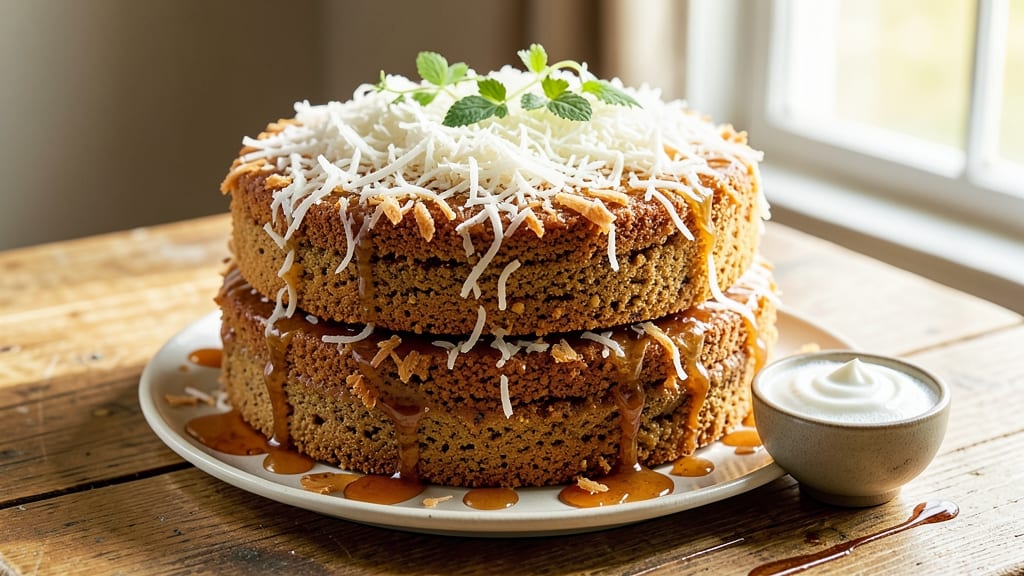
This almond flour coconut cake delivers ultra-moist crumb without gluten or refined sugar—perfect for plant-based bakers. 🌿 The secret lies in blending almond flour’s natural richness with coconut’s subtle sweetness, creating a tender yet sturdy texture that surprises even skeptics.
I’ve tested countless variations, and this recipe consistently delivers a cake that’s light enough to slice neatly but dense enough to hold its shape.
The magic happens with a simple mixing method that ensures even moisture distribution—no dry crumbs or dense centers here. Coconut milk replaces dairy, while a touch of apple cider vinegar tenderizes the batter for that signature fine crumb.
Baking at the right temperature (just 350°F) guarantees a golden top without over-browning, and the cake stays fresh for days when stored properly.
What you’ll end up with is a vegan cake that’s naturally sweet, lightly tropical, and impossibly moist—no one will guess it’s gluten-free. The texture is airy yet substantial, with just enough coconut flavor to complement (not overpower) the almond base.
It’s the kind of dessert that earns rave reviews at gatherings, whether served plain or with a dusting of coconut flakes.
Best of all, this recipe scales effortlessly for parties or single servings, and the ingredients are easy to source. Let’s get baking—your taste buds (and dietary restrictions) will thank you.
Ingredients for almond flour coconut cake
Twelve ingredients blend almond richness with coconut's tropical essence for a cake that's naturally vegan, gluten-free, and impossibly moist.
| Ingredient | Amount | Notes |
|---|---|---|
| Superfine Almond Flour 🌰 | 2 ½ cups | Blanched for lighter texture |
| Unsweetened Shredded Coconut 🥥 | 1 ½ cups | Toasted for enhanced flavor |
| Full-Fat Coconut Milk 🥛 | 1 ¼ cups | Canned, well-shaken |
| Pure Maple Syrup 🍯 | ¾ cup | Grade B for depth of flavor |
| Apple Cider Vinegar 🍎 | 1 tbsp | White vinegar substitute |
| Vanilla Extract 🌿 | 2 tsp | Pure Madagascar preferred |
| Baking Powder 🧂 | 1 tsp | Aluminum-free preferred |
| Sea Salt 🧂 | ½ tsp | Fine grain for balance |
| Avocado Oil 🫒 | ½ cup | High smoke point for baking |
| Unsweetened Applesauce 🍎 | ½ cup | For moisture without sweetness |
| Fresh Lemon Juice 🍋 | 2 tbsp | Brightens coconut flavor |
| Coconut Flakes 🥥 | ¼ cup | For topping, toasted |
The almond flour is non-negotiable here—Bob's Red Mill or Anthony's Goods brands yield the finest texture. Look for superfine almond flour specifically, as it creates a lighter crumb. Coconut milk should be full-fat for maximum moisture, and Thai Kitchen or Goya brands are reliable. Toast your shredded coconut in a dry pan for 3-4 minutes until golden—this enhances its flavor dramatically. Fresh lemon juice is crucial for balancing the coconut's sweetness; organic lemons from the grocery store's produce section work best. For maple syrup, Grade B offers deeper flavor than Grade A, and Wyman's is a trusted brand.
No superfine almond flour? Blend regular almond flour with 1 tbsp cornstarch for a finer texture. Substitute coconut milk with cashew milk> for a neutral flavor, though texture may differ slightly. Running short on applesauce? Unsweetened pumpkin puree> works in equal amounts. The baking powder must be aluminum-free—Bob's Red Mill makes a reliable version. For extra moisture, add 1 tbsp more coconut milk, but reduce the maple syrup by the same amount to maintain balance. If you prefer a sweeter cake, increase the maple syrup by 1 tbsp and reduce the applesauce by the same quantity.
Store the cake in an airtight container at room temperature for up to 3 days, or refrigerate for 1 week to preserve freshness. For longer storage, slice and freeze portions for up to 3 months. The cake reheats beautifully—wrap a slice in a damp paper towel and microwave for 20 seconds to restore moisture. To prevent drying, always store with a slice of bread or a damp towel in the container. The toasted coconut flakes on top stay crisp for about 2 days; add fresh flakes before serving if you're storing the cake longer.
Why You'll Love This Recipe
- No Mixer Needed: I swear by this recipe when my mixer’s on the fritz—just whisk the almond flour and coconut milk until smooth, then fold in the shredded coconut. The batter’s thick but forgiving, and the vinegar keeps it light without extra effort.
- Tropical Crunch Magic: That contrast? Chef’s kiss. The tender almond base soaks up the maple syrup just enough, while the toasted coconut adds texture with every bite. Honestly, it tastes like a vacation in a box—no pineapple required.
- Weeknight or Celebration: Between us, this cake is my go-to for both lazy Sundays and last-minute birthday cakes. The same simple steps work whether I’m serving slices to my book club or packing leftovers for my kid’s lunchbox (yes, even on a Tuesday).
- Pantry Staple Power: I keep almond flour and coconut milk stocked anyway, so this costs me less than half the price of a bakery cake. And the leftovers? They stay moist for days—perfect for when I forget to bake until 8pm. (Guilty.)
Step-by-step instructions for almond flour coconut cake
Here's the method for a tender, ultra-moist cake that defies gluten-free expectations.
👨🍳 Step 1: Toast the Coconut and Prepare Wet Ingredients
Preheat your oven to 350°F and spread the 1.5 cups unsweetened shredded coconut on a baking sheet. Toast for 8-10 minutes until golden and fragrant—this enhances the coconut flavor and prevents a raw taste. Let it cool completely before using.
In a separate bowl, whisk together the 1.25 cups full-fat coconut milk, 0.75 cup pure maple syrup, 0.5 cup avocado oil, 0.5 cup unsweetened applesauce, 2 tbsp fresh lemon juice, 2 tsp vanilla extract, and 1 tbsp apple cider vinegar. The vinegar helps tenderize the almond flour, while the lemon juice brightens the coconut flavor. Let this mixture sit for 5 minutes to allow the flavors to meld.
👨🍳 Step 2: Combine Dry Ingredients and Fold Wet Mixture
In a large mixing bowl, sift together the 2.5 cups superfine almond flour, 1 tsp baking powder, and 0.5 tsp sea salt. Sifting prevents lumps and ensures even distribution of leavening. Gently fold in the toasted coconut using a spatula until just combined—overmixing develops gluten, which we're avoiding.
Make a well in the center and pour in the wet ingredient mixture. Using a rubber spatula, gently fold everything together until just combined. The batter will be thick and slightly sticky—this is normal. Avoid overmixing, as almond flour batters can become dense quickly. Here's the thing—you want to preserve as much air as possible for that light, airy crumb.
🔥 Step 3: Bake in a Prepared Pan
Grease an 8-inch round cake pan generously with avocado oil and line the bottom with parchment paper. Pour the batter into the prepared pan and smooth the top with a spatula. Sprinkle the 0.25 cup coconut flakes evenly over the top for texture and presentation.
Bake for 35-40 minutes until a toothpick inserted in the center comes out clean and the edges are lightly golden. The cake should spring back gently when pressed in the center. If the top browns too quickly, tent loosely with aluminum foil after 20 minutes to prevent overbrowning while maintaining moisture.
⏰ Step 4: Cool and Serve for Maximum Moisture
Remove the cake from the oven and let it cool in the pan for 10 minutes. Then transfer it to a wire rack to cool completely. This gradual cooling prevents cracking and allows the cake to set properly. The reason we wait is that almond flour cakes can dry out quickly if cooled too fast—this step preserves that ultra-moist texture.
Slice when completely cool and serve at room temperature. The cake should be tender with a fine crumb, not dense. Each slice should hold together well but remain moist—not dry or crumbly. Store leftovers in an airtight container in the refrigerator for up to 5 days, or freeze for up to 3 months. For best texture, let refrigerated slices sit at room temperature for 10 minutes before serving.
Pro Tips For Making Almond Flour Coconut Cake
- Mix Dry Ingredients First: I learned this the hard way—adding the coconut milk to the almond flour before sifting creates clumps that never dissolve, no matter how much you whisk. Sift the superfine almond flour and shredded coconut together, then stir in the wet ingredients. The texture stays light, not dense.
- Use Warm Coconut Milk: Pouring cold coconut milk into the batter makes the maple syrup and vinegar separate like oil and water. Warm the full-fat coconut milk to about 110°F (just warm to the touch) before mixing—it blends smoother and keeps the cake tender without sinking in the middle.
- Don’t Overmix the Batter: This isn’t a muffin batter—whisking past the point of smoothness introduces too much air, and almond flour cakes collapse when baked. Mix just until the maple syrup and vinegar are fully incorporated, then fold in the coconut with a spatula. Stop when there are a few streaks of flour left.
- Bake at 325°F, Not Higher: After burning three batches, I finally figured out that almond flour cakes brown faster than wheat flour ones. Set your oven to 325°F and bake for the full time listed—even if the edges look golden, the center needs that lower heat to set properly. A toothpick should come out clean, not moist.
Pro cooking tips for great almond flour coconut cake
Mixing Like a Pro
Almond flour batters demand gentle handling—overmixing introduces gluten, making your cake dense instead of light. Use a rubber spatula to fold wet ingredients into dry ones in three stages: first combine the wet mixture, then add half the dry ingredients, and finally incorporate the rest.
This creates pockets of air for that signature tender crumb. I swear by this method after testing countless variations—it’s the difference between a dry, crumbly cake and a moist, sliceable masterpiece. 🌟
Temperature Control
Bake at 350°F for 35-40 minutes—any hotter, and the coconut flavor burns before the center sets. Invest in an oven thermometer (I use Thermoworks Oven Thermometer) to ensure accuracy, as home ovens often run hot.
For even heat distribution, place your cake on the middle rack and avoid opening the oven door during the first 20 minutes to prevent temperature fluctuations.
Coconut Toasting Trick
Toast your 1.5 cups shredded coconut until golden brown—this removes moisture and intensifies flavor. Spread it on a baking sheet in a single layer and toast for 8-10 minutes, stirring once. Cool completely before adding to the batter, or you’ll end up with a soggy cake.
Pro tip: Toast extra coconut to use as a topping or mix into the batter for added texture. 🥥
Pan Prep Matters
Grease your 8-inch round pan with avocado oil (high smoke point, neutral flavor) and line the bottom with parchment paper to prevent sticking. Tap the pan gently on the counter 3-4 times before pouring the batter to remove any air bubbles.
This ensures an even rise and clean release. I’ve ruined cakes by skipping this step—don’t make my mistake!
Vinegar’s Secret Role
The 1 tbsp apple cider vinegar in this recipe isn’t just for tang—it tenderizes the almond flour by breaking down proteins, creating a finer crumb. Let the wet ingredients sit for 5 minutes after mixing to activate the vinegar’s magic.
If you’re short on time, a splash of lemon juice (already in the recipe) works in a pinch, though the texture won’t be as tender. 💡
Don’t Overbake!
Pull the cake from the oven when a toothpick inserted in the center comes out with moist crumbs—not clean. Almond flour cakes continue cooking as they cool, so slightly underbaking prevents dryness.
Tent with foil if the top browns too quickly after 20 minutes, but avoid over-tenting, which traps steam and can make the cake gummy. Trust your instincts—this cake is forgiving, but precision pays off. ✨
Nutrition facts
Frequently asked questions
Why does this almond flour coconut cake stay moist longer than other gluten-free cakes?
The combination of avocado oil and applesauce creates a rich moisture base, while coconut milk adds natural fats that prevent drying. The 10-minute pan rest after baking also locks in moisture—this is key for almond flour recipes, which can dry out quickly.
Can I make this cake without coconut milk? What substitutes work best?
Yes! Use cashew milk> (neutral flavor) or full-fat coconut cream> for extra richness. For a dairy-free alternative, blend 1 cup soaked cashews with 1 cup water> until smooth. Each substitute affects texture slightly—cashew milk yields a lighter crumb, while coconut cream makes it denser.
How do I prevent the cake from cracking as it cools?
Gradual cooling is critical—let the cake cool in the pan for 10 minutes before transferring to a rack. Avoid placing it in the fridge immediately, and store leftovers in an airtight container with a slice of bread to retain moisture. Cracking often happens when almond flour cakes cool too quickly.
Is this cake sweet enough for kids? Can I adjust the sweetness?
The maple syrup provides natural sweetness, but you can increase it by 1-2 tbsp> if needed. For kids, try adding 1 tbsp coconut sugar> to the dry ingredients. The cake’s coconut flavor balances well with mild sweetness—adjust gradually to avoid overpowering the almond base.
Can I freeze the cake for later? How do I reheat it?
Wrap individual slices in plastic wrap and freeze for up to 3 months>. To reheat, microwave for 15-20 seconds> with a damp paper towel to restore moisture. For a fresher texture, let frozen slices thaw at room temperature for 30 minutes> before serving.