
Desserts
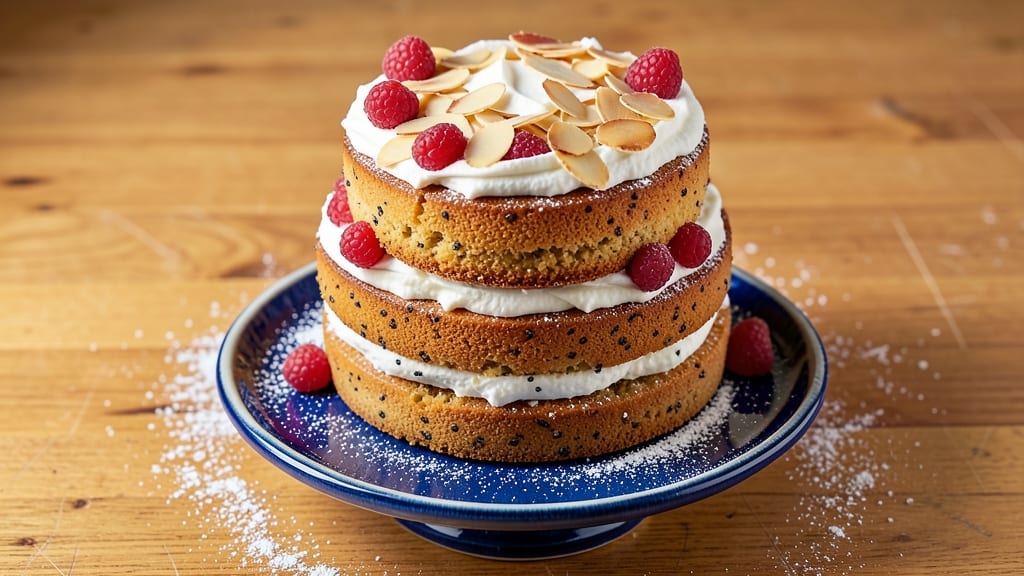
This almond poppyseed cake recipe delivers a perfect balance of nutty crunch, sweet vanilla notes, and tender crumb—ideal for special occasions or weekend baking. 💛 The secret lies in properly toasting the nuts and seeds for maximum flavor, while the buttery cake base ensures a moist texture that holds up to generous crumb toppings.
What sets this recipe apart is the layered texture: a fine crumb from the cake, delicate poppyseeds, and toasted almonds that add both crunch and depth. The vanilla infusion creates a subtle sweetness that complements the nutty flavors without overpowering them.
Baking at 350°F for 35-40 minutes guarantees a golden, even rise with a tender center.
Once out of the oven, the cake's aroma alone makes it worth the effort—warm, vanilla-scented with hints of toasted almonds. Topped with a simple powdered sugar glaze or fresh berries, it becomes a showstopper that tastes even better the next day as the flavors meld.
This is the kind of cake that makes guests ask for seconds.
The beauty of this recipe is its versatility—serve it at brunch, pair it with coffee, or use it as a base for layer cakes. The nutty-sweet profile makes it perfect for fall gatherings or holiday celebrations, where its sophisticated flavor shines. Let's bake this crowd-pleaser!
Ingredients for almond poppyseed cake
Toasted almonds and poppyseeds meet buttery vanilla layers for a crowd-pleasing cake that shines at any gathering.
| Ingredient | Amount | Notes |
|---|---|---|
| All-Purpose Flour 🌾 | 2 ½ cups | Sifted for light texture |
| Granulated Sugar 🍚 | 2 cups | White or light brown |
| Unsalted Butter 🧈 | 1 cup | Room temperature, full-fat |
| Large Eggs 🥚 | 4 whole | Room temperature, separated |
| Pure Vanilla Extract 🌿 | 2 tsp | High-quality, Madagascar |
| Poppyseeds 🌱 | ½ cup | Cleaned, no hulls |
| Sliced Almonds 🥜 | 1 cup | Toasted, skin-on preferred |
| Baking Powder 🧂 | 2 tsp | Aluminum-free preferred |
| Salt 🧂 | ½ tsp | Fine sea salt |
| Powdered Sugar 🍚 | 1 cup | For glaze, sifted |
| Milk 🥛 | ½ cup | Whole milk for richness |
| Lemon Juice 🍋 | 1 tbsp | Freshly squeezed |
The almonds and poppyseeds need toasting for peak flavor. Toast them together in a dry skillet over medium heat for 5-6 minutes until golden and fragrant—don't walk away, or they'll burn. Whole Foods bulk section has the best-priced almonds, but any store's sliced almonds work. Poppyseeds? Bob's Red Mill brand is my go-to for consistent quality. For the butter, Plugrá or Land O'Lakes are reliable choices, but never use margarine—this cake demands real butter.
No vanilla extract? Vanilla bean paste works in a pinch, or scrape seeds from a vanilla bean. The milk can be swapped for heavy cream for extra richness, though it'll make the cake slightly denser. For a dairy-free version, unsweetened almond milk works but reduce by 2 tbsp. The lemon juice brightens the flavors—don't skip it, even if you're not a fan of citrus. If you're baking ahead, make the cake 1 day early and let it sit at room temperature before serving.
This cake keeps beautifully for 3 days wrapped in plastic at room temperature, or 1 week in the fridge. For longer storage, freeze the whole cake (unfrosted) for up to 3 months. Bring to room temperature before serving. The glaze can be made ahead and reheated gently with a splash of milk if it thickens. I always bake two cakes—one for serving, one for freezing. The flavors deepen overnight, making it perfect for holiday prep.
Why You'll Love This Recipe
- No-Fuss Mixing: I swear by this recipe’s simplicity—just creaming butter and sugar, then folding in eggs and dry ingredients. No food processor, no special techniques, just a bowl and a whisk. (Yes, even on a Tuesday night.)
- Nutty Vanilla Magic: That poppyseed crunch paired with almond flour? It’s like a warm hug for your taste buds. The vanilla extract ties it all together—rich, buttery, and subtly sweet without being cloying.
- Brunch or Dessert: Serve it plain with tea for a sophisticated afternoon treat, or drizzle with honey and toast it for a breakfast cake that’ll make your coffee taste better. Honestly, I’ve had it both ways.
- Budget-Friendly Luxury: Uses pantry staples you already own, and a single batch feeds six—perfect for leftovers. The butter and eggs make it feel indulgent, but the cost stays reasonable. (My wallet approves.)
Step-by-step instructions for almond poppyseed cake
Here's the precise method for a moist, nutty-sweet cake with perfect crumb and toasted almond flavor.
👨🍳 Step 1: Prepare the Dry and Wet Ingredients Separately
In a medium bowl, whisk together the 2.5 cups All-Purpose Flour, 2 tsp Baking Powder, and 0.5 tsp Salt. Sift this mixture through a fine-mesh sieve directly into a large mixing bowl to ensure a light, airy texture. Set aside.
In a separate bowl, beat the 1 cup Unsalted Butter and 2 cups Granulated Sugar together using an electric mixer on medium speed for 3-4 minutes until light and fluffy. The mixture should nearly double in volume and become pale in color. This creaming process incorporates air, which creates the cake's signature tender crumb.
👨🍳 Step 2: Combine Wet Ingredients and Incorporate Dry Mixture
Add the 4 whole Large Eggs, one at a time, mixing well after each addition. Then stir in the 2 tsp Pure Vanilla Extract and 0.5 cup Milk. The batter will be thick but smooth at this stage.
Gradually add the sifted dry ingredients to the wet mixture, mixing on low speed just until combined. Be careful not to overmix—stop as soon as the flour disappears. Fold in the 0.5 cup Poppyseeds and 1 cup Sliced Almonds using a spatula, ensuring they're evenly distributed throughout the batter.
🔥 Step 3: Bake the Cake to Golden Perfection
Preheat your oven to 350°F and grease two 9-inch round cake pans (or line them with parchment circles). Divide the batter evenly between the pans. Bake for 25-30 minutes, or until a toothpick inserted into the center comes out clean and the top springs back when gently pressed.
I like to rotate the pans halfway through baking to ensure even browning. The cake should be golden on top with slightly domed sides. If the top browns too quickly, tent loosely with aluminum foil to prevent over-browning while allowing steam to escape.
🥘 Step 4: Prepare the Lemon Glaze
While the cake bakes, whisk together the 1 cup Powdered Sugar, 0.5 cup Milk, and 1 tbsp Lemon Juice in a small bowl until smooth. The glaze should be thin enough to drizzle but thick enough to coat the cake. If it's too thick, add a splash more milk; if too thin, add a bit more powdered sugar.
This citrus glaze adds brightness that cuts through the richness of the almonds and poppyseeds. The acidity also helps balance the sweetness, creating a more complex flavor profile. Let the glaze sit for 5 minutes before using to allow the powdered sugar to fully dissolve.
⏰ Step 5: Assemble and Cool the Cake
Allow the cakes to cool in their pans for 10 minutes, then transfer to a wire rack to cool completely. Once cooled, level the tops if needed using a serrated knife. Place one cake layer on a serving plate and spread half of the glaze over the top.
Add the second cake layer and drizzle the remaining glaze over the top and sides. For extra presentation, sprinkle with additional Sliced Almonds or a dusting of powdered sugar. Serve at room temperature for the best texture and flavor experience.
Pro Tips For Making Almond Poppyseed Cake
- Whisk Eggs Like a Pro: Beat the eggs and sugar over a double boiler until they’re pale, thick, and triple in volume—about 8-10 minutes. I learned this the hard way: rushing it leaves the cake dense, and skipping the double boiler risks scrambling the eggs (yes, even if you’re impatient like me).
- Toast the Poppyseeds: Dry-toast the poppyseeds in a skillet over medium-low heat for 3-4 minutes until fragrant. This banishes that raw, bitter bite that makes the cake taste like birdseed instead of dessert—trust me, it’s worth the extra two minutes.
- Don’t Overmix the Batter: Mix the flour and butter just until combined—lumpy is fine. Overworking it develops gluten, and your cake will turn out tough instead of tender. I’ve ruined batches by turning this into a science experiment; keep it loose.
- Use Room-Temp Butter: Let the butter sit out for 1-2 hours until soft but not melted. Cold butter creates pockets of air that disappear when baked, leaving a cake that’s dense and sad. This isn’t the prettiest method, but it’s the tastiest.
Common mistakes when making this recipe
Overmixing the Batter
This is the #1 mistake I see when baking this cake—overmixing the batter develops too much gluten, resulting in a dense, chewy texture instead of the tender crumb we want. Once you've incorporated all the dry ingredients, stop mixing as soon as the flour disappears.
Use a spatula to gently fold in the poppyseeds and almonds to preserve that delicate texture. 💛
Skipping the Toast
Never skip toasting your almonds and poppyseeds! Raw nuts and seeds lack the depth of flavor that toasting brings. Spread them on a dry skillet over medium heat for 5-6 minutes, stirring constantly, until they're golden and fragrant.
This step amplifies their natural oils and creates that signature nutty aroma that makes this cake special.
Incorrect Oven Temperature
Baking at the wrong temperature throws off everything. This cake demands 350°F—any hotter and it'll brown too quickly before cooking through, any cooler and it'll be gummy.
Invest in an oven thermometer to verify your oven's accuracy. I've ruined cakes by assuming my oven was calibrated correctly—don't make that mistake!
Underbaking or Overbaking
The cake should bake until a toothpick comes out clean with just a few moist crumbs. 25-30 minutes is the sweet spot, but every oven varies. If you're unsure, err on the side of underbaking slightly—you can always put it back in for a few more minutes.
Overbaking dries out the cake and makes it crumbly instead of moist.
Using Cold Ingredients
Cold butter, eggs, or milk can cause the batter to curdle or create pockets of uneven texture. Let all ingredients sit at room temperature for at least 1 hour before mixing.
For butter, I cut it into small cubes and let it soften on the counter while I prep everything else. Cold ingredients are the sneaky culprit behind many baking fails.
Ignoring the Glaze Timing
Rushing the glaze preparation leads to lumps or uneven coating. Let the glaze mixture sit for 5 minutes before using—this allows the powdered sugar to fully dissolve and creates a silky-smooth finish.
If you're in a hurry, strain it through a fine-mesh sieve to catch any remaining lumps. A well-made glaze elevates the whole cake! ✨
Nutrition facts
Frequently asked questions
Can I substitute almonds for another nut in this cake?
Yes, but texture and flavor will change. Try pecans or walnuts for a richer taste, or hazelnuts for a milder nutty note. Toast them first! For a seed-only version, use sunflower seeds instead, but reduce to 0.75 cup since they're smaller. Avoid pine nuts—they're expensive and burn easily.
How do I make this cake gluten-free?
Replace the 2.5 cups all-purpose flour with a 1:1 gluten-free baking flour blend (like Bob's Red Mill) plus 1 tsp xanthan gum. Add 2 tbsp extra milk to compensate for reduced moisture in GF flours. Test your blend first—some brands need adjustments. The texture will be slightly denser but still delicious!
Can I bake this cake in a single layer instead of two?
Use a 9x13-inch pan and reduce baking time to 25-30 minutes. For a taller cake, try an 8-inch round pan (bake 30-35 minutes). The single layer works great for sheet cakes or when you prefer a simpler presentation. Just watch for doneness—smaller pans may need slightly longer baking.
Why did my cake turn out dry?
Most likely from overbaking or using old ingredients. Check your oven with a thermometer—350°F is critical. Also verify baking powder isn't expired (test with vinegar). For extra moisture, brush warm layers with simple syrup (equal parts sugar + water, heated until dissolved) before glazing.
What's the best way to store leftovers?
Wrap tightly in plastic wrap or foil for 3 days at room temperature. For longer storage, freeze the whole (unfrosted) cake for 3 months. Thaw overnight in the fridge. The glaze may thicken—reheat gently with a splash of milk if needed. Store individual slices separated by parchment to prevent sticking.