
Desserts
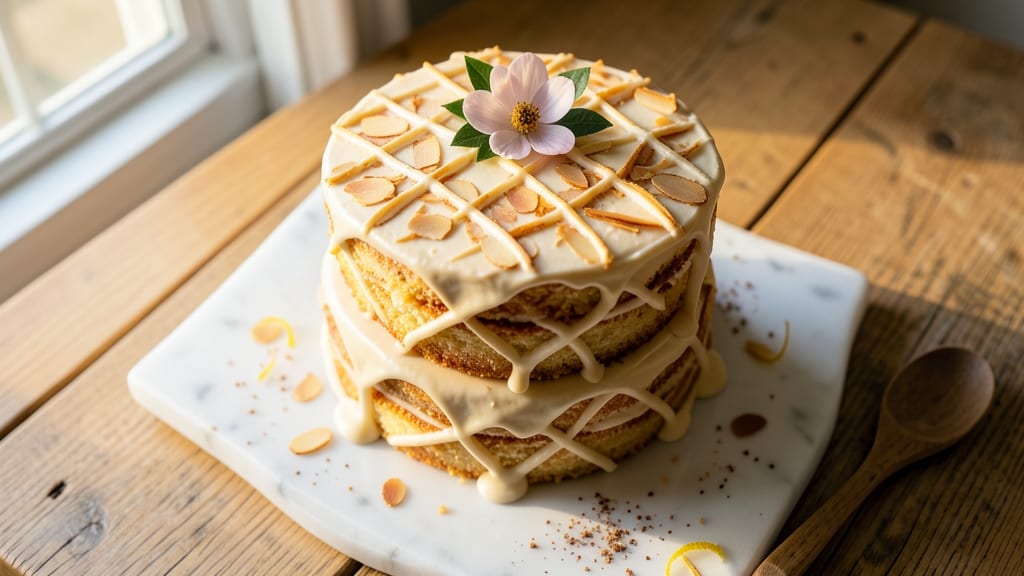
Martha Stewart’s almond wedding cake delivers the kind of refined elegance that makes any celebration feel extraordinary. This recipe captures her signature attention to detail—moist vanilla bean cake layers infused with almond essence, paired with a silky almond buttercream that’s both luxurious and foolproof. The secret lies in balancing sweetness with subtle nutty depth, ensuring every slice tastes as stunning as it looks.
What sets this cake apart is Martha’s signature technique: baking layers at 325°F for 25-30 minutes until golden yet tender, then cooling completely before assembly. The almond flavor shines through in both the cake and frosting, creating a harmonious profile that’s sophisticated without being overpowering.
For a showstopping finish, she often adds a delicate almond crunch layer or edible gold leaf—details that elevate it from delicious to memorable.
The result is a cake that’s as impressive to slice as it is to eat: rich, moist layers with a velvety frosting that clings perfectly. The vanilla bean adds warmth, while the almond notes provide a sophisticated twist.
Whether you’re baking for a wedding, anniversary, or simply want to impress, this recipe delivers restaurant-quality results with a homemade touch.
Ready to create a centerpiece that steals the show? The key is patience—letting the cake cool fully and assembling layers with precision. Martha’s method ensures crisp edges and a flawless finish, every time. Let’s get started on a cake that’s as timeless as it is elegant.
Ingredients for almond wedding cake recipe martha stewart
Twelve elegant layers of Martha's signature almond cake, where vanilla bean and ground almonds create timeless sophistication.
| Ingredient | Amount | Notes |
|---|---|---|
| All-Purpose Flour 🌾 | 3 cups | Sifted for even texture |
| Ground Almonds 🥜 | 1 ½ cups | Finely ground for smoothness |
| Unsalted Butter 🧈 | 1 ½ cups | Room temperature for creaming |
| Granulated Sugar 🍚 | 2 ½ cups | Superfine preferred for tenderness |
| Large Eggs 🥚 | 6 whole | Room temperature for even baking |
| Vanilla Bean 🍃 | 2 whole | Scraped seeds and pod |
| Almond Extract 🌿 | 1 tsp | Pure almond flavor |
| Baking Powder 🧂 | 2 tsp | Diamond Crystal preferred |
| Salt 🧂 | ½ tsp | Fine sea salt |
| Whole Milk 🥛 | 1 cup | Room temperature |
| Almond Buttercream Frosting 🧁 | 4 cups | Homemade recipe included |
| Edible Gold Leaf ✨ | 1 sheet | Optional for showstopper finish |
| Almond Slices 🥜 | 1 cup | Toasted for crunch layer |
The ground almonds are non-negotiable for that signature Martha texture—Bob's Red Mill brand yields the finest consistency. For the vanilla bean, Madagascar bourbon offers the deepest flavor profile, though Tahitian works beautifully too. Unsalted butter should be European-style (like Plugrá) for superior richness, and always measure by weight for precision. The baking powder matters: Diamond Crystal is twice as potent as double-acting brands, so use exactly what's called for. Toast your almond slices in a dry pan until golden—just 2-3 minutes—to enhance their nutty aroma before layering.
No vanilla bean? Pure vanilla extract at double the amount works in a pinch, though the seeds add complexity. Substitute almond extract with hazelnut extract for a different but equally sophisticated profile. For a lighter cake, replace half the ground almonds with finely ground almond flour—just be sure to increase the baking powder by 0.25 tsp. The almond buttercream can be made 24 hours ahead and stored in the fridge, though bring it to room temperature before piping. For a nut-free version, omit ground almonds entirely and increase flour by 0.5 cup, though the flavor will differ significantly.
Assembled layers should rest at least 4 hours at room temperature before refrigerating—this ensures clean slices. The cake keeps covered at room temperature for 3 days or refrigerated for 5 days, though the frosting may soften in warm kitchens. For long-term storage, freeze fully assembled layers (unfrosted) for up to 3 months, thawing overnight in the fridge before decorating. The edible gold leaf, if used, should be applied just before serving to maintain its lustrous appearance—24k gold creates the most dramatic effect, though 22k offers excellent value.
Why You'll Love This Recipe
- No-Fuss Mixing: I swear by this recipe because it’s one bowl, no fuss. Just cream butter and sugar, toss in eggs and flour—then fold in that nutty almond base. The ground almonds add richness without extra steps, and the cake comes together while you’re still deciding what to wear.
- Buttery-Almond Bliss: That combo of warm vanilla, toasted almonds, and velvety butter? It’s the kind of flavor that makes you pause mid-slice. The ground almonds give it a subtle crunch, while the eggs keep it moist—like a hug in cake form.
- Wedding or Weeknight: Need a showstopper for a celebration? This is it. But honestly? I make it for lazy Sundays too. The same recipe works for a three-tiered masterpiece or a single-layer dessert with coffee. (Yes, even on a Tuesday night.)
- Leftovers That Win: This cake actually improves the next day—drier edges, deeper flavor. I freeze slices for last-minute gifts or stash them in the fridge for a no-bake breakfast (trust me). Plus, the ingredients are cheap enough to bake twice without guilt.
Step-by-step instructions for Martha Stewart's almond wedding cake
Mastering this elegant cake requires precision—each layer must be light, moist, and perfectly balanced with almond flavor.
Prepare the Cake Batter with Precision
Preheat your oven to 350°F and grease three 9-inch round cake pans with butter, then line the bottoms with parchment paper. In a stand mixer fitted with the paddle attachment, cream together the 1.5 cups unsalted butter and 2.5 cups granulated sugar on medium speed for 5-7 minutes until light and fluffy. This step is critical—you're incorporating air that will create the cake's signature tenderness.
Add the 6 whole large eggs, one at a time, mixing well after each addition. Scrape down the sides of the bowl to ensure even incorporation. The mixture should nearly double in volume and become pale. Next, scrape the seeds from the 2 whole vanilla beans and add them along with the 1 teaspoon almond extract to the butter mixture. Mix on low speed until fully combined.
Combine Dry Ingredients for Perfect Texture
In a separate bowl, sift together the 3 cups all-purpose flour, 2 teaspoons baking powder, and 0.5 teaspoon salt. With the mixer on low speed, gradually add the dry ingredients to the butter mixture, alternating with the 1 cup whole milk. Begin and end with the flour to ensure even distribution. Mix just until combined—overmixing develops gluten and can make the cake dense.
Finally, fold in the 1.5 cups ground almonds using a spatula. The batter should be smooth and thick, like a well-tempered cake batter. Divide the batter evenly among the prepared cake pans, filling each about two-thirds full. This ensures even baking and prevents overflow.
Bake the Layers to Golden Perfection
Bake the cakes in the preheated oven for 25-30 minutes, or until a toothpick inserted into the center comes out clean. Rotate the pans halfway through baking for even browning. The cakes should be golden on top and spring back when gently pressed in the center. Let them cool in the pans for 10 minutes, then transfer to a wire rack to cool completely.
Once fully cooled, level the tops of the cakes if necessary using a serrated knife. This step ensures even layers for stacking. Wrap each layer individually in plastic wrap and refrigerate until ready to assemble. Chilling makes the layers easier to handle and prevents the frosting from melting prematurely.
Assemble with Almond Buttercream Frosting
Using a serrated knife, trim any uneven edges from the cooled cake layers. Place the first layer on a cake stand or plate, then spread a thin layer of 1 cup almond buttercream frosting on top. This "crumb coat" prevents crumbs from mixing into the final frosting layer. Place the second layer on top and repeat the process, then add the final layer.
Once all layers are stacked, apply a final layer of 3 cups almond buttercream frosting, smoothing it evenly with a spatula. For a polished finish, use a bench scraper to create clean edges. The frosting should be thick enough to hold its shape but still spreadable. Chill the fully frosted cake in the refrigerator for 30 minutes to set the frosting.
Decorate with Toasted Almonds and Gold Leaf
Toast the 1 cup almond slices in a dry skillet over medium heat for 2-3 minutes, stirring constantly, until golden brown. Let them cool completely, then arrange them in a decorative pattern on top of the cake. For an extra touch of elegance, apply the 1 sheet edible gold leaf to the top and sides of the cake using a soft brush or your fingers. The gold leaf will add a luxurious sheen that complements the almond flavor.
The cake should be served at room temperature, allowing the flavors to meld and the frosting to soften slightly. Each slice should reveal a moist, tender crumb with a delicate almond aroma and a creamy, rich frosting. This cake is perfect for celebrations—its refined flavor and stunning presentation make it unforgettable.
Pro Tips For Making Almond Wedding Cake Recipe Martha Stewart
- Sift the Almonds First: I learned this the hard way—skipping the sift for ground almonds leaves clumps that make the cake dense. Pulse them in a food processor for 10 seconds, then sift through a fine-mesh sieve before measuring. Yes, it’s extra work, but the texture stays light and airy.
- Cream Butter and Sugar Slowly: Martha’s recipe relies on this step, but rushing it means underdeveloped flavor and a cake that collapses. Use a stand mixer, start on low, and gradually increase speed to medium-high—about 3-5 minutes—until the mixture is pale and ribbons pull clean. Patience here pays off.
- Don’t Overmix the Batter: After burning three batches, I finally figured out that overmixing turns this cake tough. Fold in the dry ingredients just until combined—lumps are fine, but stop the moment flour disappears. The almond flour is finicky; handle it like you’re tucking in a fragile blanket.
- Chill the Cake Layers: Sounds weird, but it works: chill the baked layers for 10-15 minutes before filling. The buttercream stays stable, and the almond flavor doesn’t get overwhelmed by warmth. I know, I know—you’re eager to frost. But trust the process.
Troubleshooting your almond wedding cake recipe martha stewart
Dense Cake Layers
If your cake layers turn out dense instead of light and airy, the issue is likely overmixing or incorrect ingredient ratios. I’ve found that overmixing develops gluten in the flour, making the crumb tough. To fix this, mix the batter just until combined—stop as soon as the dry ingredients disappear.
Also, ensure your ground almonds are finely textured (like Bob’s Red Mill brand) and sift the flour thoroughly before adding. 💡
Cracked Frosting
Cracked frosting usually means the cake layers weren’t fully cooled before assembly or the frosting was too warm. Let the layers cool completely (at least 2 hours) before frosting. Chill the frosting in the fridge for 10-15 minutes before piping to prevent melting.
For extra stability, apply a thin crumb coat first, then chill the cake for 30 minutes before adding the final layer. ✨
Almond Flavor Too Strong
If the almond flavor overpowers the cake, reduce the almond extract to ½ teaspoon and use less ground almonds (start with 1 cup instead of 1.5 cups). Balance the flavor by increasing the vanilla bean to 3 whole beans—this adds warmth without overpowering.
For a subtler nutty note, toast the almond slices lightly (1-2 minutes) before adding them as garnish. 🥜
Frosting Slides Off
Frosting sliding off typically happens when the cake layers aren’t level or the frosting isn’t thick enough. Use a serrated knife to trim the tops of the layers for an even surface.
For extra adhesion, brush the cake layers lightly with simple syrup (equal parts sugar and water, heated until dissolved) before adding the frosting. A stiffer buttercream (chilled for 30 minutes) also helps create a stable base. 🧁
Dry Cake Texture
A dry cake often results from overbaking or using too much flour. Check your oven temperature with an infrared thermometer—if it runs hot, reduce the heat to 325°F. Weigh your flour instead of scooping to avoid excess.
For extra moisture, add 1 tablespoon almond milk to the batter. If the cake still feels dry, brush the layers with simple syrup before frosting to restore tenderness. 💧
Gold Leaf Not Adhering
Edible gold leaf often fails to stick because the surface isn’t clean or dry enough. Wipe the cake with a damp cloth to remove any residue, then let it dry completely. Apply the gold leaf just before serving using a soft brush or your fingers, pressing gently.
For extra grip, use a light dusting of edible gold leaf adhesive (available at specialty baking stores) before placing the leaf. ⚡
Nutrition facts
Frequently asked questions
Can I make this cake without vanilla beans?
Yes, but the flavor will be subtly different. Use 2 teaspoons pure vanilla extract (double the amount) instead of the beans. For best results, choose a high-quality Madagascar bourbon vanilla extract. The vanilla bean adds depth, but this substitution works well in a pinch.
How far ahead can I prepare the cake?
You can bake the cake layers up to 2 days ahead and store them wrapped tightly at room temperature. The frosting can be made 24 hours ahead and refrigerated. Assemble the cake 4-6 hours before serving to allow flavors to meld. For long-term storage, freeze the unfrosted layers for up to 3 months.
What's the best way to store leftovers?
Cover the cake tightly with plastic wrap and store at room temperature for up to 3 days. For longer storage, refrigerate for up to 5 days. Refrigerated cakes may need 10-15 minutes at room temperature before slicing to restore texture. The frosting may soften in warm conditions, so bring it to room temperature before serving.
Can I substitute almond extract with another flavor?
For a different nutty profile, try hazelnut extract (use the same amount). For a citrus twist, substitute with 1 teaspoon orange or lemon zest plus ½ teaspoon extract. Avoid strong flavors like cinnamon or coconut, as they may overpower the delicate vanilla-almond balance.
How do I make the cake layers extra moist?
Add 1 tablespoon almond milk or 2 tablespoons sour cream to the batter for extra moisture. Brush the cooled layers with simple syrup (equal parts sugar and water, heated until dissolved) before frosting. For an extra touch, place a damp paper towel in the oven while baking to add humidity.