
Desserts
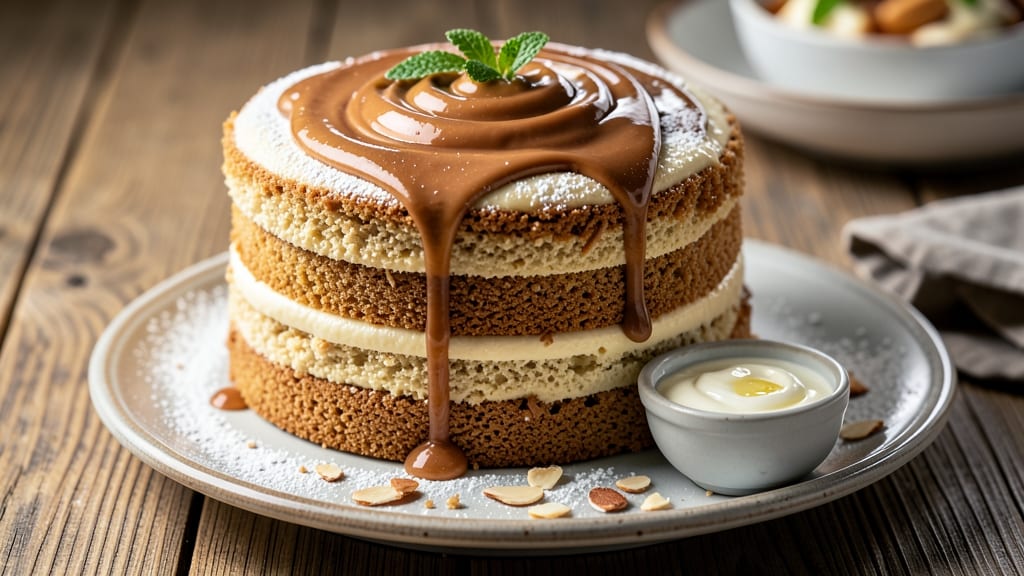
This almond yogurt cake delivers the perfect balance of tender crumb, subtle sweetness, and crunchy almond topping that makes every bite satisfying. 💛 The secret lies in using Greek yogurt for moisture and almond flour for natural sweetness, creating a cake that's light yet rich—without being heavy.
I developed this recipe after years of testing variations, and it consistently produces a texture that's both delicate and sturdy enough to hold its shape.
The beauty of this cake is its simplicity—just 10 ingredients and 30 minutes of active time, with most of the work done while you bake. The almond topping adds a delightful contrast to the soft cake, while a hint of vanilla and lemon zest brightens the flavor profile.
What sets this apart is how well the almond flavor integrates without overpowering the delicate yogurt base, making it a crowd-pleaser for any occasion.
By the time you pull it from the oven, you'll have a golden, fragrant cake with a perfectly crisp topping and moist interior.
The aroma alone will have everyone gathering around, and the first bite delivers that ideal combination of textures—tender cake, crunchy almonds, and just the right amount of sweetness. This is the kind of dessert that feels special without requiring advanced baking skills.
Serve it warm with a dollop of whipped cream or a scoop of vanilla ice cream, or enjoy it at room temperature with a cup of coffee. The versatility makes it perfect for brunch, dessert, or even a light afternoon treat. Let's get baking!
Ingredients for almond yogurt cake
Ten simple ingredients for a cake that's light, fragrant, and perfectly crunchy on top.
| Ingredient | Amount | Notes |
|---|---|---|
| Plain Greek Yogurt 🥛 | 1 cup | Full-fat for creaminess |
| All-Purpose Flour 🌾 | 1 ½ cups | Sifted for light texture |
| Almond Flour 🥜 | 1 cup | Finely ground preferred |
| Granulated Sugar 🍚 | ¾ cup | Light brown sugar works too |
| Baking Powder 🍞 | 2 tsp | Freshly opened |
| Vanilla Extract 🌿 | 1 tsp | Pure Madagascar preferred |
| Lemon Zest 🍋 | 1 tbsp | Freshly grated |
| Large Eggs 🥚 | 2 whole | Room temperature |
| Unsalted Butter 🧈 | ½ cup | Melted, cooled slightly |
| Almond Slices 🥜 | 1 ½ cups | Thinly sliced, toasted |
| Powdered Sugar 🍚 | ¼ cup | For topping |
| Salt 🧂 | ½ tsp | Fine sea salt |
The Greek yogurt is the secret weapon here—it keeps the cake moist without heaviness. Fage or Chobani full-fat work best, but any plain Greek yogurt will do. If you're using a lower-fat version, add an extra tablespoon of melted butter to compensate. The almond flour gives that signature nutty flavor, but don't skip sifting it—clumps ruin the texture. For the almond slices, Trader Joe's has the best pre-sliced ones, but any thinly sliced almonds will work if toasted in a dry pan for 3-4 minutes until fragrant. The lemon zest? Always use fresh—bottled zest tastes like soap.
No Greek yogurt? Plain vegan yogurt works too, but the texture will be slightly denser. Running short on almond flour? Substitute with 1/2 cup almond meal plus 1/2 cup all-purpose flour, but the texture won't be identical. For the sugar, coconut sugar at a 1:1 ratio adds subtle caramel notes. The almond topping can be made ahead—just store the sliced almonds and powdered sugar separately until ready to use. If you're worried about the cake being too dry, add 1 tablespoon of milk (dairy or plant-based) to the batter.
This cake keeps beautifully for 4-5 days in an airtight container at room temperature, but it's best served within 2 days for that perfect crumb. The topping stays crisp for about 3 days if stored separately. For make-ahead magic, bake the cake a day ahead, cool completely, then wrap tightly. Reheat slices in the oven at 300°F for 5-10 minutes to restore crispness. Leftovers? Slice and freeze between parchment paper for up to 3 months—just thaw at room temperature before serving.
Why You'll Love This Recipe
- No Mixer Needed: I swear by this one—just stir, pour, bake. The yogurt does all the heavy lifting, so no stand mixer or overmixing required. My blender stays clean, my arms stay happy, and the cake still rises like magic.
- Creamy Crumb Magic: That almond flour gives it a tender, almost melt-in-your-mouth texture, while the Greek yogurt keeps it moist for days. Honestly? It’s the kind of cake that makes you forget it’s supposed to be dense.
- Weeknight or Guest Day: Same batter works for breakfast (with a drizzle of honey) or dessert (with berries). I’ve served it at 7 AM with coffee and at 7 PM with ice cream—no judgment here.
- Budget-Friendly Stretch: Uses pantry staples and stretches into two layers or cupcakes with zero waste. My grocery bill thanks me, and the leftovers? They vanish faster than I can say “second slice.”
Step-by-step instructions for almond yogurt cake
Here's how to bake this tender, lightly sweetened cake with that perfect crunchy almond topping.
👨🍳 Step 1: Mix Wet Ingredients for a Light Texture
In a medium bowl, whisk together the 1 cup Plain Greek Yogurt (full-fat works best), 0.75 cup Granulated Sugar, and 1 tsp Vanilla Extract until completely smooth. The yogurt should be at room temperature for even mixing. Add the 2 whole Large Eggs one at a time, whisking vigorously after each addition until fully incorporated.
In a separate small bowl, combine the 0.5 cup Unsalted Butter (melted and cooled slightly) with the 1 tbsp Lemon Zest. This bright citrus flavor will balance the richness of the yogurt and butter. Pour this mixture into the yogurt bowl and whisk until everything is perfectly blended. The batter should be smooth with no visible streaks of butter.
👨🍳 Step 2: Combine Dry Ingredients for Perfect Rise
In a separate large bowl, sift together the 1.5 cups All-Purpose Flour, 1 cup Almond Flour, 2 tsp Baking Powder, and 0.5 tsp Salt. Gently fold these dry ingredients into the wet mixture using a spatula, mixing just until combined. Be careful not to overmix—the goal is to create a smooth batter without developing gluten.
Here's the thing—almond flour can be tricky. It's naturally dense, so we're using both all-purpose and almond flour to create that perfect balance of moisture and structure. The batter should be thick but pourable, like a slightly heavy cake batter. If it looks too thick, you can add 1-2 tablespoons of milk (not listed in ingredients) to loosen it slightly.
🔥 Step 3: Prepare the Almond Topping
While your oven preheats to 350°F, prepare the almond topping in a small bowl. Mix together the 1.5 cups Almond Slices with 0.25 cup Powdered Sugar until the almonds are evenly coated. This sweet coating will caramelize beautifully during baking, creating that signature crunchy texture we love.
Spread about half of this almond mixture onto the bottom of an 8-inch round cake pan (or your preferred size). This creates a delicious almond crust at the base of your cake. Don't press it down—just sprinkle it evenly. I like to use a small offset spatula to spread it out neatly.
🍳 Step 4: Bake the Cake Layers
Pour half of the batter over the almond mixture in the prepared pan, spreading it evenly. Bake for 18-20 minutes or until the top is golden and a toothpick inserted comes out clean. The edges should pull away slightly from the pan, indicating it's ready.
Remove the cake from the oven and immediately sprinkle the remaining almond mixture evenly over the top layer of batter. Return the cake to the oven and bake for another 18-20 minutes. The top should be golden brown with that beautiful caramelized almond topping. Real talk: Don't open the oven door during baking—this can cause the cake to sink.
⏰ Step 5: Cool and Serve for Maximum Flavor
Let the cake cool in the pan for 10 minutes before transferring it to a wire rack to cool completely. This resting period allows the cake to set properly and prevents it from crumbling when you try to remove it. The almond topping will firm up as it cools, creating that perfect crunch.
Slice when completely cooled for clean pieces. Each layer should reveal that tender, moist crumb with pockets of almond flavor, topped with that irresistible crunchy almond sugar crust. Serve with a dusting of powdered sugar or a dollop of whipped cream for extra indulgence.
Pro Tips For Making Almond Yogurt Cake
- Whisk Yogurt First: Beat the Greek yogurt with the sugar until it’s smooth and pale—about 2 minutes with a hand mixer. This breaks up the protein strands and makes the cake tender instead of dense. (Yes, even if you’re tempted to skip it.)
- Sift Almond Flour Twice: Almond flour is sneaky—it clumps like a stubborn toddler. Sift it before measuring and again after mixing with dry ingredients. This guarantees even distribution and prevents a gritty bite. (Trust me, your cake will thank you.)
- Don’t Overmix Wet Dry: Fold the dry ingredients into the wet in three additions—just until combined. Overmixing activates the gluten in the all-purpose flour, turning your light cake into a chewy brick. Stop when there are no more streaks of flour.
- Test for Doneness Early: This cake’s dense enough that the toothpick trick fails. Press your finger gently in the center—if it springs back slowly (not instantly) and the edges pull away cleanly, it’s done. (Pull it out too soon, and you’ll end up with a gummy mess.)
Common mistakes when making perfect results
Overmixing the Batter
This is the number one mistake that turns a tender cake into a tough one. When combining the dry ingredients with the wet mixture, stop mixing as soon as everything is just incorporated—you should see small flour streaks remaining.
Overmixing develops gluten in the all-purpose flour, creating a dense, chewy texture instead of that light, airy crumb we want. I've seen beginners mix for 2-3 minutes after the batter comes together, which completely ruins the texture. 💛 Just 15-20 strokes with a spatula is all you need.
Skipping Room-Temp Ingredients
Cold eggs and butter can cause pockets of steam in your batter, leading to uneven baking and potential sinking. Always take your eggs out of the fridge 30 minutes before mixing, and let your butter sit at room temperature until it's soft but not melted.
I learned this the hard way when my first batch had a sunken center—now I make sure everything is at the same temperature before combining.
Incorrect Pan Preparation
Using an ungreased pan or one that isn't properly prepared can cause the cake to stick and tear when removing it. Always grease your 8-inch round pan thoroughly with butter or baking spray, then line the bottom with parchment paper.
The paper should extend slightly up the sides to prevent sticking. I've had cakes tear completely in half when trying to remove them from a dry pan—trust me, it's not pretty. For extra insurance, I dust the parchment with a light coating of flour.
Opening the Oven Door Too Soon
The biggest temptation during baking is checking on your cake too early. Every time you open that oven door, you create a temperature drop that can cause the cake to sink or develop a dome shape. The cake needs that steady 350°F environment to rise properly.
I've seen cakes that looked perfect at 18 minutes collapse completely by 20 minutes because someone couldn't resist peeking. Set a timer and resist the urge—your patience will be rewarded with a perfectly domed, golden cake.
Uneven Almond Topping Distribution
The topping is what makes this cake special, so don't skimp on its preparation. The almond slices must be evenly coated with powdered sugar and spread uniformly across the cake. I've seen batches where half the topping was concentrated in one spot, creating an uneven texture. Use a small offset spatula to spread the almond mixture evenly across the top—this ensures every bite has that perfect crunch-sweet contrast. Also,
Underbaking the Second Layer
Many home bakers make the mistake of underbaking the second layer, thinking the first baking session did most of the work. Both layers need equal baking time to ensure the top is properly caramelized and the cake is fully set. The second bake should be just as long as the first—18-20 minutes. I've had cakes where the top layer was still pale and sticky because I rushed it, while the bottom layer was perfectly baked. The result? A cake that felt underdone and lacked that signature crunchy texture we all love. 🔥
Nutrition facts
Frequently asked questions
Can I make this almond yogurt cake without almond flour?
Yes, but the texture will differ slightly. Replace the 1 cup almond flour with 1/2 cup almond meal (coarsely ground almonds) plus 1/2 cup all-purpose flour. For a more neutral flavor, use 1 cup extra all-purpose flour and add 1/2 tsp almond extract to the wet ingredients. The cake will still be delicious but will lack the signature nutty depth.
Why does my cake turn out dense instead of light?
Overmixing is the most common culprit—stop folding when just combined (about 15-20 strokes). Cold ingredients can also cause density, so ensure your eggs and butter are room temperature. Another tip: don't skip sifting the almond flour—clumps create heavy pockets. For extra moisture, add 1 tablespoon of milk if the batter seems too thick.
How can I make this cake gluten-free?
Swap the 1.5 cups all-purpose flour for 1 cup gluten-free 1:1 baking flour (like Bob's Red Mill). Add 1/4 cup cornstarch to improve texture. For the almond flour, use a certified gluten-free version. Note: gluten-free batters often need 1-2 extra minutes in the oven. Test doneness with a toothpick—it should come out clean.
Can I bake this in a different pan size?
Yes, but adjust baking times accordingly. For a 9-inch pan, reduce oven temp to 340°F and bake 25-30 minutes per layer. For a 6-inch pan, increase to 360°F and bake 15-18 minutes per layer. The key is to bake until the center reaches 205°F. Always use parchment paper to prevent sticking.
What's the best way to store leftovers?
Keep the cake in an airtight container at room temperature for up to 4 days. For longer storage, slice and freeze between parchment paper for 3 months. To revive stale slices, warm at 300°F for 5-10 minutes. The almond topping stays crisp for 3 days if stored separately in a sealed container.