
Desserts
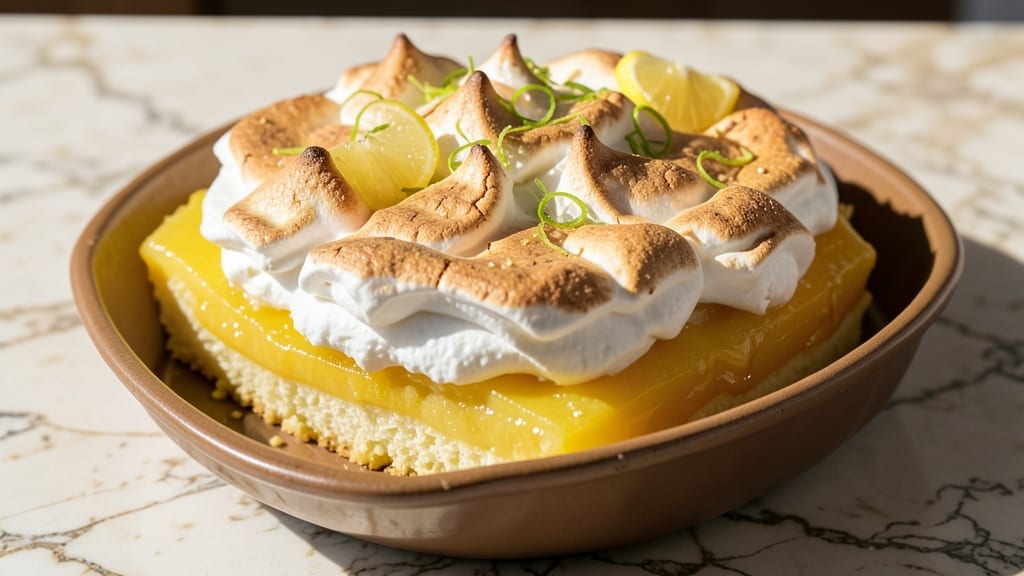
This Amalfi lemon meringue cheesecake recipe brings the bright, zesty flavors of Italy’s Amalfi Coast to your dessert table with every bite. The secret lies in a lemon-infused cheesecake base—tangy, creamy, and perfectly set—paired with a homemade lemon curd layer that adds a burst of citrusy richness.
Topped with a toasted meringue crown, this dessert delivers the perfect balance of smooth, tangy, and airy textures that will impress even the most discerning guests.
The recipe starts with a water bath-baked cheesecake for a silky-smooth texture, infused with fresh lemon zest and juice to capture that signature Amalfi brightness. A layer of bright yellow lemon curd sits between the cheesecake and meringue, ensuring every forkful is packed with flavor.
The meringue isn’t just decorative—it’s torched to golden perfection, creating a crisp, toasted contrast that makes this cheesecake unforgettable.
What sets this apart is the authentic Amalfi touch—no artificial flavors, just real lemon and a touch of vanilla to round out the brightness. The result is a dessert that’s elegant yet approachable, perfect for special occasions or when you want to treat yourself to something truly remarkable.
Serve it with a shot of espresso or sparkling wine to enhance the citrus notes and complete the experience.
This recipe is designed to be foolproof—even if you’re new to baking cheesecake, the step-by-step instructions will guide you through every phase, from the water bath technique to meringue torching.
The final result? A showstopping dessert that tastes like a trip to the Amalfi Coast, one slice at a time.
Ingredients for amalfi lemon meringue cheesecake
Bright lemons, rich cream cheese, and crisp meringue—this Italian-inspired dessert delivers authentic Amalfi flavor.
| Ingredient | Amount | Notes |
|---|---|---|
| Fresh Amalfi Lemons 🍋 | 1 ½ cups | Zest and juice only, organic preferred |
| Large Eggs 🥚 | 6 whole | Room temperature for even baking |
| Full-Fat Cream Cheese 🧀 | 32 oz | Room temperature, no lumps |
| Granulated Sugar 🍚 | 2 cups | Superfine preferred for smooth texture |
| All-Purpose Flour 🌾 | ½ cup | Sifted for lightness |
| Vanilla Extract 🌿 | 2 tsp | Pure Madagascar preferred |
| Unsalted Butter 🧈 | ½ cup | Melted for lemon curd |
| Heavy Whipping Cream 🥛 | 2 cups | Cold for meringue |
| Granulated White Sugar 🍚 | 1 ½ cups | For meringue, fine grain |
| Cornstarch 🌾 | 2 tbsp | For lemon curd stability |
| Vanilla Bean Paste 🌿 | 1 tbsp | For enhanced vanilla flavor |
| Diamond Crystal Kosher Salt 🧂 | ½ tsp | Fine grain for delicate seasoning |
The lemon selection is non-negotiable for authentic Amalfi flavor. Organic, locally grown lemons from specialty markets like Whole Foods or Trader Joe's deliver the most vibrant zest and juice. Look for lemons with thick, bright yellow skins—these yield the most aromatic zest. If using conventional lemons, ensure they're freshly harvested (avoid those with dull skins). For the meringue, Stork brand is a professional favorite due to its stable volume and smooth texture. The cream cheese should be full-fat—Philadelphia brand is reliable, but room temperature is critical to avoid lumps in the batter. Vanilla bean paste elevates the flavor beyond extract, and Madagascar vanilla provides the richest profile.
No fresh lemons? Key limes or Meyer lemons work in a pinch, though the flavor profile shifts slightly. For the lemon curd, substitute lemon juice concentrate at half the amount, but add an extra 0.5 tsp of cornstarch to compensate for the thicker consistency. The meringue can be stabilized with 1 tsp of cream of tartar if you're short on sugar, though the texture will be slightly denser. Pre-made lemon curd from Whole Foods or Trader Joe's can save time, but homemade delivers superior brightness. The butter for the curd should be unsalted to avoid over-salting the delicate citrus flavor. If you're baking in a humid climate, reduce the sugar slightly to prevent weeping in the meringue.
Store the unbaked cheesecake in the fridge for up to 24 hours before baking to ensure even cooking. The lemon curd keeps for 5 days in the fridge, covered tightly with plastic wrap pressed directly on the surface. Meringue should be used immediately after torching, but you can shape and refrigerate it for up to 4 hours before baking. The assembled cheesecake stays fresh for 4-5 days in the fridge, though the meringue may soften slightly. For longer storage, freeze the baked cheesecake (without meringue) for up to 3 months—thaw overnight in the fridge before adding the meringue and torching.
Why You'll Love This Recipe
- No-Zero-Effort Base: I swear by this crust—just flour, sugar, and butter pressed into a pan. No food processor, no fuss. The texture stays perfectly crisp even when the lemon curd sits on top, and honestly? It’s my shortcut to looking like I tried.
- Zesty Tang Magic: That first bite of meringue gives way to a cloud of cream cheese, but the real star? The Amalfi lemon curd—bright, buttery, and just sweet enough. It’s the kind of flavor that makes you pause mid-slice and go, “Wait, how is this real?”
- Weekend or Weeknight: Bake it ahead for a dinner party or pull it from the fridge for a lazy Sunday. The meringue holds up for days (if it lasts that long), and the lemon keeps it from getting stale. My kids ask for it after school—yes, even on a Tuesday night.
- Budget Bright Spot: Full-fat cream cheese and fresh lemons might sound fancy, but you use less than you think. A single lemon’s zest and juice stretch across two batches, and the crust’s simple ingredients stretch my grocery budget further than store-bought desserts ever could.
Step-by-step instructions for Amalfi lemon meringue cheesecake
Master this delicate balance of tart lemon curd and airy meringue with precise technique.
Prepare the Lemon Curd Filling
In a medium saucepan, combine the zest from the 1.5 cups of fresh Amalfi lemons, the juice (about ½ cup), 0.5 cup unsalted butter, 2 cups granulated sugar, 2 tbsp cornstarch, and 0.5 tsp diamond crystal kosher salt. Whisk constantly over medium heat until the mixture thickens to a pudding-like consistency—this should take about 8-10 minutes. The curd is ready when it coats the back of a spoon and leaves a clean trail when you run your finger through it.
Remove from heat immediately and stir in 2 tsp vanilla extract and 1 tbsp vanilla bean paste. Let the curd cool to room temperature while you prepare the crust. This cooling step is crucial—hot curd will melt the crust prematurely. Cover the pan with plastic wrap pressed directly onto the surface to prevent a skin from forming.
Assemble the Crust Components
In a food processor, pulse 1.5 cups of the cooled lemon curd with 32 oz of room-temperature full-fat cream cheese until completely smooth. This step ensures an ultra-silky texture in your cheesecake filling. Transfer the mixture to a large mixing bowl and gently fold in 6 whole room-temperature large eggs, one at a time, ensuring each is fully incorporated before adding the next.
Add the remaining 1.5 cups granulated white sugar and 0.5 cup sifted all-purpose flour to the bowl. Mix on low speed just until combined—overmixing develops gluten and creates a dense texture. The batter should be smooth and slightly thick, like heavy pudding. Here's the thing—don't worry if it looks too thin; it will set properly in the oven.
Prepare the Water Bath and Bake the Cheesecake
Preheat your oven to 325°F. Grease a 9-inch springform pan thoroughly with melted butter, then line the bottom with parchment paper. Pour the cheesecake batter into the prepared pan and smooth the top with a spatula. Place the pan in a larger roasting pan and pour hot water into the roasting pan until it reaches halfway up the sides of the springform pan—this creates a water bath that prevents cracking.
Bake for 50-60 minutes until the edges are set but the center still jiggles slightly when shaken. The internal temperature should reach 150°F. This gentle bake ensures a silky texture without curdling the eggs. Remove from the water bath and let the cheesecake cool in the oven with the door slightly ajar for 15 minutes to prevent condensation from forming on the surface.
Prepare and Torch the Meringue
While the cheesecake cools, whip 2 cups cold heavy whipping cream to stiff peaks in a chilled mixing bowl. Gradually add 1.5 cups granulated white sugar and continue whipping until the meringue forms glossy, stiff peaks that hold their shape when the beaters are lifted. Fold in the remaining 1 tbsp vanilla bean paste and 0.5 tsp diamond crystal kosher salt for balance.
Spread the meringue evenly over the cooled cheesecake, sealing it completely to the sides to prevent cracking. Use a spatula to smooth the surface and create a slight peak in the center. Immediately torch the meringue with a kitchen torch until it develops a golden brown color—this adds the perfect crunchy contrast to the creamy cheesecake. If you don't have a torch, broil for 1-2 minutes, watching carefully to avoid burning.
Chill and Serve
Let the cheesecake cool completely at room temperature, then refrigerate uncovered for at least 4 hours or overnight. This slow chilling process allows the flavors to meld and the texture to set properly. When ready to serve, run a knife around the edge of the springform pan to loosen, then release the sides carefully.
Slice the cheesecake into 8 even portions. Each slice should reveal layers of tangy lemon curd swirled through creamy cheesecake, topped with a crisp meringue crust. Serve chilled with fresh Amalfi lemon slices on the side for an elegant presentation. The contrast of temperatures—warm lemon slices against cool cheesecake—enhances the overall experience.
Pro Tips For Making Amalfi Lemon Meringue Cheesecake
- ZEST BEFORE JUICE: Fresh Amalfi lemons pack more flavor than store-bought, but don’t just squeeze them—zest the outer layer first, then juice. That bright yellow skin holds the real magic. (Yes, even if it looks like you’re stealing the lemon’s soul—it’s worth it.)
- WHIP CREAM CHEESE COLD: Take the cream cheese straight from the fridge and let it sit for 15 minutes before whipping. I learned this the hard way—room-temperature cheese gets greasy and won’t hold its shape. Trust me, your cheesecake’s structure depends on this.
- BAKE LOW AND SLOW: Skip the high-heat rush—this isn’t a race. Bake at 325°F (160°C) for the full time, even if the edges look set early. The center needs time to firm up without cracking. (I know, I know—you’re eager to eat it, but patience here makes the difference.)
- STAB MERINGUE FIRST: Before torching the meringue, pierce the top with a skewer in a crosshatch pattern. This prevents the heat from creating a hard shell while letting the filling cook through. (And no, you won’t ruin it—just do it.)
Serving suggestions for this recipe
Elegant Plating
Serve this Amalfi lemon meringue cheesecake on a chilled glass platter to highlight its vibrant colors. Use a sharp serrated knife to create clean slices that showcase the lemon curd swirls and toasted meringue crown.
Garnish each slice with thin lemon wheels and a sprinkle of edible gold leaf for a luxurious touch. 💛
Pairing with Coffee
A shot of espresso cuts through the richness beautifully, balancing the bright citrus notes. For a more indulgent pairing, serve with Amaretto-infused tiramisu on the side—the almond flavor complements the lemon perfectly. I always keep a small espresso maker nearby when hosting dessert gatherings.
Wine and Sparkling Options
Dry Prosecco or Pinot Grigio from Italy enhance the lemon flavors without overpowering. For a non-alcoholic option, sparkling lemonade (made with fresh lemon juice and soda water) mirrors the dessert's brightness. I've found that chilled sparkling wine at 45-50°F provides the ideal contrast.
Seasonal Garnishes
In spring, add fresh raspberries and mint leaves for a refreshing contrast. During winter, swap for candied cranberries and cinnamon sticks to add warmth. The key is to keep garnishes minimal—this dessert should remain the star of the show. 🍓
Make-Ahead Serving
Assemble the cheesecake 24 hours ahead and store it uncovered in the fridge. The meringue will firm up beautifully, and the flavors deepen overnight. Just re-torch the meringue briefly before serving to restore its crisp texture. This makes it perfect for surprise dessert guests!
Portion Control
Use a ring mold to create perfect individual portions for parties. Each 2-inch slice serves as an elegant dessert course. For a restaurant-style presentation, place the cheesecake on a slate board with lemon zest sprinkled around the base. The visual appeal makes it feel like a gourmet experience. 🍽️
Nutrition facts
Frequently asked questions
Why does this recipe use a water bath for the cheesecake?
The water bath creates gentle, even heat that prevents cracking while ensuring a silky-smooth texture. Without it, the cheesecake might develop a dense center or surface cracks. This method is especially important for the lemon-infused base—the moisture helps distribute the citrus flavors evenly. Always use hot water (not cold) to avoid shocking the pan.
Can I substitute regular lemons for Amalfi lemons?
Yes, but you'll lose some of the authentic brightness. Use organic Meyer lemons or Eureka lemons for the best flavor profile. If using conventional lemons, add an extra 0.5 tsp of lemon zest to compensate. The key is to maximize the citrus oils—always zest the outer layer where the oils are most concentrated.
How do I fix a cracked meringue top?
Don't panic! Gently reheat the meringue with a torch or broiler until it softens, then smooth it with a spatula. For extra insurance, chill the cheesecake for 2 hours before torching to reduce moisture evaporation. If the crack is deep, cover it with extra whipped cream and toasted coconut flakes for a decorative fix.
Can I make this cheesecake without a kitchen torch?
Broil the meringue for 1-2 minutes on high heat, watching constantly to prevent burning. Keep the oven door slightly ajar to allow steam to escape. For even browning, rotate the pan halfway through. The meringue should develop a golden color—this adds that perfect toasted contrast without needing a torch.
How long can I store the lemon curd separately?
The homemade lemon curd stays fresh for 5 days in the fridge when stored properly. Press plastic wrap directly onto the surface to prevent a skin from forming. For longer storage, freeze the curd in an airtight container for up to 3 months. Thaw overnight in the fridge before using—never microwave, as it can break down the texture.