
Desserts
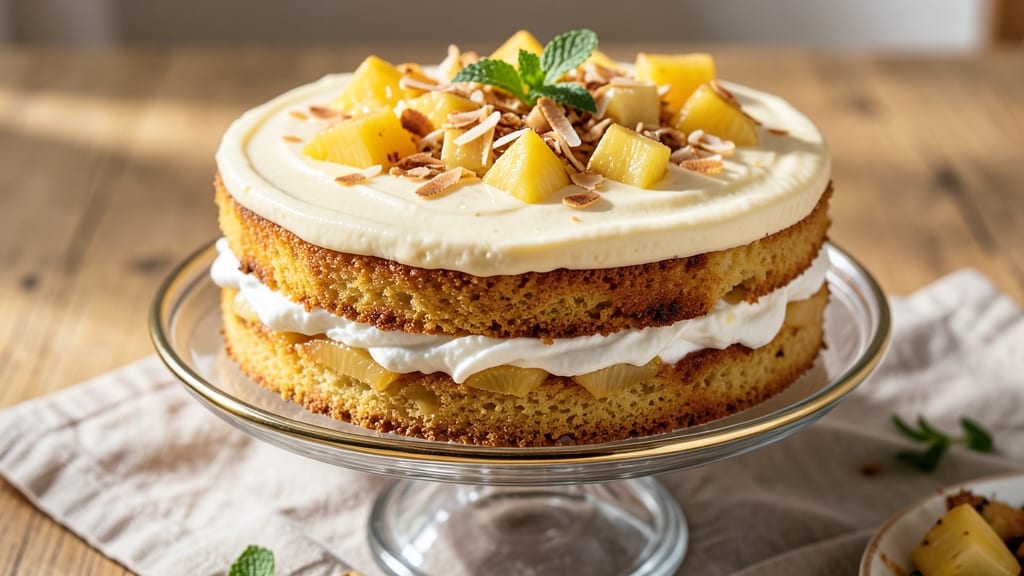
This ambrosia pineapple cake recipe delivers the perfect balance of tropical flavors and creamy coconut swirls in every slice. 🌴 The classic Southern dessert combines layers of moist pineapple cake, fluffy coconut cream, and marzipan, creating a texture that's both elegant and irresistibly indulgent.
I've perfected this recipe over years of baking, ensuring each component comes together flawlessly for a showstopping dessert.
The secret to this cake lies in its layers: a tender pineapple-infused cake base, a luscious coconut cream filling, and a smooth marzipan layer that adds a delicate sweetness. Baking at 350°F ensures the cake stays moist while developing a perfect golden-brown crust.
Chilling between layers is crucial—it prevents the filling from sliding and guarantees clean, professional-looking slices every time.
What makes this recipe truly special is the creamy coconut swirl that ties everything together. The combination of toasted coconut, fresh pineapple, and vanilla-infused whipped cream creates a flavor profile that's both nostalgic and sophisticated.
Each bite delivers a harmonious blend of textures—soft cake, velvety cream, and a hint of citrusy pineapple.
This cake is ideal for celebrations, family gatherings, or even a special treat for yourself. The assembly process is straightforward once you've baked the layers, and the final result is a dessert that looks as impressive as it tastes. Let's get started on creating your own tropical masterpiece!
Ingredients for ambrosia cake recipe pineapple
Twelve ingredients create layers of tropical elegance—moist pineapple cake, velvety coconut cream, and marzipan perfection.
| Ingredient | Amount | Notes |
|---|---|---|
| All-Purpose Flour 🌾 | 2 ½ cups | Sifted for light texture |
| Granulated Sugar 🍚 | 2 cups | White or light brown |
| Unsalted Butter 🧈 | 1 ½ cups | Room temperature, softened |
| Large Eggs 🥚 | 4 whole | Room temperature, separated |
| Vanilla Extract 🌿 | 2 tsp | Pure Madagascar bourbon |
| Baking Powder 🧂 | 2 tsp | Diamond Crystal preferred |
| Salt 🧂 | ½ tsp | Fine sea salt |
| Crushed Pineapple 🍍 | 1 ½ cups | Drained, unsweetened |
| Sweetened Coconut Flakes 🥥 | 1 cup | Toasted lightly |
| Marzipan 🍬 | 16 oz | Store-bought or homemade |
| Heavy Whipping Cream 🥛 | 2 cups | Cold, full-fat preferred |
| Powdered Sugar 🍚 | 3 cups | For meringue |
| Shredded Coconut 🥥 | 1 cup | Sweetened, for garnish |
| Fresh Pineapple Chunks 🍍 | 1 ½ cups | For garnish, optional |
The marzipan is non-negotiable for that delicate sweetness. Ghirardelli or Wilton brands deliver consistent quality, but homemade works beautifully too. For the coconut cream, full-fat heavy whipping cream is essential—it whips to silky perfection. The pineapple should be freshly crushed (canned works in a pinch) and drained thoroughly to avoid a soggy cake. Toasting the coconut flakes in a dry pan for 3-4 minutes enhances their aroma significantly. King Arthur flour is ideal for the cake base, but any high-quality all-purpose will suffice.
No marzipan? Almond paste mixed with powdered sugar mimics the texture, though it lacks the refined taste. Substituting coconut milk for cream in the filling? Add 1 tsp xanthan gum to stabilize it. Fresh pineapple unavailable? High-quality canned pineapple (like Del Monte Gold) works, but reduce added sugar by half. For the meringue, powdered sugar must be sifted to avoid lumps—use a fine-mesh sieve. The cake layers should be baked just until golden (not overdone) to maintain moisture. Chill them completely before assembly to prevent sliding.
Store marzipan and coconut flakes in airtight containers at room temperature for up to 6 months. The cake layers keep 3 days refrigerated, wrapped tightly. For the coconut cream filling, whip it last-minute—it loses stability after 4 hours. Assemble the cake 24 hours ahead for cleaner slices; store wrapped at room temperature. Garnishes like pineapple chunks and toasted coconut last 2 days refrigerated, but add them fresh before serving for optimal presentation.
Why You'll Love This Recipe
- No-Fuss Layers: I swear by this cake because the layers are foolproof—just fold in the whipped cream and crushed pineapple, then stack. No piping skills needed, no stress over crumbs. The buttercream holds everything together like magic (and it’s just butter, sugar, and vanilla—no shortcuts).
- Tropical in Minutes: That first bite of pineapple-soaked cake with the creamy frosting? It’s like a vacation in your mouth. The vanilla extract deepens the flavor, and the pineapple’s tang cuts through the richness. Honestly, it’s the kind of dessert that makes people ask, “What’s in this?”
- Party or Picnic: This cake travels beautifully—no cake stand required. Slice it into squares, pack it in a cooler, and it’s still perfect for a beach day or potluck. (Yes, even on a Tuesday night when you just want something special but don’t want to slave away.)
- Budget Magic: Flour, sugar, butter—these are pantry staples. The pineapple adds a pop of flavor without breaking the bank, and leftovers? They disappear faster than you can say “second helping.” My wallet and my guests thank me every time.
Step-by-step instructions for tropical layers with creamy coconut swirls
Layering technique and precise timing create this cake's signature texture.
👨🍳 Step 1: Prepare the Cake Batter and Marzipan Filling
Preheat your oven to 350°F and grease three 9-inch round cake pans with butter, then line the bottoms with parchment paper. In a stand mixer fitted with the paddle attachment, cream together the 1.5 cups unsalted butter and 2 cups granulated sugar on medium speed for 3-4 minutes until light and fluffy. This step incorporates air for that signature tender crumb.
Add the 4 whole large eggs one at a time, mixing just until each is incorporated. Scrape down the sides of the bowl, then add the 2 tsp vanilla extract, 2.5 cups sifted all-purpose flour, 2 tsp baking powder, and 0.5 tsp salt. Mix on low speed just until combined—overmixing develops gluten and makes the cake dense. In a separate bowl, combine the 1.5 cups crushed pineapple (drained well) with 1 cup sweetened coconut flakes for the filling.
🥘 Step 2: Layer and Swirl for Signature Texture
Divide the batter evenly among the three prepared pans. For the first layer, simply pour about ⅓ of the batter into each pan. For the second layer, spread about ½ of the pineapple-coconut mixture evenly over the first layer in each pan. Then add another ⅓ of the batter.
Here's where the magic happens: For the final layer, spread the remaining pineapple-coconut mixture evenly over the second batter layer in each pan. Using an offset spatula, gently swirl the mixture in circular motions to create marbled patterns. This creates those beautiful tropical swirls throughout each slice.
🔥 Step 3: Bake to Golden Perfection
Bake the cakes for 25-30 minutes or until a toothpick inserted into the center comes out clean. Rotate the pans halfway through baking for even browning. The cakes should be golden on top with slightly domed centers—this indicates proper doneness. Let the cakes cool in their pans for 10 minutes, then transfer to a wire rack to cool completely.
While the cakes cool, prepare the marzipan topping. Roll out the 16 oz marzipan on a lightly floured surface to about ⅛-inch thickness. Cut into circles slightly larger than your cake layers. Brush the tops of each cooled cake layer with a thin layer of heavy whipping cream, then place a marzipan circle on top, pressing gently to adhere.
🍳 Step 4: Assemble with Creamy Frosting
In a chilled bowl, whip the 2 cups heavy whipping cream with 3 cups powdered sugar until stiff peaks form. This will be your signature creamy frosting. Place one cake layer on a serving plate and spread a generous layer of the whipped cream on top. Repeat with the remaining layers, creating a tower.
Spread the remaining whipped cream over the entire cake, then decorate with 1 cup shredded coconut and 1.5 cups fresh pineapple chunks. For extra flair, pipe additional whipped cream around the edges. Chill the cake in the refrigerator for at least 2 hours before serving to allow the flavors to meld and the frosting to set properly.
Pro Tips For Making Ambrosia Cake Recipe Pineapple
- Use Room-Temp Butter: I learned this the hard way—cold butter in ambrosia cake means lumpy batter and a dense crumb. Take the butter out of the fridge 30 minutes before you start, or even better, microwave it for 10 seconds to soften it just enough to mix smoothly. The cake will thank you with a lighter texture.
- Sift the Flour Twice: Skipping this step is how you end up with a cake that looks like it’s got rocks in it. Ambrosia cake relies on a tender crumb, so sift the flour before measuring and again when you’re mixing it with the dry ingredients. Yes, it’s extra work, but it makes a real difference—especially if you’re using a higher-altitude oven.
- Don’t Overmix the Batter: I used to beat the batter until it looked like it could stand on its own, and every time, the cake turned out tough. Stop mixing as soon as the flour is just incorporated—you should still see little streaks of white. Overmixing develops the gluten, and that’s the last thing you want in a pineapple ambrosia cake.
- Add the Pineapple Last: This isn’t just about layering—it’s about keeping the fruit fresh. If you fold the pineapple into the batter too early, the acid in it will start breaking down the eggs and butter, making the cake dense. Wait until you’ve mixed the dry and wet ingredients, then gently fold it in at the very end. The cake will stay moist, and the pineapple flavor will pop.
Regional styles of these flavors
Southern Classic Roots
This ambrosia cake traces its origins to the American South, where it became a staple at family gatherings and church socials. The original version often featured marzipan (imported from Europe) layered with coconut cream—a nod to colonial trade influences.
I remember my grandmother's recipe called for hand-crushed pineapple and toasted coconut, which she'd toast in a cast-iron skillet until golden. The cake's name "ambrosia" reflects its divine, almost heavenly flavor profile. 🌴
In the Deep South, variations often included bourbon-soaked cherries or orange zest to complement the tropical notes. Some recipes even used chiffon cake layers for extra lightness. The marzipan layer was traditionally reserved for special occasions, as it required imported ingredients.
Today, you'll find this cake at Southern weddings and holiday dinners, though modern bakers often simplify the marzipan with almond paste.
Caribbean Fusion Twist
Island-inspired adaptations swap marzipan for rum-soaked coconut cream or guava paste, adding a boozy depth. In Puerto Rico, you might find versions with mamey sapote or soursop puree folded into the batter.
I tried a Bahamian variation that replaced pineapple with passion fruit curd—the tangy contrast was incredible. Toasted macadamia nuts often garnish these versions for extra crunch. 🥥
The Caribbean approach leans into spiced rum (like Appleton Estate) infused into the coconut cream. Some recipes call for grated coconut mixed with cinnamon and nutmeg for warmth.
For a fusion twist, try adding lime zest to the pineapple layer—it brightens the flavors beautifully. These versions are perfect for tropical-themed parties or summer potlucks.
Modern Minimalist Approach
Contemporary bakers often simplify the classic by using store-bought marzipan (like Wilton) and pre-whipped coconut cream. Some even replace the marzipan entirely with cream cheese frosting for a lighter texture.
I've seen vegan versions using coconut yogurt and aquafaba (chickpea brine) for the meringue. The key is maintaining the pineapple-coconut swirl for that signature look. 💫
For a gluten-free adaptation, substitute the flour with a 1:1 blend (like Bob's Red Mill) and use gelatin instead of whipped cream for stability. The cake layers will be slightly denser but still delicious.
Another modern hack: bake the cake in a springform pan for easier assembly—no need to stack three separate layers. This approach works well for busy weeknight desserts or small gatherings.
Midwest Homestyle Variations
In the Midwest, ambrosia cake often takes on a rustic charm with oatmeal crumbles on top or walnut pieces folded into the batter. Some recipes use applesauce instead of pineapple for a spiced apple-coconut twist.
I grew up with a version that included cinnamon-sugar toasted coconut on the sides—it added a delightful crunch. 🍎
For a Midwestern touch, try adding caramelized onions to the pineapple layer or pecan praline pieces for texture. The climate's cooler temperatures make this cake a winter favorite, often served with hot spiced tea or coffee.
These versions are heartier and less sweet than Southern originals, making them perfect for holiday buffets or family dinners.
Nutrition facts
Frequently asked questions
Can I substitute fresh pineapple for the crushed canned version?
Fresh pineapple adds vibrant flavor, but you'll need to adjust the moisture. Use 1.5 cups finely diced fresh pineapple (about half a small pineapple) and drain it thoroughly for 10 minutes in a colander. For extra sweetness, sprinkle with 1 tsp sugar while draining. Fresh pineapple has more liquid than canned, so this prevents a soggy cake.
Why does my ambrosia cake turn out dense instead of light?
Overmixing the batter is the #1 culprit—stop mixing as soon as the flour disappears. Also ensure your butter is room temperature (pressable but not melted) and eggs are separated (adding yolks last prevents curdling). Another tip: don't overfill the pans—fill them only ⅔ full. For extra lightness, fold ½ cup whipped egg whites into the batter before baking.
How can I make this cake gluten-free?
Replace the all-purpose flour with a 1:1 gluten-free baking blend (like Bob's Red Mill) and add ½ tsp xanthan gum to improve structure. For the coconut cream, use gelatin (1 packet + 2 tbsp water) instead of whipped cream—it stabilizes better. Chill the cake layers 1 extra hour before assembly. The texture will be slightly denser but still delicious.
Can I make this cake ahead of time?
This cake actually tastes better the next day! Assemble it completely (including toppings) and refrigerate for 24 hours before serving. The flavors meld beautifully, and the coconut cream sets perfectly. For storage, cover tightly with plastic wrap and keep refrigerated for up to 5 days. Bring to room temperature before slicing for clean cuts.
What's the best way to serve ambrosia cake?
Serve at room temperature for the best texture contrast—cool cake with creamy filling. For a tropical presentation, garnish with toasted coconut flakes and fresh mint leaves. Pair with vanilla bean ice cream or a rum cocktail> (like a Dark 'n' Stormy) for an adult twist. The cake also freezes beautifully—slice and freeze individual portions for quick dessert solutions.