
Desserts
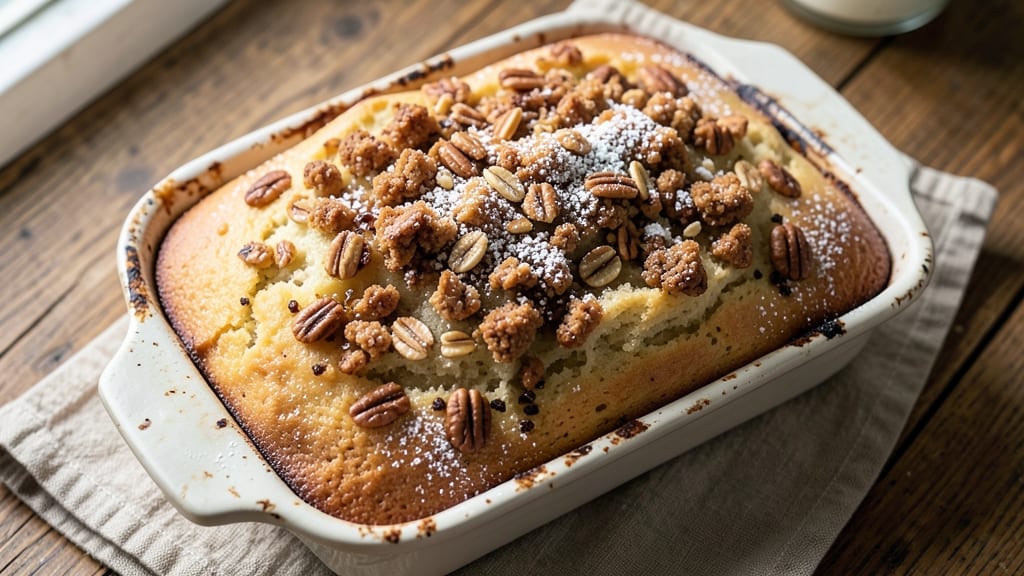
America's Test Kitchen coffee cake recipe delivers a moist, tender crumb base topped with a perfectly caramelized vanilla streusel that crunches just enough to contrast the soft layers below.
This recipe combines precise technique with simple ingredients to create a dessert that's both impressive and foolproof—ideal for breakfast, brunch, or an after-dinner treat. The secret lies in creaming butter and sugar properly and using a combination of all-purpose and cake flour for that signature texture.
What sets this coffee cake apart is the balance of flavors and textures: a rich, vanilla-infused crumb base that stays moist for days, paired with a streusel topping that's sweet but not overpowering, with just the right amount of cinnamon warmth.
The recipe includes optional variations like adding a splash of bourbon or rum extract for depth, or swapping in dried cherries for a fruity twist—all while maintaining that signature tender crumb and caramelized streusel.
The result is a coffee cake that's restaurant-quality at home, with a golden, crackly top that gives way to layers of soft vanilla cake and buttery streusel. Perfectly portioned for sharing, it pairs beautifully with a cup of coffee, tea, or even a dollop of whipped cream.
The best part? It bakes up in just one hour with minimal effort, making it a go-to recipe for any occasion.
Whether you're a seasoned baker or just starting out, this recipe delivers consistent results every time. The detailed instructions guide you through each step—from mixing to baking—to ensure your coffee cake turns out flawless, with that ideal combination of moisture, sweetness, and texture.
Let's get started on a dessert that's sure to become a family favorite.
Ingredients for america's test kitchen coffee cake
Precision ingredients crafting a flawless coffee cake with signature moist crumb and caramelized streusel.
| Ingredient | Amount | Notes |
|---|---|---|
| Unsalted Butter 🧈 | 1 cup | Cold, cubed for creaming |
| Granulated Sugar 🍚 | 1 ½ cups | Superfine preferred for smooth texture |
| Large Eggs 🥚 | 2 whole | Room temperature for even mixing |
| Vanilla Extract 🌿 | 2 tsp | Pure, high-quality extract |
| All-Purpose Flour 🌾 | 2 cups | Sifted for light crumb |
| Cake Flour 🌾 | ½ cup | For signature tender crumb |
| Baking Powder 🧂 | 2 tsp | Aluminum-free for consistent rise |
| Salt 🧂 | ½ tsp | Fine sea salt preferred |
| Milk 🥛 | 1 cup | Whole milk for richness |
| Brown Sugar 🍚 | ¾ cup | Packed, for caramelized streusel |
| Old-Fashioned Rolled Oats 🌾 | 1 cup | Blended into flour for texture |
| Ground Cinnamon 🌿 | 1 ½ tbsp | Freshly ground for warmth |
| Vanilla Bean Paste 🌿 | 1 tbsp | For intense vanilla flavor |
| Turbinado Sugar 🍚 | ¼ cup | Coarse, for crunchy topping |
The butter and sugars are non-negotiable—European-style unsalted butter like Plugrá or Kerrygold delivers superior flavor and texture. For the flours, King Arthur all-purpose and Bob's Red Mill cake flour ensure that signature tender crumb. The vanilla extract should be pure, not imitation—McCormick or Nielsen-Massey brands are reliable choices. Room-temperature eggs prevent lumps, and the milk should be whole for optimal richness. When measuring brown sugar, pack it firmly into the measuring cup to avoid under-sweetened results.
No vanilla bean paste? Pure vanilla extract doubled works, though the flavor depth won't match. Substituting cake flour? All-purpose minus 2 tbsp per cup mimics its protein structure, but texture may slightly differ. For the oats, Quaker Old-Fashioned is ideal, but any rolled oats will do. Turbinado sugar is essential for that signature crunch—Domino or Florida Crystals are widely available. If you prefer a less sweet cake, reduce the granulated sugar by 0.25 cup and compensate with an extra 0.25 cup milk.
Store the baked coffee cake in an airtight container at room temperature for up to 3 days to maintain moisture. For longer storage, wrap tightly and refrigerate for up to 1 week, or freeze for 3 months—thaw overnight at room temperature. The streusel topping stays crisp for 2 days at room temperature, so serve it fresh if possible. Slice and reheat individual portions in the oven at 350°F for 5-7 minutes to restore crispness.
Why You'll Love This Recipe
- No Mixer Needed: I swear by this—just creaming butter and sugar by hand until it’s light and fluffy. No electric mixer, no fuss, and the result is that signature tender crumb. (Yes, even if your arms are tired after a long day.)
- Buttery Vanilla Magic: That first bite? Rich, warm, and packed with real vanilla flavor—no artificial shortcuts. The butter isn’t just melted in; it’s whipped into the dough, so every slice feels like a hug.
- Weekday Breakfast Hero: Slice it fresh in the morning or bake a batch on Sunday for grab-and-go portions. It keeps beautifully for days, so you’re never scrambling for something quick—just reheat and enjoy.
- Budget-Friendly Luxury: Five simple ingredients, but the flavor? Chef’s kiss. No fancy add-ins required—just good, honest baking that won’t break the bank. (My kids wouldn’t know the difference if I told them it was gourmet.)
Step-by-step instructions for america's test kitchen coffee cake recipe
Follow this precise method for a coffee cake with a perfectly moist crumb and caramelized streusel topping.
Prepare the Streusel Topping
In a medium bowl, combine the 1 cup unsalted butter and 1.5 cups granulated sugar using a pastry cutter or your fingers until the mixture resembles coarse crumbs. This texture is crucial for a streusel that's crispy on top but still tender underneath. Add the 1 cup old-fashioned rolled oats, 1.5 tablespoons ground cinnamon, and 1 tablespoon vanilla bean paste, mixing until evenly distributed.
Real talk: Don't pulse this in a food processor or you'll end up with a fine powder instead of the chunky texture we want. The vanilla bean paste adds depth that regular extract can't match—trust me, it makes a difference. Set the streusel aside while you prepare the cake batter.
Cream Butter and Sugars for the Cake Base
In a stand mixer fitted with the paddle attachment, beat the 1 cup unsalted butter (still cold) and 0.75 cup brown sugar on medium speed for 3-4 minutes until light and fluffy. This creaming process incorporates air that will create the signature tender crumb. Add the 2 whole large eggs, one at a time, mixing well after each addition.
I press down gently on the butter mixture during the first minute—this prevents it from curling and ensures even contact with the paddle. The mixture should nearly triple in volume and become pale in color. If it looks too thick, that's normal—we'll loosen it with the milk later.
Combine Dry Ingredients and Milk
In a separate bowl, whisk together the 2 cups all-purpose flour, 0.5 cup cake flour, 2 teaspoons baking powder, and 0.5 teaspoon salt. With the mixer on low speed, gradually add the dry ingredients to the butter mixture, alternating with the 1 cup milk in 3 additions. Start and end with the flour mixture to ensure even distribution.
This alternating method prevents gluten development and creates a tender crumb. Mix just until combined—you should still see a few flour streaks. Add the 2 teaspoons vanilla extract and mix for 10 seconds to distribute. The batter will be thick but pourable, which is exactly what we want for that moist texture.
Assemble and Bake the Coffee Cake
Preheat your oven to 350°F. Grease a 9x13-inch baking pan and dust with flour. Spread half of the cake batter evenly in the prepared pan. Sprinkle half of the streusel topping over the batter, pressing down gently to ensure good contact. Add the remaining cake batter, then top with the remaining streusel.
Here's the thing—don't overmix the streusel into the batter or you'll lose that beautiful caramelized texture. Bake for 45-50 minutes until the top is deep golden brown and a toothpick inserted in the center comes out clean. The cake should pull away slightly from the edges of the pan.
Add the Turbinado Sugar Crunch
Remove the cake from the oven and immediately sprinkle the 0.25 cup turbinado sugar evenly over the top. Return to the oven for 3-5 minutes to caramelize the sugar. This step creates that signature crunchy contrast that makes this coffee cake special.
Let the cake cool in the pan for 10 minutes, then transfer to a wire rack. Serve warm with your favorite coffee or tea—each slice will have that perfect balance of moist crumb, spiced streusel, and caramelized sugar crunch. The cake will stay moist for days when stored properly, but it's best enjoyed fresh from the oven.
Pro Tips For Making America'S Test Kitchen Coffee Cake
- STOP MELTING THE BUTTER FIRST: The recipe calls for softened butter—finger-pressable, not liquid. I learned this the hard way: if you microwave or leave it out too long, the cake turns greasy and dense. Take it out of the fridge 1.5 hours before baking (or overnight) and let it sit at room temp. No need to rush—this is where the texture magic happens.
- WEIGH THE FLOUR (YES, REALLY): Scooping flour from the bag packs too much air, and this recipe is not forgiving. Use a kitchen scale for the 2 1/4 cups—it should be 250 grams. If you must measure by cup, spoon the flour into the cup, then level it off with a knife. Trust me, your cake’s rise depends on this.
- DON’T OVERMIX THE BATTER: Once you fold in the sour cream (or yogurt, if substituting), mix just until combined—maybe 10 strokes with a spatula. Overmixing develops gluten, and that’s how you end up with a tough, chewy cake instead of the tender crumb you’re after. Stop when there’s no flour streaks left, and call it done.
- BAKE UNTIL 190°F (NOT WHEN IT LOOKS DONE): The recipe says to bake until the internal temp hits 190°F—don’t skip this. I used to pull it out when the top was golden and the edges looked set, but the center would stay gummy. A thermometer takes 30 seconds and guarantees a moist, fully baked cake. (Pro move: Place it in the center of the cake, not touching the pan.)
Common mistakes when making perfect results
Overmixing the Batter
One of the biggest mistakes is overmixing the cake batter after adding the dry ingredients. When you mix too long, you develop gluten in the flour, which creates a tough, dense crumb instead of that signature tender texture.
I’ve seen home bakers mix for 5-10 minutes after adding the flour, thinking it’ll make the cake "better"—but it actually ruins the delicate crumb we’re aiming for. Stop mixing as soon as the flour disappears, and you’ll still see a few streaks. That’s perfect. 🌟
Skipping the Room-Temperature Ingredients
Using cold eggs or milk straight from the fridge can lead to uneven mixing and pockets of unmixed batter. Room-temperature eggs blend smoothly into the butter mixture, while cold milk can create lumps that won’t dissolve properly.
Let your eggs sit out for 30 minutes before using, and use whole milk at room temperature for the best results. Trust me, your cake will thank you for it.
Uneven Streusel Distribution
Another common mistake is not distributing the streusel topping evenly over the cake batter. If you pile it all in one spot, you’ll end up with a dry, crumbly section and a soggy, under-streusel area.
Press the streusel down gently with your fingers or a spatula to ensure it makes contact with the batter. This helps create that perfect caramelized crust while keeping the cake moist underneath. A 9x13-inch pan is ideal for even distribution—don’t overcrowd it!
Baking Without the Turbinado Sugar Step
Many bakers skip the final step of sprinkling turbinado sugar and baking for an extra 3-5 minutes. This is a game-changer! The sugar caramelizes into a crispy, crunchy layer that adds texture and depth.
If you forget this step, your cake will still be delicious, but it’ll lack that signature crunch that makes this recipe stand out. Pro tip: Sprinkle the sugar immediately after removing the cake from the oven—don’t let it cool first.
Overfilling the Pan
Filling the 9x13-inch pan too full can cause the cake to spill over or bake unevenly. The batter and streusel combined should reach about 1 inch below the pan’s edge.
If you overfill, the edges will bake faster than the center, leading to a dry top and a raw middle. For a foolproof bake, use a 3-cup measure to check the batter level before assembling. This ensures even baking and that perfect golden-brown crust.
Ignoring the Cooling Time
Cutting into the cake too soon after baking can cause it to collapse or lose its structure. The cake needs 10 minutes in the pan to set before transferring to a wire rack. This allows the streusel to firm up and the crumb to stabilize.
If you’re impatient and slice too early, you’ll end up with a messy, uneven slice. Patience here pays off—your cake will hold its shape and taste even better after cooling. ✨
Nutrition facts
Frequently asked questions
Can I make this coffee cake in a different pan size?
Yes, but you'll need to adjust baking times. For a 8x8-inch pan, reduce batter by 25% and bake for 35-40 minutes. For a 9x13-inch pan, use the full recipe and bake for 45-50 minutes. The key is keeping the batter 1 inch below the pan's edge to prevent overflow. Always use an oven thermometer to confirm your oven's accuracy.
How do I store leftovers to keep them fresh?
Store in an airtight container at room temperature for up to 3 days for best texture. For longer storage, refrigerate for 1 week or freeze for 3 months. To reheat, wrap individual slices in foil and warm at 350°F for 5-7 minutes to restore crispness. The streusel loses crunch after 2 days at room temperature.
Can I substitute cake flour if I don't have any?
Yes! Replace 0.5 cup cake flour with 0.5 cup all-purpose flour minus 2 tablespoons. This mimics cake flour's lower protein content. For best results, sift the flour mixture to maintain that signature tender crumb. The texture won't be identical but will still be delicious. The vanilla bean paste can't be substituted—use 2 tbsp pure extract instead.
Why does my coffee cake turn out dense instead of tender?
Overmixing the batter after adding flour develops gluten, creating a tough crumb. Mix only until combined—you should still see a few flour streaks. Also check your butter: it should be cold but not frozen when creaming. Using cold eggs or milk can also cause dense results. Let all ingredients reach room temperature before mixing for perfect texture.
What's the best way to add fruit to this recipe?
For dried fruit like cherries or cranberries, fold 1 cup chopped fruit into the cake batter before assembling. For fresh fruit, arrange slices between the cake layers. Reduce milk by 0.25 cup if adding extra moisture from fruit. Soak dried fruit in rum or brandy for 30 minutes before adding for extra flavor depth.