
Desserts
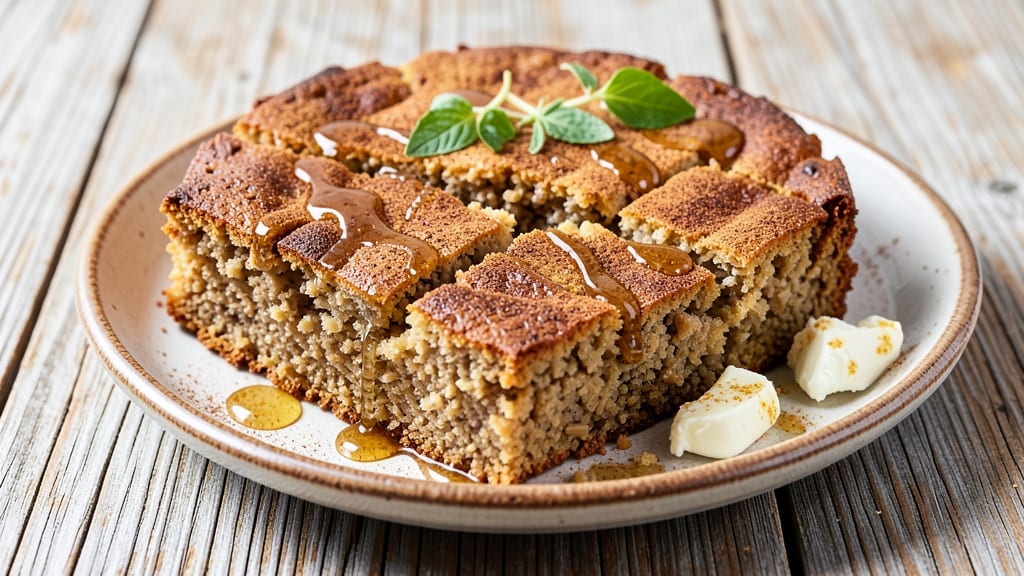
This ancient barley cake recipe bridges 3,000 years of tradition with modern baking precision—where nutty barley flour meets honey's golden sweetness in a chewy, hearty dessert. 🌾 The original Roman and Greek versions relied on open-hearth baking, but today's ovens deliver the same deep caramelized crust and tender crumb with just 45 minutes of active time.
What makes this recipe remarkable isn't just its history, but how it transforms simple ingredients into something that tastes like a lost civilization's treasure.
The secret lies in the barley flour's natural nuttiness, which develops even deeper flavor when combined with warm spices like cinnamon and cardamom—a nod to ancient trade routes. Unlike modern cakes, this version requires no refined sugar; honey provides the moisture and subtle complexity.
The texture is what truly sets it apart: chewy yet tender, with a slightly crisp edge that holds up perfectly for slicing. This isn't just dessert—it's a culinary time machine.
Modern adaptations make it accessible without sacrificing authenticity. The dough comes together in 10 minutes of mixing, then rests while you shape it into a round loaf or flatbread-style cake. Baking at 350°F ensures even heat distribution, while a honey glaze added post-bake creates that signature sheen.
The result? A cake that's rich enough for holiday tables but simple enough for weeknight baking. Every bite carries the weight of history—nutty, spiced, and impossibly satisfying.
For those curious about variations, this recipe works equally well as a savory flatbread (swap honey for olive oil and herbs) or a layered cake (add a lemon zest-infused batter between layers).
The beauty of ancient grains is their versatility—whether you're recreating a Roman feast or just craving something heartier than store-bought sweets. Let's bake history into your kitchen.
Ingredients for ancient barley cake
Ancient grains meet modern baking precision in this chewy, nutty barley cake—where history and texture collide.
| Ingredient | Amount | Notes |
|---|---|---|
| Barley Flour 🌾 | 2 ½ cups | Stone-ground for optimal texture |
| Honey 🍯 | 1 cup | Raw or wildflower preferred |
| Unsalted Butter 🧈 | ½ cup | Cold, cubed for mixing |
| Large Eggs 🥚 | 2 whole | Room temperature for even blending |
| Ground Cinnamon 🌿 | 1 ½ tsp | Freshly ground for aromatic depth |
| Ground Cardamom 🌿 | 1 tsp | Lightly toasted for enhanced flavor |
| Sea Salt 🧂 | ½ tsp | Fine grain for balanced seasoning |
| Vanilla Extract 🌸 | 1 tsp | Pure Madagascar preferred |
| Baking Soda 🧪 | ½ tsp | Pure, unadulterated |
| Whole Milk 🥛 | ½ cup | Full-fat for richness |
| Toasted Walnuts 🥜 | ½ cup | Chopped, for texture contrast |
| Lemon Zest 🍋 | 1 tbsp | Fresh, finely grated |
| Pistachios 🌰 | ¼ cup | Shell-on for presentation |
Barley flour is the heart of this recipe, and Bob's Red Mill or King Arthur brands deliver the most authentic texture. Look for stone-ground flour—it's worth seeking out at specialty grocers or online retailers like Amazon Fresh. The walnuts and pistachios add depth, so toast them lightly in a dry pan until fragrant before chopping. Freshly ground spices like cinnamon and cardamom elevate the flavor profile; Penzeys Spices offers excellent pre-ground options if you don't have a grinder. For the honey, local raw honey adds subtle floral notes that complement the barley's nuttiness—avoid overly processed varieties.
No barley flour? Substitute half with whole wheat flour, though texture will differ slightly. Running short on walnuts? Pecans or almonds work equally well, but toast them first. The honey can be swapped for maple syrup or agave nectar, though the flavor profile shifts toward caramel. For a gluten-free adaptation, use a 1:1 gluten-free flour blend like Bob's Red Mill 1-to-1. The butter must be cold when mixed—cut it into small cubes and let it sit at room temperature for 30 minutes before measuring. If you prefer a lighter texture, reduce the honey by 2 tablespoons and add 2 tablespoons of whole milk to the batter.
Store the cake in an airtight container at room temperature for up to 5 days, though it's best enjoyed within 2 days for optimal texture. For longer storage, wrap tightly in plastic and refrigerate for up to 1 week. The crust firmness increases with time, so reheat slices at 300°F for 5-10 minutes if serving cold. Freeze portions for up to 3 months—wrap individual slices in parchment paper before placing in a freezer bag. The pistachios and walnuts can be toasted and stored separately in the freezer for up to 6 months to preserve their freshness.
Why You'll Love This Recipe
- Here’s what sold me: this cake works for any meal. Serve it warm with butter for a hearty breakfast, or dust it with powdered sugar for an after-dinner treat. My kids grab slices for lunchboxes, and my partner eats it straight from the pan. No judgment here.
- Five-Ingredient Magic: I swear by this recipe because it’s that simple—just barley flour, honey, butter, eggs, and cinnamon. No fancy substitutions, no last-minute grocery runs. The dough comes together faster than you can say "ancient grains," and honestly? That’s half the battle won.
- Honey-Butter Bliss: The moment you bite into this cake, you’ll taste why it’s worth making. The barley flour gives it a nutty depth, while the honey and butter create this unexpected richness—like a cross between a scone and a cookie, but better. (Yes, even on a Tuesday night.)
- Breakfast or Dessert: Here’s what sold me: this cake works for any meal. Serve it warm with butter for a hearty breakfast, or dust it with powdered sugar for an after-dinner treat. My kids grab slices for lunchboxes, and my partner eats it straight from the pan. No judgment here.
Step-by-step instructions for ancient barley cake
Here's how to craft this nutty, chewy barley cake with ancient grain depth and perfect texture.
👨🍳 Step 1: Prepare the Wet Ingredients
In a medium mixing bowl, combine the 1 cup honey and 0.5 cup unsalted butter (cold, cubed). Microwave the butter in 10-second bursts until just softened but not melted. This creates tiny air pockets that contribute to the cake's signature chewiness.
Add the 2 whole large eggs (room temperature) one at a time, whisking vigorously after each addition until fully incorporated. The mixture should become pale and slightly thickened. Stir in the 1 tsp vanilla extract, 1 tbsp lemon zest, and 0.5 cup whole milk until smooth. Here's where the citrus brightness and floral vanilla notes begin to develop—they'll shine through in the final texture.
👨🍳 Step 2: Mix the Dry Components
In a separate large bowl, whisk together the 2.5 cups barley flour with the 1.5 tsp ground cinnamon, 1 tsp ground cardamom, 0.5 tsp sea salt, and 0.5 tsp baking soda. The stone-ground barley flour should be sifted lightly to prevent clumping—this ensures even distribution throughout the batter. The spices should be freshly ground to maximize their aromatic depth.
Gently fold in the 0.5 cup toasted walnuts and 0.25 cup pistachios (shell-on for presentation) using a silicone spatula. Be careful not to overmix at this stage—just combine until the nuts are evenly distributed. The toasted walnuts add crunch while the pistachios provide a delicate floral note that complements the barley's earthiness.
🥘 Step 3: Combine Wet and Dry Ingredients
Gradually pour the wet mixture into the dry ingredients while folding gently with the spatula. Mix just until combined—you should still see some flour streaks. The barley flour has a higher protein content than wheat flour, so it develops gluten more quickly. Overmixing will create a tougher texture, which defeats the purpose of this ancient grain cake.
Once combined, let the batter rest for 10 minutes at room temperature. This resting period allows the barley flour to fully hydrate and the gluten strands to relax slightly. You'll notice the batter becomes slightly thicker during this time—this is normal and indicates proper preparation for the cake's signature chewy texture.
🔥 Step 4: Bake to Golden Perfection
Preheat your oven to 350°F and line an 8-inch round cake pan with parchment paper. Pour the batter into the prepared pan and smooth the top with a spatula. The batter will be thick but should spread evenly—don't worry if it doesn't fill the pan completely.
Bake for 40-45 minutes until a toothpick inserted in the center comes out clean and the edges are deep golden brown. The top should have a slightly cracked appearance, which indicates proper moisture evaporation. The cake will continue to set as it cools, so remove it from the oven when it's just barely done.
⏰ Step 5: Cool and Serve
Allow the cake to cool in the pan for 15 minutes before transferring it to a wire rack to cool completely. The residual heat will continue to develop the flavors, and the cake will firm up slightly as it cools. This resting period is crucial for achieving the perfect balance of chewiness and tenderness.
Once completely cooled, slice into 8 equal wedges and serve at room temperature. The cake should have a dense, moist crumb with visible nut pieces throughout. Each bite should deliver a harmonious blend of barley's earthy sweetness, honey's floral notes, and the bright citrus finish from the lemon zest—a perfect representation of ancient grain baking techniques.
Pro Tips For Making Ancient Barley Cake
- STIR THE FLOUR FIRST: Barley flour is dense—don’t just dump it in and mix. Whisk it with the cinnamon and a pinch of salt before adding wet ingredients, or you’ll end up with lumps that turn into dry pockets. I learned this the hard way when my first batch had a weird, gummy texture.
- USE ROOM-TEMP BUTTER: Cold butter from the fridge will make your cake crumble like brittle bread. Let it sit out for 30 minutes (or microwave for 10 seconds) until it’s soft but not melted—this ensures a tender crumb without turning the cake greasy. Yes, even if you’re impatient like me.
- DON’T OVERMIX THE BATTER: Barley flour develops gluten fast, and once you start folding in eggs, stop when the batter is just combined. Overmixing makes the cake tough and dense. I used to beat it like I was kneading dough—now I count to 10 after the last flour disappears.
- BAKE UNTIL GOLDEN, NOT JUST SET: The cake will look done at 325°F (160°C) but needs another 5–7 minutes until the top is deep golden, not pale. A toothpick should come out clean, but if it’s crumbly with wet bits, keep baking—barley flour stays moist longer than wheat flour. (Your future self will thank you.)
Make-ahead tips for this ancient barley cake
Prep Ahead Strategy
This barley cake thrives with advance preparation—mix the batter up to 24 hours ahead and refrigerate in an airtight container. The flavors deepen overnight, and the barley absorbs moisture more evenly.
When ready to bake, let the batter sit at room temperature for 30 minutes before shaping. This resting period prevents cracking during baking. 🌾
Batter Storage Tips
For longer storage, divide the batter into two quart-sized freezer bags and freeze flat for up to 3 months. Thaw overnight in the refrigerator before baking.
I always label my bags with the date—trust me, you'll forget! The texture remains perfect when baked from frozen, though baking time increases by 10-15 minutes.
Nut Prep Shortcut
Toast and chop the walnuts and pistachios a week ahead and store them in separate airtight containers in your pantry. They stay fresh for 6 months this way, and you'll always have them ready for baking.
I keep mine in small mason jars with tight-sealing lids for easy access. The toasted aroma alone makes my kitchen smell like a bakery. 🥜
Make-Ahead Glaze
Prepare the honey glaze 3 days in advance by combining ½ cup honey with 1 tbsp lemon juice and ½ tsp vanilla extract. Store in a small jar in the fridge.
Brush it on cooled cake just before serving—it adds that signature shine and extra citrus brightness. The glaze keeps well for up to 2 weeks refrigerated.
Portion Control
Slice the cake into 8 equal wedges immediately after cooling and store them individually wrapped in parchment paper. This prevents drying and makes serving effortless. I like to stack them in a clear plastic container with parchment between layers for easy grab-and-go dessert.
Each slice stays fresh for 5 days at room temperature.
Freezer-Friendly Slices
For individual portions, wrap cooled slices in plastic wrap followed by aluminum foil. These freeze beautifully for 3 months and reheat perfectly in a 300°F oven for 5-7 minutes.
The texture remains chewy, and the flavors are just as vibrant as fresh-baked. I often prepare a batch of these for quick breakfasts or after-dinner treats. ✨
Nutrition facts
Frequently asked questions
What makes this barley cake different from modern wheat-based cakes?
This ancient barley cake uses stone-ground barley flour for its signature nutty, earthy flavor and chewy texture—unlike light, airy wheat cakes. The recipe also relies on natural sweeteners like honey instead of refined sugar, and warm spices like cinnamon and cardamom reflect traditional trade routes. Barley's higher protein content creates a denser crumb that holds up beautifully when sliced.
Can I make this cake without an oven?
For a more authentic ancient approach, shape the batter into a flatbread and cook it on a preheated skillet over medium heat for 3-4 minutes per side. You can also bake it in a clay pot over an open flame or campfire (about 20-25 minutes). The texture will be slightly denser but equally delicious.
Why does the recipe call for resting the batter?
The 10-minute rest allows the barley flour to fully hydrate and relax its gluten structure, preventing a tough texture. This step mimics ancient baking techniques where doughs were often left to rest before shaping. The batter will thicken slightly during this time—this is normal and ensures the perfect chewy crumb.
What's the best way to store leftovers?
Wrap cooled slices in plastic wrap and store in an airtight container at room temperature for 5 days. For longer storage, freeze individual portions for up to 3 months. To reheat, warm at 300°F for 5-7 minutes to restore the chewy texture. The cake actually improves overnight as flavors meld!
Can I substitute barley flour with other grains?
For best results, stick with barley flour for its unique flavor, but you can mix half with whole wheat flour if needed. For a gluten-free version, use a 1:1 gluten-free flour blend—just note the texture will be slightly denser. Rye flour also works well but adds a deeper, slightly sour note that complements the honey beautifully.