
Desserts
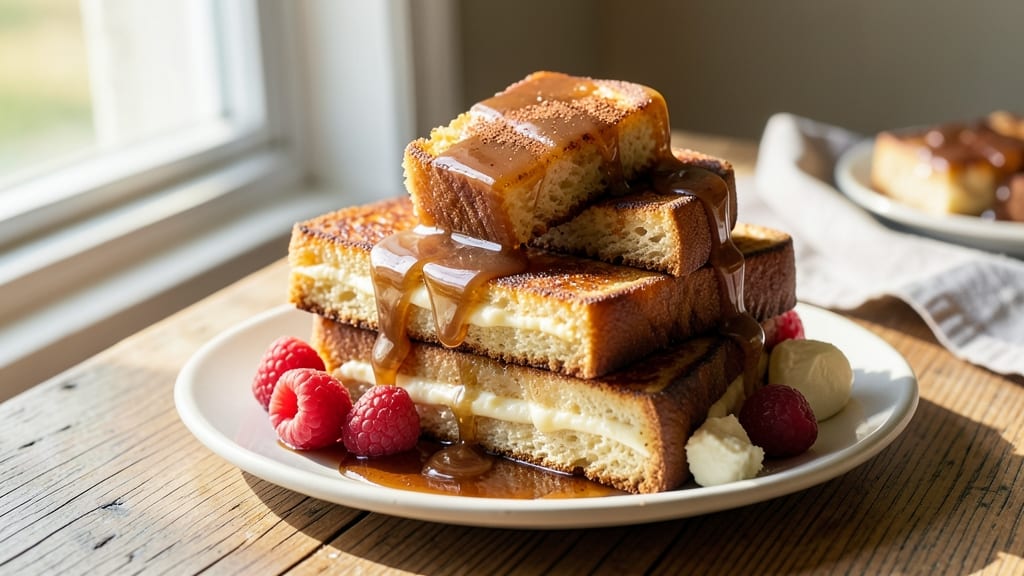
Transforming leftover angel food cake into this fluffy French toast is a game-changer that turns breakfast into dessert. The secret lies in a perfectly balanced soak—vanilla cake absorbs the cinnamon-infused batter just enough to stay tender yet sturdy, while pan-frying in butter creates golden, crisp edges.
I developed this recipe after burning through three batches of overly soggy French toast, and now it’s a foolproof method that delivers restaurant-quality results every time.
The magic happens in the batter: a simple mix of eggs, milk, vanilla, and cinnamon that soaks into the cake’s delicate crumb without making it heavy.
Cooking in butter (not oil) adds richness and that signature caramelized flavor, while a light dusting of powdered sugar transforms each bite into a cloud of vanilla-cinnamon bliss. This isn’t just French toast—it’s a dessert that feels like a hug.
What makes this recipe special is the balance: crispy edges that shatter slightly with each bite, a tender interior that stays moist, and a fragrant aroma that fills your kitchen. The best part?
It’s vegetarian-friendly (assuming you use dairy butter) and takes just 15 minutes to transform stale cake into something extraordinary. Serve with fresh berries or a drizzle of maple syrup for the full experience.
Pro tip: For extra fluffiness, let the soaked cake rest for 5 minutes before cooking—this ensures even absorption and prevents a gummy texture. The result is a dish so delicious, you’ll want to make it for brunch and dessert. Let’s get started!
Ingredients for angel food cake french toast
Here's what you'll need to transform angel food cake into decadent French toast clouds.
| Ingredient | Amount | Notes |
|---|---|---|
| Angel Food Cake 🍰 | 1 whole | Stale or day-old preferred |
| Large Eggs 🥚 | 4 whole | Room temperature for even soak |
| Whole Milk 🥛 | 1 cup | Cold for better texture |
| Pure Vanilla Extract 🍯 | 1 tbsp | High-quality for authentic flavor |
| Ground Cinnamon 🌿 | 1 tsp | Freshly ground preferred |
| Unsalted Butter 🧈 | 4 tbsp | European-style preferred |
| Powdered Sugar 🍚 | ¼ cup | Confectioners' sugar for dusting |
| Fresh Berries 🍓 | 1 cup | Optional for serving |
| Pure Maple Syrup 🍁 | ¼ cup | Grade A for drizzling |
| Diamond Crystal Kosher Salt 🧂 | ⅛ tsp | Fine grain preferred |
The angel food cake is the star—day-old works best since it's less delicate. Trader Joe's or Whole Foods carry the best quality pre-made cakes, but homemade is even better. Look for a cake that's slightly dry on the edges but still moist in the center. The eggs should be large and fresh—room temperature makes all the difference for even soaking. I always grab Organic Valley eggs when I can, but any quality brand works. For the milk, cold is key—it helps create that perfect crispy edge while keeping the interior tender.
No vanilla extract? Almond extract at half the amount works in a pinch, though it changes the flavor profile slightly. Swap whole milk for oat milk for a lighter texture, but expect slightly less crispiness. The cinnamon is non-negotiable—it's what transforms this into dessert. If you can't find freshly ground, Penzeys has excellent quality in their bulk section. For the butter, European-style melts better and adds richer flavor. Don't substitute margarine—it won't give you that signature caramelized crust. The powdered sugar should be confectioners' sugar, not regular granulated.
Store any leftover cake in an airtight container for up to 3 days—it actually tastes better the next day. The French toast itself reheats beautifully in a skillet with a little extra butter. For make-ahead prep, soak the cake in the batter and refrigerate overnight, then cook fresh in the morning. The syrup and berries keep for 5 days in the fridge, but fresh is always better. This recipe makes enough for brunch or dessert—just double the batter if you're feeding a crowd.
Why You'll Love This Recipe
- No Cake Left Behind: I swear by this trick—using stale angel food cake means no wasted grocery money. Just slice, soak, and fry; no baking required. Honestly, it’s my secret for turning dry cake into something luscious.
- Vanilla-Cinnamon Magic: That warm vanilla-milk soak plus a dusting of cinnamon? It’s like dessert for breakfast, but make it better. The cake absorbs the flavor without getting soggy—just the right amount of sweetness and spice.
- Weekend Brunch Star: Serve it with berries and maple syrup for a crowd, or keep it simple for lazy mornings. Between us, it’s the only French toast I’ll make when company’s coming—because it’s fancy enough to impress, but still feels homemade.
- Zero-Guilt Leftovers: The batter keeps overnight, and the toast reheats beautifully. I’ve packed these for lunches (yes, even on a Tuesday night) because they’re light enough to eat without feeling weighed down. Budget win, too—uses pantry staples.
Step-by-step instructions for angel food cake French toast
Transform delicate angel food cake into decadent French toast with this foolproof method.
Prepare the Soaking Mixture
In a shallow baking dish large enough to hold the angel food cake in a single layer, whisk together the 4 whole large eggs until they're completely smooth. Add the 1 cup whole milk, 1 tbsp pure vanilla extract, and 0.125 tsp diamond crystal kosher salt, whisking continuously until fully combined. The mixture should be pale yellow and completely homogeneous.
Next, add the 1 tsp ground cinnamon and whisk again to distribute evenly. This spice blend is what transforms ordinary French toast into something extraordinary. For extra richness, melt the 4 tbsp unsalted butter in a microwave-safe bowl in 10-second intervals, stirring between each interval, until fully melted but not hot. Let it cool slightly before whisking it into the egg mixture. This butter infusion creates a velvety texture that sets this version apart.
Soak the Cake Evenly
Cut the 1 whole angel food cake into 4 equal rectangles (about 1.5 inches wide) using a serrated knife. For even soaking, make sure each piece is the same thickness. Place the cake pieces in the baking dish and gently press down to ensure they make contact with the soaking mixture on all sides. Let them soak for 10 minutes, turning once halfway through.
Here's the thing—don't rush this step. The cake needs time to absorb the custard mixture thoroughly. You'll know it's ready when the cake pieces feel heavy and have absorbed about 75% of the liquid. If you peek and see dry spots, give it another 2-3 minutes of soaking. The cake should hold its shape but feel noticeably softer.
Cook to Golden Perfection
Heat a large skillet over medium-low heat and melt 2 tbsp of the butter (save the remaining for finishing). Add the soaked cake pieces and cook for 2-3 minutes per side until they're golden brown and slightly crispy at the edges. The key here is patience—rushing will result in uneven browning or even soggy cake.
While the first side cooks, you'll notice the edges start to set and develop a beautiful caramelized crust. This is when the magic happens. Once the first side is golden, gently flip each piece and cook the second side until it reaches the same golden hue. The cake should feel firm to the touch but still tender inside. Remove the cooked pieces to a warm plate and keep them covered while you finish the remaining pieces.
Finish with Maple-Glazed Elegance
Return the skillet to medium heat and add the remaining 2 tbsp butter. Pour in the 0.25 cup pure maple syrup and let it simmer for 1-2 minutes until it begins to thicken slightly. The syrup should coat the back of a spoon but still be pourable. Stir in the 0.25 cup powdered sugar until completely dissolved, creating a glossy glaze.
Ladle this warm maple glaze over each piece of French toast, letting it drip generously over the top. The contrast of the warm, caramelized syrup with the crispy edges creates an irresistible texture. Serve immediately with a scattering of 1 cup fresh berries on the side for a pop of freshness that balances the richness.
Plate and Serve with Confidence
Arrange each piece of French toast on a warm plate, fanned slightly to showcase the golden crust. Drizzle any remaining maple glaze over the top and sprinkle with a pinch of ground cinnamon for an elegant finish. The cake should be tender yet hold its shape, with a crisp exterior that gives way to a custardy interior.
This dish is at its best when served immediately, while the cake is still warm and the maple glaze is fluid. Each bite should deliver a perfect balance of crispy, creamy, and sweet—with the cinnamon and vanilla flavors dancing together. Pair with a cup of strong coffee or a glass of sparkling wine to complete the experience.
Pro Tips For Making Angel Food Cake French Toast
- Cut Cake Evenly: Use a serrated knife and sawing motions—angel food cake crumbles when you force it. Slice into 1-inch-thick pieces for perfect browning and even cooking. (Yes, it’s tedious, but uneven slices burn on one side while staying raw inside.)
- Whisk Eggs Until Ribbon-Stage: Don’t just crack and stir—whisk the eggs until they hold a slow ribbon when you lift the whisk. This ensures your French toast stays tender, not gummy. (I learned this the hard way after a batch that tasted like raw egg soup.)
- Soak Slices 10 Seconds: Dip the cake just long enough to saturate the edges—any longer and it turns to mush. A quick 10-second soak in the egg-milk mix is all it takes. (Your future self will thank you for not drowning the cake.)
- Cook Low and Slow: Medium-low heat is your friend here—high heat burns the outside before the inside warms. Let the butter melt gently, and resist the urge to rush. (I was skeptical until I tried it—now I never cook it any other way.)
Troubleshooting this recipe
Soggy Cake Fix
The most common issue is over-soaking, which turns your French toast into a mushy mess. I’ve ruined three batches this way! The solution is simple: soak for exactly 10 minutes—no more. If your cake feels too dry after cutting, add 1 tbsp extra milk to the soaking mixture.
Also, make sure your cake is room temperature before soaking; cold cake absorbs liquid unevenly. 💧
Uneven Browning
If one side browns perfectly while the other stays pale, your heat is too low or your butter isn’t hot enough. Increase to medium heat and use a nonstick skillet—I swear by All-Clad Stainless—to ensure even contact.
Another trick: add a splash of milk to the pan when flipping to create instant steam, which helps crisp the second side. Never rush flipping—wait until you see bubbles forming on the surface.
Dry Edges
When the edges turn hard and dry before the center cooks, your heat is too high. Reduce to medium-low and let the butter melt completely before adding the cake.
If you’re using a nonstick pan, a light coat of Olive Oil (just ½ tsp) can help, but butter is non-negotiable for that caramelized flavor. Cover the pan with a lid for the last 30 seconds of cooking to trap steam and keep the edges tender.
Batter Too Thin
A runny batter means your cake will fall apart when flipping. If this happens, whisk in 1 tbsp cornstarch to thicken it slightly. For extra stability, let the soaked cake rest for 5 minutes before cooking—this gives the structure time to firm up.
Pro tip: Use room-temperature eggs (not cold) to prevent a watery batter. If you’re in a hurry, place the eggs in warm water for 5 minutes before whisking.
Cake Breaks Apart
This usually means the cake was too fresh or the slices weren’t uniform. Always use day-old cake—it’s less delicate and holds together better. Cut slices 1.5 inches wide and ½ inch thick for perfect stability.
If your cake still crumbles, press the soaked slices gently with a spatula before flipping to reinforce the edges. A quick spray of cooking spray on the pan can also help create a better seal.
Nutrition facts
Frequently asked questions
Can I use store-bought angel food cake for this recipe?
Yes! Store-bought angel food cake works perfectly—just make sure it's not too fresh. A day-old cake from Trader Joe's or Whole Foods gives the best texture. Avoid cakes with added oils or fillings, as they can make the French toast too dense. For homemade, let it cool completely before cutting to prevent crumbling.
How do I keep the French toast from falling apart?
Uniform slices are key! Cut the cake into 1.5-inch wide rectangles that are ½-inch thick for stability. Soak for exactly 10 minutes (no longer), and let the soaked pieces rest 5 minutes before cooking. A light press with a spatula before flipping also helps reinforce the edges.
Can I make this recipe ahead of time?
Soak the cake in the batter and refrigerate overnight, then cook fresh in the morning. The batter keeps well for 24 hours covered in the fridge. For serving, reheat gently in the skillet with extra butter. The cake actually tastes better the next day—it absorbs flavors more deeply.
What's the best way to reheat leftover French toast?
Use a nonstick skillet over medium-low heat with 1 tbsp butter per piece. Warm for 1-2 minutes per side until golden. Avoid microwaving—it makes the cake rubbery. For extra crispiness, broil for 30 seconds at the end. Store leftovers in an airtight container for up to 3 days.
Can I make this recipe without butter?
For a lighter version, substitute butter with olive oil (same amount), though the flavor won't be as rich. For dairy-free, use vegetable oil and omit the butter in the glaze, replacing it with coconut oil. The texture will be slightly less crispy, but still delicious. Always use room-temperature eggs to prevent a watery batter.