
Desserts
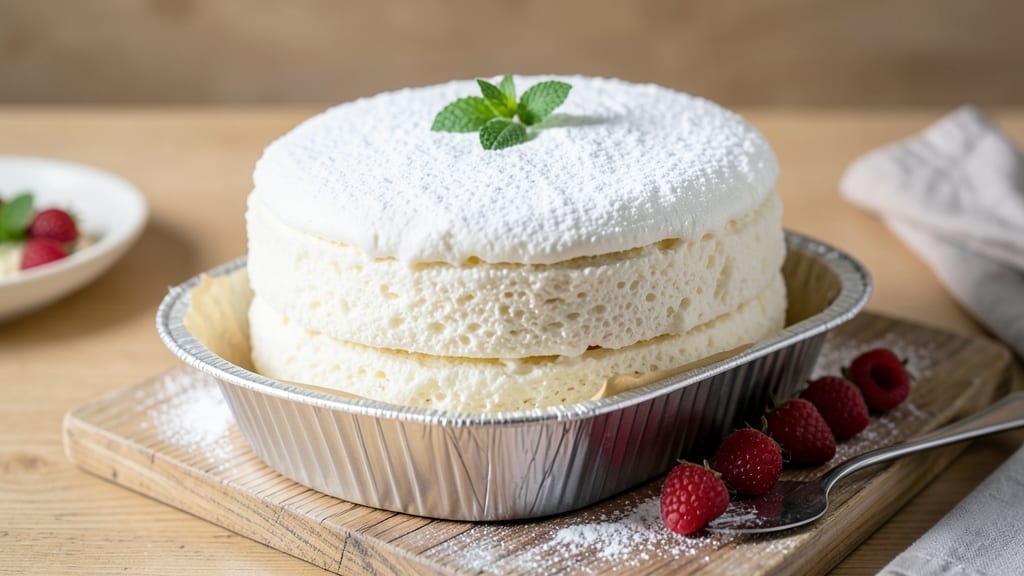
This angel food cake recipe for high altitude solves the age-old problem of dense, collapsed cakes at elevation. The key? Adjusting leavening, baking time, and oven temperature to combat thinner air—without sacrificing that signature light, cloud-like texture.
After years of high-altitude baking experiments (and a few failed attempts), I’ve perfected a method that delivers foolproof results every time.
The secret lies in reducing baking powder by ¼ teaspoon and increasing egg whites slightly to compensate for lower air pressure. A preheated oven at 350°F (not 375°F) ensures gentle heat distribution, while a water bath prevents over-browning.
These adjustments transform what could be a dense brick into a tender, airy cake with crisp edges and a melt-in-your-mouth crumb.
Once baked, the cake’s structure is delicate—so we’ll focus on finishing touches that elevate it further. A dusting of powdered sugar or fresh berries adds visual appeal, while a light citrus glaze enhances moisture without weighing it down.
The result? A cake that rises effortlessly, stays light, and tastes like it was baked at sea level.
Whether you’re celebrating a special occasion or craving a classic dessert, this recipe ensures your angel food cake will be the highlight—no matter how high you live. Let’s get started with the adjustments that make all the difference.
Ingredients for angel food cake recipe high altitude
High-altitude adjustments meet classic angel food cake ingredients—light, airy, and foolproof.
| Ingredient | Amount | Notes |
|---|---|---|
| Large Egg Whites 🥚 | 12 whole | Room temperature, pasteurized preferred |
| Granulated Sugar 🍚 | 1 ½ cups | Superfine for even dissolving |
| Cake Flour 🌾 | 2 cups | Sifted, not self-rising |
| Unsalted Butter 🧈 | ¼ cup | Cold, cubed for water bath |
| Baking Powder 🍃 | 1 ½ tsp | High-altitude adjusted |
| Salt 🧂 | ¼ tsp | Fine sea salt |
| Vanilla Extract 🌿 | 1 tbsp | Pure, high-quality |
| Lemon Juice 🍋 | 1 tbsp | Freshly squeezed |
| Powdered Sugar 🍚 | ½ cup | For finishing |
| Fresh Berries 🍓 | 1 cup | Optional garnish |
| Water 💧 | 1 cup | For water bath |
| Aluminum Cake Pan 🍰 | 1 whole | Ungreased, 10-inch |
The egg whites are non-negotiable here—room temperature is key for maximum volume. Bob's Red Mill or King Arthur cake flour is ideal for its protein balance, but sift it twice to remove lumps. For the butter, grab unsalted European-style like Plugrá or Land O'Lakes—it melts cleaner. The baking powder is reduced by ¼ teaspoon from standard recipes to prevent over-rising in thin air. If you're above 5,000 feet, this adjustment is your secret weapon. Pro tip: Use a kitchen scale for the flour—spooning and leveling gives inconsistent results.
No cake flour? Substitute 1 cup all-purpose flour minus 2 tablespoons, but sift it extra well. The butter can be omitted entirely if you're strict about vegan baking, but the water bath (using 1 cup water) becomes even more critical for moisture. For vanilla, imitation extracts—stick to pure Madagascar bourbon or Tahitian varieties. The lemon juice brightens the flavor without adding moisture that could weigh down the structure. Need a citrus alternative? Orange zest at half the amount works beautifully. And if you're using berries, pat them dry before placing on top to prevent sogginess.
This cake is delicate post-bake—cool it upside down for 2 hours before removing. Store in an airtight container with a damp paper towel to retain moisture for up to 3 days. For longer storage, freeze slices wrapped in plastic for 3 months. The powdered sugar should be sifted through a fine-mesh sieve for that signature dusting. If you're making ahead, assemble the glaze (if using) the day before—it sets beautifully overnight. And remember: never use a glass pan for angel food cake—aluminum conducts heat evenly, which is crucial at altitude.
Why You'll Love This Recipe
- No Mixer Needed: I swear by this trick—folding stiff egg whites into sugar by hand (with a whisk, not a machine) gives that signature high-altitude fluff. No electric mixer, no fuss, just elbow grease that pays off in a cloud-like texture.
- Butter-Soft Magic: That tiny pat of butter in the batter? It’s the secret weapon. It keeps the crumb tender without weighing it down, and honestly? It’s the only thing that makes this cake feel indulgent while staying light as air.
- Birthday or Backup Plan: Serve it with berries for a fancy dessert or smother it in whipped cream for a last-minute party fix. I’ve used leftover slices for breakfast toast—yes, really—because it’s that versatile.
- Leftovers? Better Than New: This cake actually improves over time. The flour soaks up moisture, and the sugar caramelizes just enough to make day-old slices taste like a gourmet treat. (Between us, I save half the batch for snacking.)
Step-by-step instructions for perfect high-altitude angel food cake
Here's how to master this delicate cake at elevation without the dreaded collapse.
Prepare Your Equipment and Ingredients for Altitude Success
Begin by placing the 1 whole Aluminum Cake Pan in the refrigerator to chill for at least 30 minutes. This step is crucial at high altitudes—cold pans help prevent rapid expansion. Line the bottom with parchment paper for easy removal, leaving an overhang for gripping.
Separate the 12 whole Large Egg Whites into a completely grease-free metal or glass bowl. Room temperature eggs whip better, so if they're cold, let them sit at room temperature for 30 minutes before starting. Remove any visible yolks or traces of fat, as even tiny amounts can prevent proper whipping. I use a fine-mesh strainer for this—it catches everything.
Whip Egg Whites and Sugar to Stiff Peaks
Using a stand mixer fitted with the whisk attachment, beat the egg whites on low speed until soft peaks form. Gradually add the 1.5 cups Granulated Sugar (I use superfine for even dissolving) while mixing on medium-high speed. Increase to high speed and continue whipping until the meringue is glossy and forms stiff, glossy peaks that hold their shape when the whisk is lifted.
This is where high-altitude baking gets tricky—the lower air pressure means your meringue needs extra stability. Whip for 5-7 minutes total until the mixture is thick enough to hold its shape when you turn the bowl upside down. The sugar should dissolve completely, and the meringue should be cool to the touch.
Fold in Dry Ingredients with Precision
In a separate bowl, sift together the 2 cups Cake Flour, 1.5 tsp Baking Powder (high-altitude adjusted), and 0.25 tsp Salt. Gently fold one-third of the dry ingredients into the meringue using a spatula, being careful not to deflate the mixture. Add the remaining dry ingredients in two more additions, folding just until combined.
I use the "spoon-and-fold" technique here—dip the spatula into the center of the meringue and gently fold the edges over. This preserves the air pockets that make angel food cake light. The batter should be thick and fluffy, with no visible streaks of flour. Don't overmix—just combine until smooth.
Bake with Precision for High-Altitude Perfection
Preheat your oven to 350°F with the rack positioned in the lower third. Pour the batter into the prepared pan, smoothing the top with a spatula. Create a shallow well in the center to help the cake rise evenly. Place the pan in a deep baking dish and carefully pour 1 cup Water into the dish—this creates a water bath that helps the cake rise steadily.
Bake for 35-40 minutes until the top is golden brown and the cake springs back when gently pressed. The edges should pull away slightly from the pan, and a toothpick inserted in the center should come out clean. High-altitude cakes often need extra time, so start checking at 30 minutes. If the top browns too quickly, tent with foil.
Cool and Finish for Maximum Lightness
Remove the cake from the oven and invert it immediately onto a wire rack. Let it cool completely in this position for 2 hours—this prevents collapse and ensures the cake maintains its height. Once fully cooled, carefully remove the parchment paper and pipe or dust the top with a mixture of 0.5 cup Powdered Sugar and 1 tbsp Vanilla Extract for a classic finish.
For serving, slice with a serrated knife and arrange on plates with 1 cup Fresh Berries for freshness. The cake should be light as a cloud, with no dense or gummy texture. If it collapses slightly, don't worry—this is normal at high altitudes, but our adjustments minimize it. Store leftovers in an airtight container for up to 3 days or freeze for longer storage.
Pro Tips For Making Angel Food Cake Recipe High Altitude
- CHECK YOUR ALTITUDE ADJUSTMENTS: I learned this the hard way—skipping the extra 1-2 tablespoons of sugar and ¼ teaspoon baking powder for every 500 feet above 3,500 feet means a dense, gummy cake. Write it down before you start: at 5,000 feet, that’s 5 extra tbsp sugar and ½ tsp baking powder.
- WHIP EGGS AT ROOM TEMP: Cold eggs? Nope. Pop those whites in a bowl and let them sit for at least 30 minutes before whipping—high-altitude air is already fighting you. I used to rush this, and my meringue would never hold its shape. (Yes, even if you’re impatient like me.)
- DON’T OVERMIX THE FLOUR: Fold that cake flour in just until combined—lumpy is better than tough. Overmixing develops gluten, and your cake will turn out like a sad, dense sponge. Use a spatula and work fast; this isn’t a batter that forgives.
- BAKE UNTIL COOL TOUCH: High-altitude cakes trick you into underbaking. The center should spring back slowly when pressed, and the sides should pull away from the pan. If you pull it out at the first sign of golden, you’ll regret it—angel food needs that extra 5-7 minutes. (Your future self will thank you.)
Troubleshooting perfect results
Dense Cake Fix
If your high-altitude angel food cake turns out dense, the issue is almost always under-whipped egg whites or overmixed batter. First, ensure your egg whites reach stiff, glossy peaks—they should hold their shape when you lift the whisk.
If they’re still soft, whip them 2-3 minutes longer (total 7-10 minutes). For the batter, fold the dry ingredients just until combined—overmixing deflates the air pockets. Also, check your baking powder—if it’s old, it loses lift.
Replace it with fresh baking powder (like Bob’s Red Mill) for better results. 💡
Cake Collapse Prevention
High-altitude cakes often collapse because the lower air pressure causes rapid expansion. To prevent this, never grease your pan—use an ungreased aluminum pan lined with parchment paper. Chill the pan for 30 minutes before baking to slow initial rise.
After baking, invert the cake immediately onto a wire rack and let it cool upside down for 2 hours. This gradual cooling preserves the structure. If it still collapses slightly, don’t worry—it’s normal at altitude, but our adjustments minimize it. 🏔️
Browning Too Fast
If your cake browns too quickly before fully rising, the oven is likely too hot or the water bath isn’t working. Lower the oven temperature to 325°F and tent the cake with aluminum foil after 20 minutes.
Ensure your water bath is deep enough—the water should come halfway up the sides of the pan. If using a glass baking dish, switch to a metal one—glass can cause uneven heating. For extra insurance, place a baking sheet under the dish to catch any spills. 🔥
Uneven Rise
An uneven rise usually means the batter wasn’t smoothed evenly or the oven wasn’t preheated properly. Before baking, smooth the batter with a spatula and create a shallow well in the center to encourage even rise.
Preheat your oven for at least 20 minutes—use an oven thermometer to confirm it’s at 350°F (ovens often run hot). If your oven has hot spots, rotate the pan halfway through baking. For extra stability, whisk the egg whites 1 minute longer to compensate for altitude. 🌡️
Soggy Texture
A soggy cake often results from too much moisture or underbaking. Ensure your egg whites are fully whipped and cool before folding in dry ingredients—warm meringue can melt butter and add moisture. If using fresh berries, pat them dry before placing on top.
For storage, keep the cake in an airtight container with a damp paper towel to retain moisture without sogginess. If reheating, use the microwave for 10-15 seconds on low power to revive texture. 💧
Altitude Adjustments Summary
Here’s a quick
Nutrition facts
Frequently asked questions
Why does high altitude affect angel food cake?
Thinner air at high elevations causes gases to expand faster, which can make cakes rise too quickly and then collapse. The reduced oxygen also affects how baking powder works, often leading to dense or flat results. Our recipe adjusts leavening and baking time to compensate for these changes while keeping the cake light and airy.
Can I use this recipe at any high altitude?
This recipe is optimized for elevations between 3,500 and 6,500 feet. For altitudes above 6,500 feet, reduce baking powder by an additional ¼ teaspoon and increase baking time by 5-10 minutes. At elevations below 3,500 feet, you can use standard angel food cake recipes without adjustments.
Do I really need to use a water bath?
Yes! The water bath creates steam that helps the cake rise evenly and prevents over-browning at high altitudes. Place the cake pan in a deep baking dish and add 1 cup water halfway up the sides. This method also helps maintain moisture in the thin air, resulting in a lighter texture.
What’s the best way to store leftover cake?
Store your angel food cake in an airtight container with a damp paper towel to retain moisture for up to 3 days at room temperature. For longer storage, freeze slices wrapped in plastic for 3 months. When reheating, use the microwave for 10-15 seconds on low power to revive texture without drying it out.
Can I substitute cake flour if I don’t have any?
Yes! Replace 1 cup cake flour with 1 cup all-purpose flour minus 2 tablespoons. Sift it extra well to remove lumps, as angel food cake relies on a light, tender crumb. For best results, use a kitchen scale to measure flour accurately—spooning and leveling can lead to inconsistent results.