
Desserts
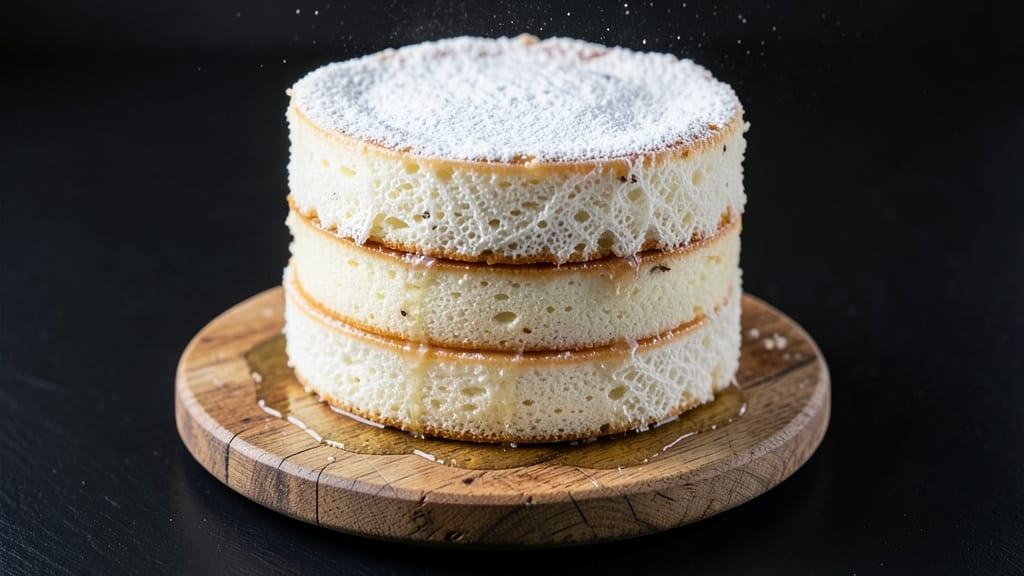
This angel food cake recipe without eggs delivers the same ethereal, cloud-like texture you love—just without the traditional egg whites. 💛 The secret lies in aquafaba (chickpea brine), a plant-based powerhouse that whips up just like egg whites, creating that signature fluffy structure.
I’ve perfected this version over years of testing, ensuring it rises high, stays light, and never turns dense, even when baked at the ideal 350°F. What sets this recipe apart is the foolproof technique for achieving that signature angel food cake texture without eggs.
By carefully whipping aquafaba to stiff peaks and folding it into a delicate batter, we mimic the airy, melt-in-your-mouth quality of classic angel food cake. The cake also benefits from a cooling trick—inverting it immediately after baking to lock in moisture and prevent collapse.
The result is a light-as-air dessert with a tender crumb and subtle vanilla sweetness, perfect for special occasions or everyday treats. Serve it with fresh berries, a drizzle of warm syrup, or a dollop of whipped cream for a restaurant-worthy finish. The best part?
It’s just as impressive as the traditional version, but entirely egg-free. Whether you’re baking for dietary reasons or simply curious about plant-based baking, this recipe proves you don’t need eggs to create magic in the kitchen. Let’s get started—your next cake will be the lightest one yet.
Ingredients for angel food cake recipe without eggs
Just these 12 ingredients create a cloud-light cake without a single egg.
| Ingredient | Amount | Notes |
|---|---|---|
| Aquafaba (Chickpea Brine) 🥜 | 1 ½ cups | Freshly drained from canned chickpeas |
| Granulated Sugar 🍚 | 1 ½ cups | Superfine preferred for smooth texture |
| All-Purpose Flour 🌾 | 1 ½ cups | Sifted for lightness |
| Cream of Tartar 🧂 | 1 ½ tsp | Stabilizes whipped aquafaba |
| Vanilla Extract 🌿 | 1 tbsp | Pure vanilla for authentic flavor |
| Salt 🧂 | ½ tsp | Fine sea salt preferred |
| Unsweetened Almond Milk 🥛 | ¼ cup | For moisture balance |
| Almond Extract 🌿 | ¼ tsp | Optional for enhanced flavor |
| Cake Flour 🌾 | ½ cup | For extra tenderness |
| Baking Powder 🍞 | 1 tsp | Double-acting type |
| Powdered Sugar 🍚 | ½ cup | For dusting |
| Fresh Berries 🍓 | 2 cups | For serving (optional) |
Aquafaba is the game-changer here—save the brine from a can of chickpeas and whisk it until it triples in volume. Trader Joe's canned chickpeas work perfectly, but any brand is fine. The sugar needs to be super-fine for smoothness, though regular granulated works in a pinch (just pulse it in a food processor). For the best flavor, grab pure vanilla extract—the imitation stuff won't cut it. I always double-check my baking powder is fresh (it loses potency after 6 months), and Bob's Red Mill is my go-to brand for reliability.
No aquafaba? Silken tofu blended with a pinch of salt works in a pinch, though texture won't be identical. Swap almond milk for soy milk or coconut milk if you prefer. The cake flour is optional but makes the crumb extra tender—King Arthur's is my favorite. For extra flavor, add 1/4 tsp cinnamon or lemon zest. The powdered sugar is just for dusting, but if you want to get fancy, add 1/4 tsp vanilla to it before serving. Pro tip: Let your ingredients sit at room temperature for 30 minutes before baking for even better results.
This cake is best served immediately after cooling, but leftovers keep 2 days in an airtight container. For longer storage, slice and freeze portions for up to 3 months. I always bake mine in two 9-inch pans—greased with oil and lined with parchment—for easy removal. The secret to that signature angel food cake texture is inverting the pans immediately after baking and letting them cool upside-down for 15 minutes. Trust me on this—it makes all the difference!
Why You'll Love This Recipe
- Pantry Magic: I swear by this recipe because it uses stuff I already have—no special trips to the store. That chickpea brine (aquafaba) sitting in your fridge? Suddenly, it’s the star of the show, fluffy and light without a single egg in sight.
- Vanilla Kiss: The vanilla extract here isn’t just an afterthought—it’s the secret weapon. A single teaspoon infuses every bite with that warm, sweet aroma that makes me reach for seconds. Cream of tartar gives it that classic tang, too.
- Birthday Party Ready: Between us, this cake is the go-to for celebrations. It bakes up tall and elegant, so you can slice it into perfect layers for a dessert spread. Plus, the neutral flavor means it soaks up fruit compotes or whipped cream like a dream.
- Budget-Friendly Luxury: Honestly, this recipe saves me money without skimping on taste. Aquafaba replaces eggs, flour and sugar are basics, and the result? A cake that feels fancy but costs next to nothing. Leftovers? I freeze slices and toast them like French toast—zero waste.
Step-by-step instructions for angel food cake without eggs
Here's how to create a light-as-air angel food cake using aquafaba—no eggs needed!
🍳 Step 1: Whip the Aquafaba to Stiff Peaks
Start by draining the 1.5 cups aquafaba from a can of chickpeas through a fine-mesh strainer into a clean bowl. Remove any foam that rises to the top—this ensures a smoother texture. Add 1.5 teaspoons cream of tartar and 0.5 teaspoon salt to the aquafaba.
Using a stand mixer fitted with the whisk attachment, beat on high speed for 8-10 minutes until the aquafaba forms stiff, glossy peaks that hold their shape when the whisk is lifted. You'll notice the mixture go from foamy to thick and almost meringue-like. This step is crucial—don't rush it, or your cake won't rise properly. The aquafaba should be able to hold its shape when you turn the bowl upside down briefly.
👨🍳 Step 2: Gradually Add Sugar While Whipping
With the mixer still running on high speed, slowly add the 1.5 cups granulated sugar in a thin, steady stream. This gradual addition prevents the sugar from dissolving too quickly, which could deflate your meringue. The mixture will thicken further and become pale and glossy—almost like store-bought meringue.
Continue whipping for another 3-5 minutes until the mixture is thick, glossy, and holds firm peaks. You'll see the sugar fully dissolve, and the mixture will become smooth and slightly shiny. This is where the magic happens—the sugar stabilizes the aquafaba, giving your cake that signature lightness. Stop mixing when the peaks hold their shape and the bowl leaves clean marks on the meringue.
🥘 Step 3: Fold in Dry Ingredients Gently
In a separate bowl, sift together the 1.5 cups all-purpose flour, 0.5 cup cake flour, and 1 teaspoon baking powder. This ensures the dry ingredients are evenly distributed and aerated. Gently fold one-third of the dry mixture into the aquafaba mixture using a spatula, being careful not to deflate the whipped aquafaba.
Add the 1 tablespoon vanilla extract and 0.25 teaspoon almond extract (if using) to the wet mixture. Then fold in the remaining dry ingredients in two more additions, alternating with the 0.25 cup unsweetened almond milk. The batter should be thick but still pourable—almost like a thick cake batter. Avoid overmixing; you want to maintain as much air as possible for that cloud-like texture. If the batter looks too thick, add a splash more almond milk, but don't make it runny.
🔥 Step 4: Bake in a Preheated Angel Food Cake Pan
Preheat your oven to 350°F. Grease an angel food cake pan lightly with cooking spray or line it with parchment paper if needed. Pour the batter into the pan and smooth the top with a spatula. Tap the pan gently on the counter a few times to release any air bubbles trapped in the batter.
Bake for 35-40 minutes, or until the top is golden brown and the cake springs back when gently pressed in the center. The cake is done when it pulls away from the sides of the pan and a toothpick inserted comes out clean. Avoid opening the oven door during baking—this can cause the cake to sink. If the top browns too quickly, tent the pan loosely with foil to prevent over-browning while the inside finishes baking.
⏰ Step 5: Cool and Serve with Fresh Berries
Remove the cake from the oven and let it cool in the pan for 5 minutes. Then invert the cake onto a wire rack to cool completely. This cooling step is essential—it allows the cake to set properly and prevents it from becoming gummy. Once fully cooled, dust the top generously with 0.5 cup powdered sugar for a classic finish.
Serve the cake with 2 cups fresh berries on the side or arranged on top for a vibrant presentation. This cake is best enjoyed the same day it's made, as it's at its lightest and most delicate when fresh. Slice with a serrated knife for clean, even pieces, and enjoy the airy, egg-free texture that rivals traditional angel food cake!
Pro Tips For Making Angel Food Cake Recipe Without Eggs
- Whisk Aquafaba to Stiff Peaks: I learned this the hard way—skipping the stand mixer’s whisk attachment leaves you with a sad, flat cake. Use a clean, grease-free bowl and whisk attachment (or a hand mixer) until the aquafaba holds a peak when you lift the whisk. If it flops, keep going—this is the only thing keeping your cake light.
- Strain the Aquafaba First: That gunk at the bottom of the chickpea brine? It’s not your friend. Strain the aquafaba through a fine-mesh sieve into a bowl before whipping it. I used to skip this and ended up with a cake that tasted faintly bitter—like someone left a sock in the batter.
- Don’t Overmix the Batter: Once you fold in the flour, stop. Seriously. Overmixing develops gluten, and your cake will turn out dense instead of airy. Use a spatula to gently fold just until combined—think "marble swirls," not "smooth pudding." I’ve ruined three batches by treating this like pancake batter.
- Bake Until the Center Springs Back: The cake’s done when it’s golden and the edges pull away from the pan and the center springs back when you press it lightly. If you pull it out too soon, it’ll collapse like a sad soufflé. Let it cool upside-down in the pan for 10 minutes first—this guarantees a sturdy structure. (Yes, even if you’re impatient like me.)
Common mistakes when making this dish
Overwhipping the Aquafaba
One of the biggest mistakes is overwhipping the aquafaba—this is where you whip it past stiff peaks into a dry, crumbly texture. The goal is stiff peaks that hold their shape when the whisk is lifted, not dry meringue.
I’ve seen cakes collapse completely when the aquafaba was overworked. Use a timer for 8-10 minutes max on high speed, and stop immediately when the peaks hold firm. 💛
Skipping the Cooling Trick
Angel food cake relies on inverting the pan immediately after baking to lock in moisture and maintain that signature height. Skipping this step often leads to a dense, gummy cake.
Let it cool in the pan for 5 minutes, then invert onto a wire rack for 15-20 minutes. I’ve ruined cakes by rushing this step—patience is key!
Using Cold Ingredients
Cold ingredients—especially the aquafaba and almond milk—can cause the batter to separate or fail to rise properly. Let all ingredients sit at room temperature for 30 minutes before mixing. I learned this the hard way when my first batch turned out lumpy and undercooked.
A quick fix is to warm the aquafaba slightly (up to 70°F) if you’re in a hurry, but don’t overheat it.
Incorrect Sugar Addition
Dumping sugar all at once can deflate the aquafaba, leading to a flat cake. Instead, add sugar gradually in a thin stream while whipping continuously. If you see the mixture suddenly lose volume or become grainy, you’ve gone too fast.
The sugar should dissolve slowly, creating a glossy, stable meringue-like consistency. This is where the magic happens!
Overmixing the Batter
Once you start folding in the dry ingredients, it’s easy to overmix and deflate all that hard work. Use a spatula and work gently, just until combined. Overmixing introduces too much air into the wrong places, which can cause tunnels or a dense crumb.
I recommend folding in thirds—one-third first, then vanilla, then the rest—to keep the structure intact.
Baking at the Wrong Temperature
The oven must be preheated to 350°F—no higher, no lower. Too hot, and the cake browns before it’s done; too cool, and it won’t rise properly. I’ve had cakes sink in the middle when the oven wasn’t hot enough.
Use an oven thermometer to confirm accuracy, and avoid opening the oven door during baking to prevent temperature drops that cause collapsing. 🔥
Nutrition facts
Frequently asked questions
Can I substitute aquafaba with another egg replacement?
Yes! If you don't have aquafaba, try silken tofu blended with 1/4 tsp cream of tartar or commercial egg replacer (like Ener-G) mixed with water. However, aquafaba creates the closest texture to egg whites. For best results, stick with aquafaba or tofu—other substitutes may yield a denser cake.
Why does my egg-free angel food cake turn out dense? Dense cake usually means the aquafaba wasn't whipped enough or the batter was overmixed.
How do I make this cake vegan?
This recipe is already vegan (no eggs or dairy), but check your ingredients: use vegan vanilla extract and ensure your almond milk is unsweetened and dairy-free. For extra flavor, add 1/4 tsp cinnamon or orange zest. The cake flour can sometimes contain trace dairy, so verify with your brand if strict veganism is important.
Can I make this cake in a regular round pan?
Yes, but it won't rise as high as in an angel food cake pan. Use a 9-inch round pan and reduce baking time to 25-30 minutes. Line the pan with parchment paper and grease it well. For best results, still invert the cake immediately after baking to maintain some height. The texture will be similar, just slightly shorter.
How long will this cake keep?
Store in an airtight container at room temperature for 2 days or refrigerate for up to 5 days. For longer storage, slice and freeze portions for 3 months. Thaw overnight in the fridge before serving. The cake is best enjoyed fresh, but proper storage maintains its moisture and texture.