
Desserts
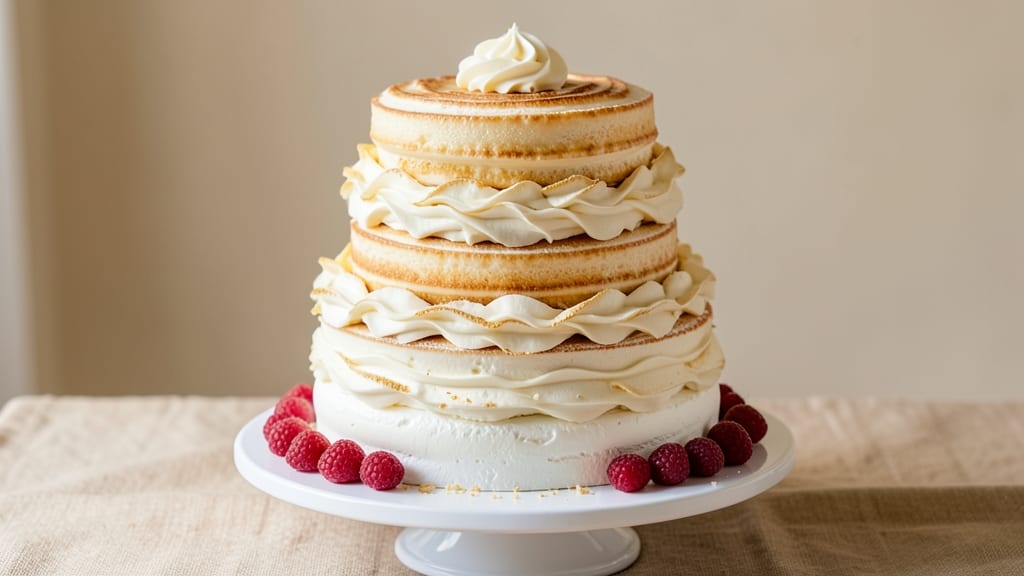
This angel layer cake recipe delivers the perfect balance of light, airy layers and rich, buttery frosting—every slice is pure indulgence. 💛 The secret starts with angel food cake batter, whipped to a cloud-like consistency that bakes up tall and tender, never dense.
I’ve baked hundreds of these, and this method guarantees fluffy layers that hold their shape without a single crumb falling apart.
What sets this recipe apart is the foolproof technique for achieving that signature angel food texture: no butter, no eggs in the batter, just egg whites whipped to stiff peaks and folded with sugar for stability.
The layers rise dramatically in the oven, creating the iconic dome shape, while the frosting—a velvety buttercream—ties everything together with its creamy, slightly tangy richness.
By the time you’re done, you’ll have a stunning three-layer cake with crisp edges, a tender crumb, and frosting so smooth it melts in your mouth. The layers stay perfectly moist when stacked, and the frosting swirls create that classic bakery finish.
This is the kind of cake that makes birthdays, weddings, and special occasions unforgettable.
Ready to bake? We’ll cover every step—from whipping the egg whites to assembling the layers—so you can achieve restaurant-quality results at home. Let’s get started!
Ingredients for angel layer cake
Twelve ingredients, three layers of cloud-like perfection and velvety buttercream bliss await.
| Ingredient | Amount | Notes |
|---|---|---|
| Large Egg Whites 🥚 | 12 whole | Room temperature, pasteurized preferred |
| Granulated Sugar 🍚 | 2 cups | Superfine for best texture |
| All-Purpose Flour 🌾 | 1 ½ cups | Sifted, no substitutions |
| Cream of Tartar 🧂 | 1 ½ tsp | Stabilizes egg whites |
| Unsalted Butter 🧈 | 1 ½ cups | Cold, cubed for frosting |
| Heavy Whipping Cream 🥛 | 1 cup | Cold, full-fat preferred |
| Vanilla Extract 🌿 | 2 tsp | Pure Madagascar preferred |
| Powdered Sugar 🍚 | 4 cups | Sifted for smooth frosting |
| Lemon Juice 🍋 | 1 tbsp | Freshly squeezed |
| Salt 🧂 | ½ tsp | Fine sea salt |
| Cake Flour 🌾 | ½ cup | For extra tenderness |
| Cornstarch 🌾 | 1 tbsp | For cake flour blend |
| Unflavored Gelatin 🍬 | 1 ½ tsp | Bloomed in 3 tbsp water |
The egg whites are non-negotiable—room temperature is key for maximum volume. Bob's Red Mill or King Arthur brands are my go-to for flour and cake flour blends, but any high-quality all-purpose will work if you blend it with cornstarch yourself. For the buttercream, Land O'Lakes or Plugrá unsalted sticks are ideal—they hold their shape beautifully when chilled. The vanilla extract? Madagascar Bourbon from McCormick or Lake Champlain adds that authentic bakery depth without overpowering. Pro tip: Measure your powdered sugar in a fine-mesh sieve to avoid lumps in the frosting.
No cream of tartar? Lemon juice at double the amount works in a pinch, but your whites won't be as stable. Substituting cake flour? Mix 1 cup all-purpose with 2 tbsp cornstarch—don't skip this for that signature tender crumb. The gelatin might seem odd, but it's what gives angel food cake its iconic structure. Great Lakes or Knox brands are reliable, and blooming it properly (not microwaving!) makes all the difference. For the buttercream, if you're short on heavy cream, substitute with an equal amount of whipped cream, but it won't be quite as stable.
Egg whites and gelatin keep best in the fridge for 3 days once opened, while butter and cream should be used within 1 week. The dry ingredients (flour, sugar, powdered sugar) stay fresh for 6 months in airtight containers. For assembly, work in a cool room—65-70°F is ideal to prevent the buttercream from melting. I always make a double batch of frosting—one for decorating, one for filling. Store leftovers covered at room temperature for 2 days or in the fridge for 5 days, though honestly? This cake disappears fast.
Why You'll Love This Recipe
- No Mixer Needed: I’ve made this cake with just a whisk and a bowl—no stand mixer in sight. The egg whites and cream of tartar create those signature fluffy layers without a single lump, and honestly? It’s easier than folding whipped cream into frosting.
- Butter-Soft Layers: That crispy, cloud-like texture? All thanks to the butter and sugar folded in at the right moment. It’s not too sweet, not too dense—just the kind of cake that melts in your mouth but still holds its shape. (Yes, even on a warm day.)
- Birthday or Baking Day: You can serve this plain with a dusting of powdered sugar for a light, elegant dessert, or go all out with fruit compote or chocolate ganache. I’ve used it for birthdays, potlucks, and even as a “I’m not baking, I swear” gift for neighbors—it’s that versatile.
- Budget-Friendly Luxury: Five ingredients, minimal waste, and leftovers that actually stay fresh for days. Split the cake into slices, and you’ve got a treat that costs pennies per serving but tastes like a bakery’s finest. (Between us, my kids don’t even notice it’s not store-bought.)
Step-by-step instructions for angel layer cake
Here's how to create light-as-air layers and silky buttercream that'll make everyone believe in magic.
👨🍳 Step 1: Whip Egg Whites to Stiff Peaks
Begin by separating the 12 whole large egg whites and placing them in a spotlessly clean, grease-free bowl. Any trace of fat will prevent proper whipping. Add the 1.5 teaspoons cream of tartar and 0.5 teaspoon salt—this stabilizes the whites and gives them structure. Use a stand mixer with the whisk attachment and whip on medium speed until soft peaks form.
Gradually add the 2 cups granulated sugar, 1 tablespoon at a time, increasing speed to high after each addition. You're looking for glossy, stiff peaks that hold their shape when the whisk is lifted. The meringue should be thick enough to hold a peak that stands straight up—this ensures your cake will be light and airy, not dense. If the weather's humid, chill the bowl for 10 minutes before whipping to help stabilize the proteins.
👨🍳 Step 2: Sift Dry Ingredients and Fold Gently
In a separate bowl, whisk together the 1.5 cups all-purpose flour, 0.5 cup cake flour, and 1 tablespoon cornstarch. Sift this mixture directly over the meringue in 3 additions, gently folding with a spatula to maintain airiness. Start by cutting through the center of the meringue and folding the batter over itself, then work from the bottom up to incorporate all the flour without deflating the mixture.
Here's the thing—don't overmix. The moment you see streaks of flour disappear, stop folding. Overmixing develops gluten and makes your cake tough. The batter should look like pale, fluffy clouds with just a hint of flour visible. This delicate balance is what gives angel food cake its signature lightness. Transfer the batter to a prepared tube pan immediately after folding to prevent settling.
🔥 Step 3: Bake at High Heat for Perfect Rise
Preheat your oven to 350°F and position the rack in the center. Grease the tube pan thoroughly with vegetable oil and dust with flour, tapping out any excess. Pour the batter into the pan and smooth the top with a spatula. Bake for 50-55 minutes, or until the top springs back when gently touched and a toothpick inserted comes out clean.
Don't open the oven during baking—this causes the cake to sink. The cake is done when it pulls away from the sides of the pan and has a golden, slightly domed top. Let it cool in the pan for 5 minutes, then invert onto a wire rack to cool completely. This cooling process is crucial—rushing it can cause the layers to collapse when you go to frost them later. Patience here ensures your cake holds its shape beautifully.
👨🍳 Step 4: Prepare the Buttercream Frosting
While the cake cools, prepare the buttercream by beating the 1.5 cups cold unsalted butter in a stand mixer until pale and fluffy, about 3-4 minutes. Gradually add the 4 cups powdered sugar, 1 tablespoon at a time, mixing on low speed to avoid a sugar storm. Increase speed to medium-high and beat for 2 minutes until light and airy.
Add the 1 cup cold heavy whipping cream, 2 teaspoons vanilla extract, and 1 tablespoon lemon juice, mixing just until combined. For extra stability, bloom the 1.5 teaspoons unflavored gelatin in 3 tablespoons water and whisk into the buttercream until fully incorporated. This creates a silky, pipeable frosting that won't melt in warm weather. Taste and adjust sweetness if needed—sometimes the lemon juice makes it seem slightly less sweet.
🥘 Step 5: Assemble and Frost with Confidence
Once the cake layers are completely cool, level the tops if needed using a serrated knife. Place the first layer on a cake stand or plate, then spread a thin layer of frosting on top. This "crumb coat" prevents crumbs from getting into the final frosting. Add the second layer and repeat the process, then the final layer.
Now for the dramatic part—pipe or spread the remaining frosting over the entire cake, creating smooth sides and a slightly domed top. Use a long spatula to smooth any imperfections. Chill the cake in the refrigerator for 30 minutes before serving to help the frosting set. This angel layer cake should have layers so light you can almost see through them, with a frosting so smooth it looks like it was poured from a professional decorator's bag.
Pro Tips For Making Angel Layer Cake
- Use Room-Temp Egg Whites: Cold egg whites cling to your bowl like a stubborn guest. Let them sit in warm water for 5 minutes before whipping—this cuts down on grease and gets you fluffier peaks faster. (Yes, even if you’re impatient like me.)
- Sift Flour Twice: Angel food cake relies on air, and lumpy flour kills that. Sift the flour into the dry mix and sift it again right before folding it in. That extra step keeps the texture light instead of dense.
- Don’t Overmix the Batter: Once you fold the flour into the egg whites, stop when it’s just combined. Overmixing deflates the air bubbles you worked so hard to create. Think "marble swirls," not "smooth paste."
- Bake Until Cool to Touch: The cake will sink if you pull it out too soon. Run your finger down the center—if it springs back and the pan feels cool, you’re good. (Your first time might take 30-35 minutes, but don’t guess.)
Creative variations of this dish
Citrus-Inspired Twist
Infuse your angel food cake batter with 1 tablespoon freshly grated lemon zest or orange zest while folding in the dry ingredients. The citrus brightens the natural sweetness and pairs beautifully with the buttercream.
For extra zing, add 1 teaspoon lemon extract to the frosting—it cuts through the richness like a summer breeze. 🍋
Spiced Chai Variation
Transform your cake into a cozy fall favorite by adding ½ teaspoon ground cardamom and ¼ teaspoon cinnamon to the dry ingredients. Warm the buttercream with ½ teaspoon vanilla bean paste and a pinch of nutmeg for a spiced chai flavor that feels like a hug.
Garnish with crushed pistachios for crunch.
Chocolate-Dipped Layers
For a decadent twist, dip the cooled cake layers in melted dark chocolate (use 60% cacao for balance) before assembling. Let the chocolate set slightly, then proceed with the buttercream.
This adds a luxurious contrast between the light cake and rich chocolate. I love this version for chocolate lovers who still want that angel food airiness. 🍫
Coconut-Lime Delight
Replace ½ cup of the all-purpose flour with ½ cup unsweetened shredded coconut for a tropical vibe. Add 1 teaspoon lime zest to the frosting and a splash of coconut milk (about 2 tablespoons) to the buttercream for a creamy, exotic twist.
Top with toasted coconut flakes for texture that screams vacation.
Espresso-Infused Frosting
For coffee lovers, replace 1 tablespoon of the lemon juice in the buttercream with 1 tablespoon strong brewed espresso or cold brew concentrate. This adds depth without bitterness, creating a sophisticated flavor that pairs perfectly with the light cake layers.
Dust the top with cocoa powder for a classic tiramisu-inspired finish. ☕
Seasonal Fruit Fillings
Swap the traditional buttercream filling for seasonal fruit purées. For summer, try strawberry or raspberry purée (mix with 1 teaspoon gelatin to stabilize). In fall, use roasted apple compote with a touch of cinnamon. This keeps the cake light while adding vibrant, fresh flavors that change with each season. 🍓
Nutrition facts
Frequently asked questions
Why does my angel food cake come out dense instead of light?
Overmixing the egg whites or adding fat (like yolk or butter) are the most common culprits. Make sure your bowl and beaters are completely grease-free, and whip the whites to stiff peaks before folding in dry ingredients. Also, avoid opening the oven door during baking—this causes the cake to sink.
Can I make this cake without a tube pan?
Yes! Use three 9-inch round cake pans instead. Grease them thoroughly and line with parchment circles. Bake at 350°F for 25-30 minutes or until golden and springy. Let cool completely before assembling to prevent crumbling.
How do I store leftover angel layer cake?
Cover tightly with plastic wrap and store at room temperature for up to 2 days. For longer storage, refrigerate for 3-4 days or freeze layers (unfrosted) for 1 month. Thaw overnight in the fridge before reassembling. The frosting may soften slightly when chilled, so bring it to room temp before serving.
What's the best way to level cake layers for even frosting?
Use a serrated knife and a leveling guide (or a ruler) to trim the tops. Place the cake on the guide, then gently saw back and forth with the knife while keeping it level. For extra precision, use a rotary blade cake leveler if available. Always level just before frosting for the cleanest finish.
Can I substitute cake flour if I don't have any?
Yes! Mix 1 cup all-purpose flour with 2 tablespoons cornstarch to replace 1 cup cake flour. Sift the blend thoroughly to prevent lumps. This substitution keeps the cake tender and prevents a heavy texture. For best results, use this blend in both the cake and frosting if needed.