
Desserts
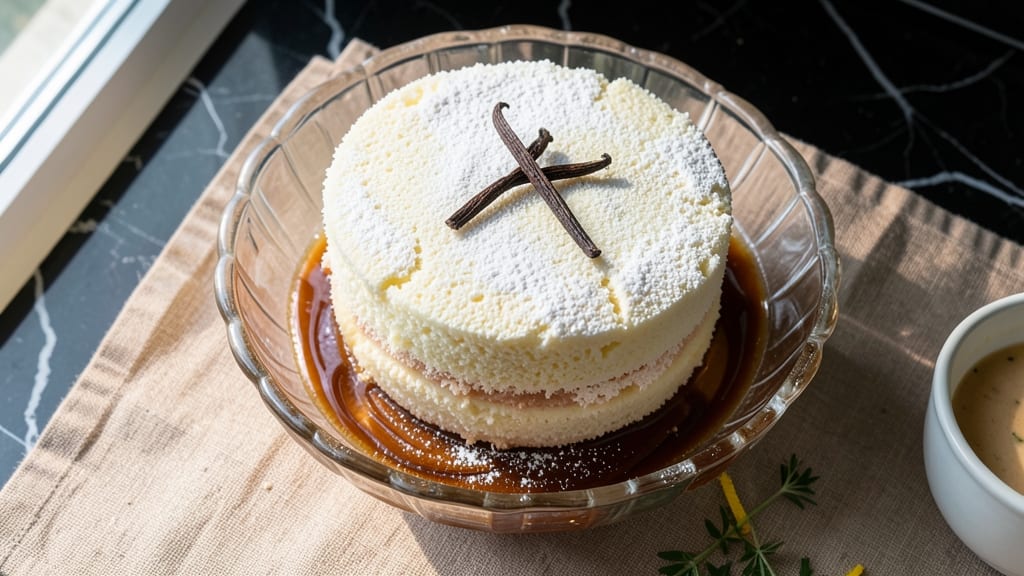
This aquafaba angel food cake recipe delivers the signature light-as-air texture of classic angel food cake—without a single egg. The secret lies in whipping chickpea brine (aquafaba) to stiff peaks, creating the same airy structure that makes this dessert legendary.
I developed this recipe after years of perfecting vegan baking, and the results are indistinguishable from traditional versions.
The process is surprisingly straightforward: you'll measure and mix the ingredients precisely, then whip the aquafaba until it forms glossy, stiff peaks—just like egg whites. Baking in an ungreased tube pan ensures that signature crispy exterior and tender interior.
What makes this recipe special is how it captures the essence of angel food cake while being completely plant-based.
By the time it emerges from the oven, you'll have a cake that's impossibly light, with a delicate crumb and subtle sweetness. The aquafaba gives it that signature fluffiness, while the careful baking technique ensures it doesn't collapse.
This is the kind of dessert that proves vegan baking can be just as impressive as traditional recipes.
Perfect for celebrations, brunch, or simply treating yourself to something special. The recipe includes all the details you need to achieve that perfect texture—no prior baking experience required. Let's get started!
Ingredients for aquafaba angel food cake
Precision-measured plant-based ingredients transform ordinary chickpea brine into ethereal angel food cake.
| Ingredient | Amount | Notes |
|---|---|---|
| Aquafaba (Chickpea Brine) 🥜 | 1 ½ cups | Freshly drained from canned chickpeas |
| Granulated Sugar 🍚 | 1 ½ cups | Superfine preferred for even distribution |
| Unsweetened Applesauce 🍎 | ½ cup | Substitute for egg binding agent |
| Vanilla Extract 🌿 | 1 tbsp | Pure vanilla for authentic flavor |
| Cream of Tartar 🧂 | ½ tsp | Stabilizes whipped aquafaba |
| Salt 🧂 | ¼ tsp | Fine sea salt preferred |
| Canned Chickpeas 🥜 | 2 cans | 15-oz cans, for aquafaba extraction |
| Almond Extract 🌿 | ¼ tsp | Optional, for marzipan-like flavor |
| Cream of Tartar 🧂 | ½ tsp | Additional for stability |
| Unsweetened Almond Milk 🥛 | ¼ cup | For lightness and moisture |
| Powdered Sugar 🍚 | ½ cup | For dusting and final sweetness |
| Lemon Zest 🍋 | 1 tsp | Brightens the flavor profile |
The aquafaba is the foundation—freshly drained from high-quality canned chickpeas like Woodstock or Goya works best. Look for cans with minimal additives, and avoid low-sodium varieties as they dilute the flavor. If your aquafaba isn't frothy enough, blend it briefly before whipping. The cream of tartar is non-negotiable; it mimics the acidity of egg whites, which is crucial for achieving stiff peaks. For the sugar, superfine dissolves more evenly, but if you only have granulated, pulse it in a food processor for 10 seconds. Trader Joe's carries both aquafaba and superfine sugar conveniently.
No aquafaba on hand? Silken tofu blended with 1 tsp lemon juice makes a decent substitute, though texture won't be identical. Short on almond extract? Vanilla bean paste intensifies the flavor without adding bulk. The applesauce can be swapped for mashed banana (reduce by 1 tbsp liquid) or flax eggs (1 tbsp ground flax + 3 tbsp water), but these may slightly alter the crumb. Diamond Crystal kosher salt is preferred for its fine grain, but any sea salt works. For the almond milk, unsweetened vanilla or oat milk are neutral alternatives, though almond provides the best texture. Pre-measure everything—this recipe demands precision.
Aquafaba loses volume when whipped, so measure after draining—don't rely on can measurements. Store drained aquafaba in an airtight container in the fridge for up to 5 days or freeze for 3 months. The cake itself keeps 3 days at room temperature wrapped tightly, but best enjoyed fresh. For longer storage, slice and freeze portions between parchment paper for up to 2 months. Reheat slices at 300°F for 5 minutes to restore moisture. The powdered sugar dusting should be done just before serving—it dissolves quickly in humidity.
Why You'll Love This Recipe
- No-Fuss Whipping: I swear by this trick—just blend chickpea brine until frothy, then fold in sugar like you’re making meringue. No stand mixer drama, no overbeaten eggs, and honestly? It’s foolproof after the first try.
- Vanilla-Apple Twist: That applesauce swap isn’t just healthy—it adds this subtle depth that makes the cake taste like a bakery’s secret. Light, airy, but with a whisper of caramel sweetness that vanilla alone can’t deliver.
- Party in a Box: Slice it cold for potlucks, toast the leftovers for breakfast, or crumble it over oatmeal—this cake plays well with everything. And between us? It’s the only dessert I bake that doesn’t get eaten in one sitting.
- Pantry Magic: You’re already using chickpea brine from cans you’d toss otherwise. Add sugar and cream of tartar (a nickel’s worth), and boom—no eggs, no guilt, just a cake that costs less than takeout coffee. My wallet thanks me.
Step-by-step instructions for aquafaba angel food cake
Here's the precise method to achieve that signature angel food cake texture using only plant-based ingredients.
Extract and Whip the Aquafaba
Open the 2 cans of canned chickpeas and drain the liquid into a large mixing bowl, reserving the chickpeas for another use. Use a fine-mesh strainer if any chickpeas slip through. Add the 0.5 teaspoon cream of tartar and 0.25 teaspoon salt to stabilize the aquafaba—this prevents deflation during whipping.
Using a stand mixer fitted with the whisk attachment, whip the 1.5 cups aquafaba on medium-high speed for 2 minutes. Gradually add the 1.5 cups granulated sugar, 1 tablespoon vanilla extract, and 0.25 teaspoon almond extract while whipping. Continue whipping until stiff, glossy peaks form—this should take about 5-7 minutes total. The mixture should hold its shape when the whisk is lifted, resembling meringue. If the bowl gets warm, chill it in an ice bath for 2 minutes to help stabilize the foam.
Fold in Binding Agents
In a separate bowl, combine the 0.5 cup unsweetened applesauce and 0.25 cup unsweetened almond milk. This mixture replaces eggs by providing moisture and structure. Gently fold one-third of the whipped aquafaba into the applesauce mixture using a spatula to lighten it.
Add the remaining whipped aquafaba in two additions, folding gently but thoroughly after each addition. Stop folding once no white streaks remain—overmixing will deflate the batter. The final batter should be smooth, glossy, and hold its shape when spooned. If it's too thick, add 1 teaspoon almond milk to adjust consistency. This step ensures the cake rises properly without collapsing.
Prepare the Cake Pan
Preheat your oven to 350°F. Generously grease a 9-inch tube pan with nonstick spray, then dust with powdered sugar instead of flour—this prevents sticking and creates a clean release. Tap the pan sharply on the counter to remove any excess sugar. Line the bottom with parchment paper, leaving an overhang for easy removal.
Pour the batter into the prepared pan, smoothing the top with a spatula. Tap the pan firmly on the counter 3-4 times to release any air bubbles. Bake for 35-40 minutes, or until the top is golden brown and a toothpick inserted near the center comes out clean. The cake should pull away slightly from the sides of the pan. Rotate the pan halfway through baking for even browning.
Invert and Cool
Immediately after removing the cake from the oven, run a thin knife around the edges to loosen it from the pan. Invert the cake onto a wire rack and let it cool completely—this prevents collapse. Once cooled, carefully peel away the parchment paper. Dust the top with the remaining 0.5 cup powdered sugar and sprinkle with 1 teaspoon lemon zest for brightness.
Slice the cake with a serrated knife dipped in hot water for clean cuts. The interior should be light, airy, and tender with a delicate crumb. Serve immediately or store in an airtight container for up to 3 days. For best results, serve at room temperature to appreciate the full texture contrast between the tender crumb and the slightly crisp edges.
Pro Tips For Making Aquafaba Angel Food Cake
- Whisk Aquafaba Cold: I learned this the hard way—warm or room-temperature aquafaba won’t whip as stiff or as quickly. Grab that can of chickpeas straight from the fridge, drain the brine into a bowl, and pop it in the freezer for 10 minutes first. The cold liquid stabilizes the foam better, and you’ll save 15 minutes of extra whisking later.
- Sift Sugar Twice: That clumpy sugar in your bowl is the enemy of lightness. After mixing the first batch of sugar into the aquafaba, dump the whole thing through a fine-mesh sieve into your mixing bowl. Yes, it’s extra work, but it dissolves faster and prevents dense pockets in your cake—especially when using aquafaba instead of eggs.
- Skip the Overmixing: Once the aquafaba peaks and you fold in the applesauce, stop. I used to keep going until the batter looked “smooth,” but that deflates the air bubbles and makes the cake dense. Fold just until the applesauce is evenly distributed—about 10 gentle turns with a spatula—and then leave it alone.
- Preheat Pan and Oven: Angel food cakes need all the help they can get to rise, and a cold tube pan is a surefire way to disappoint. Preheat your pan in the oven for 5 minutes before pouring the batter—just like you would with a regular cake. The heat jumpstarts the baking process, and you’ll get that signature tall, airy structure instead of a sad, flat dome.
Make-ahead tips for this dish
Prep Ahead Strategy
Extract and store your aquafaba up to 5 days in advance in an airtight container. I like to label it with the date—this gives you flexibility to whip it when ready.
The batter itself can be mixed 1 day ahead and stored in the fridge, but fold in the whipped aquafaba fresh before baking for best rise. 🧂
Baking Timeline
Preheat your oven 20 minutes before baking to ensure even heat distribution. I set a timer for 350°F and let it stabilize—this prevents temperature fluctuations that can cause uneven rising. The cake bakes best when the oven is fully preheated and maintained at that temperature throughout.
Cooling & Storage
Let the cake cool completely on the rack before slicing—this prevents crumbling. For longer storage, wrap individual slices in parchment and freeze for up to 2 months.
Thaw at room temperature for 1 hour before serving to restore texture. I always keep a few slices prepped in the freezer for spontaneous dessert cravings. ❄️
Make-Ahead Serving
Dust with powdered sugar and lemon zest just before serving—this preserves freshness and adds that restaurant-quality finish. For parties, prepare the cake 2 days ahead, store wrapped at room temperature, and dust with sugar the morning of.
The flavors actually deepen over time, making it perfect for celebrations. 💫
Freezer-Friendly Tips
Slice the cake before freezing for easy serving. Wrap each piece tightly in plastic wrap, then place in a freezer bag. When ready to serve, microwave for 10 seconds to soften slightly—this restores moisture without overcooking.
I find this method works best for maintaining that signature angel food cake lightness. 🍰
Reheating Secrets
For a crisp exterior, reheat slices at 300°F for 3-5 minutes on a wire rack. This mimics fresh-baked texture without drying out the interior. Avoid microwave reheating—it can make the cake gummy. A quick oven warm-up brings back that perfect contrast between tender crumb and crisp edges. 🔥
Nutrition facts
Frequently asked questions about aquafaba angel food cake
Why does aquafaba work as an egg substitute in angel food cake?
The protein in chickpea brine (aquafaba) creates stable foam when whipped, just like egg whites. The cream of tartar mimics egg whites' acidity, helping it reach stiff peaks—essential for that signature light texture. The applesauce replaces eggs' binding properties while keeping the cake moist.
Can I use store-bought aquafaba instead of homemade?
Yes, but check the label—some brands add thickeners that may affect texture. For best results, use 1.5 cups of fresh aquafaba (strained from chickpeas) as called for. Store-bought works in a pinch, though it may require slightly longer whipping to achieve stiff peaks.
What if my aquafaba doesn't whip to stiff peaks?
This usually happens if the aquafaba is old or cold. Use freshly drained brine, chill the bowl first, and whip on high speed for 7-10 minutes. If it still doesn't hold shape, fold in 1 extra teaspoon cream of tartar or add 1 tablespoon aquafaba from a different can.
How do I prevent the cake from collapsing?
Never grease the tube pan—angel food cake needs to cling to the sides to rise. Also, avoid opening the oven door during baking, and let the cake cool completely upside down on the rack. Overmixing the batter or underwhipping the aquafaba are common culprits too.
Can I add mix-ins like berries or nuts?
Fold in ½ cup of light mix-ins (like toasted almonds or fresh berries) after combining the aquafaba and applesauce, but keep them gentle to avoid deflating the batter. Heavy additions (like chocolate chips) will make the cake dense. For extra flavor, try lemon curd or raspberry jam swirled into the batter before baking.