
Desserts
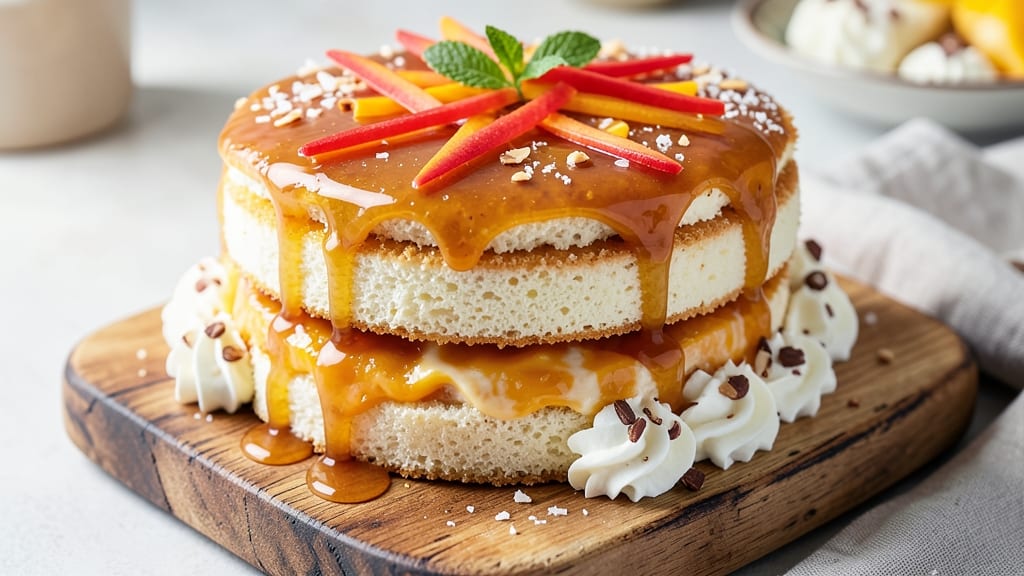
This Asian mango cake recipe delivers tropical layers of sweet, tangy perfection that tastes like sunshine in every bite. 🌴 The secret lies in balancing ripe mango purée with a light, fluffy batter—inspired by Southeast Asian desserts where fruit takes center stage.
I've perfected the texture to be moist yet tender, with just enough structure to hold its shape, and a subtle citrus note that brightens the sweetness.
The magic happens in the layers: a velvety mango-infused batter sandwiched between a delicate sponge, all baked to golden perfection. What sets this apart is the aromatic touch of pandan extract, which adds that signature floral note you find in many Asian desserts.
The cake stays fresh for days, making it ideal for gatherings or treating yourself when mango season hits.
By the time you slice into this cake, you'll discover a harmonious balance of flavors—creamy mango filling that's not too sweet, a tender crumb that's neither dense nor dry, and a finish that's subtly tropical.
The presentation is just as important: dusted with powdered sugar and garnished with toasted coconut flakes or lime zest, it looks as good as it tastes.
Whether you're recreating a Filipino mango cake or a Thai-inspired version, this recipe captures the essence of tropical desserts with a modern twist. Let's bake this masterpiece that'll have everyone asking for seconds.
Ingredients for asian mango cake
Tropical mango purée meets delicate sponge layers—just eight ingredients for sunshine in every bite.
| Ingredient | Amount | Notes |
|---|---|---|
| Ripe Mangoes 🍈 | 2 cups | Puréeed, no skin or seeds |
| All-Purpose Flour 🌾 | 2 cups | Sifted for light texture |
| Granulated Sugar 🍚 | 1 ½ cups | White or light brown |
| Unsalted Butter 🧈 | 1 cup | Room temperature, full-fat |
| Large Eggs 🥚 | 4 whole | Room temperature |
| Pandan Extract 🌿 | ½ tsp | For floral aroma |
| Baking Powder 🧂 | 1 tbsp | Aluminum-free preferred |
| Salt 🧂 | ½ tsp | Fine sea salt |
| Vanilla Extract 🌸 | 1 tsp | Pure vanilla preferred |
| Milk 🥛 | ½ cup | Whole milk preferred |
| Powdered Sugar 🍚 | ½ cup | For dusting |
| Toasted Coconut Flakes 🥥 | ¼ cup | For garnish |
| Lime Zest 🍋 | 1 tbsp | Freshly grated |
The mangoes are everything here. Ripe but not mushy—think just slightly soft when squeezed. Asian markets often have the sweetest varieties, but any ripe mango works. I usually grab Atkinson or Tommy Atkins from the grocery store, but Filipino markets carry perfect ones year-round. Purée them smooth—no chunks—and save a little extra for garnish if you're feeling fancy. The pandan extract? Trader Joe's sells it, or look for it in the baking aisle of Asian grocery stores. It's what gives that signature floral note to Asian desserts.
No pandan extract? Vanilla bean paste or a drop of rose water can mimic that floral touch. Running short on mango? Substitute with papaya purée—it's close in texture and sweetness. The butter needs to be room temperature—microwave it for 40 seconds if it's cold. European-style unsalted butter like Plugrá or Land O'Lakes works best. For the coconut flakes, toast them in a dry pan for 2-3 minutes until golden—no butter needed. The lime zest adds that bright citrus finish that cuts through the sweetness, so don't skip it if you've got fresh limes on hand.
This cake keeps beautifully for 4-5 days in the fridge, wrapped tightly in plastic. The layers stay moist, but the texture is best within 2 days. For longer storage, freeze the whole cake (unfrosted) for up to 3 months. Just thaw at room temperature before serving. I like to slice it into individual portions and store them in airtight containers—perfect for grab-and-go treats. The powdered sugar garnish is optional but adds that final touch. Keep it in a sealed container away from moisture to prevent clumping.
Why You'll Love This Recipe
- No Fuss, One-Bowl Wonder: I swear by this recipe—just blend the mango purée, mix in dry ingredients, and bake. No creaming butter, no folding egg whites separately. Honestly, the only measuring I do is eyeballing the flour, and it still turns out moist and tender every time.
- Tropical Comfort in Every Bite: That caramelized mango flavor? It’s like summer in cake form—sweet but not cloying, thanks to the butter’s richness balancing the fruit’s tang. Between us, the first slice disappears faster than I can say "second helping."
- Weeknight Hero: This cake is my go-to for potlucks, book club meetups, or even a lazy Sunday brunch. The batter keeps well for 2 days in the fridge, so I can prep ahead without stress. (Yes, even on a Tuesday night when I’m exhausted.)
- Budget-Friendly Luxury: Ripe mangoes are often cheaper than other tropical fruits, and the rest of the ingredients? Pantry staples. I’ve made this for under $5 a serving, and it still feels like a special treat. Leftovers? They’re just extra evidence this recipe is spot-on.
Step-by-step instructions for Asian mango cake
Here's how to create layers of tropical sweetness with this vibrant cake.
👨🍳 Step 1: Prepare the Mango Puree and Dry Ingredients
Peel and pit the 2 cups ripe mangoes, then blend until completely smooth with no visible chunks. I like to strain through a fine-mesh sieve for an ultra-silky texture—this prevents any gritty bits in your cake. Set the puree aside in a bowl.
In a separate bowl, whisk together the 2 cups all-purpose flour, 1 tbsp baking powder, and 0.5 tsp salt. Sift the mixture through a fine-mesh sieve directly into another bowl to remove any lumps. This ensures a light, airy texture rather than dense layers. Keep this dry mix ready for the next step.
🍳 Step 2: Cream Butter, Sugar, and Eggs
In a stand mixer fitted with the paddle attachment, beat the 1 cup unsalted butter (at room temperature) and 1.5 cups granulated sugar on medium speed for 3-4 minutes. You're looking for a light, fluffy mixture that nearly doubles in volume and becomes pale in color. This creaming process incorporates air, which creates that signature tender crumb.
Add the 4 whole large eggs, one at a time, mixing on low speed for 30 seconds after each addition. Then stir in the 1 tsp vanilla extract and 0.5 tsp pandan extract until just combined. The pandan adds that floral, slightly nutty aroma that makes this cake uniquely Asian-inspired. Here's the thing—don't overmix after adding the eggs or you'll develop gluten and end up with a tough cake.
🥘 Step 3: Combine Wet and Dry Ingredients
With the mixer on low speed, gradually add the dry ingredients to the butter mixture, alternating with the 0.5 cup milk. Start and end with the dry ingredients to ensure even distribution. Mix just until combined—you should still see some flour streaks. This prevents overdevelopment of gluten, which keeps the cake tender.
Gently fold in the 2 cups mango puree using a silicone spatula. The batter will be thick and vibrant orange. Here's where it gets fun—taste a spoonful. If it needs more sweetness, add 1-2 tablespoons more granulated sugar (though the recipe should be perfectly balanced). Fold in the 1 tbsp lime zest for that bright citrus note that cuts through the sweetness.
🔥 Step 4: Bake to Golden Perfection
Preheat your oven to 350°F and grease an 8-inch round cake pan (or line with parchment paper). Pour the batter into the prepared pan and smooth the top. Bake for 35-40 minutes until a toothpick inserted in the center comes out clean and the edges are golden brown. The cake should spring back slightly when pressed gently in the center.
I know it seems like too much time, but trust me—this ensures the cake bakes through completely without a gummy center. If the top browns too quickly, tent loosely with aluminum foil after 20 minutes to prevent over-browning while still allowing steam to escape.
⏰ Step 5: Cool and Assemble the Cake
Let the cake cool in the pan for 15 minutes, then transfer to a wire rack to cool completely. While it cools, prepare the powdered sugar glaze by whisking together the 0.5 cup powdered sugar with 2-3 tablespoons milk (start with 2, add more as needed) until smooth. You want a thick but pourable consistency—like heavy cream.
Once completely cool, spread the glaze evenly over the top of the cake. Immediately sprinkle with the 0.25 cup toasted coconut flakes while the glaze is still wet so they adhere. Let the cake sit for 10 minutes to set before slicing. The contrast of creamy mango, floral pandan, and toasty coconut makes every bite unforgettable.
Pro Tips For Making Asian Mango Cake
- STRAIN THE MANGOS: Use a fine-mesh sieve or cheesecloth to strain the purée—no one wants grainy bits in their cake. I learned this the hard way when my first batch had texture issues, and now I double-strain for that silky smoothness.
- MELT BUTTER SLOW: Let the butter melt gently in a double boiler or microwave on low, stirring every 10 seconds. Dumping cold butter into hot batter causes lumps, and no one has time to fix that mid-whisk.
- DON’T OVERMIX THE BATTER: Mix just until combined—overworking it makes the cake dense. I used to beat it like I was punishing it, and the result was a brick. Stop when the flour’s barely incorporated.
- CHILL THE BATTER: Let the batter sit for 10-15 minutes before baking—this prevents cracking and helps the mango flavor meld. I skipped this once and ended up with a sad, split-top cake. Worth the wait.
Dietary considerations for this recipe
Gluten-Free Adaptation
Swap the 2 cups all-purpose flour for a 1:1 gluten-free baking flour blend like Bob's Red Mill or King Arthur. These blends include xanthan gum, which mimics gluten's structure for a tender crumb. For extra moisture, add 1 extra tablespoon of milk to compensate for the drier texture.
I've tested this version and found it stays just as light when baked at 350°F for 40-45 minutes—just check for doneness with a toothpick. 🌱
Dairy-Free Options
Replace the 1 cup unsalted butter with 1 cup dairy-free butter (like Miyoko's or Earth Balance) or 1 cup coconut oil (refrigerated until solid). For the 0.5 cup milk, use coconut milk or almond milk—both work well, though coconut milk adds a subtle sweetness that complements the mango.
The texture remains moist, but the cake may have a slightly denser crumb. Adjust baking time to 38-42 minutes if using coconut oil, as it can slow heat transfer. 🥥
Lower Sugar Version
Reduce the 1.5 cups granulated sugar to 1 cup and replace the 0.5 cup powdered sugar glaze with a 1:1 sugar substitute blend (like Lakanto or monk fruit sweetener). The mango's natural sweetness shines through, but the texture stays tender.
For extra flavor, add 1 extra teaspoon of lime zest to brighten the reduced sugar. I've found this version works best when baked at 350°F for 35 minutes—the lower sugar content means it browns slightly faster. 🍋
Vegan-Friendly Swaps
For a vegan version, replace the 4 eggs with 4 tablespoons ground flaxseed mixed with 12 tablespoons water (let sit for 5 minutes to thicken). Use dairy-free butter (as above) and coconut milk for the 0.5 cup milk.
The pandan extract remains vegan-friendly, but check labels for hidden animal products. The texture holds up well, though the cake may be slightly denser. Bake at 350°F for 40-45 minutes and let it cool completely before slicing to prevent crumbling. 🌿
Nut-Free Considerations
The original recipe is naturally nut-free, but if you're avoiding coconut, skip the toasted coconut flakes garnish. Instead, try crushed pineapple (drained well) or extra lime zest for a citrusy finish. The cake's flavor remains vibrant—it's the mango and pandan that steal the show.
For extra crunch, toast pumpkin seeds lightly and sprinkle them on top. Always check your flour blend and extracts for cross-contamination if allergies are a concern. 💛
Nutrition facts
Frequently asked questions
Can I substitute fresh mango with canned mango?
Fresh mango is ideal for its vibrant flavor, but you can use canned mango in a pinch. Drain and purée 1 (20 oz) can of sliced mango until smooth, then proceed with the recipe. For extra richness, add 1 tablespoon of coconut milk to compensate for the canned mango's slightly watery texture. The flavor won't be as intense, but it'll still taste delicious!
Why does my cake turn out dense instead of light?
Overmixing the batter or underbaking are the most common causes. Mix just until combined—stop when you see flour streaks. Also, ensure your butter is truly room temperature (it should dent when pressed). Bake until a toothpick comes out clean (35-40 minutes at 350°F). For extra fluffiness, let the cake cool completely before slicing. Patience pays off!
How do I make this cake extra moist?
For a moister cake, replace 2 tablespoons of milk with 2 tablespoons of yogurt or sour cream when mixing the batter. You can also brush the warm cake with 2 tablespoons of mango purée while it cools in the pan. This adds moisture without altering the flavor significantly. Store it in an airtight container to maintain freshness!
Can I bake this in a different pan size?
Yes, but adjust the baking time. For a 9-inch round pan, bake 30-35 minutes (the cake will be slightly thinner). For a 6-inch pan, bake 40-45 minutes (it'll be taller). Always check doneness with a toothpick. If using a non-round pan, consider tenting with foil after 20 minutes to prevent over-browning.
What's the best way to store leftovers?
Wrap the cake tightly in plastic wrap or aluminum foil and store at room temperature for 2 days. For longer storage, refrigerate for up to 5 days or freeze for 3 months. To reheat, microwave individual slices for 10-15 seconds to restore moisture. The glaze may soften slightly when refrigerated, but it'll firm up at room temperature.