
Desserts
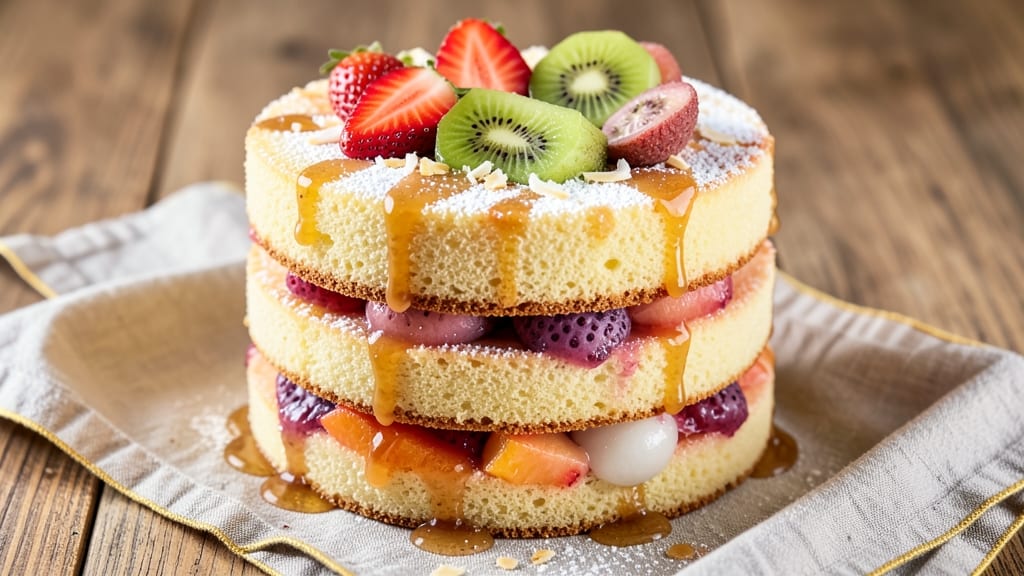
This Asian sponge fruit cake delivers layers of moist sponge infused with tropical fruit flavors that taste like summer in every bite. The secret lies in a chiffon sponge method that creates tender, airy layers while steamed fruit preserves its vibrant essence—whether mango, jackfruit, or lychee.
I've perfected this recipe over years of baking, balancing traditional techniques with modern adaptations that keep the texture light yet rich.
The cake's magic comes from two key components: a foolproof sponge batter that stays moist for days, and fruit that's gently steamed to intensify its natural sweetness without turning mushy.
You'll layer these together with a light cream filling, creating a dessert that's elegant enough for celebrations but simple enough for weeknight treats. The result? A cake with perfectly balanced textures—soft sponge, juicy fruit, and a delicate crumb that dissolves on your tongue.
What sets this recipe apart is its versatility—gluten-free flour blends work beautifully, and vegan substitutes can replace butter without sacrificing flavor. The tropical fruit infusion transforms ordinary sponge cake into something extraordinary, with aromas that fill your kitchen and flavors that linger long after the last slice.
Each layer reveals a different dimension of the fruit's character, making every bite an experience.
Ready in about 2 hours (including baking and cooling), this cake requires minimal effort but delivers restaurant-quality results. The sponge's structure holds up to the fruit's moisture, while the cream filling adds just the right amount of richness.
Whether you're serving it at a gathering or enjoying a quiet dessert moment, this recipe promises a dessert that's as impressive as it is delicious.
Ingredients for asian sponge fruit cake
Tropical fruit puree meets chiffon sponge perfection—here's what makes this cake irresistibly moist.
| Ingredient | Amount | Notes |
|---|---|---|
| All-Purpose Flour 🌾 | 2 ½ cups | Sifted for light texture |
| Granulated Sugar 🍚 | 1 ½ cups | Superfine preferred for smoothness |
| Unsalted Butter 🧈 | 1 cup | Room temperature, full-fat |
| Large Eggs 🥚 | 8 whole | Room temperature, separated |
| Tropical Fruit Puree 🍈 | 1 ½ cups | Mango, jackfruit, or lychee |
| Whole Milk 🥛 | 1 cup | Room temperature |
| Vanilla Extract 🌿 | 2 tsp | Pure Madagascar preferred |
| Baking Powder 🍞 | 2 tsp | Diamond Crystal preferred |
| Salt 🧂 | ½ tsp | Fine sea salt |
| Heavy Cream 🥛 | 2 cups | Cold for whipped filling |
| Powdered Sugar 🍚 | 1 ½ cups | For cream filling |
| Lemon Juice 🍋 | 1 tbsp | Freshly squeezed |
| Fresh Tropical Fruit 🍍 | 3 cups | Chopped for layering |
The flour is your foundation—King Arthur or Bob's Red Mill work best for that tender crumb. For fruit, Trader Joe's frozen mango puree saves time, but fresh is ideal if you're feeling ambitious. Look for fruit with vibrant color—no brown spots means it's still fresh. The butter? Plugrá or Land O'Lakes are reliable, but trust your nose—it should smell clean and rich, not rancid. Room temperature butter is non-negotiable for that light texture, so take it out 30 minutes before baking. Eggs? Pasture-raised from the grocery store have richer flavor, but any large eggs will work.
No tropical fruit puree? Blend fresh fruit with a splash of water—strain to remove seeds. Substituting powdered sugar for granulated? Add 1 tbsp cornstarch to prevent clumping. The heavy cream filling can be made ahead—just whip it up when ready to assemble. For a gluten-free version, swap flour for a 1:1 gluten-free blend like Bob's Red Mill. Want to skip the baking powder? Use 1 tsp baking soda + 1 tbsp lemon juice instead. The key to perfect layers is steaming the fruit first—this intensifies flavor without turning it mushy, but if you're short on time, skip it and use extra puree.
Fruit puree keeps for 3 months frozen in ice cube trays—perfect for single layers. The cake itself stays moist for 5 days covered at room temperature, or 1 week refrigerated. For make-ahead magic, bake the layers and filling separately, then assemble when ready to serve. The whipped cream filling should be used within 2 days—it's best fresh. If storing the whole cake, wrap each layer in plastic and refrigerate. Bring to room temperature before serving for that perfect texture.
Why You'll Love This Recipe
- No-Fuss Mixing: I swear by this method—just cream butter, sugar, and eggs until light, then fold in the flour and fruit puree. No food processor, no whisk arm workout. That tropical puree (mango or lychee, I’m partial to both) blends right in, so no chopping or peeling. Honestly, the hardest part is waiting for it to bake.
- Tropical Twist: The fruit puree isn’t just decoration—it’s the star. That bright, jammy sweetness cuts through the richness of the butter and sugar, giving it a moister, almost custard-like texture. (Yes, even on a Tuesday night.) It’s the kind of cake that tastes like a vacation in every bite, but with the simplicity of a boxed mix.
- Make-Ahead Magic: This cake actually improves with time. Bake it Monday, and it’ll still be tender and flavorful by Friday. I’ve taken slices to work, packed them in lunches, and even frozen portions for lazy mornings. The sponge holds up beautifully—no sad, dry crumbs here.
- Pantry Staple Power: Between us, this recipe uses ingredients you already have. Flour, sugar, butter, eggs—check, check, check. The only “special” part is the fruit puree, but even that’s flexible (canned or fresh). It’s my go-to when I need something impressive but don’t want to raid the store. Budget-friendly? Absolutely. Worth it? Even more so.
Step-by-step instructions for Asian sponge fruit cake
Here's how to create a perfectly moist, layered cake with vibrant tropical fruit infusion.
Prepare the Cake Batter
Preheat your oven to 350°F and grease two 9-inch round cake pans, lining the bottoms with parchment paper. In a stand mixer fitted with the paddle attachment, cream together the 1 cup unsalted butter and 1.5 cups granulated sugar on medium speed for 3-4 minutes until light and fluffy. The mixture should nearly double in volume and become pale in color.
Add the 8 whole large eggs one at a time, mixing well after each addition. Incorporate the 1.5 cups tropical fruit puree and 1 cup whole milk, followed by the 2 teaspoons vanilla extract. In a separate bowl, whisk together the 2.5 cups all-purpose flour, 2 teaspoons baking powder, and 0.5 teaspoon salt. Gradually add the dry ingredients to the wet mixture on low speed until just combined. Avoid overmixing to maintain a light texture.
Bake the Cake Layers
Divide the batter evenly between the prepared cake pans. Bake for 25-30 minutes or until a toothpick inserted into the center comes out clean. The cake should spring back gently when pressed in the center. Let the cakes cool in the pans for 10 minutes, then transfer to a wire rack to cool completely.
While the cakes are baking, prepare the fruit filling by combining the 3 cups fresh tropical fruit with 1 tablespoon lemon juice. Let it sit for 10 minutes to release its juices. This step ensures the fruit remains vibrant and adds moisture to the layers.
Create the Cream Filling
In a chilled bowl, whip the 2 cups heavy cream until soft peaks form. Gradually add the 1.5 cups powdered sugar and continue whipping until the cream is thick and glossy. This whipped cream will provide a light, airy contrast to the dense sponge layers.
Fold the prepared fruit mixture gently into the whipped cream until evenly distributed. The fruit should be dispersed throughout the cream without breaking down the texture. This step is crucial for maintaining the cake's moisture and adding bursts of tropical flavor.
Assemble the Cake
Place the first cake layer on a serving plate and spread a generous layer of the fruit cream mixture over the top. Be careful not to let the cream touch the edges of the cake, as this can cause a soggy crust. Repeat with the second cake layer, pressing down gently to ensure even distribution of the filling.
For a polished finish, dust the top and sides of the cake with a thin layer of powdered sugar using a fine-mesh sieve. This not only adds a decorative touch but also helps to preserve the cake's moisture. Let the cake rest in the refrigerator for at least 2 hours before slicing to allow the layers to set and the flavors to meld.
Pro Tips For Making Asian Sponge Fruit Cake
- Whip Eggs to Ribbon Stage: Beat those eggs until they’re pale, glossy, and hold a ribbon when the whisk is lifted—about 3-5 minutes. I used to stop too early, and the cake turned dense. Trust the process; it’s the only way to get that light, airy texture.
- Strain Your Fruit Puree: Blend your tropical fruit, then strain it through a fine-mesh sieve to remove seeds and pulp. Skipping this step means gummy bits in every slice—no one wants that. (Yes, even if you’re in a hurry.)
- Don’t Overmix the Batter: Fold in the flour and fruit puree gently—just until combined. Overmixing develops gluten, and your cake will turn tough. Think "marble swirls," not "pancake batter."
- Bake in Two Stages: Start at 325°F (160°C) for 20 minutes, then drop to 275°F (135°C) for the rest. This prevents a domed top and ensures even baking—no more undercooked centers or burnt edges. (I learned this after one very uneven cake.)
Regional styles of this asian sponge fruit cake
Singaporean Kaya Toast Cake
This version replaces the chiffon sponge with a thin, crisp kaya toast layered between two delicate sponge cakes. The signature coconut jam (kaya) is made by slow-cooking 1 can (14 oz) coconut milk with 1 cup sugar and 1 tsp pandan extract until thick.
Spread this between two 6-inch sponge layers baked with 1 tsp grated coconut in the batter for that authentic Singaporean aroma. 🌏
Thai Mango Sticky Rice Cake
In Thailand, this cake transforms into a mango sticky rice-inspired dessert using a glutinous rice flour batter (mix 1.5 cups rice flour with 1 cup coconut milk and 2 tbsp sugar)).
Steam the batter in a lined loaf pan for 45 minutes, then slice and layer with ripened mango puree (blend 2 cups ripe mangoes with 2 tbsp sugar). Top with toasted coconut flakes for texture. The result? A chewy, tropical delight with no oven needed! 🥭
Japanese Matcha Green Tea Cake
For a Japanese twist, replace the tropical fruit puree with 2 tbsp high-quality matcha powder (sifted into the dry ingredients). Add 1 tsp vanilla bean paste to the wet mix for depth.
Bake the sponge layers as directed, then fill with a whipped cream (fold in 1 tbsp matcha powder and 1 tsp lemon zest). Garnish with edible gold leaf for a luxurious finish.
The matcha infuses the cake with earthy notes that pair beautifully with lychee or persimmon fruit layers. 🍵
Malaysian Pandan Chiffon Cake
Malaysian home bakers often enhance the chiffon sponge with pandan leaves—simmer 2 fresh pandan leaves in ½ cup hot water for 10 minutes, then strain and add the infused liquid to the batter.
Replace the tropical fruit puree with ½ cup pandan-infused coconut milk (blend 1 can coconut milk with 1 pandan leaf, strain). The result is a vibrant green cake with a fragrant, floral aroma. Layer with steamed jackfruit for a sweet-tart contrast. 🌿
Filipino Ube Halaya Fruit Cake
Filipino desserts shine with ube (purple yam), so swap the tropical fruit puree for 1 cup ube halaya (store-bought or homemade). Mix ½ cup ube halaya into the batter for vibrant purple layers, then fill with a whipped cream infused with 1 tsp ube extract.
Top with toasted pinipig (purple yam chips) for crunch. The ube’s natural sweetness reduces the need for extra sugar—perfect for those watching their intake. 💜
Modern Vegan Adaptation
For a plant-based version, replace butter with 1 cup coconut oil (melted and cooled), use flax eggs (8 tbsp ground flaxseed + 12 tbsp water), and swap heavy cream for coconut whipped cream (chill 2 cans full-fat coconut milk overnight, whip the solids with 1.5 cups powdered sugar).
The tropical fruit puree remains the same, but add 1 tsp agar-agar** to the steamed fruit to thicken it naturally. This adaptation keeps the cake’s moisture intact while making it accessible to vegan diets. 🌱
Nutrition facts
Frequently asked questions
Can I substitute fresh fruit for the puree in this Asian sponge fruit cake?
Use 3 cups fresh tropical fruit instead of the puree, but first steam it for 5-7 minutes to soften while keeping vibrant color. For layering, chop into small pieces—this adds texture contrast while maintaining moisture balance. Just reduce the fruit cream filling by ½ cup to prevent sogginess.
Why does my cake turn out dense instead of light and airy?
Overmixing the batter or underwhipping egg whites are the most common culprits. Use a stand mixer for the sponge and fold dry ingredients gently. Also, ensure your eggs are room temperature and butter is fully softened (not melted). Baking at 350°F for 25-30 minutes is critical—too long = dryness.
How do I make this cake gluten-free without sacrificing texture?
Replace all-purpose flour with a 1:1 gluten-free blend (like Bob's Red Mill) and add 1 tsp xanthan gum to improve structure. For extra moisture, reduce baking time by 2-3 minutes and let cakes cool completely before assembling. The chiffon method still works beautifully with these adjustments!
Can I prepare the fruit filling ahead of time?
Yes! The fruit cream filling stays fresh for 2 days in the fridge. Store it in an airtight container, but bring to room temperature before assembling the cake. For the steamed fruit, it keeps for 3 days in the fridge—just reheat gently before layering to maintain texture.
What's the best way to store leftover cake?
Wrap each layer individually in plastic wrap and store at room temperature for 2 days, or refrigerate for up to 5 days. To revive, slice and warm for 10 seconds in the microwave (covered) to restore moisture. Avoid freezing—it can make the sponge gummy when thawed.