
Desserts
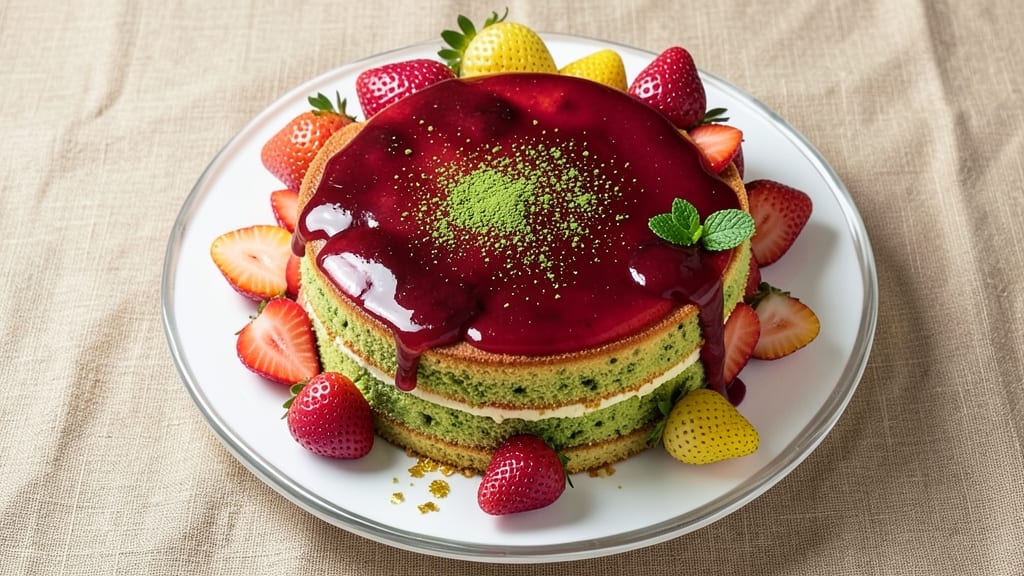
This Asian strawberry cake recipe blends delicate matcha layers with vibrant strawberry topping, creating a dessert that’s both elegant and approachable. The secret lies in balancing earthy matcha with sweet strawberry—two flavors that complement each other perfectly while keeping the texture light and moist.
I’ve perfected this recipe over years of baking, ensuring every slice delivers a harmonious mix of flavors and textures that feel both comforting and refined.
The cake itself is made with a matcha-infused sponge, giving it a subtle earthy depth that pairs beautifully with the fresh strawberry glaze on top.
No fancy equipment is needed—just a few simple techniques, like folding matcha powder into the batter for even distribution and baking the layers at the right temperature to avoid dryness. The result? A cake that’s tender yet sturdy, with a delicate crumb that melts in your mouth.
What sets this recipe apart is the fresh strawberry topping, which adds a bright, fruity contrast to the matcha’s richness. The strawberries are lightly simmered with a touch of sugar and cornstarch to create a glossy, jam-like glaze that binds the layers together.
This isn’t just a cake—it’s a celebration of texture and flavor, where every bite feels like a little moment of indulgence.
The best part? This recipe is adaptable—whether you want to add a splash of pandan extract for extra depth or keep it simple with just matcha and strawberries.
It’s perfect for special occasions, but also feels easy enough for a weekend treat. Let’s get started on creating this stunning, flavorful dessert.
Ingredients for asian strawberry cake
Earthy matcha meets bright strawberries—these ingredients craft a cake that’s both elegant and approachable.
| Ingredient | Amount | Notes |
|---|---|---|
| All-Purpose Flour 🌾 | 2 ½ cups | Sifted for even texture |
| Granulated Sugar 🍚 | 1 ½ cups | Superfine preferred for smoothness |
| Matcha Powder 🍃 | 2 tbsp | Ceremonial grade for purity |
| Unsalted Butter 🧈 | 1 cup | Room temperature, European preferred |
| Large Eggs 🥚 | 4 whole | Room temperature for even baking |
| Whole Milk 🥛 | ¾ cup | Full-fat for richness |
| Baking Powder 🧂 | 1 ½ tsp | Aluminum-free for stability |
| Salt 🧂 | ¼ tsp | Fine sea salt preferred |
| Vanilla Extract 🌿 | 1 tsp | Pure Madagascar preferred |
| Fresh Strawberries 🍓 | 1 ½ lb | Hulless, firm variety |
| Cornstarch 🌾 | 1 ½ tbsp | For glossy strawberry glaze |
| Powdered Sugar 🍚 | ½ cup | For dusting layers |
| Heavy Cream 🥛 | ¼ cup | Cold for whipped topping |
The matcha is non-negotiable—ceremonial grade from Japan (like Ippodo or Marukyu-Koyamaen) delivers that authentic umami depth without bitterness. Bulk spice shops often carry it, or order online for the best quality. For the strawberries, locally grown in season ensures peak sweetness and acidity balance. If using frozen, thaw and pat completely dry to prevent a soggy cake. The butter should be European-style (like Plugrá or President) for its higher fat content, which creates a more tender crumb. Room temperature is critical—soften it by microwaving 20-second bursts if needed.
No matcha powder? Instant espresso powder at half the amount mimics the earthy notes, though it lacks the vibrant green hue. Substituting strawberries? Raspberries or mango purée work beautifully—just reduce the liquid by 2 tablespoons to maintain texture. For the butter, vegetable shortening is a neutral alternative, though it lacks flavor. The baking powder must be fresh—if older than 6 months, test by mixing with water; it should fizz immediately. For a gluten-free version, swap the all-purpose flour for a 1:1 gluten-free baking flour blend (like Bob’s Red Mill), but increase the powdered sugar by 1 tablespoon to compensate for moisture differences.
Store the matcha powder in an airtight container away from light—it loses potency within 3 months. Fresh strawberries keep 5 days in the fridge, but hull and prep them the day before baking for maximum flavor. The cake layers can be baked a day ahead and stored at room temperature, covered loosely with parchment. The strawberry glaze thickens as it cools, so reheat gently with 1 teaspoon water if it becomes too stiff. For make-ahead convenience, assemble the cake 24 hours before serving—the flavors meld beautifully overnight, and the cream topping stays fresher longer.
Why You'll Love This Recipe
- Matcha Magic Shortcut: I’ll be real—this cake starts with a simple boxed mix, but the matcha powder transforms it. Just whisk it into the batter, and suddenly you’ve got that earthy, vibrant depth without extra effort.
- Strawberry Buttercream Bliss: That creamy buttercream? It’s where this cake shines. Rich, slightly sweet, and with fresh strawberries folded right in—no one will guess it’s just five pantry staples. Honestly, my kids think it’s store-bought.
- Weekend or Wrap-Up: Need a dessert for a brunch crowd or a last-minute office treat? Slice it thin, layer with whipped cream, and boom—elegant enough for guests, easy enough for a Tuesday. (Yes, even on a Tuesday night.)
- Budget-Friendly Luxury: Matcha and strawberries sound fancy, but this recipe uses them sparingly. A little goes a long way, and the leftovers? They last days—perfect for when you bake once and feed everyone for the week.
Step-by-step instructions for matcha strawberry cake
Here's how to create a delicate matcha-infused cake with vibrant strawberry layers—each step ensures perfect texture and flavor balance.
Prepare the Matcha Cake Batter
Preheat your oven to 350°F and grease two 8-inch round pans with the unsalted butter, then line the bottoms with parchment paper. In a medium bowl, whisk together the 2.5 cups all-purpose flour, 1.5 cups granulated sugar, 2 tbsp matcha powder, 1.5 tsp baking powder, and 0.25 tsp salt until fully combined. Sift the mixture twice through a fine-mesh sieve to ensure a light, airy texture.
In a separate large bowl, cream the 1 cup unsalted butter (at room temperature) using an electric mixer on medium speed until smooth and pale, about 3-4 minutes. Gradually add the 4 whole large eggs, one at a time, beating well after each addition. Scrape down the sides of the bowl as needed. Stir in the 0.75 cup whole milk and 1 tsp vanilla extract until fully incorporated. With the mixer on low speed, gradually add the dry ingredients to the wet mixture, mixing just until combined—avoid overmixing to maintain a tender crumb.
Bake the Cake Layers
Divide the batter evenly between the prepared pans, smoothing the tops with a spatula. Bake for 25-30 minutes, or until a toothpick inserted into the center comes out clean and the tops spring back when gently pressed. Rotate the pans halfway through baking for even browning. Let the layers cool in the pans for 10 minutes, then transfer to a wire rack to cool completely.
While the layers cool, prepare the strawberry glaze. In a small saucepan, combine 1.5 lb fresh strawberries (hulled and sliced), 1.5 tbsp cornstarch, and 0.5 cup granulated sugar. Cook over medium heat, stirring constantly, until the mixture thickens and coats the back of a spoon, about 8-10 minutes. Remove from heat and let it cool slightly before straining through a fine-mesh sieve to remove seeds. Reserve the purée for the filling.
Assemble the Cake
Once the layers are completely cool, place one layer on a serving plate. Spread a thin, even layer of the strawberry purée over the top, leaving a ½-inch border around the edges. Dust the layer with 0.25 cup powdered sugar for a delicate finish. Repeat with the second layer, pressing gently to adhere. Chill the assembled cake in the refrigerator for 1 hour to set.
To create the whipped cream topping, chill a medium bowl and beaters in the freezer for 10 minutes. Using a stand mixer fitted with the whisk attachment, whip the 0.25 cup cold heavy cream on high speed until soft peaks form. Fold in an additional 2 tbsp powdered sugar if desired for sweetness. Spread the whipped cream evenly over the chilled cake, then top with fresh strawberry slices for a vibrant presentation.
Serve and Enjoy
Slice the cake into 8 equal wedges using a sharp serrated knife, wiping the blade with a damp cloth between cuts. Serve immediately or store covered at room temperature for up to 2 days, though the matcha-infused layers are best enjoyed fresh. The cake should have a moist, tender crumb with a subtle earthy matcha flavor, perfectly balanced by the bright, tangy strawberry filling and creamy whipped topping.
For an extra touch, garnish each slice with a dusting of powdered sugar and a few strawberry seeds before serving. This cake’s harmonious blend of flavors and textures makes it ideal for special occasions or as a delightful treat for matcha and strawberry lovers alike.
Pro Tips For Making Asian Strawberry Cake
- Whisk Butter and Sugar Longer: I used to give up after 2 minutes—big mistake. Beat the butter, sugar, and matcha powder together until the mixture is pale green and ribbons form when you lift the whisk. This incorporates air for a lighter cake, and the matcha blends smoother without streaks. (Yes, even if your arm starts to protest.)
- Sift Matcha Twice: Matcha clumps like a stubborn toddler. Sift it through a fine-mesh sieve before adding it to the butter mixture, then sift it again after mixing with the flour. This prevents gritty bites and ensures an even earthy flavor throughout. Trust me, you’ll taste the difference.
- Don’t Overmix the Batter: The moment you add the eggs and milk, stop folding after just combining everything. Overmixing develops gluten, and your cake will turn dense instead of tender. Think "gentle marriage," not "food processor."
- Bake Until Slightly Under: Pull the cake out when the edges are set but the center still jiggles like Jell-O. Matcha cakes dry out fast, and baking until fully done turns them into matcha-flavored cardboard. Let it cool in the pan for 10 minutes—this is non-negotiable.
Troubleshooting this dish
Dry Cake Layers
If your matcha cake layers turn out dry, it’s usually due to overbaking or insufficient moisture in the batter. First, check your oven temperature—350°F is critical. If your oven runs hot, reduce the temperature to 325°F and bake for 35 minutes instead.
Also, ensure your butter is fully room temperature (it should dent slightly when pressed). For extra moisture, add 1 tbsp sour cream or yogurt to the batter.
If the cake is already baked, revive it by brushing the layers with 1 tbsp simple syrup (equal parts water and sugar) before assembling.
Cracked Top
Cracks often appear when the batter is overmixed or the oven temperature fluctuates. To prevent this, mix the batter just until combined—stop as soon as the dry ingredients disappear. Also, avoid opening the oven door during the first 20 minutes of baking to maintain steady heat.
If cracks form, they’re purely cosmetic and won’t affect taste. For a smoother finish, level the tops with a serrated knife before baking.
Strawberry Glaze Too Thin
A runny strawberry glaze usually means the strawberries weren’t cooked long enough or the cornstarch wasn’t fully dissolved. Simmer the strawberry mixture for an extra 2-3 minutes until it thickens to a jam-like consistency.
If it’s still too thin, mix ½ tsp lemon juice with 1 tsp cornstarch, then stir into the glaze. Let it cook for another 1 minute until it thickens. For a glossy finish, chill the glaze for 10 minutes before using.
Matcha Flavor Uneven
If the matcha taste is inconsistent, it’s likely because the powder wasn’t fully incorporated into the batter. Sift the matcha powder twice through a fine-mesh sieve to break up clumps, then whisk it directly into the dry ingredients before combining with the wet mixture.
For a smoother texture, dissolve the matcha in 1 tbsp warm milk first, then add it to the batter. Avoid using culinary-grade matcha—it’s often bitter and unevenly ground.
Whipped Cream Not Holding
If your whipped cream collapses or doesn’t hold its shape, it’s likely due to warm cream or overwhipping. Chill the bowl and beaters in the freezer for 10 minutes before whipping, and use cold heavy cream straight from the fridge.
Whip on high speed until soft peaks form—overwhipping turns it buttery. If it’s already overdone, fold in 1 tbsp powdered sugar to stabilize it. For extra stability, add ½ tsp vanilla extract or a pinch of cream of tartar.
Strawberries Bleeding Through
Excess moisture from strawberries can make the cake soggy. Pat the sliced strawberries completely dry with paper towels before cooking, and strain the glaze thoroughly to remove excess liquid.
If the cake still feels damp, let the layers cool completely before assembling, and chill the cake for 2 hours instead of 1 hour to firm up the filling. For a cleaner look, brush the layers with a thin layer of apricot jam before adding the strawberry glaze.
Nutrition facts
Frequently asked questions
Can I make this cake without matcha powder?
Yes! If you don't have matcha, substitute 1 tbsp instant espresso powder for the earthy depth, though it won't have the vibrant green color. For a floral twist, try 1 tsp rose water instead—it pairs beautifully with strawberries. Just reduce the milk by 1 tbsp to maintain moisture balance.
How do I store leftovers to keep them fresh?
Wrap the cake tightly in plastic wrap and store at room temperature for up to 2 days. For longer storage, refrigerate for up to 5 days, but bring to room temperature before serving. The matcha layers stay moist, but the whipped cream topping may separate slightly—rewhip briefly before serving.
Can I use frozen strawberries for the glaze?
Frozen strawberries work, but thaw and pat them completely dry first to prevent a soggy cake. For best results, use fresh strawberries in season—their natural sweetness and acidity create a brighter flavor. If using frozen, strain the cooked glaze extra thoroughly to remove excess liquid.
What's the best way to make this cake gluten-free?
Replace the all-purpose flour with a 1:1 gluten-free baking flour blend (like Bob's Red Mill) and increase the powdered sugar by 1 tbsp to compensate for moisture differences. Also, add ½ tsp xanthan gum to improve texture. Chill the batter for 30 minutes before baking to prevent crumbling.
Why does my cake have a bitter taste?
Bitterness usually comes from using low-quality matcha or overmixing the batter. Always use ceremonial-grade matcha (like Ippodo) and sift it thoroughly to avoid clumps. Also, mix just until combined—overmixing develops gluten, which can make the cake dense and bitter-tasting.