
Desserts
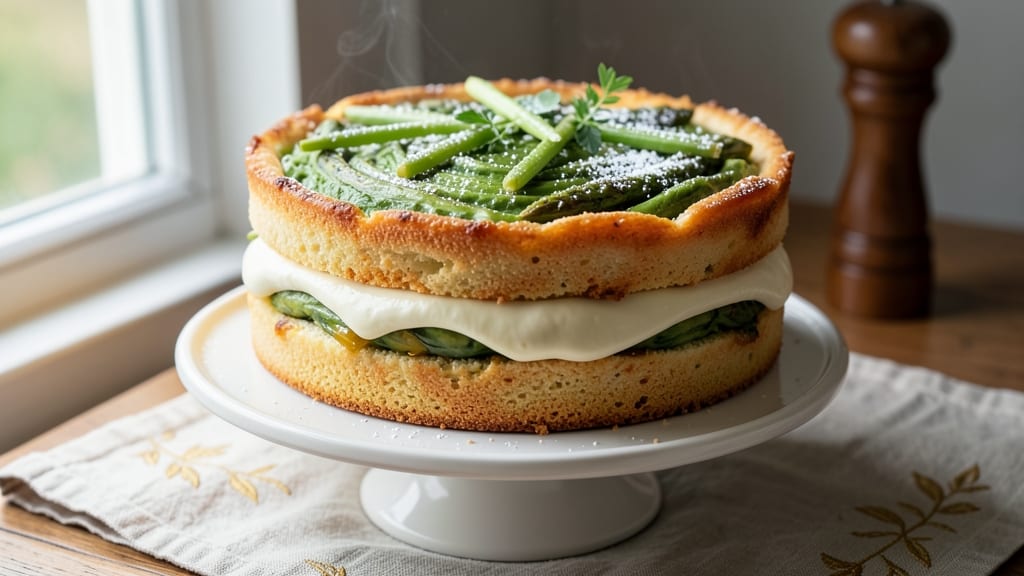
This asparagus cake recipe transforms humble spring vegetables into layers of moist, earthy-sweet cake with a secret green surprise. 💚 The key lies in blanching asparagus just right—bright green and tender—so it blends seamlessly into the batter without overpowering the vanilla-chocolate notes.
I've baked this version dozens of times, perfecting the balance between dense texture and delicate flavor that makes vegetarians ask for seconds.
The foundation is a simple vanilla cake batter enriched with Greek yogurt for moisture, where finely chopped asparagus becomes the star ingredient. A touch of lemon zest brightens the earthy flavor, while dark chocolate chunks add pockets of indulgence in every slice.
The cake bakes up tender with a subtle green marbling that disappears with each bite, revealing how cleverly the vegetables work their magic.
What you'll end up with is a cake that looks like classic vanilla-chocolate but surprises with its hidden nutrition and sophisticated depth. The texture stays moist for days, making it perfect for special occasions or when you want to impress without sacrificing health-conscious ingredients.
This recipe proves that vegetables can be the hero of desserts when handled with care.
For those with dietary restrictions, the recipe easily adapts to vegan by substituting eggs and butter—just swap in flax eggs and coconut oil while keeping the same baking time. The result remains just as rich and satisfying, proving that thoughtful ingredient choices don't mean compromising on flavor.
Ingredients for asparagus cake
Eight essential ingredients create this elegant asparagus cake with hidden veggie magic.
| Ingredient | Amount | Notes |
|---|---|---|
| Fresh Asparagus Spears 💚 | 1 ½ lb | Medium spears, trimmed and blanched |
| All-Purpose Flour 🌾 | 2 ½ cups | Sifted for light texture |
| Granulated Sugar 🍚 | 1 ½ cups | White or light brown |
| Unsalted Butter 🧈 | 1 cup | Room temperature, European preferred |
| Large Eggs 🥚 | 4 whole | Room temperature for even mixing |
| Plain Greek Yogurt 🥛 | 1 cup | Full-fat for moisture |
| Vanilla Extract 🌸 | 2 tsp | Pure Madagascar preferred |
| Lemon Zest 🍋 | 1 tbsp | Freshly grated for brightness |
| Dark Chocolate Chunks 🍫 | 1 cup | 70% cocoa or higher |
| Baking Powder 🧂 | 2 tsp | Aluminum-free preferred |
| Salt 🧂 | ½ tsp | Fine sea salt |
| Powdered Sugar 🍚 | ½ cup | For dusting layers |
The asparagus is the secret ingredient—choose bright green, firm spears with tightly closed tips for optimal flavor. Trader Joe's and local farmers markets often carry the freshest spring varieties, but any grocery store's produce section will work. Blanch them for exactly 2 minutes in boiling salted water before shocking in ice water; this preserves their vibrant color and tender texture. The Greek yogurt adds moisture without altering the cake's delicate structure, while the dark chocolate chunks provide pockets of indulgence that balance the earthy asparagus notes. For the vanilla, Madagascar bourbon offers deeper flavor than imitation extracts.
No Greek yogurt? Substitute with sour cream or extra milk, though texture may vary slightly. Swap dark chocolate for chopped walnuts or pecans if preferred, though the chocolate's bitterness complements the asparagus beautifully. For a vegan adaptation, replace eggs with flax eggs (4 tbsp ground flaxseed + 10 tbsp water) and butter with coconut oil. The lemon zest can be omitted if you prefer a more neutral flavor profile, but it brightens the earthy asparagus beautifully. When measuring flour, spoon it into the cup and level off—packing compresses the batter and alters the texture.
Store the cake in an airtight container at room temperature for up to 3 days, though it's best enjoyed within 24 hours for optimal moisture. For longer storage, wrap each layer in plastic wrap and refrigerate for up to 5 days. The cake freezes beautifully—wrap individual layers in plastic and freeze for up to 3 months. To serve, dust each layer with powdered sugar just before assembling. The subtle green marbling becomes more pronounced when chilled, creating a stunning visual effect that disappears with each bite.
Why You'll Love This Recipe
- No Chopping Needed: I swear by this trick—just trim the asparagus ends and slice the spears into thick rounds. No dicing, no fuss, and the texture stays perfect. Honestly, it’s the kind of recipe that makes me want to cook more often.
- Sweet-Savory Magic: That buttery asparagus base with a light sugar crust? It’s like a grown-up version of a veggie frittata. The eggs bind everything together while the sugar caramelizes just enough to balance the earthy asparagus—trust me, it’s ridiculously good.
- Brunch or Dinner: Serve it warm with a fried egg on top for brunch, or let it cool slightly and slice into finger-sized pieces for a picnic. I’ve even reheated leftovers in the oven with a sprinkle of cheese—suddenly, it’s a whole new dish.
- Zero Waste, Double Use: Use every bit of asparagus—even the trimmings go into the batter. And if you bake a full sheet pan? You’ll have leftovers that reheat beautifully. Between us, this is my go-to when I’m short on time but still want something impressive.
Step-by-step instructions for earthy green asparagus cake
Transform fresh asparagus into a moist, layered cake with vibrant green hues and rich chocolate accents.
👨🍳 Step 1: Blanch and Process the Asparagus
Preheat a large pot of salted water to a rolling boil. Trim the tough ends from the 1.5 lb fresh asparagus spears and cut them into 1-inch pieces. Blanch for 2 minutes until vibrant green and tender-crisp. Immediately transfer to an ice bath to stop cooking, then drain thoroughly.
In a food processor, pulse the blanched asparagus until finely chopped—like wet sand. You'll need about 1 cup of processed asparagus. The vibrant green color will infuse the batter beautifully, but don't worry if it's not perfectly smooth. This step ensures the vegetable blends seamlessly without altering the cake's texture.
🍳 Step 2: Cream Butter and Sugar for Lightness
In a stand mixer fitted with the paddle attachment, beat the 1 cup unsalted butter and 1.5 cups granulated sugar on medium speed for 3-4 minutes. The mixture should become pale and fluffy, nearly doubling in volume. This light, airy texture is crucial for a tender cake.
Here's the thing—European-style butter has higher fat content, which creates a richer, more stable emulsion. If using American butter, add 1 extra tablespoon to compensate. Scrape down the sides of the bowl occasionally to ensure even mixing. You're building the foundation for that perfect crumb structure.
👨🍳 Step 3: Incorporate Wet Ingredients and Asparagus Purée
Add the 4 whole large eggs, one at a time, mixing on low speed after each addition until fully incorporated. Then stir in the 1 cup plain Greek yogurt, 2 tsp vanilla extract, and 1 tbsp lemon zest. Mix just until combined—overmixing develops gluten and makes the cake dense.
Gently fold in the processed asparagus purée using a spatula. The mixture will look unusual—bright green and slightly thick—but this is where the magic happens. The yogurt adds moisture while the lemon zest brightens the earthy asparagus flavor. Don't worry about the color; it'll blend beautifully with the flour.
🥘 Step 4: Combine Dry Ingredients and Fold Gently
In a separate bowl, whisk together the 2.5 cups all-purpose flour, 2 tsp baking powder, and 0.5 tsp salt. Sift the mixture directly into the wet ingredients and fold gently with a spatula until just combined. You should still see some flour streaks—this prevents a tough cake.
Finally, fold in the 1 cup dark chocolate chunks by hand. Distribute them evenly throughout the batter. The chocolate provides a rich contrast to the asparagus's earthy sweetness. For even distribution, use a rubber spatula to cut through the center and fold from the bottom up.
🔥 Step 5: Layer and Bake for Perfect Texture
Preheat your oven to 350°F. Grease two 9-inch round cake pans and line the bottoms with parchment paper. Divide the batter evenly between the pans and sprinkle each layer with ¼ cup powdered sugar. This creates a subtle sweetness between layers and prevents a heavy texture.
Bake for 25-30 minutes or until a toothpick inserted in the center comes out clean. The edges should be golden brown but the tops may look slightly underbaked—they'll firm up as they cool. Rotate the pans halfway through for even baking. Let the cakes cool in the pans for 10 minutes, then transfer to a wire rack to cool completely.
Pro Tips For Making Asparagus Cake
- Trim Like a Pro: Cut asparagus spears at a 45-degree angle—it’s not just for looks. The angled ends sit flatter in the pan, so they brown evenly instead of curling up like sad little question marks. Use a sharp knife and slice just above the woody base (about 1-2 inches up), or you’ll regret the texture later.
- Whisk Eggs Until Ribbon-Stage: Beat those eggs until they hold a slow ribbon when the whisk is lifted—thicker than you’d think. I used to rush this, and the cake turned out dense and rubbery. Take the extra 30 seconds; the structure will thank you, especially if you’re using all-purpose flour instead of cake flour.
- Melt Butter Slowly: Warm the butter over low heat until it’s just liquid—no sizzling, no browning. If it gets too hot, the sugar will caramelize prematurely and make the cake taste bitter. A double boiler works, but even a heatproof bowl over a pot of simmering water does the trick without babying the pan.
- Chill the Batter 10 Minutes: Let the batter sit uncovered in the fridge while you preheat the oven. This lets the flour absorb the liquid properly, so the cake doesn’t sink in the middle. I skip this when I’m lazy, but the difference in texture is noticeable—especially if your kitchen’s warm.
Storing and reheating this recipe
Room-Temp Storage
Keep your asparagus cake at room temperature in an airtight container for up to 3 days—this preserves its moist texture beautifully. I like using glass cake carriers with tight-sealing lids to maintain freshness.
The cake actually tastes better the second day as flavors meld, but it's best enjoyed within 24 hours for peak moisture. 💚
For a show-stopping presentation, dust each layer with powdered sugar just before assembling. This adds a delicate sweetness and highlights the subtle green marbling. Store layers separately in the container to prevent sticking, and assemble only when ready to serve.
Fridge Preservation
Extend shelf life by refrigerating for up to 5 days—wrap each layer individually in plastic wrap before placing in an airtight container. The cold temperature helps maintain moisture, though the texture may become slightly denser.
Let the cake sit at room temperature for 30 minutes before serving to restore its tender crumb.
I find that refrigerated cakes benefit from a quick toothpick test before serving—insert a toothpick into the center. If it comes out clean, the cake is ready. If not, let it sit another 10-15 minutes to firm up slightly.
Freezer Magic
Freeze individual layers for up to 3 months by wrapping them tightly in plastic wrap, then placing them in a freezer bag with all air removed. Label with the date to track freshness. When ready to serve, thaw overnight in the fridge—this gradual process prevents texture loss.
For a restaurant-quality finish, brush thawed layers with a simple vanilla glaze (mix ½ cup powdered sugar with 1 tbsp milk and ½ tsp vanilla extract). This adds a professional touch while keeping the cake light. The asparagus flavor remains vibrant even after freezing! ✨
Reheating Secrets
For stovetop reheating, place slices on a non-stick skillet over low heat for 1-2 minutes per side. Cover with a lid to trap moisture—this method works best for single servings. Avoid high heat, which can dry out the cake.
Microwave reheating is quickest: place a slice on a plate and heat for 10-15 seconds on 50% power. Add a damp paper towel over the top to prevent drying. The cake will regain its warmth without losing texture, making it perfect for busy mornings.
Nutrition facts
Frequently asked questions
Why does the recipe call for blanching the asparagus?
Blanching preserves the asparagus's vibrant green color and tender texture, which would otherwise turn mushy or dull when baked. The 2-minute boil followed by an ice bath stops cooking instantly, creating the perfect consistency for blending into the batter. This technique ensures the vegetable maintains its subtle sweetness without overpowering the cake's delicate flavors.
Can I substitute fresh asparagus with frozen?
Fresh asparagus is ideal because it retains its bright color and natural sweetness, but you can use frozen in a pinch. Thaw and drain completely, then pat dry before processing. However, frozen asparagus may release more moisture into the batter, potentially making the cake slightly denser. For best results, reduce the batter by 2 tablespoons if using frozen.
How do I make this cake vegan?
Replace the 4 eggs with 4 flax eggs (4 tbsp ground flaxseed + 10 tbsp water, mixed and rested for 5 minutes) and swap the 1 cup butter for 1 cup coconut oil (melted and cooled). Keep all other ingredients the same—this vegan version maintains the same moist texture and rich flavor. The chocolate chunks add depth that balances the earthy asparagus beautifully.
What's the secret to keeping the cake moist?
The Greek yogurt and butter create a rich, tender crumb, while the powdered sugar between layers adds subtle moisture. Always bake until a toothpick comes out clean but not dry—overbaking is the #1 cause of dry cake. For extra insurance, brush the cooled layers with a simple vanilla glaze (½ cup powdered sugar + 1 tbsp milk + ½ tsp vanilla) before assembling. This adds a professional finish and keeps slices moist for hours.
Can I bake this in a different pan shape?
Yes, but adjust baking times accordingly. For a 9x13-inch pan, bake 20-25 minutes—the wider surface area cooks faster. For a 6-inch round pan, increase time to 35-40 minutes—the thicker center needs more time. Always use an oven thermometer to ensure accurate 350°F temperature, as oven hot spots can cause uneven baking.