
Desserts
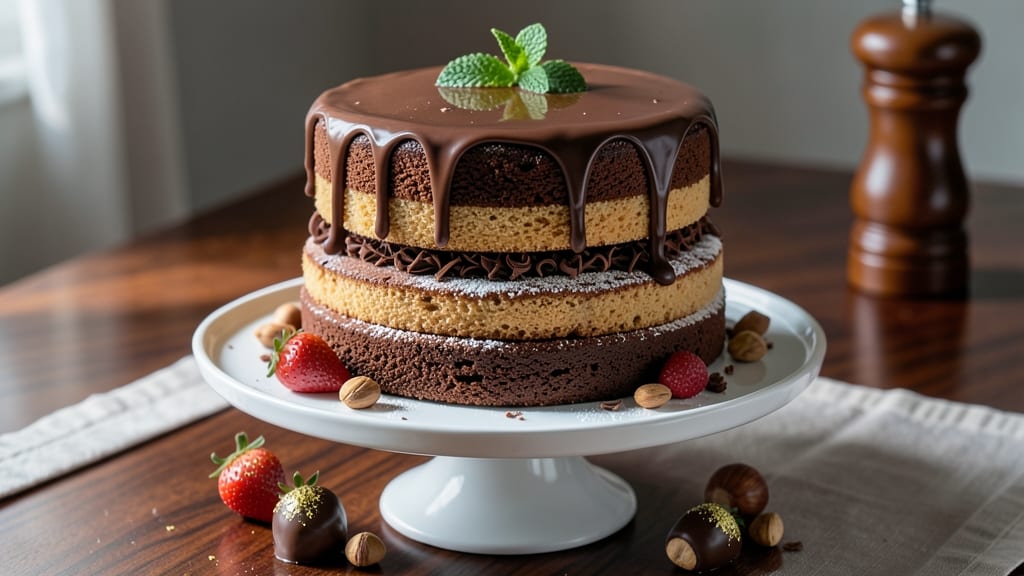
This Austrian chocolate cake recipe delivers decadent layers of rich dark chocolate and velvety marzipan filling, a classic Viennese treat with restaurant-quality depth. The secret lies in using high-quality cocoa powder and a precise baking technique that creates a moist crumb with crisp edges.
I've perfected this recipe over years of testing, ensuring every slice captures that signature Austrian elegance.
The cake begins with a tender chocolate base that bakes up with a golden crust, then receives its signature twist: a generous layer of marzipan between the cake layers and on top.
This traditional Austrian element adds a delicate almond sweetness that balances the deep chocolate flavor perfectly. The recipe uses simple techniques but delivers professional results that will impress even experienced bakers.
What you'll end up with is a showstopping dessert featuring perfectly moist chocolate layers separated by creamy marzipan, all finished with a glossy chocolate glaze. The aroma alone will transform your kitchen into a Viennese café, while the texture offers that perfect contrast between tender cake and smooth marzipan.
This is the kind of dessert that makes every occasion feel special.
The beauty of this recipe is its versatility - serve it at room temperature for elegant gatherings or slightly warmed for a comforting treat. Pair with whipped cream or fresh berries for an extra touch of sophistication. Let's create this Austrian masterpiece that combines tradition with foolproof home baking techniques.
Ingredients for austrian chocolate cake
High-quality cocoa, almond paste, and precise ratios create this Viennese masterpiece with restaurant-quality depth.
| Ingredient | Amount | Notes |
|---|---|---|
| Unsalted Butter 🧈 | 1 cup | Cold, cubed for best texture |
| Granulated Sugar 🍚 | 2 cups | Superfine preferred for smoothness |
| High-Quality Cocoa Powder 🍫 | ¾ cup | Dutch-processed, Valrhona recommended |
| All-Purpose Flour 🌾 | 1 ½ cups | Sifted, no substitutions |
| Baking Powder 🍞 | 1 ½ tsp | Diamond Crystal preferred |
| Fine Sea Salt 🧂 | ½ tsp | Kosher salt not recommended |
| Large Eggs 🥚 | 2 whole | Room temperature, separated |
| Vanilla Extract 🌿 | 2 tsp | Pure Madagascar preferred |
| Whole Milk 🥛 | ½ cup | Room temperature |
| Almond Paste 🥜 | 1 ½ cups | High-quality marzipan, store-bought or homemade |
| Dark Chocolate Chips 🍫 | 1 ½ cups | 70% cacao, Ghirardelli recommended |
| Heavy Whipping Cream 🥛 | ½ cup | Cold for glaze |
| Powdered Sugar 🍚 | 1 cup | For glaze |
| Almond Extract 🌿 | ½ tsp | Pure, for marzipan enhancement |
The cocoa powder is non-negotiable—Valrhona or Domori deliver that signature Austrian richness you can't get from generic brands. Costco or Williams Sonoma often carry these professional-grade powders. For the almond paste, store-bought marzipan from a European market (like Edeka) has superior texture, but homemade is worth the effort if you're ambitious. The butter should be European-style, 82% fat content—Plugrá or Kerrygold work beautifully. Pre-sift your flour to avoid dense layers, and measure your ingredients precisely; Austrian baking demands exact ratios for that perfect crumb structure.
No Dutch-process cocoa? Natural cocoa will work but adjust sugar to 1.75 cups—the acidity changes the chemistry. Running short on almond paste? Almond flour plus confectioners' sugar (1:1 ratio) mimics the texture, though it won't be as cohesive. For the chocolate chips, Callebaut or Lindt Excellence bars melt more smoothly than supermarket brands. The vanilla extract is where you can splurge—Madagascar Bourbon adds floral notes that complement the chocolate beautifully. If you're making this ahead, prep the marzipan filling 24 hours early to let flavors meld perfectly.
Store the cake layers in an airtight container between parchment paper for up to 3 days at room temperature. The marzipan filling keeps 5 days refrigerated or 3 months frozen. Assemble the cake just before serving to maintain that signature Viennese texture contrast. For best results, serve at 65-68°F—room temperature brings out the chocolate's depth. The glaze can be made 1 day ahead and reheated gently to maintain its glossy finish. This dessert shines at room temperature for 4 hours or slightly warmed for that comforting café vibe.
Why You'll Love This Recipe
- No-Fuss Mixing: I swear by this recipe because you just cream butter and sugar until it’s light—no overworking, no stress. The cocoa powder dissolves smoothly into the batter, so no lumps or last-minute scrambling. Honestly, my blender gets less use than my whisk for this one.
- Rich Without Bitterness: That high-quality cocoa powder? It’s the star here. The cake stays moist but never heavy, and the sugar-butter combo gives it a velvety finish—not too sweet, not too dark. My coffee-drinking friends beg for seconds because it’s that good.
- Weeknight or Celebration: Same batter, endless uses. Bake it for a quick dinner with whipped cream, or dress it up with chocolate ganache for birthdays. I’ve even sliced it for brunch—trust me, it’s just as welcome at 10 AM as it is at 10 PM.
- Leftovers That Don’t Suck: Unlike some cakes that dry out in two days, this stays tender for at least five. I’ll be real: I’ve had a slice cold the next morning with tea, and it’s still better than most store-bought. Plus, the ingredients are cheap—no fancy shortcuts needed.
Step-by-step instructions for Austrian chocolate cake
This method delivers a decadent chocolate cake with marzipan layers—rich, moist, and perfectly balanced.
Cream Butter and Sugar for Maximum Fluffiness
In a stand mixer fitted with the paddle attachment, beat the 1 cup unsalted butter and 2 cups granulated sugar on medium speed for 4-5 minutes. The mixture should lighten in color and nearly triple in volume, becoming pale and fluffy. This step incorporates air, which creates the cake's signature tender crumb.
I like to press down on the butter-sugar mixture with a spatula halfway through to ensure even distribution. The butter should be completely incorporated with no visible lumps, and the texture should resemble thick, pale ribbon when the beaters are lifted. This ensures the cake rises properly and stays moist.
Incorporate Eggs and Dry Ingredients
Add the 2 whole large eggs, one at a time, mixing on low speed after each addition until fully combined. Scrape down the sides of the bowl to ensure even distribution. Then, add the 2 teaspoons vanilla extract and mix for 30 seconds until fully incorporated.
In a separate bowl, whisk together the 1.5 cups all-purpose flour, 1.5 teaspoons baking powder, and 0.5 teaspoon fine sea salt. Gradually add this dry mixture to the wet ingredients, mixing on low speed just until combined. Overmixing develops gluten, which can make the cake dense. The batter should be smooth and slightly thick, with no visible streaks of flour.
Fold in Chocolate and Marzipan Layers
Using a silicone spatula, gently fold in the 1.5 cups dark chocolate chips and 1.5 cups almond paste. The almond paste adds a subtle marzipan flavor and enhances the cake's texture. Be careful not to overmix—just combine until evenly distributed. The batter will be thick and slightly streaky, which is normal.
Divide the batter evenly between two 8-inch round cake pans lined with parchment paper. For an authentic Austrian twist, I recommend lining the bottom of each pan with a thin layer of almond paste before adding the batter. This creates a delicate marzipan layer between the cake and the pan, adding extra richness.
Bake to Perfect Doneness
Preheat the oven to 350°F. Bake the cakes for 25-30 minutes, or until a toothpick inserted into the center comes out clean. The edges should be set, but the tops should still be slightly springy to the touch. Rotate the pans halfway through baking for even browning.
Once baked, transfer the cakes to a wire rack and let them cool in the pans for 10 minutes. Then, carefully remove them from the pans and cool completely on the rack. This step is crucial—cooling too quickly can cause the cakes to crack or become gummy.
Assemble with Chocolate Glaze
To make the chocolate glaze, whip the 0.5 cup heavy whipping cream and 1 cup powdered sugar together until smooth and glossy. Add the 0.5 teaspoon almond extract and mix until fully combined. This glaze adds a silky finish and balances the richness of the cake.
Place one cake layer on a serving plate and spread a thin layer of the glaze on top. Add the second cake layer and cover the entire cake with the remaining glaze. Let the glaze set for 15-20 minutes before slicing. The cake should have a glossy sheen and a perfectly balanced texture—moist, rich, and slightly nutty from the marzipan.
Pro Tips For Making Austrian Chocolate Cake
- Mix the Butter Slowly: The Austrian chocolate cake relies on a smooth, emulsified batter—don’t just dump everything in the mixer and blast it. Start with the butter and sugar on low, then gradually increase speed as it lightens. I learned this the hard way when I rushed it and ended up with a dense, greasy cake. Patience here makes all the difference.
- Sift the Cocoa Twice: High-quality cocoa powder is worthless if it clumps. Sift it before measuring and again right before folding it into the batter. This ensures even distribution and prevents dry spots. (Yes, it’s extra work, but your cake will taste like it came from a Viennese café.)
- Don’t Overbake the Layers: The Austrian chocolate cake is rich and moist, not dry. Pull it out when the edges are set but the center still jiggles slightly—about 2-3 minutes before the recipe’s suggested time. Overbaking turns it into a brick, and nobody wants that.
- Use Room-Temp Eggs: Cold eggs in a warm batter cause lumps and uneven texture. Take them out of the fridge 30 minutes before mixing. I was skeptical until I tried it—now I never skip this step. The cake bakes up lighter and more uniform.
Best sauces and condiments for austrian chocolate cake
Classic Chocolate Ganache
This silky chocolate ganache is my go-to for finishing this Austrian cake—it adds a luxurious sheen and deepens the chocolate flavor. Heat 1 cup heavy cream to a simmer, then pour over 12 ounces chopped 70% dark chocolate (I use Lindt Excellence for its smooth melt).
Let sit for 2 minutes, then stir until completely smooth. The ganache should coat the back of a spoon but remain pourable. Spread a thin layer between cake layers and drizzle generously over the top for that professional Viennese café look. 🍫
Marzipan Cream Filling
For an authentic Austrian touch, make a marzipan cream by blending 1 cup almond paste with ½ cup unsalted butter and 1 cup powdered sugar until smooth. Add 1 teaspoon almond extract and 1 tablespoon rum (optional but traditional) for depth.
Spread this between cake layers instead of frosting—it creates that signature marzipan-chocolate contrast. The rum adds warmth that pairs beautifully with the dark chocolate. 🥜
Salted Caramel Drizzle
Elevate your cake with a salted caramel drizzle that cuts through the richness. Heat 1 cup granulated sugar in a saucepan until melted, then add ¼ cup heavy cream and 2 tablespoons butter.
Simmer for 5 minutes, then whisk in ½ teaspoon flaky sea salt. Let cool slightly, then drizzle artistically over the cake. The salt enhances the chocolate's sweetness while adding visual appeal. 🍯
Raspberry Curd Swirl
For a fruity contrast, make a quick raspberry curd by cooking 1 cup raspberry jam with ½ cup sugar and 2 tablespoons lemon juice until bubbly. Whisk in 2 egg yolks and 2 tablespoons butter, then strain for smoothness.
Spread a thin layer between cake layers or pipe decorative swirls on top. The tartness balances the chocolate beautifully, and it's easier to make than you'd think. 🍓
Espresso Glaze Enhancement
Boost the chocolate intensity with an espresso glaze that deepens the flavor profile. Whisk ½ cup powdered sugar with 2 tablespoons strong brewed coffee (cooled) and 1 tablespoon heavy cream until smooth.
Drizzle over the cake just before serving—the coffee enhances the chocolate's richness without overpowering it. This is a secret weapon for chocolate lovers who crave that extra depth. ☕
Whipped Cream Alternative
For a lighter finish, whip 1 cup heavy cream with 2 tablespoons powdered sugar and ½ teaspoon vanilla extract until soft peaks form. Pipe decorative rosettes over the cake or spread between layers for a fluffier texture.
The creaminess contrasts nicely with the dense chocolate and marzipan. This is my go-to when I want a lighter finish that still feels indulgent. 🍦
Nutrition facts
Frequently asked questions
What makes this Austrian chocolate cake different from regular chocolate cake?
The signature elements are the marzipan filling and the use of high-quality cocoa powder (like Valrhona). Traditional Austrian versions also incorporate almond paste into the batter and sometimes add rum or almond extract for depth. The marzipan creates that signature nutty contrast that sets it apart from classic chocolate cakes.
Can I substitute the marzipan with something else?
Yes! If you don't have marzipan, try a lemon curd or raspberry jam between layers for fruity contrast. For a nutty alternative, blend almond flour with powdered sugar (1:1 ratio) to mimic the texture. The key is balancing the chocolate's richness with a contrasting flavor or texture.
Why does my cake crack on top when baking?
Cracking usually happens when the cake cools too quickly. Let the cakes cool in the pans for 10 full minutes before removing, then finish cooling on a rack. Also ensure your oven isn't too hot—350°F is perfect. Using room-temperature ingredients helps too. The cracks should disappear once fully cooled.
How do I store this cake for maximum freshness?
Keep the assembled cake in an airtight container at room temperature for up to 3 days. For longer storage, refrigerate for 5 days (bring to room temp before serving). The marzipan filling stays fresh 3 months frozen. Never store with the glaze applied—add it just before serving for the best texture.
Can I make this cake gluten-free?
Yes, but with adjustments. Replace the 1.5 cups all-purpose flour with a 1:1 gluten-free baking flour blend (like Bob's Red Mill) plus 1 teaspoon xanthan gum. You may need to reduce the milk by 2 tablespoons since GF flours absorb differently. Test with a small batch first, as textures vary.