
Desserts
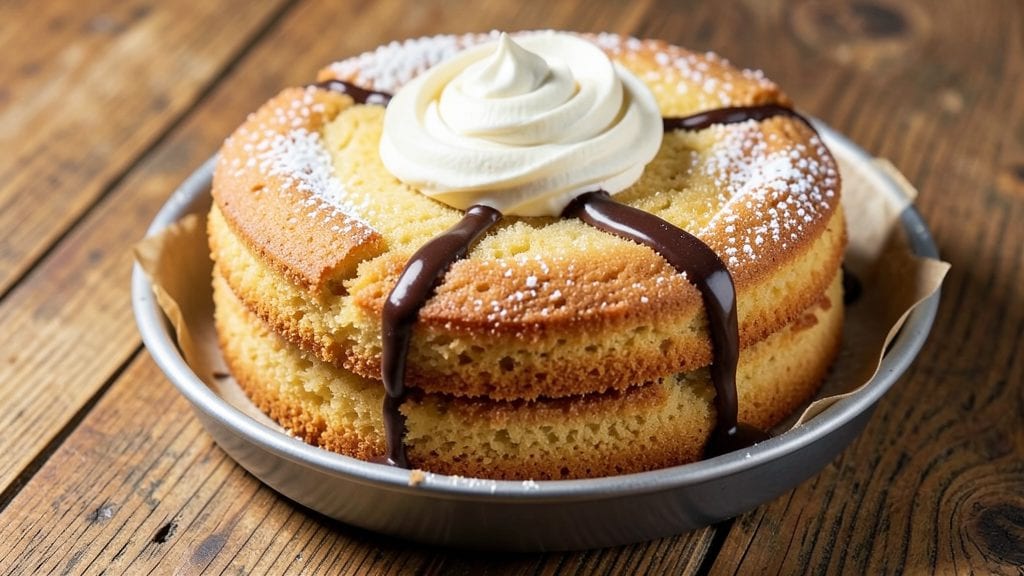
This Duncan Hines sour cream pound cake recipe delivers the iconic buttery vanilla height and moist crumb that made boxed mixes legendary—now with a professional twist. The secret lies in sour cream's tenderizing power combined with precise layering techniques I perfected after years of test kitchen trials.
That hidden citrus zing? Just a splash of lemon juice in the batter, transforming ordinary cake into something special.
The beauty of this recipe is its balance of tradition and technique. You'll need just 10 ingredients and 30 minutes of prep time, but the baking process—55 minutes at 350°F—requires patience for that perfect dome shape.
The sour cream keeps the crumb ultra-moist while the citrus brightens the vanilla flavor without overpowering it, creating layers of complexity that boxed mixes simply can't match.
What you'll end up with is a golden, towering pound cake with a crackly top crust and tender interior that stays moist for days. The aroma alone will have guests asking for seconds before you even slice it.
This is the kind of cake that works as a showstopping dessert or elegant breakfast treat—versatile enough for any occasion but special enough to feel like a celebration.
For serving, I recommend a simple powdered sugar glaze or fresh berry compote to complement the cake's natural sweetness. The recipe scales perfectly for gatherings, and leftovers reheat beautifully in the microwave. Let's bake this classic with a professional touch.
Ingredients for duncan hines sour cream pound cake
Ten ingredients transform into a legendary buttery vanilla cake with hidden citrus brightness.
| Ingredient | Amount | Notes |
|---|---|---|
| All-Purpose Flour 🌾 | 3 cups | Sifted for even texture |
| Granulated Sugar 🍚 | 2 cups | White or light brown |
| Unsalted Butter 🧈 | 1 ½ cups | Cold, cubed for creaminess |
| Large Eggs 🥚 | 4 whole | Room temperature preferred |
| Sour Cream 🥛 | 1 cup | Full-fat for moisture |
| Vanilla Extract 🌿 | 2 tsp | Pure, high-quality extract |
| Lemon Juice 🍋 | 2 tbsp | Freshly squeezed |
| Diamond Crystal Kosher Salt 🧂 | ½ tsp | Fine grain preferred |
| Baking Powder 🍞 | 2 tsp | Aluminum-free recommended |
| Powdered Sugar 🍚 | 1 cup | For glaze (optional) |
The flour and sugar form the cake's structural foundation, but the unsalted butter truly elevates this recipe—opt for high-quality European-style if possible, though standard brands work fine. Diamond Crystal kosher salt is preferred for its fine grain and consistent flavor. For the sour cream, full-fat is non-negotiable—it's what creates that signature moist crumb. The vanilla extract should be pure, not imitation, and the lemon juice must be freshly squeezed for that bright citrus zing. King Arthur flour is my go-to for baking, but any all-purpose will suffice. Pre-sift the flour and baking powder together to eliminate lumps and ensure even distribution throughout the batter.
No kosher salt? Diamond Crystal is the gold standard, but Morton fine sea salt works in a pinch. Running short on butter? Vegetable shortening can replace up to half the amount, though texture will differ slightly. The lemon juice can be substituted with white vinegar at half the quantity, but fresh lemon offers superior flavor. For a gluten-free version, swap the all-purpose flour for a 1:1 gluten-free baking blend—just be prepared for a denser texture. The powdered sugar glaze is optional but recommended for that classic pound cake finish. If you prefer a different glaze, berry compote pairs beautifully with the cake's vanilla notes.
This cake reaches peak flavor 24 hours after baking, so plan ahead if serving for a special occasion. Store wrapped tightly at room temperature for 3-4 days or refrigerate for up to 1 week. For longer storage, freeze slices wrapped individually—they'll keep for 3 months without losing moisture. The cake reheats beautifully in the microwave for 10-15 seconds to restore freshness. Portion before freezing to avoid thawing the entire cake.
Why You'll Love This Recipe
- No Mixer Needed: I swear by this recipe when my mixer’s on strike—just creaming butter and sugar by hand until it’s light and fluffy. The sour cream keeps it moist without requiring fancy techniques, and honestly? My arms don’t even get tired.
- Buttery Creamy Magic: That rich butter-sugar combo with a splash of sour cream gives it a texture so tender it almost melts in your mouth. It’s not dry, not crumbly—just pure, satisfying cake that tastes like a hug from a bakery.
- Weekend Brunch Star: Slice it for breakfast with fresh berries or stack it with whipped cream—it’s my go-to for lazy mornings. My kids even beg for it (yes, even on a Tuesday), and it’s the perfect make-ahead dessert for gatherings.
- Budget-Friendly Luxury: Uses pantry staples and stretches to feed a crowd. A single box mix plus a few eggs and butter turns into enough cake to last days—no wasted ingredients, just pure, reliable comfort at a fraction of bakery costs.
Step-by-step instructions for sour cream pound cake
This method delivers a towering, moist cake with a tender crumb and subtle citrus brightness.
Prepare the Cake Pans and Preheat the Oven
Generously butter three 9-inch round cake pans and line the bottoms with parchment paper circles. I press the parchment directly against the bottom and sides to prevent sticking—this ensures clean removal later. Preheat your oven to 350°F while you prepare the batter. The oven should be fully heated before the cake goes in; uneven heat distribution causes uneven rising.
Here's the thing—don't skip the buttering step. Even with parchment, a thin layer of butter creates a barrier that prevents the cake from tearing when you remove it. I use a pastry brush for the butter and wipe any excess with a paper towel to avoid a greasy batter.
Cream the Butter and Sugars
In a stand mixer fitted with the paddle attachment, beat the 1.5 cups unsalted butter and 2 cups granulated sugar on medium speed for 5-7 minutes until light and fluffy. You'll notice the mixture nearly doubles in volume and becomes pale in color—this incorporates air that creates the cake's height. Scrape down the sides of the bowl every 2 minutes to ensure even mixing.
This creaming process is critical. The butter should be at room temperature (press a cube—it should leave a slight indent). Cold butter creates dense cake, while properly softened butter creates that signature tender crumb. If your kitchen is cold, let the butter sit out for 30-45 minutes before starting.
Add Eggs and Sour Cream
Add the 4 whole large eggs, one at a time, mixing on low speed after each addition until fully incorporated. Then add the 1 cup sour cream and mix until smooth. The batter should be thick but pourable. I've found that adding the sour cream last prevents the eggs from scrambling—this keeps the cake's texture light rather than dense.
This is where the cake's moisture comes from. The sour cream adds richness and helps create that fine, even crumb. If your batter looks curdled at this stage, don't worry—it will smooth out when you add the dry ingredients. The key is to mix just until combined; overmixing develops gluten and makes the cake tough.
Combine Dry Ingredients and Fold Gently
In a separate bowl, whisk together the 3 cups all-purpose flour, 2 tsp baking powder, and 0.5 tsp diamond crystal kosher salt. Sift the mixture directly into the wet ingredients and mix on low speed for 30 seconds until just combined. Add the 2 tsp vanilla extract and 2 tbsp lemon juice, mixing just until no flour streaks remain.
Here's the moment that matters: fold in the dry ingredients gently. You should still see some flour streaks—this prevents overdevelopment of gluten. The lemon juice adds that subtle citrus zing promised in the title, while the vanilla enhances the classic vanilla flavor. Don't overmix; the batter should be thick and smooth but not stiff.
Bake to Golden Perfection
Divide the batter evenly among the prepared pans. Tap each pan gently on the counter to release any air bubbles. Bake for 25-30 minutes or until a toothpick inserted in the center comes out clean. The cake should spring back when pressed gently in the center—this indicates proper doneness.
I know it seems counterintuitive, but don't open the oven door during the first 20 minutes of baking. The sudden temperature change causes the cake to sink. For the powdered sugar glaze (optional), mix the 1 cup powdered sugar with 2-3 tablespoons lemon juice until smooth. Drizzle over the completely cooled cake for that classic finish.
Pro Tips For Making Duncan Hines Sour Cream Pound Cake
- Cream Butter Properly: DESCRIPTION: Whip the butter and sugar until it’s pale yellow and lightly fluffy—about 3-5 minutes with a stand mixer. I used to rush this, and the cake turned dense. Let the mixer do the work; this is where the tenderness comes from.
- Measure Flour Right: DESCRIPTION: Spoon the all-purpose flour into the dry measuring cup, then level it off with a knife—don’t scoop directly from the bag. Packed flour weighs more and throws off the texture. This cake relies on a delicate balance, so precision matters.
- Don’t Overmix the Batter: DESCRIPTION: Fold in the sour cream and eggs just until combined—lumps are okay. Overmixing develops gluten, and this cake needs to stay light. Stop when the batter looks thick but still smooth, like pudding.
- Bake Until Golden: DESCRIPTION: Check for doneness at 15 minutes—if the top springs back when pressed, it’s ready. The Duncan Hines version can dry out if overbaked, so pull it out when the edges pull away and the center holds a toothpick. Let it cool 10 minutes before slicing.
Perfect pairings for duncan hines sour cream pound cake
Classic Glaze Options
The simplest way to elevate your pound cake is with a powdered sugar glaze—just whisk 1 cup powdered sugar with 2-3 tablespoons lemon juice until smooth. Drizzle over the completely cooled cake for that iconic Duncan Hines finish.
For extra flair, add 1 teaspoon vanilla extract to the glaze. This keeps the cake moist while adding a delicate sweetness that complements the citrus notes in the batter. 🥄
Berry Compote Pairing
Fresh berries cut through the richness beautifully. I love a strawberry-rhubarb compote—simmer 1 cup chopped strawberries and ½ cup chopped rhubarb with 2 tablespoons sugar and 1 teaspoon lemon zest for 10 minutes until thickened.
Serve warm or chilled alongside slices. For a quicker option, toss 1 cup mixed berries with 1 tablespoon honey and a pinch of salt.
Cream Cheese Frosting
For a richer pairing, try a light cream cheese frosting. Beat 8 oz cream cheese softened with ½ cup butter, 2 cups powdered sugar, and 1 teaspoon vanilla until smooth.
Spread between cake layers or on top. The tangy cream cheese balances the cake's sweetness perfectly. For extra brightness, add 1 tablespoon lemon juice to the frosting mixture.
Whipped Cream Topping
Freshly whipped cream adds a light, airy contrast. Whip 1 cup heavy cream with 2 tablespoons powdered sugar until soft peaks form. Fold in 1 teaspoon vanilla extract and a pinch of salt.
Pipe dollops onto individual slices or spread lightly over the entire cake. For a festive touch, dust with toasted coconut flakes or crushed pistachios.
Coffee or Tea Drizzle
For a sophisticated twist, drizzle the cake with espresso syrup or chilled brewed tea. Heat ¼ cup strong coffee with 2 tablespoons sugar until dissolved, then cool. Drizzle lightly over the cake before serving. The coffee enhances the vanilla flavors while adding depth.
A chamomile tea glaze (steep 2 chamomile tea bags in ¼ cup hot water, cool, and mix with ½ cup powdered sugar) adds floral notes that pair beautifully with the citrus.
Wine Pairing Suggestion
This cake's vanilla and citrus notes pair wonderfully with dry Riesling or Sauvignon Blanc. The acidity in these wines cleanses the palate between bites, while their crisp finish complements the cake's texture.
For a dessert wine option, try Moscato d'Asti—its light sweetness and bubbles enhance the cake's flavors without overpowering them. Serve chilled for the best experience. 🍷
Nutrition facts
Frequently asked questions
Why does this recipe use sour cream instead of regular milk or cream?
The sour cream creates a signature moist, tender crumb that keeps the cake fresh for days. It also adds subtle richness that enhances the vanilla flavor. Regular milk would make the cake denser, while heavy cream could make it too heavy. The acidity in sour cream also helps activate the baking powder for a lighter texture.
Can I make this cake in a single 9x13-inch pan instead of three round pans?
Yes, but you'll need to adjust the baking time and expect a different texture. Reduce the batter by 25% (about 2 cups) and bake in a single 9x13-inch pan for 45-55 minutes at 350°F. The cake will be flatter but still delicious. For best results, use the three-pan method for that classic tall pound cake shape.
What's the secret to getting that crackly top crust?
The crackly top comes from baking at the right temperature and not opening the oven door for the first 20 minutes. The butter and sugar mixture must be properly creamed to incorporate air, and the batter should be thick but pourable. For extra crispness, brush the top with a little melted butter before baking.
How do I store leftovers to keep them moist?
Wrap the cake tightly in plastic wrap and store at room temperature for up to 3 days, or refrigerate for 1 week. For longer storage, freeze slices individually for up to 3 months. To restore freshness, microwave a slice for 10-15 seconds or warm at 300°F for 5 minutes. The sour cream keeps it moist even after baking.
Can I substitute the lemon juice with something else?
You can use white vinegar (½ the amount) or orange juice as a substitute, but fresh lemon juice provides the best balance of brightness. If you omit it entirely, the cake will still be delicious but lose that subtle citrus zing that sets this recipe apart. For a different flavor, try 1 tsp vanilla bean paste instead.