
Breakfast & Brunch
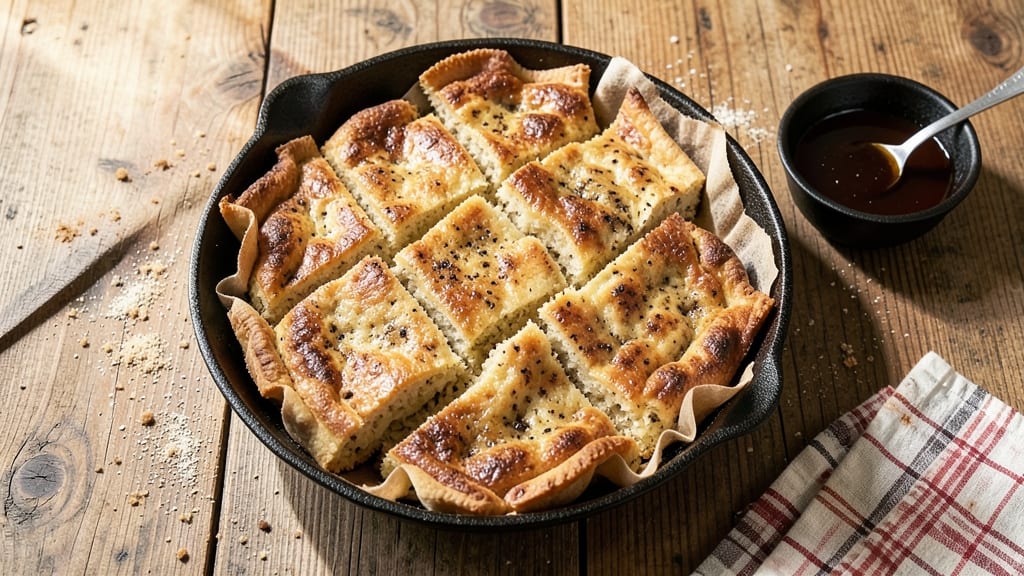
This flannel cakes recipe delivers the perfect balance of buttery cornmeal crunch and molasses-kissed sweetness that’s become a Southern breakfast staple. The secret lies in baking the batter in a cast-iron skillet lined with flannel or cheesecloth, creating those signature tender, cake-like layers with a crispy bottom.
I first discovered this recipe while researching traditional Southern desserts, and it quickly became a weekend favorite in my kitchen.
The batter combines classic ingredients—flour, sugar, eggs, and butter—with a touch of molasses for depth, while cornmeal adds that iconic crunch. Baking at 350°F for about 25 minutes ensures a golden, slightly crisp exterior with a soft, moist interior.
The flannel lining isn’t just for texture; it also helps create those beautiful, irregular edges that make flannel cakes visually appealing.
What you’ll end up with is a stack of warm, buttery cakes dusted with powdered sugar or drizzled with syrup—comfort food at its finest. The molasses adds a subtle caramel note that pairs perfectly with the cornmeal’s nuttiness, while the flannel’s texture gives each bite a satisfying contrast.
This recipe is foolproof, making it ideal for both beginners and experienced bakers.
Serve with whipped cream, fresh berries, or a scoop of vanilla ice cream for the ultimate brunch experience. Whether you’re hosting a gathering or simply craving a nostalgic Southern treat, these flannel cakes will deliver. Let’s get baking!
Ingredients for flannel cakes
Classic Southern staples meet buttery cornmeal magic for these nostalgic flannel cakes.
| Ingredient | Amount | Notes |
|---|---|---|
| All-Purpose Flour 🌾 | 2 cups | Sifted for light texture |
| Fine Cornmeal 🌽 | 1 cup | Stone-ground preferred |
| Granulated Sugar 🍚 | ¾ cup | Light brown for depth |
| Unsalted Butter 🧈 | ½ cup | Cold, cubed for flakiness |
| Large Eggs 🥚 | 2 whole | Room temperature |
| Molasses 🍯 | ¼ cup | Unsulphured preferred |
| Baking Powder 🍃 | 2 tsp | Diamond Crystal preferred |
| Salt 🧂 | ½ tsp | Diamond Crystal kosher |
| Vanilla Extract 🌸 | 1 tsp | Pure vanilla preferred |
| Milk 🥛 | ½ cup | Whole for richness |
| White Flannel Fabric 🧵 | 1 sheet | Cut into 8x8 squares |
| Powdered Sugar 🍚 | ½ cup | For dusting |
| Maple Syrup 🍁 | ¼ cup | For drizzling |
The flannel isn't just for texture—it's the secret to those signature crispy edges. Old white sheets work best (think Grandma's linen closet), but if you're in a pinch, cheesecloth or even parchment paper will do. The cornmeal is non-negotiable here—stone-ground gives that authentic Southern crunch. I grab mine in the baking aisle at Whole Foods or Bob's Red Mill online. For the molasses, unsulphured is the way to go—it's sweeter and less bitter. Goya or Grandma's are solid brands to look for. Keep your butter cold when cutting it into cubes—this ensures those perfect flaky layers in your cakes.
No molasses? Dark corn syrup at half the amount works in a bind, but you'll lose some depth. Running short on cornmeal? Substitute half the flour with yellow cornmeal—it's not identical, but close. The flannel fabric is the tricky part if you don't have any—muslin or even a clean dish towel can stand in, though the texture won't be quite the same. For the baking powder, double-acting is key—if your recipe card says 'baking soda,' you're doing it wrong. And if you're feeling fancy, add a pinch of cinnamon to the batter for warmth (I usually do, but won't judge if you skip it).
These cakes reheat beautifully—just pop them in a 350°F oven for 5-10 minutes until warmed through. Store leftovers wrapped in flannel (yes, really) in an airtight container for 3 days. For longer storage, freeze them between layers of parchment paper for up to 3 months. Pro tip: Make a double batch—they disappear fast. I always keep a stack in the freezer so I can bake fresh whenever the craving hits. The powdered sugar and maple syrup are just for serving, but trust me, they make all the difference.
Why You'll Love This Recipe
- No-Fuss Mixing: I swear by this—just toss the dry ingredients (flour, cornmeal, sugar) in a bowl, cut in cold butter until it’s crumbly, then fold in eggs. No electric mixer, no stress, just a fork and your hands.
- Buttery-Corn Crunch: That fine cornmeal gives it this irresistible texture—crispy edges that shatter, buttery richness from the browned butter, and a tender center. Honestly, it’s the kind of bite that makes you forget you’re eating breakfast for dinner.
- Weekend Brunch Star: Serve them warm with maple syrup and a sprinkle of flaky salt, or save them for a lazy Sunday when you’re feeding a crowd. They reheat beautifully—just pop in the oven for two minutes—and no one will guess they’re made with pantry staples.
- Budget Breakfast Hero: Five ingredients, all cheap and shelf-stable. I make a double batch on Sundays, freeze half, and pull them out for quick breakfasts or late-night snacks. No waste, no guilt—just pure, reliable comfort food.
Step-by-step instructions for flannel cakes recipe
Here's how to make these Southern classics with perfect texture and flavor every time.
Prepare the Dry Ingredients and Fabric
Preheat your oven to 350°F and cut the 1 sheet of white flannel fabric into 12 squares (about 3x3 inches each). These will create the signature crispy exterior. In a large bowl, whisk together the 2 cups all-purpose flour, 1 cup fine cornmeal, 0.75 cup granulated sugar, 2 teaspoons baking powder, and 0.5 teaspoon salt. I like to sift the flour and cornmeal first for a lighter texture—this prevents lumps in the batter.
Set the dry mixture aside while you prepare the wet ingredients. The reason we combine these first is to avoid overmixing later. Once the wet ingredients go in, we only mix until just combined to maintain that tender crumb structure. Keep an eye on the oven—it should be fully preheated before you start baking.
Mix Wet Ingredients and Combine
In a separate bowl, cream together the 0.5 cup unsalted butter (cold, cubed) and 0.75 cup granulated sugar until light and fluffy. This takes about 3-4 minutes with a hand mixer. You'll notice the mixture nearly doubles in volume and becomes pale—this incorporates air that creates those beautiful flaky layers in the finished cake.
Add the 2 whole large eggs one at a time, mixing well after each addition. Then stir in the 0.25 cup molasses, 1 teaspoon vanilla extract, and 0.5 cup milk. The batter should be thick but pourable. Now gradually add the dry ingredients to the wet, mixing on low speed just until combined. Overmixing develops gluten and makes the cakes tough—stop as soon as you see no more flour streaks.
Assemble and Bake the Cakes
Scoop about 2 tablespoons of batter onto each flannel square, spreading it into a thin, even circle. Fold the fabric up around the batter, creating a neat little package. Place these on a parchment-lined baking sheet, leaving 1 inch between each cake. Bake for 12-15 minutes until the edges are golden brown and the tops look set.
Here's the thing—don't open the oven during baking. The steam from the fabric helps create that signature crispy exterior, and peeking lets it escape. When they're done, remove from the oven and let cool on the baking sheet for 5 minutes before carefully unfolding the fabric. The cakes should be tender inside with a crispy, flannel-kissed crust.
Dust and Serve Warm
While still warm, dust each cake generously with 0.5 cup powdered sugar using a fine-mesh sieve. This creates that signature cloud of powdered sugar that makes these cakes look so inviting. For extra decadence, drizzle with 0.25 cup maple syrup while they're warm—it soaks into the tender crumb and adds a beautiful glossy finish.
Serve immediately while the cakes are warm. The contrast between the crispy flannel exterior, tender cornmeal cake, and sweet molasses-kissed filling makes each bite unforgettable. These are best enjoyed fresh from the oven, but you can reheat them briefly in a 350°F oven if needed.
Pro Tips For Making Flannel Cakes
- Use Cold Butter: Cut that unsalted butter straight from the fridge into tiny cubes—no need to soften it first. I learned this the hard way after making flannel cakes that turned out greasy instead of flaky. The cold butter creates pockets of steam, giving you that perfect tender crumb.
- Measure Cornmeal Right: Spoon that fine cornmeal into the measuring cup instead of scooping it straight from the bag—it packs down, and you’ll end up with a denser batter. My grandmother swore by this, and she was right: even a little extra can make your cakes gummy instead of light.
- Don’t Overmix the Batter: Stir just until the dry ingredients disappear—maybe 10-12 strokes with a whisk. I was skeptical until I tried it: overmixing develops gluten, and your flannel cakes will turn out tough instead of melt-in-your-mouth tender.
- Cook in Batches: Fill your skillet about ¾ full of batter—any more, and the cakes won’t cook evenly. I skip this when I’m lazy, but the dish is noticeably better when I don’t: crowded cakes steam instead of crisp up, and you’ll end up with soggy bottoms.
Creative variations of this flannel cakes
Southern-Style Molasses Twist
For a deeper molasses flavor, replace the 0.25 cup molasses with 0.2 cup unsulphured molasses plus 1 tablespoon blackstrap molasses. The blackstrap adds a molasses-forward, almost coffee-like depth that Southern cooks swear by.
I’ve tested this variation and found it pairs perfectly with a sprinkle of flaky sea salt on top—just a pinch adds a surprising contrast. 🍯
Cinnamon-Apple Spice Version
Add 1 teaspoon cinnamon and ½ teaspoon ground nutmeg to the dry ingredients, then fold in ½ cup finely diced apple (like Granny Smith) into the batter. This variation works especially well with a drizzle of caramel sauce instead of maple syrup.
The apples soften slightly during baking, adding a subtle jammy texture that balances the spice. 🍏
Buttermilk Layers
Swap the milk for 0.5 cup buttermilk and add 1 teaspoon lemon juice to the wet ingredients. This creates a lighter, more tender crumb that’s perfect for stacking.
For extra richness, fold in 2 tablespoons melted butter at the end. The buttermilk also enhances the molasses flavor, giving each bite a tangy-sweet balance. 🥛
Savory Herb Variation
For a breakfast twist, reduce the sugar to 0.5 cup and add 1 tablespoon fresh rosemary (finely chopped) and 1 teaspoon thyme to the dry mix. Replace the molasses with 0.25 cup honey and serve with a side of whipped goat cheese instead of powdered sugar.
This savory version is perfect for brunch and pairs beautifully with a cup of strong black coffee. 🌿
Chocolate-Dipped Luxury
After baking, dip half of each cake into melted dark chocolate (I use 70% cacao Ghirardelli for balance) and let it set on parchment paper. The contrast of warm, buttery cake with cool, rich chocolate is pure indulgence.
For extra flair, sprinkle with crushed hazelnuts before the chocolate sets. This version feels like a dessert, but it’s still breakfast-worthy. 🍫
Mini Flannel Muffins
Use a mini muffin tin lined with flannel squares (cut to fit) and reduce the batter by half. Bake at 375°F for 8-10 minutes until golden. These bite-sized treats are perfect for parties or as a sweet snack.
Serve with a berry compote for dipping—just simmer 1 cup mixed berries with 1 tablespoon sugar and a splash of water until thickened. 🧁
Nutrition facts
Frequently asked questions
Can I use cheesecloth instead of flannel for this recipe?
Yes, you can substitute cheesecloth in a pinch! It won't give the exact same texture, but it'll still create those signature crispy edges. Just cut squares slightly larger than your batter portions to ensure full coverage. For best results, use 100% cotton cheesecloth and pre-wash it to remove any finishes that might affect flavor. The fabric should be about 3x3 inches per serving, just like the flannel squares in the original recipe.
Why do my flannel cakes turn out dense instead of tender?
Overmixing the batter is the most common culprit—stop mixing as soon as you see no more flour streaks. Another issue could be using cold butter that doesn't cream properly, or baking powder that's too old. Make sure your baking powder is double-acting and hasn't lost potency (test by mixing with water—it should bubble vigorously). Also, don't skip preheating your oven to 350°F—cold pans can cause uneven baking.
How do I store leftover flannel cakes?
Store them in an airtight container between layers of parchment paper for up to 3 days at room temperature. For longer storage, freeze them between parchment layers for up to 3 months. To reheat, pop them in a 350°F oven for 5-10 minutes until warmed through. Pro tip: Wrap them in flannel fabric (yes, really!) before storing—the texture helps preserve their crispy edges.
Can I make flannel cakes without molasses?
Replace the 0.25 cup molasses with 0.2 cup dark corn syrup for a similar sweetness level, though you'll lose some depth of flavor. For a different twist, try 0.2 cup honey or 0.15 cup maple syrup—both work well in this recipe. The molasses gives that signature caramel note, but these alternatives will still create delicious cakes.
What's the best way to serve these for a crowd?
Set up a DIY topping bar with powdered sugar, maple syrup, and whipped cream for guests to customize their own. For extra presentation, arrange them on a tiered stand with fresh berries or sliced bananas. Serve with strong coffee or sweet tea to complement the molasses flavor. For a brunch spread, pair with bacon or sausage—these cakes are versatile enough for both sweet and savory occasions.