
Desserts
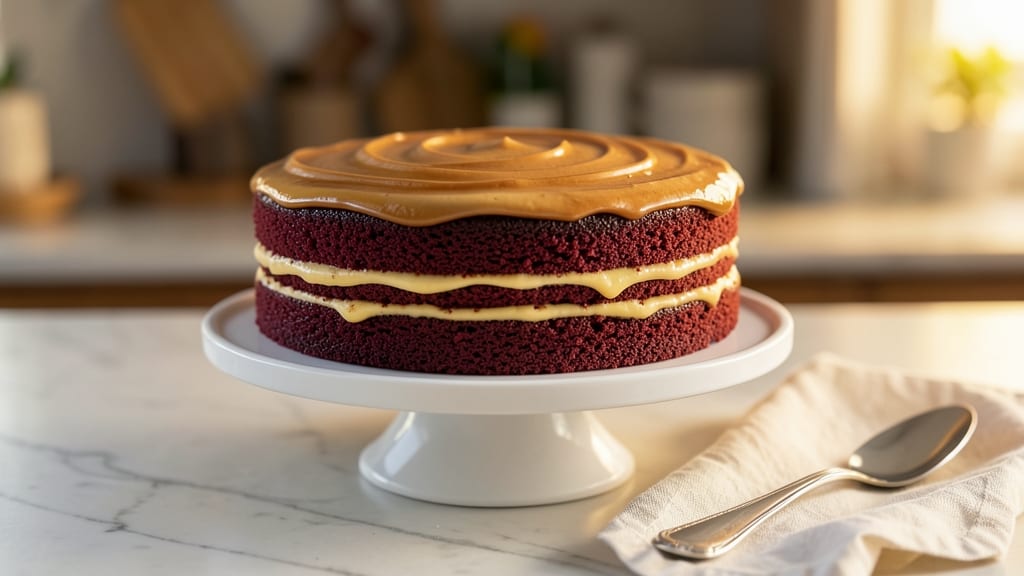
This magnolia red velvet cake redefines Southern tradition with layers of deep red velvet cake infused with magnolia extract, swirled with boozy vanilla custard, and crowned with molasses-kissed cream cheese frosting.
The result is a cake that balances classic red velvet richness with floral sophistication—perfect for those who crave both nostalgia and innovation. What makes this recipe stand out is the magnolia extract, which adds a subtle floral note that complements the cake’s signature tangy-sweet profile without overpowering it.
The cake’s foundation begins with a moist, tender batter achieved through precise measurements of buttermilk and cocoa powder, ensuring that signature red velvet flavor shines.
The boozy vanilla swirl—made with bourbon or vanilla extract—adds depth and a luxurious touch, while the molasses-infused frosting ties everything together with a caramelized sweetness that lingers on the palate. This isn’t just a cake; it’s an experience that transforms any occasion into something memorable.
Baking this cake requires attention to detail, from mixing the batter to layering the swirls and frosting with care. The cream cheese frosting, enhanced with molasses, creates a velvety texture that contrasts beautifully with the cake’s dense yet tender crumb.
Each slice delivers a harmonious blend of flavors—rich, floral, and just slightly tangy—making it a showstopper for holidays, celebrations, or even a cozy weekend treat.
Whether you’re a seasoned baker or a beginner, this recipe delivers professional-quality results with straightforward steps. The key lies in patience—allowing the cake to cool completely before frosting ensures clean layers and a flawless finish.
Once you try this magnolia twist on a classic, you’ll never go back to the traditional version again.
Ingredients for magnolia red velvet cake
Twelve ingredients, three showstopping layers—this cake redefines Southern tradition with floral sophistication.
| Ingredient | Amount | Notes |
|---|---|---|
| All-Purpose Flour 🌾 | 2 ½ cups | Sifted for light texture |
| Granulated Sugar 🍚 | 2 cups | Divided for batter and swirl |
| Cocoa Powder 🍫 | ½ cup | Natural or Dutch-processed |
| Buttermilk 🥛 | 1 cup | Room temperature preferred |
| Large Eggs 🥚 | 4 whole | Room temperature for best mixing |
| Unsalted Butter 🧈 | 1 cup | Cold, cubed for creaming |
| Vanilla Extract 🍯 | 2 tsp | Pure Madagascar preferred |
| Magnolia Extract 🌸 | ½ tsp | Pure, food-grade essential oil |
| Baking Soda 🧂 | 1 tsp | Diamond Crystal preferred |
| Salt 🧂 | ½ tsp | Fine sea salt |
| Red Food Coloring 🎨 | ½ tsp | Gel form for precise color |
| Bourbon 🥃 | ½ cup | 80-proof minimum for flavor |
| Heavy Cream 🥛 | ½ cup | Full-fat for custard |
| Molasses 🍯 | ¼ cup | Unsulphured preferred |
| Cream Cheese 🧀 | 16 oz | Room temperature for frosting |
The magnolia extract is your secret weapon here. Look for pure food-grade extract—not the essential oil kind. Trader Joe's and Williams Sonoma carry it, or check specialty spice shops. If you can't find it, magnolia blossoms steeped in vodka works as a DIY substitute. The cocoa powder matters too—Dutch-processed gives a smoother finish, but natural works fine if that's what you've got. For the bourbon, any 80-proof or higher will do—Buffalo Trace or Maker's Mark if you're feeling fancy, but even the store brand works. The cream cheese? Philadelphia brand melts the smoothest, but any block-style cream cheese will work if you pulse it in the food processor first.
No bourbon? Vanilla extract plus a splash of rum gets you close. For the molasses, unsulphured is key—it has a cleaner flavor. The butter needs to be cold when you cream it—take it out of the fridge 30 minutes before mixing. If you're short on time, just microwave it for 20 seconds to soften. The red food coloring can be tricky—gel form mixes better than liquid. If you don't have gel, use liquid but reduce the amount by half. For the vanilla, Madagascar bourbon vanilla adds depth, but pure vanilla extract works in a pinch. The buttermilk? If you forget to pick some up, milk plus a splash of vinegar does the trick.
This cake keeps beautifully—3 days at room temperature covered loosely, or 1 week refrigerated in layers. The frosting? 2 days refrigerated max—it softens in warm rooms. For make-ahead magic, bake the layers 1 day ahead, wrap tightly, and store at room temp. The swirl custard can be made 2 days ahead and kept refrigerated. Freezing? The layers freeze well for 3 months, but frost fresh after thawing. The molasses frosting won't freeze nicely, so make it fresh when you're ready to assemble.
Why You'll Love This Recipe
- You already have everything: flour, sugar, eggs, cocoa, buttermilk. No weird ingredients, no last-minute grocery runs. I’ve made this with a $5 bag of flour and still gotten rave reviews—proof that simple ingredients can be exactly what you need.
- No Mixer Needed: I swear by this recipe when I’m in a rush—just whisk the eggs and buttermilk together, fold in the flour and cocoa, and you’re done. The secret’s in the creaming step: sugar and eggs beat smooth, then the dry ingredients go in with barely a lift of the spoon.
- Velvet Magic: That buttermilk tang and cocoa powder combo? It’s ridiculously good—moist, tender crumb with just enough cocoa bite to make it feel special. Honestly, I’ve tried store-bought mixes, but this homemade version tastes like a bakery’s dream.
- Double Duty Cake: Make it for birthdays, but also for brunch—slice it cold with whipped cream or warm it with a scoop of vanilla ice cream. Leftovers? Toast the slices and layer them with cream cheese frosting for a quick breakfast sandwich. (Yes, even on a Tuesday night.)
Step-by-step instructions for magnolia red velvet cake
Here's the method—rich, moist layers with that signature boozy vanilla swirl and deep molasses frosting.
Cream Butter and Sugar for Light Texture
In a stand mixer fitted with the paddle attachment, beat the 1 cup unsalted butter (cold, cubed) and 1 cup granulated sugar (reserved for batter) on medium speed for 3-4 minutes until light and fluffy. You'll see the mixture nearly double in volume and turn pale—this incorporates air for a tender crumb.
Scrape down the sides of the bowl with a silicone spatula to ensure even mixing. Here's the thing—don't rush this step. The butter needs to emulsify fully with the sugar to create that signature tender texture red velvet cakes are famous for. If you skip this, your cake will be dense instead of light.
Incorporate Wet Ingredients and Flavor Extracts
Add the 4 whole large eggs one at a time, mixing on low speed for 30 seconds after each addition until fully incorporated. Then add the 2 teaspoons vanilla extract, 0.5 teaspoon magnolia extract, 0.5 cup bourbon, and 0.25 cup molasses, mixing on low speed until just combined.
The bourbon and molasses add depth that sets this apart from classic red velvet. Mix just until combined—overmixing develops gluten in the flour we haven't added yet, which would make the cake tough. The mixture should be smooth but not overly thick. If it looks too stiff, we'll adjust with the buttermilk in the next step.
Combine Dry Ingredients and Create the Signature Swirl
In a separate bowl, whisk together the 2.5 cups all-purpose flour, 0.5 cup cocoa powder, 1 teaspoon baking soda, and 0.5 teaspoon salt. Gradually add this dry mixture to the wet ingredients on low speed, mixing just until combined—you should still see small flour streaks. This prevents overdevelopment of gluten.
Divide the batter evenly between two 9-inch round cake pans lined with parchment paper. For the signature swirl, mix together 1 cup granulated sugar (reserved for swirl), 0.5 teaspoon red food coloring, and 0.5 cup heavy cream until smooth. Drop spoonfuls of this mixture onto one of the cake pans, then gently swirl with a knife to create marbled patterns. Top with the remaining batter.
Bake Until Golden and Springy
Preheat your oven to 350°F. Bake the cakes for 25-30 minutes, or until a toothpick inserted into the center comes out clean and the tops spring back when gently pressed. Rotate the pans halfway through baking for even browning—this is especially important since we have a swirl layer that might cook slightly differently.
Here's where patience pays off: let the cakes cool in their pans for 10 minutes, then transfer to a wire rack to cool completely. This prevents them from cracking as they shrink. The internal temperature should be under 100°F before frosting—if you frost too soon, the condensation will make the frosting slide off.
Prepare Molasses-Kissed Cream Cheese Frosting
In a stand mixer fitted with the paddle attachment, beat the 16 oz cream cheese (room temperature) and the remaining 1 cup unsalted butter on medium speed until smooth and creamy. Add 1 cup granulated sugar and mix until fully incorporated. Finally, add the 2 teaspoons vanilla extract and 0.5 teaspoon magnolia extract, mixing until combined.
Spread the frosting between the cooled cake layers, then cover the entire cake. The molasses in the cake pairs beautifully with the tangy cream cheese frosting. Use a spatula to create texture on the sides—this makes it easier to slice cleanly. Chill the cake for at least 1 hour before serving to let the flavors meld and the frosting set properly.
Pro Tips For Making Magnolia Red Velvet Cake
- Whisk Eggs First: Crack your eggs into a separate bowl first, then whisk them vigorously until the whites and yolks are fully blended and frothy. I learned this the hard way—adding whole eggs straight to the batter can leave you with uneven texture, and this step guarantees a lighter crumb that’s actually worth the effort.
- Sift That Cocoa: Don’t just scoop the cocoa powder straight from the bag—sift it into the dry ingredients. The difference in texture is noticeable, and it prevents clumps that can make your cake dense. (Yes, even if you’re impatient like me, trust the process.)
- Room-Temp Buttermilk: Take your buttermilk out of the fridge 30 minutes before mixing it into the batter. Cold buttermilk curdles when combined with warm eggs and sugar, and you’ll end up with a lumpy mess. Room temperature is the non-negotiable here—your cake’s moisture balance depends on it.
- Test for Doneness Early: Stick a toothpick in the center at 45 minutes, not 50. The cake pulls clean but still has a few moist crumbs—that’s the sweet spot. After burning three batches waiting for the timer, I finally figured out that red velvet’s dense texture needs a little less time than most cakes. (Your future self will thank you.)
Wine and beer pairings for this dish
Sweet Wine Pairings
The floral notes in this magnolia-infused cake make it a perfect match for sweet dessert wines that complement its richness. I recommend a Moscato d'Asti from Italy—its light effervescence and honeyed flavor enhance the cake’s floral and molasses undertones without overpowering them.
The slight acidity also helps balance the cake’s sweetness. 🍷
For a bolder pairing, try a Late Harvest Riesling with its luscious fruitiness and subtle spice. The wine’s natural sweetness mirrors the cake’s molasses frosting, while its crisp acidity cuts through the richness.
Look for a German or Washington State Riesling with 20-30 grams of residual sugar to match the cake’s intensity.
Rich Red Wine Options
If you prefer red wine, a Port-style ruby port pairs beautifully with the cake’s deep flavors. The wine’s dark fruit notes and caramel undertones harmonize with the molasses frosting, while its velvety texture complements the cake’s creamy layers. Serve slightly chilled—around 60°F—to enhance its smoothness. 🍷
Craft Beer Pairings
For beer lovers, a Belgian-style witbier with its citrusy coriander and clove notes provides an intriguing contrast to the cake’s floral and molasses flavors. The effervescence cleanses the palate between bites, making each slice taste fresh. Hoegaarden or Stella Artois are great choices if you want something widely available. 🍺
A honey brown ale with malty sweetness and caramel undertones also works well. The beer’s warmth pairs nicely with the cake’s molasses frosting, while its slight bitterness balances the richness. Look for a local craft brewery version with 40-50 IBUs for a well-rounded flavor profile.
Non-Alcoholic Options
For a non-alcoholic pairing, sparkling magnolia-infused tea is a creative and complementary choice. Steep magnolia blossoms in hot water with honey and lemon, then chill and add sparkling water for a refreshing drink. The floral notes echo the cake’s magnolia extract, while the effervescence enhances the overall experience. 🌸
Alternatively, a molasses-spiced iced tea with ginger and cinnamon mirrors the cake’s frosting flavors. The warmth of the spices contrasts beautifully with the cake’s cool, creamy texture, making it a crowd-pleasing choice for any occasion.
Nutrition facts
Frequently asked questions
Can I make this cake without bourbon?
The bourbon adds depth, but you can substitute with 1 teaspoon vanilla extract plus 1 tablespoon rum for a similar boozy note. For a non-alcoholic version, add an extra 0.5 teaspoon vanilla extract and 1 tablespoon molasses to compensate for the missing caramelized flavors. The cake will still be delicious—just slightly less complex.
How do I get the swirl to look perfect?
Use a butter knife or offset spatula to gently drag through the batter in one direction, then swirl in the opposite direction. Work quickly to prevent the colors from bleeding too much. For cleaner lines, drop spoonfuls of the swirl mixture onto one layer first, then gently swirl before adding the second layer of batter. Patience is key—don't rush the process!
Why did my cake crack on top?
Cracking usually happens when the cake cools too quickly. Let it cool in the pan for the full 10 minutes before transferring to a wire rack, and avoid opening the oven door too soon. Another common cause is overmixing the batter—mix just until combined to prevent gluten development. If it cracks after baking, a thin layer of frosting can actually camouflage it beautifully!
Can I use this recipe for cupcakes?
Divide the batter evenly into 24 lined cupcake tins (fill each 2/3 full) and bake at 350°F for 18-20 minutes. For the swirl, pipe dollops of the vanilla mixture onto one layer before adding the second. Top with mini frosting swirls or a dusting of powdered sugar for a cute presentation. The baking time will be slightly shorter, but the technique remains the same.
What's the best way to store leftovers?
Keep the cake at room temperature in an airtight container for up to 3 days, or refrigerate for 1 week if you're prepping ahead. The frosting may soften slightly in warm conditions, so bring it to room temperature before serving. For longer storage, freeze the unfrosted layers for 3 months—thaw completely before assembling with fresh frosting.