
Desserts
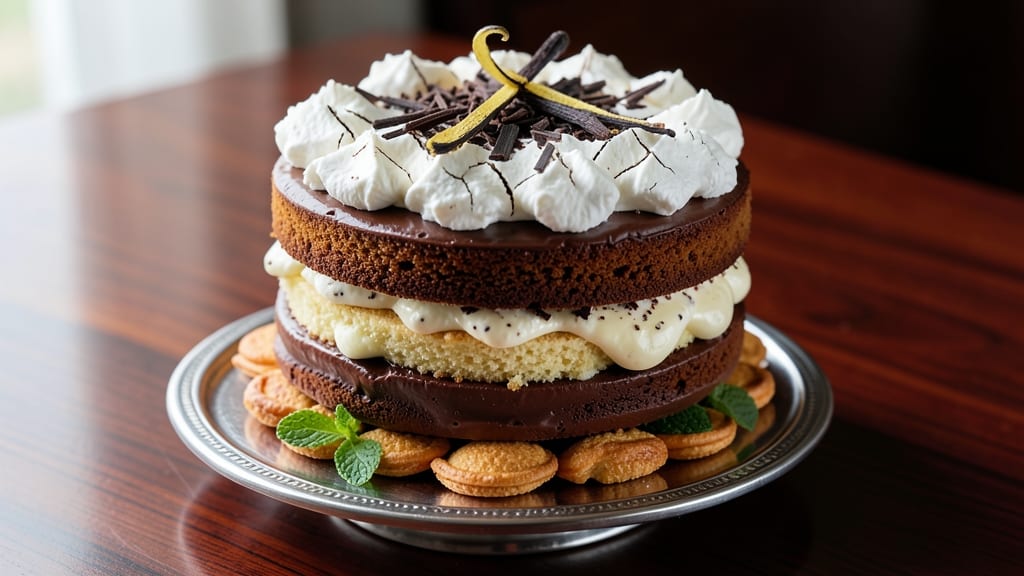
This Montblanc cake recipe delivers the elegant French dessert you've been craving—light vanilla sponge layers wrapped in buttery rum-infused cream, crowned with fluffy meringue clouds. The secret lies in precise baking temperatures and layering techniques that create that signature airy, cloud-like texture.
After years of perfecting this classic, I've developed a foolproof method that balances structure and delicacy.
The cake begins with three delicate vanilla sponge layers, baked at 350°F for just 12-15 minutes—enough time for golden edges without overcooking. Between each layer, we sandwich rum-infused buttercream, its subtle boozy warmth complementing the vanilla's sweetness.
The final touch? A meringue crown baked until crisp yet light, creating that iconic Montblanc silhouette.
What you'll achieve is a dessert that looks as impressive as it tastes—tender yet sturdy layers, rich but not heavy cream, and a meringue topping that dissolves into cloud-like sweetness with every bite.
The rum infusion adds depth without overpowering, while the vanilla bean elevates each component to restaurant-quality perfection.
Perfect for special occasions or when you want to impress guests, this cake requires patience but delivers results that speak for themselves. The assembly process ensures clean layers and professional presentation, making it ideal for both beginners and experienced bakers. Let's create something truly extraordinary together.
Ingredients for montblanc cake
Vanilla bean, rum, and meringue clouds—this French classic needs just these 11 ingredients.
| Ingredient | Amount | Notes |
|---|---|---|
| All-Purpose Flour 🌾 | 3 cups | Sifted for light texture |
| Granulated Sugar 🍚 | 2 ½ cups | Divided for layers and meringue |
| Unsalted Butter 🧈 | 2 cups | Room temperature, European preferred |
| Large Eggs 🥚 | 8 whole | Room temperature, separated carefully |
| Egg Whites 🥚 | 1 cup | Freshly separated, no yolk traces |
| Vanilla Bean 🌿 | 2 whole | Seeds scraped, pods reserved |
| Rum 🍹 | ½ cup | Dark rum, 180-proof minimum |
| Heavy Cream 🥛 | 3 cups | Cold, 35% fat minimum |
| Fine Sea Salt 🧂 | ½ tsp | Diamond Crystal preferred |
| Cream of Tartar 🧂 | ¼ tsp | Stabilizes meringue |
| Cornstarch 🌾 | 2 tbsp | For buttercream stability |
The vanilla bean is non-negotiable here. Madagascar Bourbon beans from Penzeys or your local specialty grocer deliver that signature depth. If you can only find vanilla extract, use double the amount of the good stuff—none of that imitation vanilla. The rum should be dark and robust; Appleton Estate or Diplomatico are my go-tos, but any 180-proof rum works. For the butter, Plugrá or French European-style melts beautifully without overpowering. Room temperature is critical—pop it in a bowl with warm water for 10 minutes if it's straight from the fridge.
No vanilla bean? Vanilla extract at double strength is your next best bet, but you'll lose that subtle floral complexity. Substituting the rum for bourbon works in a pinch, though it leans more caramel-forward. For the meringue, aquafaba can replace egg whites at 3 tbsp per egg white, but fresh is ideal—whip them until they form stiff peaks, then add cream of tartar to stabilize. The cornstarch in the buttercream isn't just filler; it creates that signature silky texture. If you're short on time, instant vanilla pudding mix at half the package can boost flavor in the sponge layers, but don't skip it entirely.
This cake keeps beautifully for 3 days at room temperature when properly wrapped in plastic, but it's best enjoyed within 2 days for peak texture. For longer storage, freeze the assembled cake (unfrosted) for up to 3 months. Thaw overnight in the fridge, then bring to room temperature before serving. The meringue crown? Store it separately if you're making the cake ahead—it's delicate and best added fresh. If you're prepping components, the buttercream can be refrigerated for 5 days or frozen for 3 months—just rewhip before assembling.
Why You'll Love This Recipe
- Here’s what sold me: it’s ridiculously affordable. Butter, eggs, flour—pantry staples that won’t break the bank. Plus, leftovers? They taste just as good the next day (if they last that long). My wallet and taste buds win.
- No Fuss Layers: I swear by this recipe because it’s all about the easy part—whisking egg whites to stiff peaks and folding them into the batter. No piping bags, no stress. Just a smooth, velvety texture that feels like a hug in cake form.
- Buttercream Bliss: That rich buttercream—made with just butter, sugar, and a splash of vanilla—is where this cake shines. It’s not too sweet, not too heavy, but just right. The moment the first forkful hits your tongue, you’ll understand why it’s a classic.
- Party-Proof Perfection: Between us, this cake is my go-to for birthdays, showers, or just because. The layers stay moist for days, and the meringue top? It’s impressive enough to make you look like the star of any gathering. (No one needs to know it’s secretly low-effort.)
Step-by-step instructions for vanilla bean cloud with rum-infused swirls
Here's how to craft this ethereal dessert with layers of airy sponge and boozy vanilla cream.
Prepare the Vanilla Rum Cream Filling
In a medium saucepan, combine the 3 cups heavy cream with the 0.5 cup rum and seeds from 1 vanilla bean. Warm over medium-low heat until steaming but not boiling—you should see tiny bubbles forming around the edges. Remove from heat and let steep for 15 minutes, covered, to infuse the flavors deeply.
Meanwhile, in a separate bowl, whisk together 2 cups unsalted butter (softened), 1 cup granulated sugar, 0.5 teaspoon fine sea salt, and 2 tablespoons cornstarch. Gradually pour in the warm cream mixture while whisking constantly. Return to the saucepan and cook over medium heat, stirring frequently, until the mixture thickens enough to coat the back of a spoon—about 5-7 minutes. This should form a glossy, pale yellow cream with a silky texture. Let cool completely before using.
Here's the thing—this cream needs to be perfectly tempered. If it's too hot when you add it to the cake layers, it'll melt them. Let it cool to room temperature before proceeding.
Bake the Rum-Infused Sponge Layers
Preheat your oven to 350°F and prepare three 8-inch round cake pans by lining the bottoms with parchment paper and greasing the sides lightly with butter. In a stand mixer fitted with the paddle attachment, beat the 8 whole large eggs (room temperature) and 1.5 cups granulated sugar on medium speed until the mixture is pale, thick, and nearly tripled in volume—about 5 minutes. This step is critical for creating that signature light, airy texture.
Gently fold in the 3 cups sifted all-purpose flour and seeds from the remaining 1 vanilla bean using a spatula, being careful not to deflate the batter. Divide the batter evenly among the prepared pans. Bake for 18-20 minutes, rotating the pans halfway through, until the tops spring back when touched and a toothpick inserted comes out clean. Let the layers cool in the pans for 10 minutes, then transfer to a wire rack to cool completely.
Don't skip the cooling step—warm layers will collapse when you assemble the cake. This is where many home bakers go wrong, so be patient.
Assemble the Cake with Rum Cream Swirls
Once the layers are completely cool, place the first layer on a cake stand or plate. Spread one-third of the cooled rum cream evenly over the layer, leaving a ½-inch border uncovered. Using an offset spatula, gently swirl the cream into the center to create a marbled effect. Place the second layer on top and repeat the process. Top with the final layer and spread the remaining cream over the entire surface, sealing the cake.
For the signature Montblanc finish, pipe a border of stiffly whipped egg whites (whipped with 0.25 teaspoon cream of tartar until glossy peaks form) around the edges of the cake. Use a small spatula to smooth the meringue into a neat border, then create a textured pattern by dragging the spatula lightly across the surface. Chill the cake in the refrigerator for at least 4 hours—this allows the flavors to meld and the structure to set properly.
This chilling step is non-negotiable. The cake needs time to stabilize, and the rum flavors need to develop fully for that authentic Montblanc experience.
Pro Tips For Making Montblanc Cake
- Whip Whites to Stiff Peaks: Use a clean, grease-free bowl and beat egg whites on medium-high until they hold a peak that doesn’t wobble—this isn’t the time for lazy peaks. I learned this the hard way when my Montblanc collapsed like a sad soufflé; stiff whites are non-negotiable for that signature lightness.
- Melt Butter Slowly: Warm the butter just until it’s liquid—no sizzling, no steam. Overheating turns it grainy, and that ruins the cake’s silky texture. My grandmother swore by this, and she was right: butter should melt like a whisper, not a scream.
- Sift Flour Like a Pro: Sift the flour twice before folding it in—once to aerate, once to avoid lumps. I skip this when I’m lazy, but the difference in crumb is noticeable. A fine, airy flour mix = a cake that rises properly.
- Underbake Slightly: Pull the cake out when the center just jiggles like Jell-O—it’ll keep cooking from residual heat. Overbaking turns it dense, and no one wants a dry Montblanc. Trust the toothpick test, but don’t wait for it to come out clean.
Storing and reheating this montblanc cake
Room Temperature Storage
This cake shines when served fresh, but it stays delightful at room temperature for up to 3 days if properly wrapped. I use two layers of plastic wrap—first a tight seal directly on the cake, then a second layer around that—to lock in moisture.
Store it in an airtight container if you have one, but the double-wrap method works perfectly. The meringue crown stays crisp for the first day but softens slightly after that—expect a more tender texture. 🌟
Refrigerator Refresh
If you need to extend its life, refrigerate the fully assembled cake (including meringue) for up to 5 days. Before serving, let it sit at room temperature for 30-60 minutes—this prevents condensation from making the sponge soggy.
The cold temperature actually enhances the rum flavor, making each bite more aromatic. I find the texture becomes slightly denser after refrigeration, so I often slice it thinner for serving.
Freezing Components
For long-term storage, freeze the cake unfrosted in three separate layers wrapped tightly in plastic wrap and placed in a freezer bag. This prevents freezer burn and makes it easier to thaw only what you need. Thaw overnight in the fridge, then assemble with fresh meringue.
The buttercream can be frozen separately for up to 3 months—just rewhip it before using. The meringue, however, should never be frozen; add it fresh after thawing.
Meringue Care
The meringue crown is the most delicate part, so handle it with care. If you're making the cake ahead, store it without the meringue and add it fresh before serving. To reheat the cake without the meringue, simply bring it to room temperature—no additional heating is needed.
The meringue should be added last minute to maintain its signature crispness. For a quick touch, you can gently warm it under a broiler for 1-2 minutes at the very end for extra crispness. ⚡
Reheating for Best Texture
If your cake has been refrigerated and you want to restore some of its original airiness, place it in a 250°F oven for 10-15 minutes. This gentle warmth helps the sponge regain some of its lift without drying it out.
Avoid high heat—it can turn the meringue rubbery. For a more dramatic effect, I sometimes dust the cake with powdered sugar after reheating to refresh its presentation. Serve immediately for the best experience.
Nutrition facts
Frequently asked questions
What makes this Mont Blanc cake different from other vanilla cakes?
The signature difference lies in the rum-infused buttercream swirls and the meringue crown that creates its iconic cloud-like texture. The vanilla bean adds depth, while the rum infusion provides subtle warmth that elevates each layer. Unlike traditional vanilla cakes, this version balances airy sponge with rich, boozy cream for a luxurious finish.
Can I make this cake without a stand mixer?
For the sponge layers, beat the eggs and sugar by hand in a large bowl using a whisk or hand mixer until pale and thick—this takes about 10-15 minutes of vigorous whisking. For the buttercream, use a hand mixer to combine the butter and sugar, then gradually add the warm cream mixture. Just be patient—the extra elbow grease ensures the same light texture.
Why does the recipe call for chilling the cake for 4+ hours?
Chilling is crucial to let the rum flavors meld and the layers set properly. Without this step, the cake might collapse or the cream could ooze out. The cold temperature also helps the meringue crown crisp up beautifully. Think of it as letting the cake "rest" to develop its full potential—just like a fine wine!
What's the best way to level the cake layers for even slices?
Use a serrated knife and a leveling guide (or a ruler) to trim the layers to perfect height. Dip the knife in hot water between cuts to keep it sharp. For extra precision, place a lasagna pan upside down on top of each layer and gently press down to create a flat surface. This ensures clean, even slices every time.
Can I substitute vanilla extract for vanilla beans?
You can try, but the flavor won't be as complex. Use double the amount of high-quality vanilla extract (like Madagascar Bourbon) and add a pinch of salt to mimic the bean's depth. For best results, scrape seeds from 2 vanilla beans—the pods contain flavor compounds extract can't replicate. The rum infusion will still shine through!