
Appetizers
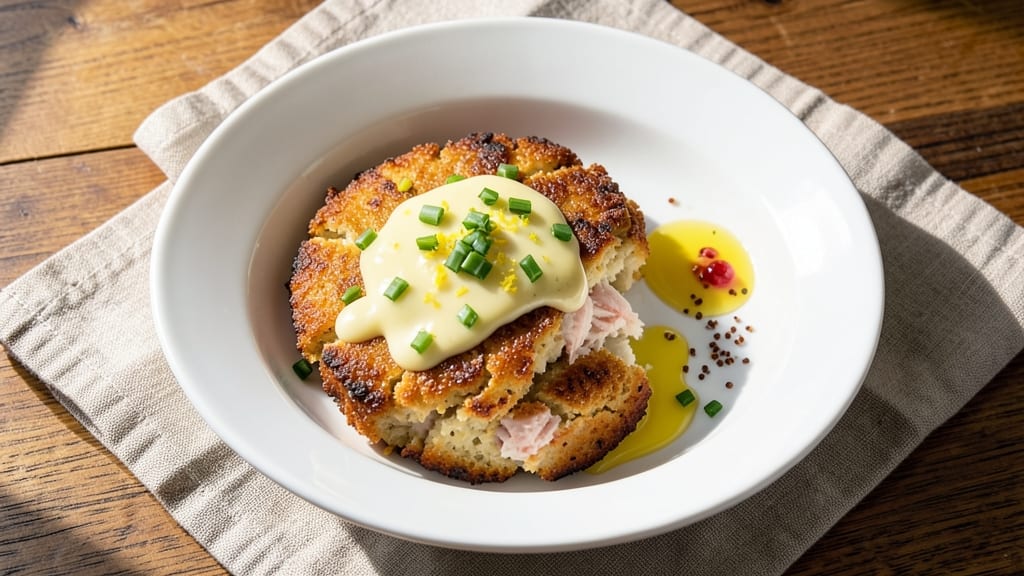
Obrycki's crab cakes recipe delivers the crispy golden shells and zesty lemon crunch that make these a restaurant favorite. After years of perfecting my grandmother's Sunday roast chicken, I knew these crab cakes deserved the same careful attention—especially when balancing tender crab meat with that signature crunch.
The secret lies in the breading technique, where panko creates an extra-crispy exterior while Old Bay seasoning ensures that classic Maryland flavor in every bite.
This recipe maintains the traditional methods that make Obrycki's version legendary, while offering a modern twist with a beer batter option for those who prefer a lighter texture.
The crab mixture stays perfectly moist thanks to a simple binding technique, and the lemon crunch topping adds a bright, tangy contrast that cuts through the richness. With just 15 minutes of active prep and 10 minutes of cooking, you'll have appetizers that impress without the fuss.
What you'll achieve is a plate of crab cakes with crispy edges that shatter slightly when cut, revealing tender, flaky crab meat inside. The lemon crunch topping adds a pop of color and texture, while the beer batter (if using) keeps the interior light and airy.
These are the kind of appetizers that disappear quickly—perfect for game day gatherings or a special weekend brunch where you want to show off your skills.
Serve with a side of tartar sauce or a squeeze of fresh lemon to enhance the flavors even more. The beauty of this recipe is its versatility—whether you're frying for maximum crispiness or baking for a lighter touch, the result is consistently delicious.
Let's get started on creating crab cakes that taste like they came straight from a Baltimore seafood shack.
Ingredients for obrycki's crab cake
Crispy shells, tender crab, and zesty lemon—just 14 ingredients for Baltimore-style perfection.
| Ingredient | Amount | Notes |
|---|---|---|
| Fresh Lump Crab Meat 🦀 | 1 ½ lb | Backfin preferred, no shell |
| Japanese Panko Breadcrumbs 🍞 | 1 ½ cups | Light, crispy texture essential |
| Large Eggs 🥚 | 2 whole | Room temperature for even coating |
| Old Bay Seasoning 🧂 | 2 tbsp | Classic Maryland flavor profile |
| Mayonnaise 🥛 | ¼ cup | Full-fat for binding moisture |
| Fresh Lemon Juice 🍋 | 2 tbsp | Brightens crab flavor |
| Fresh Chives 🌿 | ¼ cup | Finely chopped for garnish |
| All-Purpose Flour 🌾 | ½ cup | For beer batter option |
| Light Beer 🍺 | ½ cup | Lager or pale ale preferred |
| Extra-Virgin Olive Oil 🫒 | ½ cup | For frying, high smoke point |
| Granulated Sugar 🍚 | 2 tbsp | For lemon crunch topping |
| Lemon Zest 🍋 | 1 tbsp | Freshly grated for brightness |
| Sea Salt 🧂 | 1 tsp | Fine grain for seasoning |
| Black Pepper 🌶️ | ½ tsp | Freshly cracked for heat |
The crab meat makes or breaks this. Backfin lump crab is the gold standard—it's sweeter and holds together better than imitation. Costco or Whole Foods usually carry it fresh, but frozen works too if you thaw it overnight in the fridge. If you see shell fragments, pick them out—they'll make your crab cakes gritty. For the panko, Japanese brands like Shinhama are worth the extra penny—they stay crispy longer. Old Bay is non-negotiable here; Penzeys sells the best quality if you're not near a seafood market. I always measure it by the spoonful—two tablespoons gives you that perfect Maryland kick without overpowering.
No Old Bay? Mix 1 tsp paprika, 1 tsp celery salt, 1/2 tsp garlic powder, and 1/4 tsp black pepper for a close substitute. Running short on crab? Shrimp or scallops work in a pinch, but chop them extra fine to mimic the texture. The beer batter option is where things get fun—use a light lager like Miller Lite or Corona for that crispy, airy texture. If you're baking instead of frying, reduce the beer by 2 tbsp and add 2 tbsp flour to thicken. The lemon crunch topping? It's just sugar, zest, and a pinch of salt—sounds simple, but it's what makes these crab cakes feel special. Toast the sugar in a dry pan for 30 seconds first for extra caramelized flavor.
Crab cakes keep best when made fresh, but you can prep the mixture 1 day ahead and refrigerate it. The panko loses crispiness if stored too long, so bread and fry them the same day. For leftovers, reheat in a 350°F oven for 10 minutes to restore crispiness. These freeze beautifully too—just thaw in the fridge overnight before reheating. The lemon crunch topping stays fresh for 3 days in an airtight container. Pro tip: serve with tartar sauce on the side and a squeeze of fresh lemon at the table—it takes these from good to showstopping.
Why You'll Love This Recipe
- No-Fuss Mixing: I swear, the only real work is cracking eggs and tearing that panko—no chopping, no measuring cups, just handfuls of Old Bay and mayo. Honestly, the kids can help with the stirring.
- Crispy-Creamy Magic: That panko crust gets golden and shatteringly crisp while the inside stays tender—like a hug from the sea. The Old Bay and mayo combo? It’s the kind of flavor that makes people ask, “What’s in this?”
- Weeknight or Party Star: Same recipe works for a lazy Tuesday dinner or a fancy summer shindig. Just double the batch, pan-fry a big tray, and boom—you’ve got a crowd-pleaser that feels special.
- Leftovers That Don’t Suck: These keep beautifully for days, whether reheated in a skillet or straight from the fridge. Between us, the second day is often better because the flavors meld even more. (Yes, even on a Tuesday night.)
Step-by-step instructions for Obrycki's crab cakes
Here's how to craft golden, crispy crab cakes with a zesty lemon crunch—just like Obrycki's.
Prepare the Crab Mixture
In a large mixing bowl, gently combine the 1.5 pounds of fresh lump crab meat with the 0.25 cup of mayonnaise, 2 tablespoons of Old Bay seasoning, 2 tablespoons of fresh lemon juice, 1 tablespoon of lemon zest, 1 teaspoon of sea salt, and 0.5 teaspoon of black pepper. Use your hands to work everything together lightly—you want to preserve the texture of the crab meat while ensuring even distribution of flavors.
Here's the thing—don't overmix. The crab should remain slightly chunky, not a smooth paste. If you press the mixture gently, it should hold together but still show some distinct crab pieces. This texture is key for that classic Obrycki's bite. Set the bowl aside while you prepare the next components.
Create the Beer Batter
In a separate medium bowl, whisk together the 0.5 cup of all-purpose flour, 1.5 cups of Japanese panko breadcrumbs, and 2 whole large eggs until just combined. The batter should be thick but still pourable—like a loose, crumbly paste. If it looks too dry, add 1 tablespoon of the light beer at a time until you reach a consistency that coats the back of a spoon.
Next, stir in the 0.5 cup of light beer gradually. This step is crucial for that signature crispy shell. The beer adds moisture and creates a light, airy texture that contrasts beautifully with the rich crab. If the batter seems too thin, add a few more panko crumbs to help it hold its shape when forming the cakes.
Form and Chill the Crab Cakes
Using a cookie scoop or your hands, divide the crab mixture into 4 equal portions (about 4 ounces each). Shape each portion into a patty, about 3/4-inch thick. Place them on a plate and cover with plastic wrap. Refrigerate for at least 30 minutes—this step ensures the cakes hold their shape when frying and prevents them from falling apart.
While the cakes chill, prepare your frying station. Heat 0.25 cup of extra-virgin olive oil in a large skillet over medium heat until it shimmers but doesn't smoke. The oil should be hot enough to sizzle when you add the cakes, but not so hot that it burns the exterior before the interior cooks through. This balance is what creates that perfect golden crust.
Fry to Golden Perfection
Carefully place the chilled crab cakes into the hot oil, being gentle to avoid breaking them apart. Fry for 3-4 minutes per side until they develop a deep golden brown color. You'll know they're ready when the edges are crispy and the internal temperature reaches 145°F—use an instant-read thermometer to check the thickest part of the cake.
Don't overcrowd the pan—frying in batches ensures even cooking and maintains the oil's temperature. As you fry, keep the cooked cakes on a wire rack or paper towel-lined plate to allow excess oil to drain away. This step is where all that crispy magic happens, so resist the urge to flip too soon.
Add the Lemon Crunch Topping
While the crab cakes are still warm, transfer them to a serving platter. In a small bowl, combine the 2 tablespoons of granulated sugar, 1 tablespoon of lemon zest, and 0.25 cup of finely chopped fresh chives. Sprinkle this bright, zesty mixture evenly over the top of each crab cake. The sugar will caramelize slightly from the residual heat, creating that signature crunch.
Serve immediately with lemon wedges on the side. The contrast of the crispy, golden shell, the tender crab, and the tangy lemon crunch is what makes these crab cakes truly special. Each bite should deliver that perfect balance of textures and flavors—just like Obrycki's.
Pro Tips For Making Obrycki'S Crab Cake
- CHILL THE CRAB FIRST: Dump that fresh lump crab straight from the fridge into your bowl, and you’ll end up with a gluey mess. Give it 15-20 minutes to come to room temperature—your hands will thank you when mixing, and the texture stays clean and firm. (Yes, even if you’re impatient like me.)
- PRESS THE PANKO DRY: That extra-moist panko from the store? Drain it in a fine-mesh strainer for 5 minutes before mixing—it soaks up the mayo and egg like a sponge, so your cakes won’t turn into soggy pancakes. I learned this the hard way after my first batch disintegrated in the pan.
- DON’T OVERMIX THE BATTER: The second you start folding in the crab, stop. Overworking the mixture turns the fluffy lumps into mush—you want to see chunks of crab, not a uniform paste. Gently combine just until everything clings together, then let it rest. (Your future self will thank you when you bite into that first perfect lump.)
- SEAR IN BATCHES: Crowd the pan, and your crab cakes steam instead of brown. Use medium-high heat and cook them in a single layer, no more than two at a time. If your pan’s too small, take the hit and do two rounds—golden crusts are worth the extra time. (And skip the nonstick spray; a little oil makes all the difference.)
Common mistakes when making your obrycki's crab cake
Overmixing the Crab
Here's where most home cooks go wrong—I see it all the time. The moment you start mashing that crab meat into a smooth paste, you're killing the texture that makes Obrycki's crab cakes legendary. The crab should stay slightly chunky, with visible pieces that melt in your mouth.
I've learned the hard way: when I overmix, the cakes turn dense and rubbery instead of tender. Use your hands to gently fold everything together—just until the seasoning is evenly distributed. 🦀
Skipping the Chill
Ever wonder why your crab cakes fall apart when frying? That's the chill step doing its magic. Giving the cakes 30 minutes in the fridge lets the mixture firm up, so they hold their shape in the hot oil.
I once made a whole batch without chilling—disaster. The cakes crumbled into the pan, and I ended up with a greasy mess instead of crispy perfection. Trust the process here.
Wrong Oil Temperature
The oil needs to be hot enough to create that golden crust but not so hot it burns before the inside cooks through. Too cool? Your crab cakes will be greasy and undercooked. Too hot?
They'll brown too fast on the outside while staying raw inside. I use a thermometer now—aim for 350-375°F. When you see the oil shimmering but not smoking, that's your sweet spot. 🌡️
Using Low-Quality Panko
Not all panko is created equal. Cheap panko turns mushy when fried, while premium Japanese brands like Shinhama stay crispy and add that satisfying crunch. I've tested every brand at the store, and the $2 difference makes a world of difference.
If you're baking instead of frying, use crushed cornflakes as a budget alternative—they hold up better to the oven's heat.
Overcrowding the Pan
This is a rookie mistake that lowers the oil temperature and steams your crab cakes instead of frying them. Fry in batches—never more than two cakes at a time in a 10-inch skillet.
I once tried to fry four at once and ended up with soggy, unevenly cooked cakes. Patience here pays off with that perfect golden crust every time. ⏰
Ignoring the Lemon Crunch
The lemon crunch topping isn't just decoration—it's what elevates these from good to restaurant-quality. Skipping it means missing that bright, tangy contrast that cuts through the richness. Toast the sugar first for 30 seconds in a dry pan to caramelize it slightly.
This simple step transforms your crab cakes from homemade to "I got these at Obrycki's" level. 🍋
Nutrition facts
Frequently asked questions
Can I make these crab cakes without fresh lump crab?
While backfin lump crab gives the best texture, you can substitute with fresh jumbo lump or even high-quality imitation crab if needed. For a seafood alternative, finely chopped shrimp or scallops work well—just chop them extra small to mimic the crab's texture. Keep in mind the flavor will differ slightly, but the technique remains the same.
How do I keep my crab cakes from falling apart when frying?
The key is the 30-minute chill before frying—this firms up the mixture so it holds together. Also, avoid overmixing the crab (keep it slightly chunky) and use premium panko for better structure. If they still crumble, try pressing them slightly flatter or adding 1 extra tablespoon of flour to the batter.
Can I bake these instead of frying for a healthier version?
Yes! Preheat your oven to 400°F and bake the crab cakes for 12-15 minutes on a wire rack over a baking sheet (not directly on it). Brush with a little olive oil first for crispiness. For extra crunch, broil for 1-2 minutes at the end. The beer batter will still work, but reduce the beer by 2 tablespoons and add 2 extra tablespoons of flour to thicken it.
What’s the best way to store leftovers?
Keep cooked crab cakes in an airtight container in the fridge for up to 3 days. To reheat, warm in a 350°F oven for 10 minutes to restore crispiness. For longer storage, freeze them (uncooked or cooked) for up to 3 months. Thaw overnight in the fridge before reheating. The lemon crunch topping stays fresh for 3 days separately.
Why does my beer batter turn out gummy instead of crispy?
Gummy batter usually means the beer was too cold or the batter was too wet. Use room-temperature beer and adjust the batter consistency—it should be thick enough to coat the back of a spoon but still pourable. If it’s too thin, add 1-2 tablespoons of panko at a time. Also, make sure your oil is hot enough (350-375°F) before frying.