
Desserts
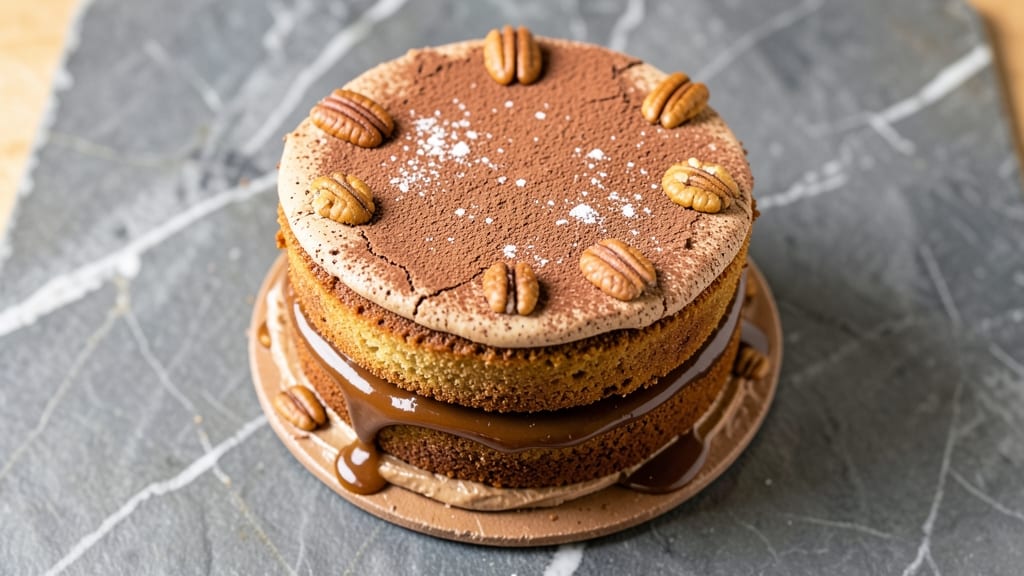
This old-fashioned baker's German chocolate cake delivers layers of tender, molasses-kissed cake with a pecan-packed frosting that's become a family heirloom in my kitchen.
The recipe traces back to mid-20th century German-American bakeries where molasses and dark chocolate created this signature flavor profile—rich yet balanced, with just the right amount of spice.
What makes this version special is the traditional texture: moist layers that hold together without being dense, and a frosting thick enough to stay in place but light enough to melt in your mouth.
The secret to achieving that old-fashioned quality lies in precise technique: using warm molasses instead of cold, which prevents the cake from becoming overly sweet, and baking at a steady 350°F for exactly 25-30 minutes per layer.
The frosting combines melted chocolate with brown sugar and pecans for that signature crunch, then gets whipped just until it reaches spreading consistency—not too stiff, not too runny. This is the kind of cake that tastes even better the next day when the flavors have fully melded.
By the time you're done assembling, you'll have a cake with golden-brown layers that cut cleanly, a frosting studded with toasted pecans in every bite, and a flavor profile that's both nostalgic and sophisticated.
The molasses gives a subtle caramel depth while the dark chocolate provides richness, creating a dessert that feels indulgent yet balanced. Perfect for celebrations or when you simply need a reason to celebrate.
This recipe maintains all the traditional elements while adapting to modern kitchens—no special equipment required beyond what you likely already own. The instructions walk through each step carefully, from preparing the cake batter to achieving that signature pecan frosting texture.
Whether you're baking for a crowd or treating yourself, this German chocolate cake delivers the kind of quality that turns one-bite testers into repeat bakers.
Ingredients for old fashioned baker's german chocolate cake
Fifteen ingredients, all essential for that signature molasses-chocolate depth and pecan crunch.
| Ingredient | Amount | Notes |
|---|---|---|
| All-Purpose Flour 🌾 | 3 cups | Sifted for light texture |
| Unsalted Butter 🧈 | 1 ½ cups | Cold, cubed for creaming |
| Granulated Sugar 🍚 | 2 cups | White or light brown |
| Dark Brown Sugar 🍚 | ½ cup | Packed firmly |
| Molasses 🍯 | ½ cup | Warm, not cold (key for flavor) |
| Large Eggs 🥚 | 4 whole | Room temperature |
| Baking Powder 🧂 | 1 ½ tsp | Aluminum-free preferred |
| Ground Cinnamon 🌿 | 1 ½ tsp | Freshly ground preferred |
| Salt 🧂 | ½ tsp | Fine sea salt |
| Dark Chocolate Bars 🍫 | 1 lb | 70% cacao, chopped fine |
| Milk 🥛 | 1 cup | Whole milk for richness |
| Vanilla Extract 🌸 | 2 tsp | Pure, high-quality |
| Pecans 🥜 | 2 cups | Toasted, chopped coarsely |
| Powdered Sugar 🍚 | 3 cups | For frosting |
| Heavy Cream 🥛 | 1 cup | Cold for whipping |
| Light Corn Syrup 🍯 | ¼ cup | For frosting stability |
The molasses is non-negotiable here—Blackstrap is ideal, but any good-quality molasses works. Warm it slightly before measuring (microwave 20 seconds) to help dissolve the sugar properly. Costco sells it in bulk, but even the regular grocery store aisle has decent options. The dark chocolate? Ghirardelli 70% cacao is my go-to, but any high-quality bar with at least 60% cacao will do. Toast the pecans in a dry pan until fragrant—3-4 minutes—then chop them while still warm for maximum flavor. The butter should be cold when you start creaming, but not rock-hard (softened slightly if it's been in the fridge too long).
No molasses? Substitute 1/4 cup maple syrup plus 1/4 cup extra brown sugar, but the flavor won't be identical. Running out of dark chocolate? Semisweet chocolate chips work in a pinch, though they melt differently. For the frosting, if you can't find corn syrup, light honey or agave can replace it at half the amount—but it'll be slightly less stable. The cake layers can be baked a day ahead and stored at room temperature (covered loosely), which actually improves the texture. The frosting, however, is best made fresh or stored in the fridge for up to 3 days (bring to room temp before using).
This cake keeps beautifully—5 days at room temperature if wrapped tightly in plastic, or 2 weeks in the fridge. The frosting, once made, stays good for 5 days in the fridge (it'll thicken slightly, so just re-whip before using). For serving, I always dust the top with a little extra powdered sugar and a sprinkle of toasted pecans right before cutting. The cake actually tastes better the second day, so if you're making it for a celebration, bake it a day ahead—trust me on this.
Why You'll Love This Recipe
- No-Fuss Mixing: I swear by this recipe because it’s one bowl—no fussing with separate dry/wet mixes. Just cream butter and sugars, toss in the flour, and let the molasses do its magic. Honestly, I’ve made it with my hands busy on three other things, and it still comes out rich.
- Molasses Magic: That deep, caramelized molasses flavor? It’s the star. The cake stays moist for days, and the brown sugar gives it this perfect balance—sweet but not cloying. (Yes, even on a Tuesday night, this is my go-to.)
- Crowd-Pleaser Always: Birthdays, potlucks, or just because—this cake disappears fast. I’ve served it at holiday gatherings (with whipped cream or ice cream) and as a weekday treat (straight from the fridge). The texture holds up everywhere.
- Budget-Friendly Luxury: Uses pantry staples—no weird ingredients or pricey shortcuts. A single batch feeds six, and leftovers? They’re even better the second day. Between us, this is how I justify buying good butter without guilt.
Step-by-step instructions for German chocolate cake
Here's how to create layers of moist molasses cake with rich chocolate-pecan frosting—just like your grandmother used to make.
Prepare the Cake Batter
Preheat your oven to 350°F and grease three 8-inch round cake pans. Line the bottoms with parchment paper for easy removal. In a large bowl, cream together the 1.5 cups unsalted butter and 2 cups granulated sugar until light and fluffy, about 3-4 minutes. This step is crucial for a tender crumb—don't rush it.
In a separate bowl, whisk together the 3 cups all-purpose flour, 1.5 teaspoons baking powder, 1.5 teaspoons ground cinnamon, and 0.5 teaspoon salt. Sift the dry ingredients directly into the butter-sugar mixture to avoid lumps. Add the 4 whole large eggs, one at a time, beating well after each addition. Stir in the 0.5 cup dark brown sugar and 0.5 cup molasses. The batter should be smooth and slightly thick—if it looks too stiff, add 1 cup milk gradually until just combined.
Bake the Layers
Divide the batter evenly among the prepared pans. Bake for 25-30 minutes or until a toothpick inserted into the center comes out clean. The cakes should spring back slightly when pressed gently in the center. Rotate the pans halfway through baking for even browning.
Let the cakes cool in their pans for 10 minutes, then transfer to a wire rack to cool completely. This cooling step prevents the frosting from melting when you assemble the cake. If you're impatient, place the pans on a cooling rack set over a bowl of ice water to speed up the process—but don't skip cooling entirely.
Make the Chocolate-Pecan Frosting
In a saucepan, combine the 1 cup heavy cream, 3 cups powdered sugar, and 0.25 cup light corn syrup. Cook over medium heat, stirring constantly, until the mixture reaches 115°F on a candy thermometer. Remove from heat and let cool slightly—it should thicken as it cools.
In a separate bowl, melt the 1 lb dark chocolate bars over a double boiler or in 30-second bursts in the microwave. Stir the melted chocolate into the cooled cream mixture until smooth. Fold in the 2 cups toasted, chopped pecans and 2 teaspoons vanilla extract. The frosting should be thick but spreadable—if it's too stiff, warm it gently over low heat.
Assemble the Cake
Place one cake layer on a serving plate. Spread a generous layer of frosting over the top, then repeat with the remaining two layers. Frost the entire cake, including the sides, with the remaining frosting. Chill in the refrigerator for at least 2 hours before serving—this allows the flavors to meld and the frosting to set properly.
Slice with a warm knife for clean cuts, and serve with a dollop of whipped cream or a scoop of vanilla ice cream. The contrast of the warm cake and cool frosting makes every bite unforgettable. Store leftovers covered in the fridge for up to 3 days, though I doubt they'll last that long!
Pro Tips For Making Old Fashioned Baker'S German Chocolate Cake
- Cream Butter Slowly: The molasses and brown sugar in this cake are heavy hitters, so don’t just dump them in. Beat the butter and sugars together for at least 3-4 minutes until the mixture is light and fluffy—this keeps the cake tender instead of dense. I used to rush this step, and the result was a cake that felt more like a brick.
- Measure Molasses Precisely: Molasses is thick and syrupy, so don’t eyeball it. Use a kitchen scale or measure it in a liquid measuring cup, then scrape the back with a knife to get an accurate amount. Too little and the cake lacks depth; too much and it turns bitter. (Yes, even if you’re impatient like me.)
- Check Doneness with a Toothpick: This cake’s dark color can fool you—it’s done when the center springs back and the toothpick comes out with a few moist crumbs, not wet batter. Overbaking dries it out, so pull it at 325°F (163°C) if your oven runs hot. I learned this the hard way after serving a cake that tasted like sawdust.
- Cool Fully Before Frosting: Frosting warm cake makes it soggy, and this recipe’s chocolate glaze needs a stable surface to set properly. Let the cake cool in the pan for 15 minutes, then transfer to a wire rack and cool completely—at least an hour. Trust me, the wait is worth the clean slices.
Pro cooking tips for this recipe
Molasses Temperature Tip
Warming your molasses before measuring is a game-changer for this cake. I microwave mine for just 20 seconds to loosen its thick texture—this helps it blend smoothly with the brown sugar and prevents that grainy, overly sweet bite.
Cold molasses can make the cake dense, so always warm it slightly. If you forget, a quick dip in warm water works too. 🍯
Butter Creaming Mastery
Creaming the butter and sugar until truly light and fluffy (about 3-4 minutes) creates the tender crumb this cake needs. I use a stand mixer with the paddle attachment, scraping the bowl every 30 seconds to ensure even aeration.
If your butter is too cold, it won’t incorporate properly—soften it slightly if needed. The goal is to see ribbons form when you lift the paddle. 🥄
Chocolate Melting Hack
For the frosting, chop your dark chocolate bars into ½-inch pieces before melting—this ensures even, smooth melting. I melt it in 30-second microwave bursts, stirring between each, until just melted (not overheated).
Overheating causes the chocolate to seize, making it impossible to blend. A double boiler works too, but microwave is faster for home bakers. 🍫
Pecan Toasting Secret
Toast your pecans in a dry skillet over medium heat for 3-4 minutes until fragrant and golden. Chop them while still warm—they’ll stay crisp in the frosting and add that signature crunch.
If you’re short on time, toast them directly in the oven at 350°F for 8-10 minutes, stirring halfway. Never skip toasting—raw pecans taste bland in the frosting. 🥜
Frosting Temperature Control
The frosting’s 115°F temperature is critical for stability. Use a candy thermometer to monitor the cream mixture—it should thicken slightly as it cools. If it’s too runny, chill it for 10 minutes before adding chocolate.
Too thick? Warm it gently over low heat, stirring constantly. The frosting should coat the back of a spoon but still be spreadable. 🌡️
Assembling Like a Pro
Work quickly when assembling to avoid frosting melting. I chill the cake layers for 5 minutes in the fridge before frosting to prevent sogginess. Use a bench scraper to smooth the frosting on the sides, then tap the plate gently on the counter to level it.
Chill for at least 2 hours—this lets the flavors meld and the frosting set properly. Patience here makes all the difference. ⏰
Nutrition facts
Frequently asked questions
Why does this recipe use warm molasses instead of cold?
Warming the molasses prevents that thick, grainy texture that can make the cake dense. The 20-second microwave warm-up helps it blend smoothly with the brown sugar, creating a more tender crumb. Cold molasses also makes the cake overly sweet—warming it balances the flavors perfectly.
Can I make this cake in a 9-inch pan instead of 8-inch?
Yes, but reduce the oven temperature to 325°F and bake for 25-30 minutes instead. The batter will spread more in larger pans, so check for doneness with a toothpick at 22-25 minutes. The layers will be slightly thinner but still moist.
What's the secret to getting crispy toasted pecans in the frosting?
Toast the pecans in a dry skillet over medium heat for 3-4 minutes until fragrant and golden. Chop them while still warm—they'll stay crisp in the frosting. Never skip toasting! Raw pecans turn mushy and bland. For extra crunch, toast them in the oven at 350°F for 8-10 minutes instead.
How do I fix frosting that's too runny or too thick?
If runny, chill the frosting for 10 minutes before adding chocolate. Too thick? Warm it gently over low heat, stirring constantly until it reaches spreadable consistency. The ideal frosting should coat the back of a spoon but still be smooth. Never microwave—it can cause the chocolate to seize.
Can I substitute maple syrup for molasses?
Yes, but use ¼ cup maple syrup plus ¼ cup extra brown sugar for the molasses. The flavor won't be identical—molasses gives a deeper caramel note—but it works in a pinch. For best results, stick with molasses if possible. The cake will still be delicious, just with a slightly sweeter profile.