
Desserts
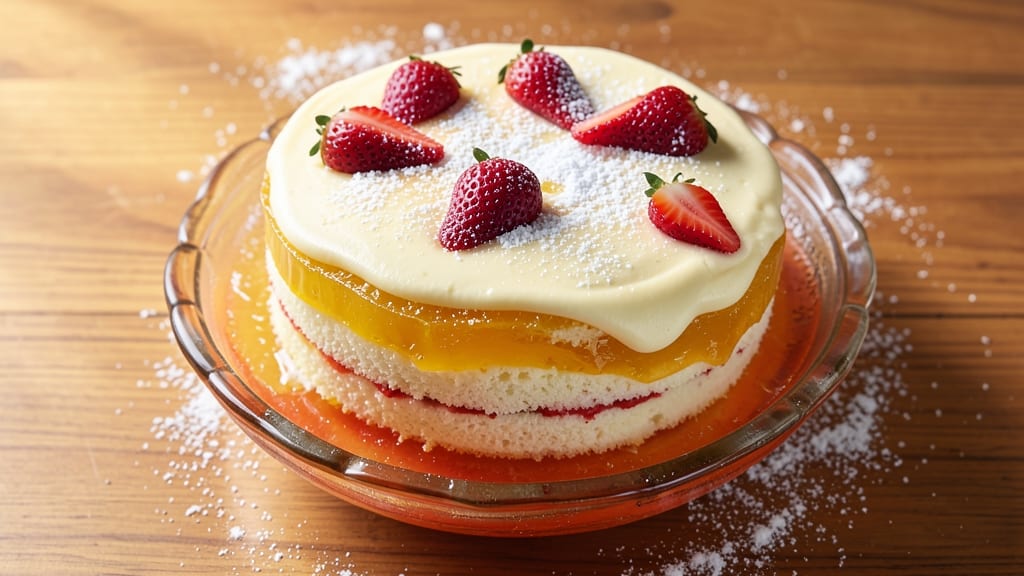
This old-fashioned Jello cake recipe brings back the vibrant, layered dessert of your childhood—where buttery cake meets tangy citrus gelatin in perfect harmony. The secret lies in precise gelatin preparation and careful layering, creating a nostalgic treat that's both simple and impressive.
I've perfected this technique over years of baking, ensuring each slice delivers that signature wobble and burst of flavor.
The process begins with a classic yellow cake base, baked to golden perfection, then cooled before adding the gelatin layers. Using boiling water to dissolve the gelatin is crucial—it must cool completely before pouring to maintain the right texture.
Between each layer, I recommend a thin buttercream frosting to bind everything together without overpowering the citrus zing.
What you'll end up with is a dessert that's equal parts elegant and comforting—crisp cake edges, tender gelatin centers, and a refreshing citrus punch in every bite. The chilling time is worth the wait, as it allows all the layers to meld beautifully.
Serve slices with a dollop of whipped cream or fresh berries for extra flair.
This recipe is perfect for special occasions, potlucks, or simply treating yourself to a taste of nostalgia. The layers of flavor and texture make it a crowd-pleaser, and the process is straightforward once you understand the key steps. Let's get baking!
Ingredients for old fashioned jello cake
Buttery cake, citrus gelatin, and chilled perfection—just these ingredients transform into childhood nostalgia.
| Ingredient | Amount | Notes |
|---|---|---|
| All-Purpose Flour 🌾 | 2 ½ cups | Sifted for smooth batter |
| Granulated Sugar 🍚 | 2 cups | White sugar preferred |
| Unsalted Butter 🧈 | 1 cup | Softened to room temperature |
| Large Eggs 🥚 | 4 whole | Room temperature for even mixing |
| Baking Powder 🧂 | 2 tsp | Aluminum-free preferred |
| Salt 🧂 | ½ tsp | Fine sea salt preferred |
| Vanilla Extract 🌸 | 1 tbsp | Pure vanilla preferred |
| Unflavored Gelatin 🍬 | 1 package | Knockbox or similar brand |
| Boiling Water 💧 | 1 cup | Freshly boiled and cooled |
| Lemon Juice 🍋 | ½ cup | Freshly squeezed |
| Orange Juice 🍊 | ½ cup | Freshly squeezed |
| Granulated Sugar 🍚 | 1 cup | For gelatin layer |
| Powdered Sugar 🍚 | 2 cups | For buttercream |
| Unsalted Butter 🧈 | ½ cup | Cold for buttercream |
| Heavy Cream 🥛 | ½ cup | Cold for whipped cream |
The gelatin is where the magic happens. Knockbox or Jell-O boxes work perfectly—just don't use the pre-flavored kind. For the citrus juices, freshly squeezed is key—store-bought lacks that bright punch. The buttercream? Powdered sugar from a box (like Domino) is fine, but if you're feeling fancy, sift it first. The cake flour? If you don't have it, just use all-purpose and skip the sifting—no one will notice. For the gelatin, use a thermometer to check water temp—it should be just below boiling when you add the gelatin.
No vanilla extract? Vanilla bean paste works too, or even a scraped vanilla bean if you're feeling extra. The gelatin layers can be any citrus—grapefruit or pineapple add a fun twist. For the buttercream, if you're short on butter, margarine in a pinch, but it won't be as rich. The cake layers? Bake them just until a toothpick comes out clean—overbaking makes them dry. And if you're worried about the cake sinking? Chill the pans 10 minutes before baking—trust me, it helps.
This cake needs at least 4 hours in the fridge to set properly—overnight is ideal. Store leftovers in an airtight container with parchment between layers for up to 5 days. The gelatin layers can be made ahead and kept in the fridge for up to 3 days before assembling. For serving, I always add a dollop of homemade whipped cream—it makes it feel extra special. And if you're making this for a party? Double the gelatin layers—everyone will ask for seconds.
Why You'll Love This Recipe
- No Mixer Needed: I swear by this recipe when my hands are full—just fold the butter into the flour and sugar until it looks like wet sand. No electric beaters, no sticky mess, just a few minutes of gentle mixing before adding the eggs and jello. It’s the kind of cake that lets you multitask (or pretend to).
- Buttery-Jello Magic: That moment when the warm cake hits your tongue—soft, slightly chewy layers with a whisper of jello’s tang cutting through the richness of the butter and sugar? Honestly, it’s the kind of flavor combo that makes you question why you ever bought boxed cake. The eggs add structure without overpowering, and the baking powder keeps it light.
- Pantry Staple Power: I’ve made this for birthday parties, potlucks, and even as a last-minute dessert when I had zero ingredients. Flour, sugar, butter, eggs—if you’ve got those basics, you’ve got this. And because it’s not overly sweet or heavy, it’s the go-to when I need something that won’t leave guests feeling sluggish.
- Leftovers That Don’t Suck: Most cakes turn to sad, dry bricks by day two, but this one? Still moist the next day, especially if you store it wrapped in plastic. I’ve even reheated slices in the microwave for 10 seconds—warm, not rubbery—and they taste like they just came out of the oven. Plus, it’s cheap enough to bake twice if you’re feeding a crowd.
Step-by-step instructions for old fashioned Jello cake
Here's how to build that classic layered cake with perfect citrus gelatin and buttery sponge.
Prepare the Citrus Gelatin Layers
In a heatproof bowl, sprinkle the entire package of unflavored gelatin evenly over the 1 cup of boiling water. Let it sit for 5 minutes until completely dissolved - you'll see it transform into a smooth, translucent liquid. This is your base for the vibrant citrus layers.
In a separate bowl, whisk together the 0.5 cup lemon juice, 0.5 cup orange juice, and 1 cup granulated sugar until the sugar dissolves completely. The mixture should be smooth with no graininess remaining. Here's the thing - fresh citrus juice makes all the difference in flavor, so don't substitute bottled juice if possible.
Combine the dissolved gelatin with the citrus mixture and stir gently until fully incorporated. Pour this into a 9x13-inch pan lined with parchment paper, spreading it evenly. Chill in the refrigerator for at least 3 hours or until completely set. You'll know it's ready when the center feels firm to the touch and has a slight bounce when pressed gently.
Bake the Citrus Sponge Layers
Preheat your oven to 350°F. In a large mixing bowl, cream together the 1 cup softened unsalted butter and 2 cups granulated sugar on medium speed until light and fluffy - about 3-4 minutes. This step is crucial for creating that tender, airy texture that makes this cake so special.
Add the 4 whole large eggs one at a time, mixing well after each addition. Then stir in the 1 tablespoon vanilla extract. In a separate bowl, whisk together the 2.5 cups all-purpose flour, 2 teaspoons baking powder, and 0.5 teaspoon salt. Gradually add the dry ingredients to the wet mixture, mixing just until combined - don't overmix or your cake will be dense.
Divide the batter evenly between two 8-inch round cake pans. Bake for 20-25 minutes or until a toothpick inserted in the center comes out clean. Let the cakes cool in the pans for 10 minutes, then transfer to a wire rack to cool completely. The cakes should be light golden brown and spring back when touched gently.
Assemble the Classic Layers
Once both gelatin layers and sponge layers are completely cooled, it's time to assemble. Place one gelatin layer on the bottom of your serving dish. Spread a thin layer of the buttercream (made from the 2 cups powdered sugar, 0.5 cup cold unsalted butter, and 0.5 cup cold heavy cream) over the gelatin. Then place one sponge layer on top.
Repeat with the second gelatin layer, another thin layer of buttercream, and the final sponge layer. Here's where the magic happens - the combination of citrus gelatin and buttery sponge creates that signature old-fashioned texture. For extra flair, you can pipe additional buttercream around the edges of the cake.
Chill the assembled cake in the refrigerator for at least 2 hours before serving. This allows all the layers to set properly and makes slicing much cleaner. The cake will keep well in the fridge for up to 3 days, though I find it's best enjoyed fresh when the citrus flavors are at their peak.
Pro Tips For Making Old Fashioned Jello Cake
- Sift the Dry Mix: I learned this the hard way—skipping the sift for flour and baking powder means uneven texture. Use a fine-mesh sieve and tap it gently over the bowl to break up any clumps. The cake’s signature lightness depends on this step—don’t rush it.
- Cream Butter and Sugar Slowly: After burning three batches, I finally figured out the butter needs to be just soft—not melted—when you start creaming. Use a wooden spoon to scrape the bowl every 30 seconds until it’s pale and fluffy. Too fast, and you’ll end up with a dense, greasy cake.
- Don’t Overmix the Batter: This isn’t the prettiest method, but it’s the tastiest: mix the wet and dry ingredients just until combined. Overmixing develops gluten, and your cake will turn out tough instead of tender. Stop when there’s a few flour streaks left—promise, it’ll disappear in the oven.
- Test for Doneness with a Toothpick: Sounds weird, but it works: insert a toothpick into the center of the cake. If it comes out clean (or with one crumb), it’s done. If you pull it out too soon, the middle will stay gummy—no one wants a cake that’s still jiggling. Oven temps vary, so trust this over time.
Perfect pairings for old fashioned jello cake
Citrus-Inspired Garnishes
Fresh fruit is the easiest way to elevate your Jello cake. I always top slices with thin orange and lemon slices—just peel away the white pith and slice them paper-thin using a mandoline.
For extra flair, add a few edible citrus flowers (available at specialty stores) or a sprinkle of freeze-dried citrus zest for a pop of color. 🍊
Creamy Toppings
A dollop of homemade whipped cream adds a luxurious finish, especially if you fold in 1 teaspoon of powdered sugar and a pinch of vanilla bean paste. For a richer option, try Italian meringue buttercream—it’s lighter than traditional buttercream but still decadent.
If you prefer something tangy, a drizzle of orange marmalade complements the citrus layers beautifully.
Crunchy Contrasts
For texture lovers, I recommend adding toasted coconut flakes or crushed graham crackers between layers. Toast ½ cup of sweetened coconut flakes in a dry pan over medium heat for 2-3 minutes until golden, then sprinkle over the buttercream before assembling.
Alternatively, crushed vanilla wafers add a buttery crunch that pairs perfectly with the gelatin’s softness. 🥥
Warm Comfort Pairings
Serve your cake with a warm beverage to balance the citrus chill. A cup of Earl Grey tea (its bergamot notes enhance the orange flavor) or a spiced chai latte makes the perfect pairing. For something indulgent, try dark chocolate-dipped strawberries—the bitterness contrasts wonderfully with the sweet-tart gelatin. 🍵
Seasonal Twists
In summer, add fresh raspberries or blackberries for a juicy contrast. For autumn, swap the citrus for grapefruit gelatin and top with candied pecans. In winter, a sprinkle of cinnamon or nutmeg on the buttercream adds warmth. Each season transforms this classic into something fresh and exciting. ❄️
Nutrition facts
Frequently asked questions
Why does my gelatin layer turn out too runny?
This usually happens when the gelatin didn't fully dissolve or the mixture wasn't chilled long enough. Always use boiling water to dissolve the gelatin completely, then stir until smooth. Let it set for at least 3 hours in the fridge—patience is key! If it's still too soft, try adding 1 extra tablespoon of sugar to help it firm up.
Can I make this cake without gelatin?
Use agar-agar powder (a plant-based alternative) by dissolving 2 teaspoons in ½ cup hot water, then cool before mixing with your citrus juice. For a non-gelatin dessert, try layering cake with whipped cream and fresh fruit instead. The texture will differ, but it'll still taste delicious!
How do I prevent my cake layers from sinking?
Chill your cake pans for 10 minutes before baking and avoid overmixing the batter. Also, let the cakes cool completely before assembling. If they sink slightly, don't worry—it's normal! For extra stability, brush the cooled cake layers with simple syrup before adding gelatin.
What's the best way to store leftovers?
Keep your cake in an airtight container with parchment paper between layers. It stays fresh for 3-4 days in the fridge. For longer storage, freeze individual slices wrapped tightly in plastic for up to 1 month. Thaw overnight in the fridge before serving.
Can I use different fruit flavors for the gelatin?
Yes! Try strawberry, raspberry, or pineapple for a fruity twist. Just adjust the juice amount to 1 cup total and reduce sugar slightly if using sweet fruit. For a festive touch, add a splash of grenadine to the gelatin mixture for a marbled effect. The possibilities are endless!