
Desserts
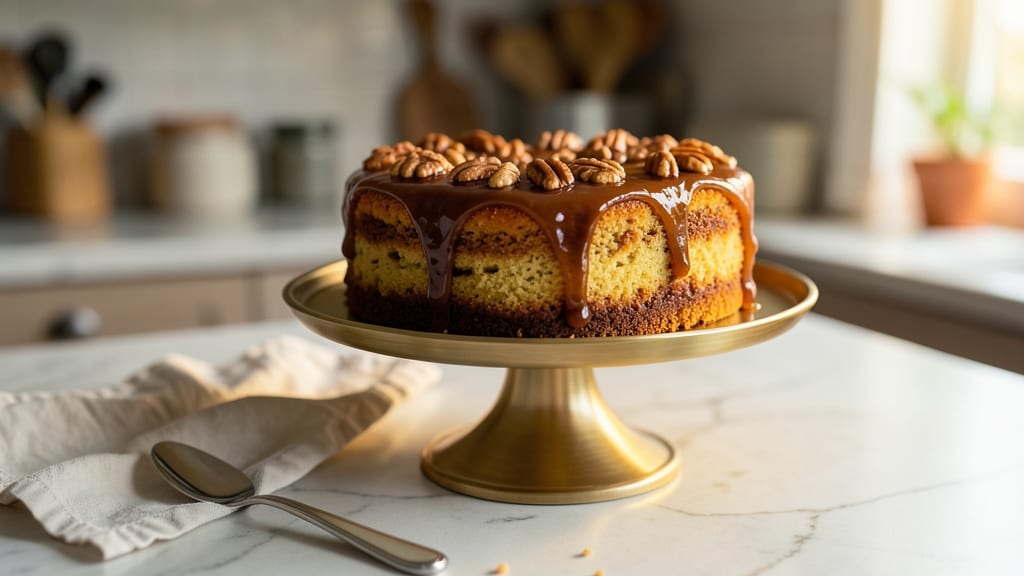
This vintage heart cake recipe brings back the warm, spiced nostalgia of old-fashioned baking with a modern twist—molasses-kissed layers wrapped in a toasted pecan crown. 🌟 The rich, caramelized molasses flavor cuts through the buttery cake layers, while the pecan crown adds a satisfying crunch that ties the whole dessert together.
I first made this for a family reunion when my grandmother mentioned how much she missed the heart-shaped cakes from her childhood.
The secret to this recipe lies in its balance—molasses provides deep, warming sweetness without overpowering, while the toasted pecans add a nutty complexity that elevates the cake from simple to showstopping. Baking the heart shape requires patience and precision, but the result is worth every minute.
The layers stay moist, the molasses glaze sets perfectly, and the pecan crown holds its shape beautifully.
What you’ll end up with is a cake that looks as stunning as it tastes—golden layers with a glossy molasses glaze, crowned with a delicate but sturdy pecan lattice. This isn’t just dessert; it’s a centerpiece that sparks conversation and brings back memories of simpler times.
Whether you’re baking for a celebration or just craving a taste of nostalgia, this recipe delivers.
The best part? It’s easier than it looks. With clear instructions for shaping the heart and decorating the crown, even beginners can achieve professional-looking results. Let’s get baking—your kitchen will smell like autumn in no time.
Ingredients for vintage heart cake
Buttery layers, spiced molasses, and a toasted pecan crown—this cake tastes like nostalgia in every bite.
| Ingredient | Amount | Notes |
|---|---|---|
| All-Purpose Flour 🌾 | 4 cups | Sifted for light texture |
| Unsalted Butter 🧈 | 2 cups | Softened to room temperature |
| Granulated Sugar 🍚 | 2 ½ cups | Divided for layers and glaze |
| Light Brown Sugar 🍚 | 1 cup | Packed firmly for molasses depth |
| Molasses 🍯 | 1 cup | Unsulphured preferred for authentic flavor |
| Large Eggs 🥚 | 4 whole | Room temperature for even mixing |
| Vanilla Extract 🌿 | 2 tsp | Pure, high-quality extract |
| Baking Powder 🧂 | 2 tsp | Freshly opened for lift |
| Ground Cinnamon 🌿 | 1 ½ tsp | Freshly ground for warmth |
| Ground Ginger 🌶️ | ½ tsp | Freshly ground for spice |
| Salt 🧂 | ½ tsp | Fine sea salt for balance |
| Pecans 🥜 | 3 cups | Chopped, toasted for crown |
| Powdered Sugar 🍚 | 2 cups | For glaze and crown dusting |
| Heavy Cream 🥛 | 1 cup | Whipped for crown binding |
The molasses makes or breaks this cake. Unsulphured molasses from Whole Foods or Trader Joe's gives that deep, caramelized flavor—none of that bitter aftertaste from cheap brands. Pecans? Raw, unsalted from Costco or a bulk bin toast until golden—don't skip this step. The butter should be room temperature; cold butter creates dense layers. If your kitchen runs warm, chill the batter 20 minutes before baking. For the heart shape, I use a 10-inch round cake pan and cut the excess with a serrated knife—practice makes perfect.
No unsulphured molasses? Substitute with dark corn syrup plus 1 tsp vinegar for tang. Pecans too expensive? Walnut halves work in a pinch, but toast them extra long. Short on vanilla? 1 tsp vanilla bean paste adds depth. The cake layers need to cool completely before glazing—30 minutes minimum. For the crown, mix powdered sugar and whipped cream until stiff peaks form, then fold in toasted pecans. If your crown feels too soft, chill it 15 minutes before placing on the cake.
This cake keeps beautifully. Wrap the glazed cake tightly in plastic and store at room temperature for 3 days—the molasses glaze actually improves overnight. For longer storage, freeze the unfrosted layers for up to 3 months. Reheat slices in a 200°F oven for 5 minutes to revive the texture. The pecan crown? Best eaten fresh, but you can reheat the whole cake 10 minutes at 300°F if needed—just watch the glaze.
Why You'll Love This Recipe
- One-Bowl Wonder: I swear by this recipe—just toss everything into a bowl, mix, and bake. No fancy layers, no fussing with frosting. That molasses? It does all the work for you.
- Molasses Magic: Between us, this cake’s secret weapon is the molasses. It’s rich, it’s deep, it’s got that warm, almost caramel-like kick that makes every bite feel like a hug. Honestly, I’ve tried other cakes, but this one sticks with me.
- Breakfast or Dessert: Here’s what sold me—this cake’s versatile. Serve it warm with butter for a hearty breakfast or dust it with powdered sugar for a dessert that won’t break the bank. (Yes, even on a Tuesday night.)
- Budget-Friendly Staples: All the good stuff—flour, butter, sugar—you already have. No specialty ingredients, no last-minute grocery runs. And the leftovers? They last for days, if you can resist the urge to eat them all at once.
Step-by-step instructions for molasses-kissed layers with toasted pecan crown
Here's how to build this nostalgic cake with rich layers and a crunchy pecan crown.
🍳 Step 1: Cream Butter and Sugars for Maximum Fluff
In a stand mixer fitted with the paddle attachment, beat the 2 cups unsalted butter and 1 cup light brown sugar on medium speed for 3-4 minutes until light and fluffy. The mixture should nearly double in volume and become pale. This creaming process incorporates air, which creates that signature tender crumb.
Add the 2.5 cups granulated sugar and beat for another 2-3 minutes until the mixture is smooth and thick. Here's the thing—don't rush this step. You'll know it's ready when you lift the paddle and see ribbons of butter that hold their shape for a few seconds. This ensures your cake will be light, not dense.
👨🍳 Step 2: Mix in Molasses and Wet Ingredients
Reduce the mixer speed to low and add the 1 cup molasses and 2 tsp vanilla extract. Mix just until combined—you're looking for a smooth batter, but don't overmix or you'll develop gluten. The molasses gives this cake its signature deep flavor, so don't skimp here.
Add the 4 whole large eggs, one at a time, mixing just until each is incorporated. Then stir in the 1 cup heavy cream until smooth. The batter will be thick and syrupy—this is normal. Let it rest for 10 minutes at room temperature while you prepare your dry ingredients. This resting period helps the flour absorb the wet ingredients more evenly.
🥘 Step 3: Combine Dry Ingredients and Fold Gently
In a separate bowl, whisk together the 4 cups all-purpose flour, 2 tsp baking powder, 1.5 tsp ground cinnamon, 0.5 tsp ground ginger, and 0.5 tsp salt. Sift the flour mixture directly into the wet ingredients and gently fold together using a spatula. Mix just until no flour streaks remain—overmixing develops gluten and makes the cake tough.
Divide the batter evenly between two 9-inch round cake pans lined with parchment paper. The batter should fill the pans about 2/3 full. Tap the pans gently on the counter to remove any air bubbles. Here's a pro tip: place the pans in the refrigerator for 15 minutes before baking. This helps prevent doming and ensures even baking.
🔥 Step 4: Bake the Layers to Perfect Doneness
Preheat your oven to 350°F. Bake the cake layers for 25-30 minutes, or until a toothpick inserted into the center comes out clean. The edges should be golden brown, but the tops might still look slightly underdone—this is normal. Rotate the pans halfway through baking for even heat distribution.
Let the cakes cool in their pans for 10 minutes, then transfer to a wire rack to cool completely. This gradual cooling prevents cracking. While the cakes cool, prepare your glaze by whisking together 1 cup powdered sugar and 2-3 tablespoons of the reserved molasses (from the batter) until smooth. You'll want a thick but pourable consistency—like honey.
🥘 Step 5: Assemble with Pecan Crown and Glaze
Place one cake layer on a cake stand or plate. Spread a thin layer of the glaze over the top, then place the second layer on top. Brush the remaining glaze over the entire cake, letting some drip down the sides for that classic vintage look.
For the pecan crown, toast the 3 cups pecans in a dry skillet over medium heat for 3-4 minutes until fragrant and lightly golden. Stir in 1/2 cup powdered sugar and 1/4 cup melted butter until coated. Spread the whipped 1 cup heavy cream over the top of the cake, then press the toasted pecans into the cream to form a crown. Dust with the remaining 1/2 cup powdered sugar for a snowy finish.
Pro Tips For Making Vintage Heart Cake
- CREAM THE BUTTER SLOWLY: I learned this the hard way—dumping all the butter into the sugar at once just makes a greasy mess. Instead, add it 1 tablespoon at a time while mixing on medium speed, letting each addition fully incorporate before adding more. The goal is a light, fluffy batter, not a sticky glob.
- MEASURE MOLASSES PRECISELY: Molasses is thick enough that a "splash" isn’t reliable. Use a kitchen scale or a measuring spoon with straight sides—fill it to the brim and level it off. Too little and your cake tastes flat; too much and it’s bitter. (Yes, even if you’re impatient like me.)
- DON’T OVERMIX THE BATTER: Once you fold in the dry ingredients, stop mixing the second everything comes together. Overworking the batter introduces gluten, which makes the cake dense instead of tender. Give it one last stir with a spatula—just until no flour streaks remain.
- BAKE UNTIL THE CENTER SPRINGS BACK: The toothpick test is overrated for heart cake—molasses-rich batters stay moist. Instead, press the center gently with a finger: it should spring back slowly, not bounce. If it’s still jiggly after 5 minutes, cover loosely with foil and bake another 5–10 minutes. (Your future self will thank you.)
Troubleshooting this recipe
Cracked Cake Layers
If your cake layers crack during baking, it’s usually due to uneven cooling or overmixing. First, ensure your oven is fully preheated to 350°F—cold spots can cause cracks. After baking, let the cakes cool in their pans for 10 minutes before transferring to a wire rack.
For extra insurance, chill the batter 15 minutes before baking to prevent rapid expansion. If cracks still appear, try brushing the tops with a thin layer of simple syrup (equal parts sugar and water) before baking to create a moisture barrier. 💡
Dense or Dry Texture
A dense or dry cake often means overmixing or insufficient fat. To fix this, cream your 2 cups butter and sugars until light and fluffy—this incorporates air for a tender crumb. Avoid overmixing the batter after adding flour; mix just until combined.
If your cake turns out dry, try adding 1-2 tablespoons of heavy cream to the glaze or brushing the layers with a molasses syrup (equal parts molasses and water) before assembling. This adds moisture without altering the flavor. 🥛
Pecan Crown Too Soft
The pecan crown should hold its shape but still be crunchy. If it feels too soft, ensure your whipped cream is fully chilled before mixing with pecans—room-temperature cream won’t set properly. For extra stability, fold in 1 extra tablespoon of powdered sugar to stiffen the mixture.
If the crown still collapses, try pressing it onto the cake immediately after whipping and chilling the cake for 15 minutes in the fridge before serving. 🥜
Molasses Glaze Too Thin
A runny glaze usually means too much liquid. Start with 2 tablespoons of molasses for every 1 cup of powdered sugar, adjusting in ½-teaspoon increments until you reach a thick, honey-like consistency. If it’s still too thin, add 1-2 teaspoons of powdered sugar to thicken.
For a glossy finish, brush the glaze in thin layers, allowing each to set slightly before adding the next. Let the cake sit at room temperature for 30 minutes before serving to help the glaze firm up. 🍯
Heart Shape Not Holding
Cutting a perfect heart shape requires a sharp serrated knife and patience. First, bake your cake in a 10-inch round pan—this gives you enough excess to trim. After cooling, place the cake on a cutting board and use a serrated knife to slice the excess into a heart.
For cleaner edges, dip the knife in hot water, wipe dry, and press firmly. If the shape crumbles, try chilling the cake for 10 minutes before cutting. A heart-shaped cake cutter (available at baking supply stores) can also help achieve professional results. ❤️
Uneven Baking
Uneven baking often happens when the oven isn’t calibrated or the cake pans aren’t leveled. Rotate your pans halfway through baking to ensure even heat distribution. Also, check your oven’s accuracy—many run hot or cold.
If your edges bake faster than the center, try tenting the pans with aluminum foil to create a moisture barrier. For a foolproof method, bake one layer at a time, adjusting the oven rack to the middle position for consistency. 🔥
Nutrition facts
Frequently asked questions
Can I make this cake without molasses?
The molasses is what gives this cake its signature depth of flavor, but you can substitute it with 1 cup dark corn syrup plus 1 teaspoon apple cider vinegar for tang. For a lighter flavor, try 1 cup honey, though it will be slightly less rich. The spices (cinnamon and ginger) will still shine, but the molasses adds that unmistakable caramelized warmth.
How do I store leftovers?
Wrap the glazed cake tightly in plastic wrap and store it at room temperature for up to 3 days. For longer storage, freeze the unfrosted layers for 3 months. To reheat slices, warm them in a 200°F oven for 5 minutes to restore the moist texture. The pecan crown is best enjoyed fresh, but you can reheat the whole cake for 10 minutes at 300°F if needed.
Is this cake gluten-free?
As written, this recipe uses all-purpose flour and isn't gluten-free. For a GF version, substitute with a 1:1 gluten-free flour blend (like Bob's Red Mill) and add ½ teaspoon xanthan gum. You may also need to increase the baking powder to 2.5 teaspoons for proper lift. Keep in mind the texture will be slightly denser.
Can I make this cake in a different shape?
While the heart shape is traditional, you can bake this cake in round, square, or even cupcake pans. For cupcakes, reduce baking time to 18-20 minutes. The molasses glaze and pecan crown will work beautifully on any shape—just adjust the assembly steps. A square pan works well for a rustic look, while cupcakes are perfect for individual servings.
Why does my cake sink in the middle?
This usually happens from overmixing the batter or opening the oven door too early. Make sure to mix just until combined after adding flour, and avoid overfilling the pans (fill to 2/3 full). Also, don't open the oven door until at least 20 minutes of baking time has passed. If it still sinks, try baking at 325°F instead of 350°F for a slower rise.