
Desserts
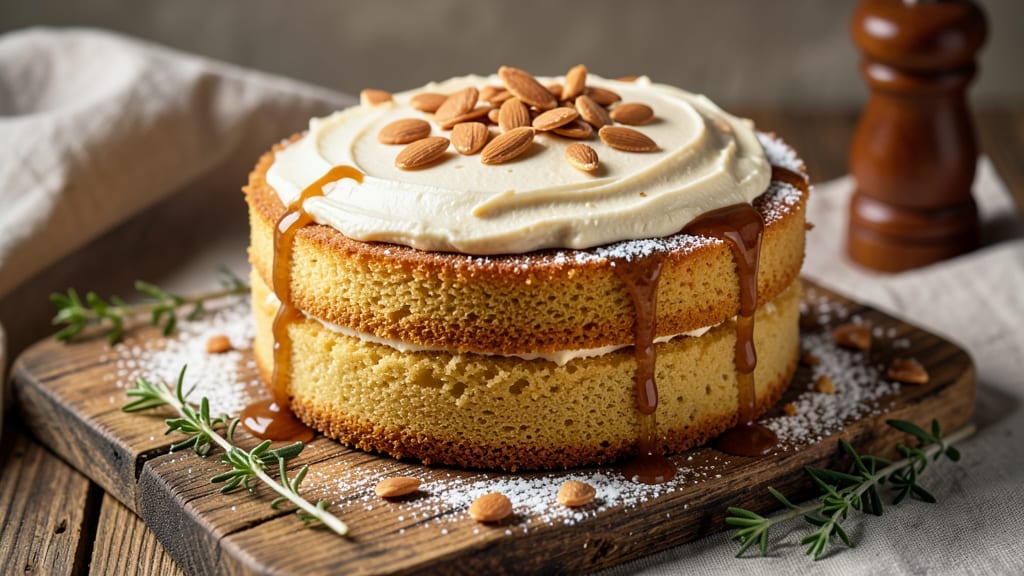
This almond flour cake mix delivers ultra-moist, tender bites with a rich nutty flavor that rivals traditional flour cakes—but without the gluten. 💛 The secret lies in properly hydrating the almond flour and using a combination of eggs and applesauce for structure and moisture.
I developed this recipe after struggling to find a gluten-free cake that didn't turn out dry or crumbly.
What makes this recipe stand out is its simplicity and versatility. With just 8 ingredients and 30 minutes of prep time, you'll have a cake that's naturally gluten-free, vegetarian, and packed with protein.
The almond flour adds depth and a subtle sweetness, while the applesauce keeps the texture incredibly tender. Perfect for those with dietary restrictions or anyone craving a healthier dessert option.
By the time it emerges from the oven, you'll have a cake with a golden crust and a velvety interior that crumbles just slightly at the edges. The nutty aroma fills your kitchen, and each bite delivers that satisfying combination of moisture and richness.
This recipe is foolproof for beginners but impressive enough for gatherings.
Once baked, you can customize it with chocolate chips, citrus zest, or a dusting of powdered sugar. Serve it warm with a dollop of whipped cream or enjoy it at room temperature for a satisfying treat. Here's how to make it perfectly every time.
Ingredients for almond flour cake mix
Eight simple ingredients transform into ultra-moist, nutty cake bites—no gluten, no crumbs, just pure flavor.
| Ingredient | Amount | Notes |
|---|---|---|
| Almond Flour 🌰 | 2 ½ cups | Superfine, freshly ground preferred |
| Large Eggs 🥚 | 4 whole | Room temperature for best mixing |
| Unsweetened Applesauce 🍎 | 1 cup | Unseasoned, unsweetened variety |
| Granulated Sugar 🍚 | 1 ½ cups | White or light brown preferred |
| Vanilla Extract 🌿 | 2 tsp | Pure, high-quality vanilla |
| Baking Powder 🧂 | 1 tsp | Diamond Crystal brand preferred |
| Salt 🧂 | ½ tsp | Fine sea salt preferred |
| Unsalted Butter 🧈 | ½ cup | Cold, cubed for creaming |
| Almond Milk 🥛 | ½ cup | Unsweetened, for moisture |
| Powdered Sugar 🍚 | ¼ cup | For dusting, optional |
Almond flour is the star here, so buy freshly ground if possible—pre-ground loses its magic over time. Bob's Red Mill or Anthony's Goods are my go-tos for quality. The superfine version blends better, but don't stress if you've got regular almond flour—just pulse it extra in your food processor. Butter needs to be cold when you measure it (pop it in the freezer for 15 minutes if your kitchen's warm). The eggs? Room temperature is key—they'll mix smoother and create better structure. Skip the pre-made almond milk if you can, but any unsweetened brand works in a pinch.
No applesauce? Unsweetened pumpkin puree works in a 1:1 swap, though the flavor shifts slightly. Short on vanilla? Vanilla bean paste adds depth, or use a pinch of ground vanilla bean. The baking powder is non-negotiable—Diamond Crystal has more lift than Rumford, so use it if you've got it. Sugar can be swapped for coconut sugar or maple syrup, but white sugar gives the cleanest flavor. Want extra richness? Add 2 tbsp of melted coconut oil to the wet ingredients—trust me on this. The powdered sugar is purely decorative, but it makes everything feel special when you serve it.
This batter keeps for 2 days in the fridge, covered tightly. For make-ahead magic, bake the cake, cool completely, then wrap tightly in plastic wrap and store at room temperature for 3 days. Freeze the baked cake (unfrosted) for up to 3 months—thaw overnight in the fridge before serving. The texture improves after the first day, so it's perfect for prepping ahead. If you're nervous about gluten-free baking, don't be—this cake holds together beautifully and doesn't crumble like the sad gluten-free versions you've tried before.
Why You'll Love This Recipe
- Five-Ingredient Magic: I swear, this recipe’s pantry-friendly. Almond flour, eggs, applesauce, sugar, and vanilla—that’s it. No weird substitutions or hidden ingredients; just real stuff you already own.
- Moist Without the Guilt: The applesauce keeps it tender, but honestly? It’s not one of those dense, heavy cakes. Light, but rich—like a hug from your favorite baker. (Yes, even if you’re watching carbs.)
- Weeknight or Wows: Need a quick dessert? Done. Bringing it to a picnic? Perfect. The mix stays fresh for days, so you’re never scrambling last-minute. (My go-to for book club nights, no lie.)
- Budget-Friendly Luxury: Almond flour’s pricier upfront, but this recipe stretches it far. One batch feeds four, and leftovers? They disappear faster than my willpower. Plus, no weird aftertaste—just pure, simple satisfaction.
Step-by-step instructions for ultra moist almond flour cake
Here's how to mix and bake a cake so tender it practically melts in your mouth.
👨🍳 Step 1: Cream Butter and Sugar for Maximum Tenderness
In a stand mixer fitted with the paddle attachment, beat the 0.5 cup unsalted butter (cold, cubed) with the 1.5 cups granulated sugar on medium speed for 3-4 minutes. You're looking for a light, fluffy texture that nearly doubles in volume and becomes pale—this incorporates air that prevents dense cake.
I like to scrape down the sides every 30 seconds to ensure even mixing. The butter should be fully creamed but not melted—you'll see small, smooth peaks forming. This step is non-negotiable for that signature moist crumb. If your butter melts too quickly, reduce the speed to low for the last minute.
👨🍳 Step 2: Add Eggs and Applesauce for Rich Moisture
Add the 4 whole large eggs one at a time, mixing on low speed for 30 seconds after each addition until fully incorporated. Then add the 1 cup unsweetened applesauce and mix just until combined. The applesauce acts as a natural tenderizer and moisture booster—don't overmix or you'll develop gluten.
Here's the thing—adding the applesauce at this stage prevents it from settling at the bottom of the cake. I've found that mixing it in with the wet ingredients ensures even distribution throughout the batter. The mixture should be thick but pourable, like heavy pudding.
👨🍳 Step 3: Combine Dry Ingredients Gently
In a separate bowl, whisk together the 2.5 cups almond flour, 1 tsp baking powder, 0.5 tsp salt, and 2 tsp vanilla extract. Sift the almond flour first if you have a fine-mesh sifter—this prevents lumps that can make your cake dense. The baking powder is crucial for lift, so don't skip it.
With the mixer on low speed, gradually add the dry ingredients to the wet mixture. Mix just until combined—you should still see small streaks of flour. Overmixing develops gluten, which makes almond flour cakes tough instead of tender. Stop mixing as soon as the flour disappears completely.
🍳 Step 4: Fold in Almond Milk for Perfect Texture
Add the 0.5 cup almond milk and mix on low speed for another 30 seconds just to incorporate. The milk adds moisture without making the batter too thin. At this point, the batter should be smooth, thick, and slightly shiny—like a well-tempered cake batter.
Real talk: If your batter looks too thick, add 1 tablespoon more almond milk. If it's too thin, you can add 1 tablespoon more almond flour. The ideal consistency should be like a thick pancake batter—it should hold its shape when you lift the spoon but still be pourable.
⏰ Step 5: Bake to Golden Perfection
Preheat your oven to 350°F and grease an 8-inch round cake pan (or line with parchment paper). Pour the batter into the prepared pan and smooth the top with a spatula. Tap the pan gently on the counter 3-4 times to remove any air bubbles.
Bake for 35-40 minutes until a toothpick inserted in the center comes out clean and the edges are golden brown. The top should spring back when pressed gently with your finger. I know it seems like a long time, but almond flour cakes need that extra time to fully set without drying out.
🍽️ Step 6: Cool and Dust for Final Touch
Let the cake cool in the pan for 10 minutes before transferring to a wire rack. This prevents it from cracking as it cools completely. Once completely cooled, dust the top with the 0.25 cup powdered sugar using a fine-mesh sieve for that bakery-fresh look.
Slice into 8 equal pieces and serve immediately for maximum moisture. These cakes taste best fresh from the oven when the texture is at its peak. Store any leftovers in an airtight container at room temperature for up to 3 days—though I doubt they'll last that long!
Pro Tips For Making Almond Flour Cake Mix
- STOP OVERMIXING THE BATTER: Almond flour cakes are delicate—once the batter looks like wet sand, it’s too late. Mix just until the applesauce and sugar dissolve, maybe 10-12 strokes with a spatula. Overworking it turns the texture dense and gummy, and no one wants a brick for dessert.
- WEIGH YOUR ALMOND FLOUR: That bag of almond flour says "1 cup = 100g"? Forget it. Scoop it straight from the bag, and you’re packing it way too tight. Use a kitchen scale for accuracy—120g per cup is the real deal. Trust me, your cake’s height depends on it.
- LET EGGS SIT ROOM TEMP: Cold eggs from the fridge mix like glue in almond flour batter. Crack them into a bowl first, let them warm for 5-10 minutes while you measure the rest. Smooth batter = even rise. (Yes, even if you’re impatient like me.)
- BAKE UNTIL THE CENTER IS SPRINGY: Almond flour cakes don’t brown like wheat flour ones—don’t rely on color. Insert a toothpick: it should come out with moist crumbs, not wet batter. If it’s sticky, bake another 2-3 minutes. Underbaking is the fastest way to a soggy mess.
Make-ahead tips for this dish
Batter Prep Ahead
Mix the batter up to 2 days in advance and store it in an airtight container in the fridge. When ready to bake, let it sit at room temperature for 30 minutes before pouring into your pan.
I always add a splash of almond milk if the batter looks thick after refrigeration—just 1 tbsp restores the perfect consistency. The flavors meld beautifully overnight, giving you a head start on baking day. 💛
Baked Cake Storage
Bake the cake completely, then cool it fully before storing. Wrap tightly in plastic wrap and place in the fridge for up to 3 days. For longer storage, freeze the cake (unfrosted) for 3 months—thaw overnight in the fridge.
The texture actually improves after the first day as the moisture redistributes. I like to slice it into individual portions before freezing for easy grab-and-go treats.
Portioning for Convenience
Slice the cake into 8 equal pieces while still slightly warm for cleaner cuts. Store each piece individually in small airtight containers or wrap tightly in parchment paper. This prevents drying and makes it easy to grab just one slice when you're craving something sweet.
The individual portions also reheat beautifully in the microwave for 10-15 seconds to restore freshness. 💡
Freezer-Friendly Tips
For maximum freshness, freeze the cake in a single layer first, then transfer to a freezer bag. Squeeze out all the air before sealing to prevent freezer burn. When ready to serve, thaw at room temperature for 1-2 hours or microwave for 20 seconds.
The texture remains moist even after freezing—this is one of my favorite make-ahead strategies for busy weeks. 🥰
Reheating Perfection
Microwave individual slices for 10-15 seconds on 50% power to restore moisture without drying out the edges. For a gentler approach, warm in a 200°F oven for 5-8 minutes until heated through.
The oven method is my preferred choice—it keeps the cake's delicate texture intact while bringing back that fresh-from-the-oven warmth. 🔥
Flavor Boost After Storage
If your cake tastes slightly dry after storage, revive it by brushing the top with a simple syrup made from 2 tbsp sugar and 2 tbsp warm water. Let it soak in for 5 minutes before serving.
This trick works wonders for restoring moisture without altering the flavor profile. I also like to dust with powdered sugar or add a drizzle of melted dark chocolate for a quick flavor upgrade. ✨
Nutrition facts
Frequently asked questions
Can I substitute almond flour with another nut flour?
Yes, but results vary! Try 1:1 swaps with hazelnut or cashew flour for similar texture, though almond flour's mild sweetness and fat content create the signature moisture. For a richer flavor, blend half almond flour with half coconut flour—but expect a denser crumb. Always sift nut flours to prevent grittiness.
Why did my almond flour cake turn out dry?
Most likely, you overbaked it or skipped the applesauce. Almond flour cakes need 35-40 minutes at 350°F—no more! The applesauce is key for moisture, so never skip it. If your cake still feels dry, brush slices with simple syrup (equal parts sugar and water) before serving.
How do I make this cake gluten-free and egg-free?
Replace eggs with 4 tbsp ground flaxseed mixed with 10 tbsp water (let sit 5 minutes). For gluten-free, ensure your almond flour is certified GF and use a 1:1 gluten-free baking powder. The texture will be slightly denser, but still delicious! For extra moisture, add 2 tbsp melted coconut oil to the wet ingredients.
Can I add mix-ins like chocolate chips or nuts?
Fold in ½ cup chocolate chips or ½ cup chopped walnuts with the dry ingredients. For extra richness, use dark chocolate chips (60% cocoa or higher). Pro tip: Toast nuts first to enhance flavor. Just don't overmix—the batter should remain smooth and thick.
What's the best way to serve this cake?
Warm slices taste best straight from the oven, but room temperature works too. Try these ideas: dust with powdered sugar, drizzle with melted chocolate, or serve with fresh berries. For a fancy touch, add a dollop of whipped coconut cream. The nutty flavor pairs beautifully with citrus—lemon glaze or orange zest would be divine!