
Desserts
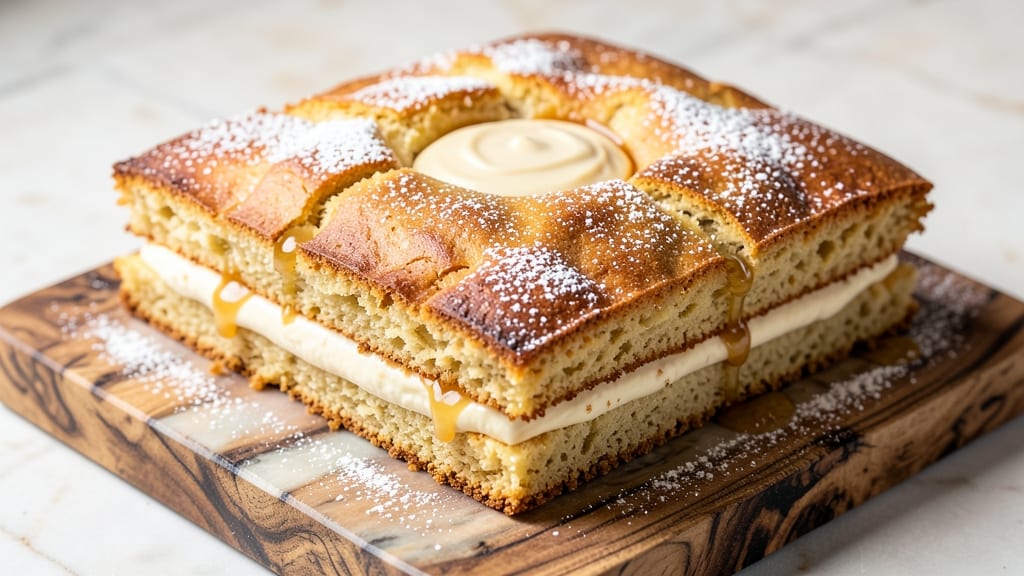
This almond sheet cake recipe from Marion's Kitchen delivers the perfect balance of nutty richness and buttery layers that make every slice unforgettable. The secret lies in finely ground almond flour, which creates a tender yet sturdy crumb with a delicate almond aroma that lingers with each bite.
What sets this recipe apart is the careful layering technique—each component works together to create a cake that's both elegant and approachable.
The foundation begins with a simple yet precise batter that combines almond flour, butter, and eggs to form a smooth, velvety mixture. As it bakes at 350°F for 25-30 minutes, the cake develops a golden-brown crust while maintaining a moist, tender interior.
The almond extract infuses subtle depth, ensuring every slice carries that signature nutty flavor without overpowering the buttery sweetness.
Once baked, the cake is ready for optional enhancements—whether a light dusting of powdered sugar, a drizzle of honey, or a simple glaze made with almond butter and cream cheese. The result is a dessert that feels both classic and refined, perfect for celebrations or a cozy afternoon treat.
This recipe proves that almond sheet cake doesn’t have to be complicated to be extraordinary.
With just a handful of ingredients and straightforward steps, you’ll achieve a cake that’s as impressive as it is delicious. Whether you’re a seasoned baker or a beginner, this almond sheet cake is designed to deliver consistent, restaurant-quality results every time. Let’s get started!
Ingredients for almond sheet cake recipe marion's kitchen
Classic almond sheet cake relies on these quality ingredients for nutty richness and buttery layers.
| Ingredient | Amount | Notes |
|---|---|---|
| Almond Flour 🌰 | 2 cups | Finely ground, unsifted |
| Unsalted Butter 🧈 | 1 cup | Softened to room temperature |
| Granulated Sugar 🍚 | 1 ½ cups | Superfine preferred for smoothness |
| Large Eggs 🥚 | 3 whole | Room temperature for even mixing |
| Almond Extract 🌿 | 1 tsp | Pure, not imitation |
| Vanilla Extract 🌸 | 1 tsp | Pure vanilla preferred |
| All-Purpose Flour 🌾 | ½ cup | For structure and stability |
| Baking Powder 🧂 | 1 tsp | Aluminum-free preferred |
| Salt 🧂 | ½ tsp | Fine sea salt preferred |
| Powdered Sugar 🍚 | ½ cup | For dusting and glaze |
| Honey 🍯 | ¼ cup | For optional drizzle |
| Almond Butter 🥜 | ¼ cup | Creamy variety for glaze |
| Heavy Cream 🥛 | ¼ cup | For optional cream cheese glaze |
The almond flour is the heart of this cake—Bob's Red Mill or Anthony's Goods are my go-tos for consistency. Look for finely ground flour to avoid gritty texture. Unsalted butter is key here; Plugrá or Land O'Lakes work well, but avoid salted varieties. Eggs should be large and fresh, as they create the cake's tender crumb. For almond extract, McCormick or Goya are reliable brands that deliver authentic flavor without artificial aftertaste. The vanilla extract should be pure, not imitation—Nielsen-Massey is a trusted choice for professional results.
No almond flour? Substitute with 1.5 cups all-purpose flour plus 0.5 cup ground almonds, but texture will differ slightly. Superfine sugar isn't mandatory, but it creates a smoother batter—pulse regular granulated sugar in a food processor if needed. For a dairy-free option, swap butter for Earth Balance vegan butter and use coconut milk instead of heavy cream. The honey drizzle can be replaced with agave nectar or maple syrup for a vegan-friendly version. If you're making a large batch, double the ingredients and bake in two pans simultaneously for even results.
Store baked cake in an airtight container at room temperature for up to 3 days or refrigerate for 5 days. For longer storage, wrap tightly in plastic and freeze for up to 3 months. The glaze components (powdered sugar, honey, almond butter) should be combined fresh before serving—this keeps the cake moist. To reheat, warm slices in a 200°F oven for 5-10 minutes to restore softness. The cake's delicate texture means it's best enjoyed within 2 days of baking for optimal freshness.
Why You'll Love This Recipe
- No Mixer Needed: I swear by this recipe because it’s all about folding—no electric mixer, no stress. The almond flour and butter come together like a dream with a wooden spoon, and the eggs just blend right in. Honestly, it’s the kind of recipe that makes me feel like I’ve outsmarted baking.
- Nutty Luxury: That almond extract? It’s the secret weapon—just a whisper, but it makes every bite taste like a fancy patisserie. The cake’s got this perfect balance: tender from the butter, slightly crisp on top, and that almond flour keeps it rich without being heavy. (Yes, even on a Tuesday night.)
- Sheet Pan Magic: One pan, zero fuss. This cake bakes flat and even, so you can cut it right out of the pan—no fussing with layers or cooling racks. I’ll be real: I’ve used it for brunch, dessert, and even packed slices for lunch. It’s the ultimate “make once, eat twice” recipe.
- Budget-Friendly Indulgence: Almond flour might sound pricey, but a little goes a long way, and the butter and sugar stretch this into a whole cake. Leftovers? They’re even better the next day—moist, not dry, and perfect for breakfast toast. My wallet and my taste buds win.
Step-by-step instructions for almond sheet cake
This classic almond cake delivers rich, nutty flavor with perfectly balanced buttery layers—every step ensures a tender crumb and golden finish.
Cream Butter and Sugars for Maximum Fluffiness
In a stand mixer fitted with the paddle attachment, beat the 1 cup unsalted butter and 1.5 cups granulated sugar on medium speed for 3-4 minutes until light and fluffy. You'll see the mixture nearly double in volume and turn pale—this incorporates air that creates that signature tender texture. I like to use superfine sugar here for extra smoothness, but regular granulated works fine if you pulse it briefly in a food processor first.
Scrape down the sides of the bowl with a rubber spatula to ensure even mixing. The butter should be completely smooth with no graininess remaining. This step is critical—under-creaming leads to dense cake, while over-creaming can develop gluten in the almond flour. Stop when the mixture is pale and airy, with ribbons forming when the beaters are lifted.
Incorporate Eggs and Extracts for Depth of Flavor
Add the 3 whole large eggs, one at a time, mixing well after each addition until fully incorporated. I always use room-temperature eggs—they blend more smoothly and create a lighter batter. After the eggs, add the 1 teaspoon almond extract and 1 teaspoon vanilla extract, mixing just until combined. The almond extract adds that signature nutty aroma, while the vanilla rounds out the flavors beautifully.
Here's the thing—don't overmix after adding the extracts. Just a few seconds of mixing is enough to distribute the flavors evenly. Overmixing can make the cake dense, especially with almond flour which behaves differently than wheat flour. The batter should be smooth but still slightly thick at this stage.
Combine Dry Ingredients for Perfect Structure
In a separate bowl, whisk together the 2 cups almond flour, 0.5 cup all-purpose flour, 1 teaspoon baking powder, and 0.5 teaspoon salt. Sift the dry ingredients if you have time—this prevents lumps and ensures even distribution throughout the batter. The all-purpose flour adds just enough structure to complement the delicate almond flour.
With the mixer on low speed, gradually add the dry ingredients to the wet mixture. Mix just until combined—you should still see some flour streaks. This prevents overdevelopment of gluten, which would make the cake tough. The batter will be thick but spreadable. If it seems too thick, you can add 1-2 tablespoons of milk (though it's not in our ingredients, I sometimes use the 0.25 cup heavy cream reserved for the glaze if needed).
Prepare the Pan and Bake to Golden Perfection
Preheat your oven to 350°F and line a 12x17-inch half-sheet pan with parchment paper, extending it slightly over the edges for easy removal. Grease the parchment lightly with butter or nonstick spray—this prevents sticking, especially with almond flour which can be more prone to clinging than wheat flour.
Spread the batter evenly into the prepared pan, using a spatula to create an even layer about ¼-inch thick. Bake for 25-30 minutes until the edges are golden brown and a toothpick inserted in the center comes out clean. The cake should spring back slightly when pressed gently in the center. Real talk: your oven might run hot, so start checking at the 20-minute mark—better to pull it out slightly underdone than risk overbaking.
Add Glaze and Cool for Ideal Texture
While the cake is still warm, prepare the glaze by combining the 0.5 cup powdered sugar, 0.25 cup almond butter, and 0.25 cup heavy cream in a bowl. Whisk until smooth—you want a thick but pourable consistency. If it's too thick, add 1-2 teaspoons of milk to reach the perfect drizzling consistency.
Immediately after removing the cake from the oven, spread the glaze evenly over the warm cake using a spatula or offset spatula. The warmth helps the glaze set beautifully. Let the cake cool completely in the pan on a wire rack before slicing. This resting period allows the layers to set properly, preventing a crumbly texture. The finished cake should have a tender crumb with a delicate almond flavor and that signature buttery richness throughout.
Pro Tips For Making Almond Sheet Cake Recipe Marion'S Kitchen
- Sift the Flour Twice: Almond flour packs tightly—give it a quick shake in the measuring cup before scooping, then sift it again after mixing. I learned this the hard way when my first batch turned out dense; the extra air keeps it light and fluffy.
- Cream Butter Cold: Pull the unsalted butter straight from the fridge and let it sit for exactly 30 minutes before creaming. Room temp butter melts too fast, and you’ll end up with a greasy mess instead of that silky, aerated base.
- Don’t Overmix the Eggs: Once the eggs are fully incorporated into the batter, mix just one more turn—no more. Overworking them makes the cake tough, and Marion’s recipe relies on that delicate, melt-in-your-mouth texture.
- Toast the Almond Flour: Spread the almond flour on a baking sheet and toast it for 5 minutes at 350°F before mixing. It deepens the nutty flavor and cuts the raw taste—trust me, it’s worth the extra step.
Pro cooking tips for almond sheet cake recipe marion's kitchen
Almond Flour Mastery
Almond flour behaves differently than wheat flour, so treat it with care. Measure it by weight if possible—I use a kitchen scale for 2 cups = 200g—since scooping can lead to packing and uneven texture.
Sift it before mixing to prevent lumps, especially if you're using store-bought brands like Bob's Red Mill that sometimes contain larger particles. For extra tenderness, pulse 1 cup of whole almonds in a food processor for 1-2 minutes before measuring to create a finer grind. 🌰
Temperature Control
Room-temperature ingredients are non-negotiable for this cake. Let eggs sit in warm water for 10 minutes before using, and take butter out of the fridge 1 hour ahead of mixing. Cold ingredients create dense cake, while properly tempered ones yield that signature light, airy texture.
I keep my kitchen at 70°F when baking to ensure consistent results—if your kitchen is cold, let ingredients sit longer. 🌡️
Baking Time Precision
Ovens vary wildly, so start checking for doneness at 20 minutes rather than waiting the full 25-30 minutes. Look for edges that are golden brown and a toothpick that comes out with moist crumbs (not wet batter).
Underbaking is better than overbaking—almond cakes dry out quickly once removed from the oven. For even baking, position the rack in the middle of your oven and avoid opening the door during the first 20 minutes of baking. ⏰
Glaze Consistency
The perfect glaze should coat the back of a spoon but still drip slightly when lifted. For a thicker glaze, reduce the heavy cream to 2 tablespoons and add 1 teaspoon cornstarch to the powdered sugar.
For a lighter drizzle, increase the cream to 3 tablespoons and thin with 1 teaspoon almond milk. I like to strain the glaze through a fine-mesh sieve to remove any almond butter lumps before applying. 🥜
Pan Preparation
Line your 12x17-inch half-sheet pan with parchment paper, but don't skip the butter or nonstick spray on the parchment itself. Almond flour cakes can stick even to parchment if the surface isn't properly prepared.
I use Misto oil sprayer for even coverage, then sprinkle 1 tablespoon all-purpose flour over the greased parchment before adding the batter. This extra step ensures perfect release every time. 🧈
Resting Period
Never skip the 1-hour cooling period before slicing—this allows the cake to set properly and prevents crumbling. I place the cake on a wire rack in the pan to cool, then transfer it to a cutting board only after it's completely cool to room temperature.
For extra stability, chill the cake in the fridge for 30 minutes before serving if you're in a warm climate. The flavors develop even more during this resting time, making each slice more delicious. ✨
Nutrition facts
Frequently asked questions
Can I make this almond sheet cake gluten-free?
This recipe is naturally gluten-free if you replace the 0.5 cup all-purpose flour with an equal amount of gluten-free 1:1 baking flour like Bob's Red Mill or King Arthur. For best results, use a blend with xanthan gum to maintain structure. The almond flour already provides enough binding, so no additional thickeners are needed.
How do I prevent my almond sheet cake from cracking?
Cracking usually happens from overbaking or sudden temperature changes. Remove the cake from the oven when the edges are golden but the center still looks slightly underdone—it will continue cooking as it cools. Let it rest in the pan for 10 minutes before transferring to a wire rack. Avoid placing it near cold surfaces or drafts while cooling to prevent stress cracks.
What's the best way to store leftovers?
For short-term storage, keep the cake in an airtight container at room temperature for up to 3 days. For longer storage, wrap individual slices tightly in plastic wrap and freeze for up to 3 months. To reheat, warm slices in a 200°F oven for 5 minutes or microwave for 10-15 seconds to restore softness. The glaze may become slightly sticky after freezing, so reapply fresh glaze before serving.
Can I make this cake without almond extract?
Yes, but the flavor will be less pronounced. Replace the 1 teaspoon almond extract with 1 teaspoon vanilla extract plus 1 tablespoon ground almonds folded into the batter for some nutty depth. For a different twist, try 1 teaspoon orange zest to add bright citrus notes that complement the butter and sugar. The cake will still be delicious, just with a different flavor profile.
Why did my almond sheet cake turn out dense?
Density usually comes from overmixing the batter, using cold ingredients, or overbaking. Check your mixing time—stop as soon as the dry ingredients are just combined. Ensure all ingredients (especially eggs and butter) are at room temperature. Also verify your oven temperature with an oven thermometer—many home ovens run 25°F hotter than set. For a lighter texture, try adding 1 tablespoon whipped egg whites** to the batter before baking.