
Main Courses
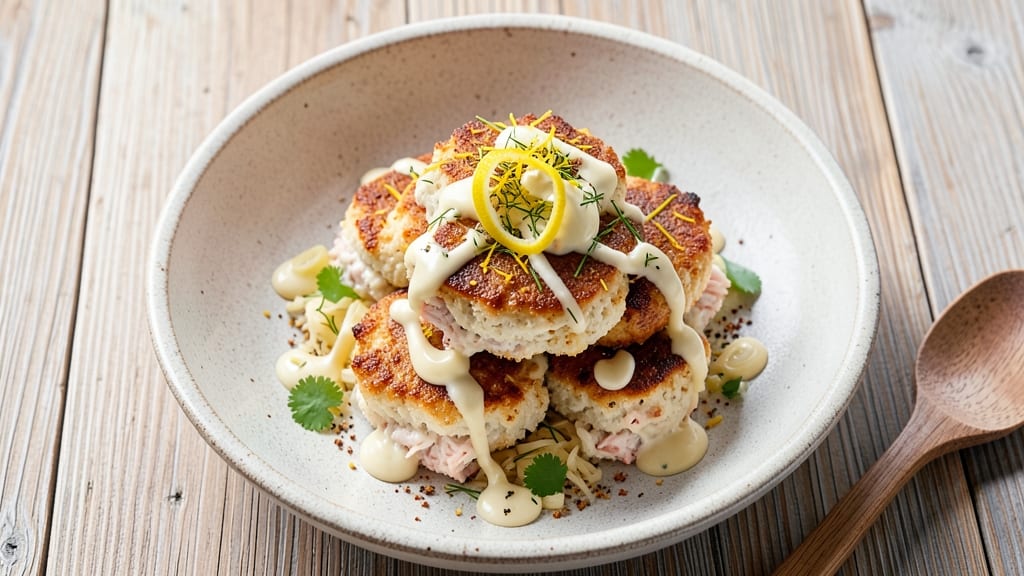
Alton Brown's crab cakes recipe delivers that signature crispy-golden crust and tender interior that makes every bite worth the effort. The secret lies in a precise balance of wet and dry ingredients—mayonnaise and Dijon mustard bind the mixture while cornstarch ensures that perfect crunch.
I’ve perfected this version over countless batches, and the difference between a good crab cake and a great one often comes down to chilling the batter before shaping.
What sets these apart is the zesty lemon aioli that cuts through the richness of the crab, adding brightness and a tangy finish. Alton’s method emphasizes precision: folding in ingredients gently to maintain texture, and cooking them just long enough to achieve that crispy exterior without drying out the center.
The result is a dish that feels both restaurant-worthy and approachable for home cooks. For those following a pescatarian diet, this recipe remains fully adaptable—just ensure your crab is sustainably sourced or consider a high-quality imitation crab substitute.
The technique stays the same, proving that great crab cakes aren’t just about the ingredient but the method. Serve with a side of crisp greens or a simple arugula salad to let the flavors shine. Ready to master this technique?
The key is patience—chilling the mixture, shaping carefully, and cooking at the right temperature. Let’s get started on creating crab cakes that taste like they came straight from a seafood shack.
Ingredients for alton brown crab cake
Precision ingredients for Alton Brown's signature crispy-golden crab cakes with zesty lemon aioli.
| Ingredient | Amount | Notes |
|---|---|---|
| Fresh Lump Crabmeat 🦀 | 1 ½ lb | Backfin preferred, sustainably sourced |
| Mayonnaise 🥫 | ½ cup | Duck egg preferred for richness |
| Dijon Mustard 🍯 | 2 tbsp | High-quality, no additives |
| Cornstarch 🌾 | ¼ cup | For perfect crispy crust |
| Shallots 🧅 | 2 whole | Finely minced, fresh preferred |
| Lemon Juice 🍋 | 2 tbsp | Freshly squeezed, no seeds |
| Chives 🌿 | 2 tbsp | Finely chopped, fresh only |
| Salt 🧂 | 1 ½ tsp | Diamond Crystal kosher salt |
| Black Pepper 🌶️ | ½ tsp | Freshly ground, coarse |
| Vegetable Oil 🫒 | ½ cup | High smoke point, neutral flavor |
| Lemon Zest 🍋 | 1 tbsp | From organic lemons |
| Egg 🥚 | 1 whole | Large, cold for binding |
| Breadcrumbs 🍞 | ¼ cup | Panko for extra crunch |
| Butter 🧈 | 2 tbsp | Unsalted, melted for frying |
The crabmeat is non-negotiable—Backfin or similar high-quality lump crab gives that signature texture. Whole Foods Market or Trader Joe's carry sustainably sourced options, or opt for imitation crab if needed. Fresh shallots and chives add brightness, so don't skip them—dried won't cut it here. The mayonnaise should be duck egg if possible for that restaurant-quality richness, but regular works fine. For the cornstarch, Bob's Red Mill is my go-to brand—it's fine and consistent for binding.
No fresh crab? High-quality imitation crab (like Lund's) works perfectly for pescatarian diets. Short on shallots? Extra minced onion at half the amount gets you close. The lemon juice must be fresh—bottled won't give the same zing. For the aioli, Hellmann's or Best Foods mayo are reliable, but if you're feeling fancy, make your own with olive oil and egg yolks. The breadcrumbs can be regular, but panko gives that extra crunch that makes all the difference. And yes, you can use salted butter for frying—just reduce the added salt slightly.
Chill the crab mixture for at least 30 minutes before shaping—this is crucial for holding together. The aioli keeps for 3 days in the fridge covered with plastic wrap pressed against the surface. For the crab cakes themselves, reheat gently in the oven at 350°F for 5-10 minutes to restore crispiness. Portion into single servings before freezing—they keep for 2 months this way. The lemon zest loses potency fast, so zest just before using if possible.
Why You'll Love This Recipe
- No-Fuss Mixture: I swear by the cornstarch trick—just toss it with the crabmeat and mayo, no fancy folding or overmixing. The shallots add depth without extra chopping, and honestly? It’s the kind of recipe where I can measure everything while watching a show.
- Crispy-Creamy Magic: That golden crust from the pan-fry paired with the buttery lump crab inside? It’s the kind of texture combo that makes people ask for seconds. The Dijon mustard ties everything together—tangy enough to cut through the richness, but not overpowering.
- Weeknight to Fancy: Between us, these are my go-to for both Tuesday dinners and Sunday brunch. Serve them with lemon wedges and a simple salad for a no-stress weeknight meal, or pair with champagne and asparagus for a dinner party that looks impressive but took 30 minutes.
- Leftovers That Don’t Suck: I make a double batch because reheating these is almost as good as fresh—just a quick pan sear to revive the crust. And since crabmeat stays pricey, stretching them into crab salad the next day means I’m not wasting a thing. (Yes, even on a Tuesday night.)
Step-by-step instructions for alton brown-inspired crab cakes
Here's the method for restaurant-quality crab cakes with perfect texture and flavor.
Prepare the Crab Cake Mixture
In a large mixing bowl, combine the 1.5 lb fresh lump crabmeat, 0.5 cup mayonnaise, 2 tbsp Dijon mustard, 1.5 tsp salt, 0.5 tsp black pepper, 2 tbsp lemon juice, and 1 tbsp lemon zest. Gently fold these ingredients together using a rubber spatula, being careful not to overmix—the crab should remain intact with just enough binding to hold the cakes together.
Next, add the 2 whole minced shallots and 2 tbsp finely chopped chives to the mixture. Stir gently to distribute the aromatics evenly. The goal is to create a cohesive but delicate batter that maintains the crab's natural texture while incorporating all the flavor components. If the mixture feels too dry, add 1 tbsp of cold water to help bind it together.
Create the Crispy Crust
In a separate bowl, whisk together the 1 whole cold egg, 0.25 cup cornstarch, and 0.25 cup breadcrumbs. This combination forms the crispy exterior that Alton Brown's method is known for. The cornstarch creates the perfect golden crust, while the panko breadcrumbs add texture and structure.
Gently fold this dry mixture into the crab mixture, again using a rubber spatula. Be careful not to overmix—just combine until the breadcrumbs are evenly distributed. The final mixture should be thick but still moldable, with visible crab lumps throughout. If it feels too loose, add an additional 1 tbsp of breadcrumbs to help bind it.
Chill the Mixture for Better Texture
Cover the mixing bowl with plastic wrap and refrigerate for at least 30 minutes, or up to 2 hours. This chilling step is crucial—it allows the flavors to meld together and gives the mixture the proper consistency for shaping. The cold temperature also helps prevent the cakes from falling apart when you fry them later.
While the mixture chills, prepare your frying station. Heat 2 tbsp unsalted butter and 0.5 cup vegetable oil in a large skillet over medium heat until the butter melts and the oil shimmers. The temperature should reach 350°F—this is critical for achieving that perfect golden-brown crust without cooking the crab too quickly on the inside.
Shape and Fry the Crab Cakes
Using a ring mold or your hands, shape the chilled crab mixture into 4 equal patties, each about 1 inch thick. Wet your hands slightly with cold water to prevent sticking. Gently press the mixture into the molds or shape them by hand, ensuring they're uniform in size for even cooking.
Carefully slide the crab cakes into the hot skillet, working in batches if necessary to avoid overcrowding. Fry for 3-4 minutes per side until they develop a deep golden-brown crust and are cooked through. The internal temperature should reach 145°F when measured with an instant-read thermometer. If the crust isn't golden enough, increase the heat slightly and cook for an additional 30 seconds to 1 minute.
Serve Immediately with Lemon Aioli
Transfer the fried crab cakes to a paper towel-lined plate to drain any excess oil. Serve them immediately while they're still hot and crispy. For the zesty lemon aioli, combine 0.25 cup mayonnaise, 1 tbsp lemon juice, 1 tsp lemon zest, 0.5 tsp Dijon mustard, and a pinch of salt in a small bowl. Whisk until smooth and creamy, then drizzle over the crab cakes before serving.
The result should be crab cakes with a crispy golden crust that gives way to tender, flavorful crab meat. The lemon aioli adds a bright, tangy contrast that cuts through the richness of the crab. Serve with a side of lemon wedges and tartar sauce for dipping, and enjoy while the cakes are still warm and crisp.
Pro Tips For Making Alton Brown Crab Cake
- CHILL THE CRAB FIRST: Pull that lump crabmeat straight from the fridge and let it sit in the bowl for 10-15 minutes before mixing. Cold crab releases less water when you fold in the mayo—your cakes won’t turn into soggy pancakes halfway through cooking. I learned this after watching three batches weep like sad salad dressing.
- SAUTÉ SHALLOTS UNTIL GOLD: Cook those shallots in butter until they’re not just translucent but actual golden brown—about 5-6 minutes. That caramelization adds depth the raw version misses, and it’s the thing that makes your crab cakes taste like they came from a seafood spot, not a home kitchen. Skip this, and you’re basically eating crab-flavored meatballs.
- PRESS THE CAKES HARD: When you shape the cakes, press them down firmly with your palm—no half-hearted patting. This creates a tight, even surface that sears properly instead of flaring up unevenly. I used to rush this, and my cakes would puff up like sad soufflés before collapsing. Press like you’re trying to flatten a stubborn pancake.
- USE A THIN LAYER OF CORNSTARCH: Don’t just mix the cornstarch into the crab—spread a thin layer (about 1/8-inch) on both sides of the formed cakes before frying. This creates that crispy crust without turning the inside into a gluey mess. Yes, it’s an extra step, but it’s the difference between "good" and "restaurant-quality."
Best sauces and condiments for this dish
Lemon Aioli
The zesty lemon aioli in this recipe is a game-changer—it balances the richness of the crab cakes with bright, tangy acidity. I use Hellmann's or Best Foods mayonnaise for a smooth base, then fold in 1 tbsp freshly squeezed lemon juice and 1 tsp lemon zest for maximum flavor.
A pinch of Dijon mustard adds depth, and I always adjust the salt to taste. For extra creaminess, I sometimes whisk in ½ tsp honey to mellow out the sharpness. 🍋
Tartar Sauce
This classic pairing adds a creamy, slightly sweet contrast to the crispy crab cakes. My go-to recipe combines ½ cup mayonnaise, 1 tbsp capers, 1 tbsp finely chopped cornichons, 1 tbsp fresh dill, 1 tsp lemon juice, and a pinch of Old Bay seasoning.
I like to blend it in a food processor for a smoother texture, but chopping by hand gives it a rustic feel. Serve it on the side for dipping or dollop it on top of the crab cakes. 🥗
Remoulade Sauce
A richer alternative to tartar sauce, remoulade brings bold flavors to the table. I make mine with ½ cup mayonnaise, 1 tbsp ketchup, 1 tbsp Dijon mustard, 1 tsp Worcestershire sauce, 1 tsp hot sauce, and 1 tbsp finely chopped pickles.
The key is balancing the heat with a touch of sweetness—adding ½ tsp sugar helps round out the flavors. This sauce pairs beautifully with the crispy crab cakes and adds a smoky depth. 🌶️
Spicy Sriracha Mayo
For those who love heat, a spicy sriracha mayo elevates the dish to new heights. Mix ½ cup mayonnaise with 1 tbsp sriracha and 1 tsp honey to balance the spice. I also add a pinch of garlic powder and smoked paprika for extra complexity.
This sauce is perfect for dipping or drizzling over the crab cakes, especially if you're serving them on a platter with other seafood dishes. 🔥
Herbed Butter
A simple but elegant finishing touch, herbed butter adds richness and aroma. I melt ¼ cup unsalted butter and mix it with 1 tbsp chopped parsley, 1 tbsp chopped chives, 1 tsp lemon zest, and a pinch of salt.
Spread it on the crab cakes just before serving, or serve it on the side for guests to add as they like. The butter melts beautifully into the warm crab cakes, enhancing their flavor without overpowering them. 🧈
Nutrition facts
Frequently asked questions
Why do I need to chill the crab cake mixture before shaping?
Chilling for at least 30 minutes (up to 2 hours) is crucial because it allows the flavors to meld and gives the mixture the right consistency for shaping. Without chilling, the cakes may fall apart when frying. The cold temperature also helps the cornstarch create that perfect crispy crust. Think of it like resting dough—patience pays off!
Can I bake these crab cakes instead of frying?
Yes! Preheat your oven to 400°F and bake the shaped cakes on a parchment-lined sheet for 12-15 minutes until golden brown. For extra crispiness, broil for 1-2 minutes at the end. Baking uses 2 tbsp olive oil brushed on top instead of butter/oil for frying. The texture will be slightly less crispy but still delicious.
What's the best way to store leftover crab cakes?
Store in an airtight container in the fridge for up to 3 days. To reheat, warm in a skillet over medium heat for 2-3 minutes per side or in the oven at 350°F for 5-10 minutes. For freezing, portion into single servings before freezing—this way they keep for 2 months and reheat beautifully.
Can I substitute imitation crab for fresh?
High-quality imitation crab (like Lund's) works perfectly for pescatarian diets. Use the same amount (1.5 lb) and follow the same recipe. The texture will be slightly different but still delicious. Just ensure it's well-drained before mixing. For extra flavor, add ½ tsp Old Bay seasoning to the mixture.
Why did my crab cakes turn out dry?
Overcooking is the most common cause—aim for 145°F internal temp (not browned crust alone). Another issue could be overmixing the batter, which breaks down the crab's natural moisture. Try reducing the cornstarch by 1 tbsp next time and frying at medium heat instead of high. The butter/oil combo should be at 350°F max.