Desserts
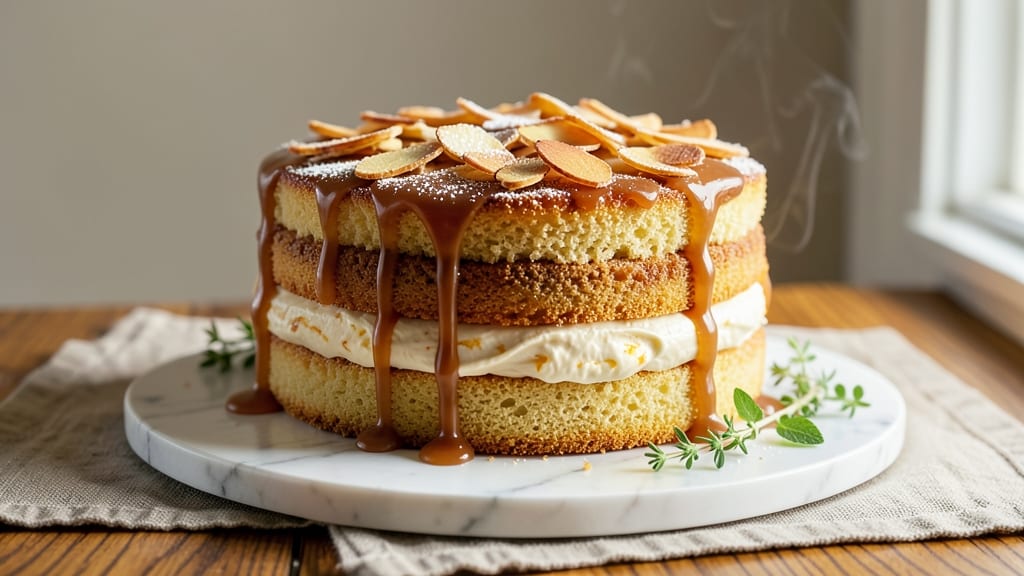
This America cake recipe delivers the perfect buttery layers and velvety vanilla frosting that made it a classic American dessert for generations. 💛 The secret lies in properly creaming butter and sugar, baking at the right temperature, and assembling layers with precision to create that signature tender crumb and smooth frosting finish.
What sets this cake apart is its foolproof method—no advanced techniques required, just simple ingredients and careful timing. The cake batter develops a fine, even crumb when baked at 350°F for exactly 25-30 minutes, while the buttercream frosting adds that signature American sweetness that balances the cake's richness.
By following these steps, you'll achieve a cake with moist layers, a golden-brown top, and frosting that's light yet rich enough to hold its shape.
The aroma alone as it bakes will transport you to classic American diners and family gatherings where this cake has been a staple for decades.
Perfect for birthdays, holidays, or simply treating yourself, this recipe maintains the timeless appeal of America's favorite cake. The beauty of this method is its adaptability—whether you're a beginner or an experienced baker, the results will be consistently restaurant-quality every time.
Ingredients for america cake
Twelve essential ingredients crafting America's iconic buttery layers and velvety vanilla frosting perfection.
| Ingredient | Amount | Notes |
|---|---|---|
| Unsalted Butter 🧈 | 1 cup | Cold, cubed for creaming |
| Granulated White Sugar 🍚 | 2 cups | Superfine preferred for smoothness |
| Large Eggs 🥚 | 4 whole | Room temperature for even baking |
| All-Purpose Flour 🌾 | 2 ½ cups | Sifted, spooned lightly |
| Baking Powder 🧂 | 2 tsp | Aluminum-free for tender crumb |
| Salt 🧂 | ½ tsp | Fine sea salt preferred |
| Pure Vanilla Extract 🌿 | 1 ½ tsp | Bourbon or Madagascar preferred |
| Whole Milk 🥛 | ½ cup | Room temperature for smooth batter |
| Vegetable Oil 🫒 | ½ cup | Light, neutral flavor |
| Powdered Sugar 🍚 | 4 cups | Confectioners' sugar for frosting |
| Heavy Whipping Cream 🥛 | 1 cup | Cold for stable buttercream |
| Vanilla Bean Paste 🌿 | 1 tbsp | For enhanced vanilla flavor |
The foundation begins with unsalted butter—European-style like Plugrá or Land O'Lakes is ideal for its high fat content. Room temperature eggs ensure even distribution, while sifted all-purpose flour prevents dense layers. For the sugar, superfine (like Domino) dissolves faster, creating a smoother batter. Baking powder must be fresh—test by mixing with water; if it fizzes vigorously, it's active. Whole milk adds moisture without over-sweetening, and vegetable oil like Crisco ensures tender crumb. Pure vanilla extract from brands like McCormick or Lake Champlain delivers authentic flavor, while vanilla bean paste adds depth without bitterness.
No superfine sugar? Pulse granulated sugar in a food processor for 30 seconds to achieve similar texture. Almond milk can replace whole milk in a pinch, though texture may slightly differ. Vegetable shortening like Crisco works as a 1:1 butter substitute for a more stable bake. For the frosting, powdered sugar from Domino dissolves smoothly, while heavy whipping cream from Hormel or Land O'Lakes whips to stiff peaks effortlessly. Vanilla bean paste is non-negotiable for that restaurant-quality flavor—Nielsen-Massey is a trusted brand. If you're avoiding dairy, coconut cream can replace heavy cream, though it yields a slightly denser frosting.
Store baked cake layers at room temperature in an airtight container for up to 3 days, or freeze for 3 months. Frosting keeps for 5 days refrigerated, though texture softens—re-whip before use. Assembled cake holds for 4 days refrigerated or 2 months frozen. For best results, bake layers the day of assembly and let them sit at room temperature for 30 minutes before frosting. Portion frosting into small containers for easy touch-ups—it's perfect for layering between cake tiers or piping decorations.
Why You'll Love This Recipe
- No-Mix Magic: I swear by this recipe—just cream butter and sugar, toss in eggs, fold in dry ingredients, and bake. That’s it. No sifting, no folding until just combined, no stress. The secret’s in the baking powder’s lift; it’s all handled for you.
- Buttery Golden Bliss: That first bite? Rich, tender crumb with a whisper of vanilla (yes, it’s in there) and a buttery melt that’s dangerously satisfying. The eggs bind it perfectly—no dryness, no gummy aftertaste—just pure, simple cake happiness.
- Party in a Pan: Slice it warm for breakfast, pack it for lunch, or serve it chilled with ice cream for dessert. Honestly, I’ve used it for everything from potlucks to my kid’s birthday—it’s the one cake that actually works for any moment without feeling like a fuss.
- Budget-Friendly Staples: Flour, sugar, butter—these are pantry basics that don’t break the bank. A single batch feeds six, and leftovers? They last forever if you store them right (wrapped tight, they stay moist for days). My wallet and my taste buds both win.
Step-by-step instructions for America's classic cake recipe
Here's the method that delivers flawless layers every time—moist, tender crumb with perfect rise.
👨🍳 Step 1: Cream Butter and Sugar to Light and Fluffy
In a stand mixer fitted with the paddle attachment, beat the 1 cup unsalted butter (cold and cubed) with the 2 cups granulated white sugar on medium speed for 3-4 minutes. You're looking for a light, pale color and nearly doubled volume—the mixture should be thick enough to leave clean streaks when the paddle lifts.
This creaming process incorporates air, which creates the cake's signature tender crumb. I press down on the butter occasionally with a spatula to ensure even distribution. The butter should be fully creamed but still hold its shape when you lift the paddle—if it looks soupy, it needs more time.
👨🍳 Step 2: Add Eggs and Vanilla for Rich Flavor
Add the 4 whole large eggs one at a time, mixing on low speed for 30 seconds after each addition until fully incorporated. Then add the 1.5 teaspoons pure vanilla extract and mix for 10 seconds to combine. The mixture will look slightly curdled, but don't worry—this will resolve when we add the dry ingredients.
I always use room-temperature eggs for this recipe. Cold eggs can cause the batter to curdle or create dense pockets in the cake. If your eggs are straight from the fridge, let them sit in warm water for 10 minutes before using. The vanilla extract should be high-quality—you can taste the difference in the finished cake.
👨🍳 Step 3: Combine Dry Ingredients and Alternate with Wet
In a separate bowl, whisk together the 2.5 cups all-purpose flour, 2 teaspoons baking powder, and 0.5 teaspoon salt. With the mixer on low speed, add one-third of the dry ingredients to the wet mixture and mix just until combined. Then add half of the 0.5 cup whole milk and half of the 0.5 cup vegetable oil, mixing until smooth.
Repeat this process, alternating between remaining dry ingredients and the remaining milk and oil, ending with the last of the dry ingredients. Mix only until the batter is just combined—overmixing develops gluten and makes the cake tough. The finished batter should be smooth and slightly thick, like heavy pudding.
🔥 Step 4: Bake in Prepared Pans for Even Rise
Preheat your oven to 350°F. Grease and flour two 9-inch round cake pans or line them with parchment rounds. Divide the batter evenly between the pans and smooth the tops with an offset spatula. Bake for 25-30 minutes, or until a toothpick inserted in the center comes out clean and the tops spring back when pressed gently.
I rotate the cake pans halfway through baking for even heat distribution. The cakes are done when they pull away slightly from the edges of the pan and have a golden hue. Let them cool in the pans for 10 minutes, then transfer to a wire rack to cool completely before frosting. This prevents cracking when you add the heavy buttercream.
🥘 Step 5: Prepare and Frost with Vanilla Buttercream
In a stand mixer fitted with the paddle attachment, beat the 1 cup heavy whipping cream (cold) and 1 cup unsalted butter (softened) on medium speed until light and fluffy, about 3-4 minutes. Gradually add the 4 cups powdered sugar and mix until smooth. Add the 1 tablespoon vanilla bean paste and mix for 1 minute to fully incorporate.
Spread a thin layer of buttercream between the cooled cake layers, then cover the entire cake with remaining buttercream. I use an offset spatula to create smooth sides and a slightly domed top. Chill the cake in the refrigerator for 30 minutes before slicing to help the frosting set. This classic combination delivers the perfect balance of tender cake and rich, velvety frosting.
Pro Tips For Making America Cake
- CREAM BUTTER AND SUGAR FIRST: Mix your unsalted butter and sugar until it’s pale and fluffy—about 3-5 minutes with a stand mixer. I used to rush this, and the cake turned out dense; the extra time lightens the texture and makes it tender.
- WEIGH YOUR FLOUR PRECISELY: Scoop and level your all-purpose flour instead of packing it into the measuring cup. America cake relies on structure, and too much flour makes it dry; too little collapses the middle. A kitchen scale is best, but if you don’t have one, use the spoon-and-level method.
- DON’T OVERMIX THE BATTER: Stop folding in the dry ingredients once they’re just combined—no streaks, but no overworking either. I learned this the hard way when my cake turned out tough; overmixing develops gluten, and this recipe needs a delicate crumb.
- BAKE UNTIL THE CENTER SPRINGS BACK: Use a toothpick test, but don’t rely on it alone—your America cake should spring back slowly when pressed, not immediately. After burning three batches, I finally figured out: if the toothpick comes out clean but the cake still feels soft, tent it with foil and bake 5 more minutes.
Perfect pairings for this america cake
Classic Coffee Pairings
This America cake pairs beautifully with medium-roast American coffee like Folgers or Maxwell House—their balanced acidity complements the cake's buttery sweetness. For a gourmet touch, try a light French roast from Peet's Coffee or Starbucks Pike Place, which enhances the vanilla notes without overpowering.
I always serve a 12-ounce cup of freshly brewed coffee alongside slices to create that nostalgic diner experience. ☕
Tea Alternatives
For tea lovers, Earl Grey or English Breakfast teas create elegant pairings. The bergamot in Earl Grey brightens the cake's richness, while the malty depth of English Breakfast balances the sweetness.
Brew a strong cup (2 tsp tea per 8 oz water) and serve slightly chilled for contrast. I often recommend Bigelow or Twinings for consistent quality. 🍵
Seasonal Beverage Adaptations
In summer, swap coffee for iced vanilla chai latte—the warm spices echo the cake's vanilla while the cold temperature refreshes. For winter, try hot spiked cider with a cinnamon stick, which adds warmth to complement the cake's buttery layers.
I like Trader Joe's chai concentrate for convenience or Mulling Spice for homemade cider. 🍂
Non-Alcoholic Options
For non-alcoholic pairings, sparkling apple cider from Martinelli's adds a festive touch, especially during holidays. Vanilla milkshakes made with Land O'Lakes heavy cream and Hershey's chocolate syrup create a decadent dessert pairing. I often serve these in chilled glasses to enhance the cake's creamy texture. 🥤
Alcoholic Elevations
For adult celebrations, bourbon or vanilla-infused whiskey (like Maker's Mark) enhances the cake's vanilla notes. A 2-ounce pour over ice with a splash of cream creates a perfect cocktail pairing. For wine lovers, Moscato d'Asti or Riesling offer light sweetness that complements the frosting without overpowering. 🍷
Presentation Tips
Serve cake slices on parchment-lined plates with a dusting of powdered sugar for an elegant finish. Pair with mini vanilla bean ice cream scoops for a restaurant-quality touch.
I like to arrange fresh mint leaves alongside for a pop of color and subtle freshness. This presentation makes the cake feel special for any occasion. ✨
Nutrition facts
Frequently asked questions
Why does this America cake recipe use both butter and oil?
The combination creates the perfect texture—butter delivers rich flavor and structure while vegetable oil keeps the crumb tender and moist. This classic technique has been used in American baking since the 1950s to prevent dryness in layered cakes. The oil also helps the cake stay fresh longer after baking.
Can I make this cake in a bundt pan instead of round pans?
Yes, but you'll need to adjust the baking time to 40-45 minutes at 350°F since the shape affects heat distribution. The batter quantity remains the same, but the cake will have a different presentation—great for special occasions! Just grease the pan thoroughly and check for doneness with a toothpick.
What's the secret to getting smooth buttercream frosting?
Use cold heavy cream and softened butter (not melted) and whip them together for 3-4 minutes before adding powdered sugar gradually. The key is patience—adding sugar too quickly can cause lumps. For extra smoothness, sift the powdered sugar first. Chill the bowl if needed to prevent overheating.
How do I store leftover cake to keep it fresh?
Wrap individual layers in plastic wrap and store them at room temperature for up to 3 days or freeze for 3 months. For the frosting, keep it refrigerated in an airtight container for 5 days—re-whip before using. The assembled cake stays fresh for 4 days refrigerated. Always bring cake to room temperature before serving for best texture.
Can I substitute vanilla extract with vanilla sugar?
Yes, but adjust the measurement—use 1 tablespoon vanilla sugar plus 0.5 teaspoon water for each 1 teaspoon vanilla extract called for. The sugar dissolves during mixing, but you may need to reduce the granulated sugar in the cake batter by 1 tablespoon to maintain balance. For frosting, use vanilla sugar as a direct 1:1 substitute.