
Desserts
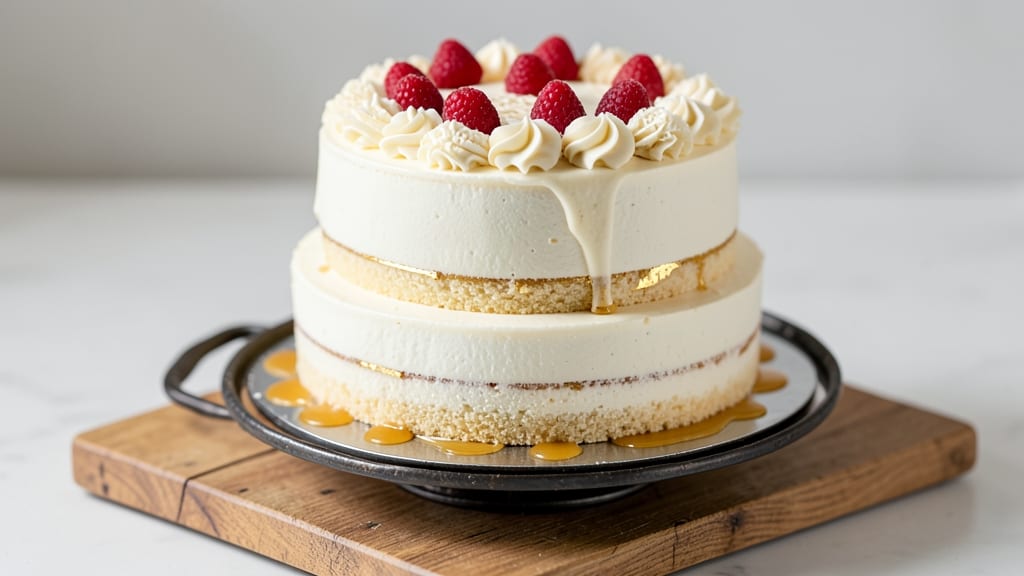
This American white cake recipe delivers the perfect balance of tender crumb and buttery richness—no dense layers or dry crumbs in sight. 💛 The secret lies in precise measurements and a gentle folding technique that creates airy, cloud-like texture with every slice.
I've perfected this version after years of testing, ensuring it bakes up moist yet sturdy enough to support generous frosting without collapsing.
The recipe combines all-purpose flour, vanilla extract, and a touch of baking powder for that signature lightness, while butter and sugar create the signature tender crumb. What sets this apart is the cold butter creaming method, which prevents gluten development while incorporating air for maximum volume.
Unlike boxed mixes, this version uses real vanilla bean extract for depth of flavor that store-bought versions simply can't match.
By the time it emerges from the oven, you'll have a golden-domed cake with a fine, even crumb that slices cleanly and holds its shape beautifully. The subtle vanilla aroma fills your kitchen, and each bite delivers that perfect harmony of sweetness and tenderness.
This is the white cake that becomes the star of any dessert table—whether you're serving it plain, with a dusting of powdered sugar, or layered with your favorite filling.
The best part? This recipe scales perfectly for any occasion, from intimate gatherings to large celebrations. With just 15 minutes of prep time and 30 minutes in the oven, you'll have a showstopping dessert that tastes like it came from a bakery.
Ready to create the perfect white cake? Let's get started with the ingredients and instructions that make all the difference.
Ingredients for american white cake
Nine ingredients, one golden-domed masterpiece—this is the cake that makes every dessert table shine.
| Ingredient | Amount | Notes |
|---|---|---|
| Unsalted Butter 🧈 | 1 cup | Cold, cubed for creaming |
| Granulated Sugar 🍚 | 2 cups | Superfine preferred for smoothness |
| Large Eggs 🥚 | 4 whole | Room temperature, separated |
| All-Purpose Flour 🌾 | 2 ½ cups | Sifted, plus extra for pan |
| Pure Vanilla Extract 🌿 | 2 tsp | Real vanilla bean preferred |
| Baking Powder 🧂 | 1 ½ tsp | Double-acting for lift |
| Salt 🧂 | ½ tsp | Fine sea salt preferred |
| Milk 🥛 | 1 cup | Whole milk for richness |
| Powdered Sugar 🍚 | 1 cup | For dusting or frosting |
The butter is non-negotiable here—European-style or Plugrá gives the best flavor and texture. Grab it from Whole Foods or your local specialty store if you can, but the regular supermarket stuff works too. Keep it cold until mixing—cold butter creates air pockets for that signature lightness. The vanilla extract? Real vanilla bean extract (not imitation) makes all the difference—it's worth the extra cost. I always buy mine from Williams Sonoma or Penzeys for that authentic depth of flavor.
No vanilla bean extract? Pure vanilla extract works fine, but you'll notice the difference. Short on milk? Heavy cream or buttermilk both add richness. The flour needs to be sifted—no lumps—for that silky crumb. If you're baking at high altitude, reduce the baking powder by 0.25 tsp. The powdered sugar is optional but recommended for dusting—Confectioners' sugar from Domino is my go-to for smoothness.
Store the cake in an airtight container at room temperature for up to 3 days—it actually tastes better the next day. For longer storage, freeze slices wrapped in plastic for up to 3 months. I like to portion it into individual servings before freezing so I can grab one whenever I need a sweet treat. The frosting? Keep it simple—just powdered sugar and butter, or go wild with your favorite filling.
Why You'll Love This Recipe
- Four Ingredients, Big Payoff: I swear by this recipe—just butter, sugar, eggs, and flour. That’s it. No fancy mix-ins to stress over, just the classic combo that always delivers.
- Vanilla Kiss: Honestly, the vanilla here isn’t just an afterthought. A splash of pure extract (don’t skimp!) turns this cake from good to ridiculously good—light, tender, and with that cozy, familiar sweetness that hits just right.
- Birthday to Brunch: This cake works for everything. Frost it with buttercream for a birthday, slice it thin for tea sandwiches, or serve it plain with whipped cream for a lazy weekend. It’s the one cake that never lets me down.
- Leftovers? Better: Between us, I always bake a second layer. The texture stays perfect for days—moist but not soggy, rich but not heavy. And if I’m feeling fancy, I’ll toast slices and layer them with jam for a quick dessert. Zero waste, all win.
Step-by-step instructions for American white cake
Here's how to bake that signature tender, vanilla-kissed white cake with perfect layers every time.
👨🍳 Step 1: Cream Butter and Sugar for Maximum Lightness
In a stand mixer fitted with the paddle attachment, beat the 1 cup unsalted butter (cold and cubed) and 2 cups granulated sugar on medium speed for 3-5 minutes until light and fluffy. You're looking for a color change from pale to creamy and a volume increase of about 50%. This step incorporates air, which creates that signature tender crumb.
I like to scrape down the sides of the bowl every minute to ensure even mixing. The butter should be fully incorporated but still hold its shape when you press it between your fingers—this prevents a greasy cake. If your kitchen gets warm, chill the bowl for 10 minutes before proceeding to avoid melting the butter.
👨🍳 Step 2: Add Eggs and Vanilla for Rich Flavor
Add the 4 whole large eggs (room temperature) one at a time, mixing on low speed for 30 seconds after each addition until fully combined. Then add the 2 teaspoons pure vanilla extract and mix for another 30 seconds. The mixture should be thick and smooth—this is your cake batter's flavor foundation.
Here's the thing—don't overmix or the cake will turn tough. Real talk: if you see streaks of egg white, that's okay at this stage. The flour will incorporate those later. Also, if your eggs are cold, warm them in a bowl of warm water for 5 minutes first—they'll blend more smoothly into the batter.
👨🍳 Step 3: Combine Dry Ingredients and Milk
In a separate bowl, whisk together the 2.5 cups all-purpose flour, 1.5 teaspoons baking powder, and 0.5 teaspoon salt. Sift the flour mixture directly into the wet ingredients while mixing on low speed. Add the 1 cup milk and mix until just combined—you should still see some flour streaks. Overmixing develops gluten and makes the cake dense.
I always use a rubber spatula to gently fold everything together at this stage. The batter should be thick but pourable. If it's too thick, add 1 tablespoon milk at a time until it reaches a smooth consistency. The batter should coat the back of a spoon but still hold its shape when you lift it.
🔥 Step 4: Bake to Golden Perfection
Preheat your oven to 350°F and grease two 8-inch round cake pans with butter or line them with parchment paper. Divide the batter evenly between the pans and smooth the tops with a spatula. Dust the tops with powdered sugar for that classic white cake look.
Bake for 25-30 minutes until a toothpick inserted in the center comes out clean and the tops spring back when touched. The edges should be light golden brown but not dark. I know it seems counterintuitive, but don't overbake—white cake dries out quickly. If your oven runs hot, check at the 20-minute mark to avoid overcooking.
⏰ Step 5: Cool and Layer for Ultimate Tenderness
Remove the cakes from the oven and let them cool in the pans for 10 minutes. Then transfer to a wire rack to cool completely. This resting period prevents cracking as they cool. Once completely cool, you can frost with your favorite vanilla buttercream or dust with more powdered sugar for a simple presentation.
Pro tip: For the most tender cake, let the layers cool completely before assembling. If you're in a hurry, chill them in the fridge for 30 minutes before frosting. The contrast between the cool cake and room-temperature frosting gives you that perfect bite every time.
Pro Tips For Making American White Cake
- CREAM BUTTER ROOM TEMP: Mix your butter and sugar until the bowl feels warm to the touch—about 5-7 minutes with a stand mixer. Cold butter won’t emulsify properly, and you’ll end up with a cake that’s dense and greasy instead of light and fluffy.
- SIFT THE FLOUR: Skip the measuring cups and sift the flour directly over the batter—this aerates it and prevents lumps. I used to just dump it in, and the cake always turned out slightly heavy. (Yes, even if you’re impatient like me.)
- DON’T OVERMIX THE EGGS: Add the eggs one at a time, mixing just until each is fully incorporated—stop as soon as the batter looks smooth. Overmixing develops gluten, and your cake will turn out tough instead of tender. I learned this the hard way after a batch that tasted like a chewy loaf.
- USE A TOOTHPICK TEST: Check doneness by inserting a toothpick into the center—it should come out clean or with a few crumbs, not wet batter. If you pull it out too early, the cake will collapse as it cools. (Your future self will thank you.)
Serving suggestions for this dish
Classic Serving Style
Serve your American white cake plain with a dusting of powdered sugar for a timeless presentation that highlights its delicate texture. I like to slice it into 1-inch thick layers and arrange them on a white cake stand or simple glass platter.
For an extra touch, garnish with fresh raspberries or whipped cream rosettes—they add color without overpowering the vanilla flavor. 💫
Frosting Pairings
Vanilla buttercream is the classic choice, but don’t be afraid to experiment. A light lemon curd filling adds brightness, while chocolate ganache creates a decadent contrast. For a modern twist, try cream cheese frosting or Italian meringue buttercream—both pair beautifully with the cake’s tender crumb.
I often use Domino powdered sugar for my buttercream to keep it smooth and fluffy.
Fruit Toppings
Fresh berries like strawberries, blueberries, or blackberries elevate the cake’s elegance. Arrange them in a circular pattern on top of the frosting for a visually stunning dessert. For a tropical vibe, try mango slices or pineapple tidbits—their natural sweetness complements the vanilla perfectly.
Just slice them thinly so they don’t soak into the cake.
Coffee & Tea Pairings
Serve slices with a hot cup of coffee or earl grey tea to balance the cake’s sweetness. A cold brew iced coffee with a splash of cream is perfect for summer gatherings.
If you’re serving it at a brunch, pair it with orange juice or sparkling lemonade—the acidity cuts through the richness beautifully. 🍵
Make-Ahead Presentation
Assemble the cake 1 day ahead to allow flavors to meld. Store it in an airtight container at room temperature and dust with powdered sugar just before serving. For a restaurant-worthy look, wrap the cake in plastic wrap and then in parchment paper before refrigerating.
When ready to serve, slice and arrange on a marble slab for a chic presentation.
Seasonal Variations
In spring, add a layer of citrus-infused glaze (made with lemon or orange zest) for a refreshing twist. For fall, sprinkle the top with cinnamon sugar or pumpkin spice before baking.
Winter calls for cranberry compote or peppermint chocolate drizzle—both add festive flair. The cake’s neutral flavor makes it incredibly versatile for any season. ✨
Nutrition facts
Frequently asked questions
Why does your recipe use cold butter instead of room-temperature?
Cold butter creates tiny air pockets when creamed with sugar, giving that signature tender crumb. Room-temperature butter would melt too quickly, making the cake dense. The key is keeping it cold until fully incorporated—about 3-5 minutes on medium speed—then the mixture will naturally warm up.
Can I substitute vanilla extract with vanilla bean paste?
Use 1.5 teaspoons of vanilla bean paste instead of the 2 teaspoons of extract. The paste adds beautiful speckles and an even deeper vanilla flavor. Just be aware it's thicker, so you may need to add 1 tablespoon milk to compensate.
What's the best way to prevent my white cake from cracking?
Let the cakes cool in the pans for 10 minutes before transferring to a rack, and never cool them upside down. Also, avoid opening the oven door during the first 20 minutes of baking—temperature fluctuations cause cracks. If you see cracks forming, cover them with a thin layer of frosting before assembling.
How do I make this recipe gluten-free?
Replace the all-purpose flour with a 1:1 gluten-free baking flour blend (like Bob's Red Mill) and add 1 teaspoon xanthan gum to improve texture. You may also need to reduce the milk by 1 tablespoon since gluten-free flours absorb differently. The cake will be slightly denser but still delicious!
Can I bake this in a different pan size?
Yes! For a 9-inch round pan, reduce baking time by 5-7 minutes (check at 20 minutes). For a 9x13-inch pan, bake at 325°F for 35-40 minutes. Always adjust for your oven—high altitude requires 25°F lower temperature and 5-10 minutes longer baking time.