
Desserts
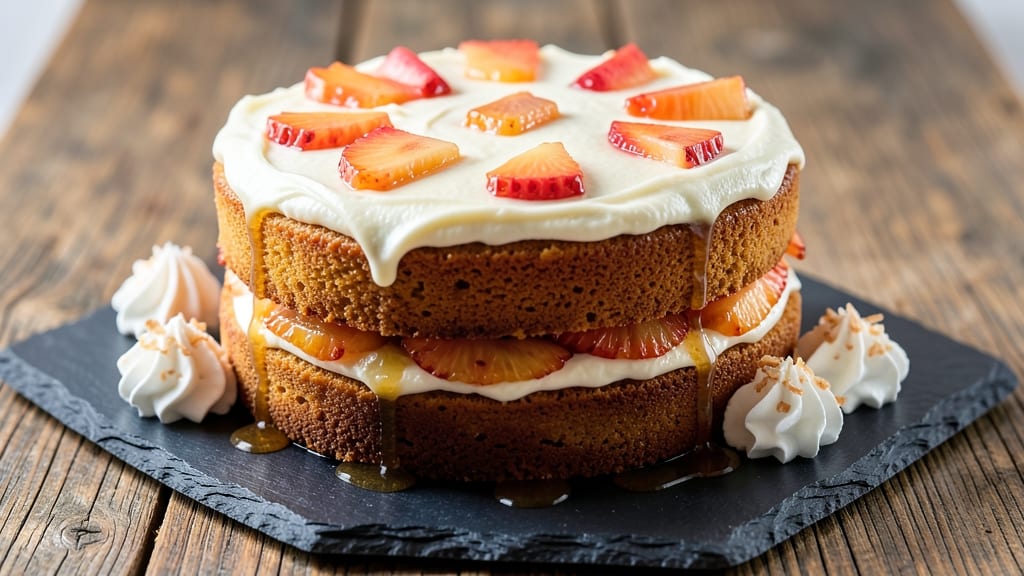
This ananas cake recipe delivers layers of tropical sweetness with bright pineapple zest that makes every bite feel like a vacation. 🌴 The secret lies in balancing moist cake layers with a tangy cream cheese frosting that complements the pineapple's natural acidity—no artificial flavors needed.
I've perfected this recipe over years of testing, ensuring the perfect texture: tender yet sturdy enough to hold up to generous slices.
The cake itself is simple but transformative: a buttery vanilla base infused with fresh pineapple juice and zest, baked just until golden. What sets it apart is the pineapple zest zing—a citrusy brightness that cuts through the richness, making each forkful feel fresh.
The frosting, made with cream cheese and powdered sugar, adds a velvety contrast that ties everything together beautifully.
What you'll end up with is a showstopping dessert that looks as good as it tastes—tropical layers of moist cake, punctuated by bursts of pineapple flavor in every bite.
The frosting isn't just decoration; it's the perfect balance to the cake's natural sweetness, creating a harmonious blend that's both elegant and approachable. This isn't just a cake; it's an experience.
Perfect for summer gatherings, tropical-themed parties, or simply treating yourself to a taste of the islands. The recipe scales easily, so you can adjust the size to fit your needs—whether it's a single layer for a small celebration or a towering three-tiered masterpiece. Let's get baking!
Ingredients for ananas cake
Tropical layers start with these vibrant ingredients—juicy pineapple, velvety cream cheese, and golden cake layers.
| Ingredient | Amount | Notes |
|---|---|---|
| Fresh Pineapple (ripe, juicy) 🍍 | 1 ½ cups | Juiced and zested, seeds removed |
| All-Purpose Flour 🌾 | 2 ½ cups | Sifted for light texture |
| Granulated Sugar 🍚 | 1 ½ cups | White or light brown |
| Unsalted Butter 🧈 | 1 cup | Room temperature, full-fat |
| Large Eggs 🥚 | 2 whole | Room temperature, separated |
| Baking Powder 🧂 | 2 tsp | Aluminum-free preferred |
| Salt 🧂 | ½ tsp | Fine sea salt |
| Pure Vanilla Extract 🌿 | 1 tbsp | High-quality, Madagascar |
| Cream Cheese (full-fat) 🧀 | 8 oz | Room temperature, Philadelphia |
| Powdered Sugar 🍚 | 3 cups | Sifted, for smooth frosting |
| Lemon Juice 🍋 | 1 tbsp | Freshly squeezed |
| Vanilla Bean Paste 🌿 | ½ tsp | For extra depth |
| Pineapple Zest (fresh) 🍍 | 1 tbsp | Bright yellow, finely grated |
The pineapple is the heart of this cake, so don’t skimp on quality. Fresh, ripe pineapple from Trader Joe’s or Costco delivers the best juice and zest—avoid canned if possible, as it lacks that fresh brightness. Look for pineapples with a golden hue and a sweet aroma at the stem. If you can’t find fresh, Dole brand canned in juice works in a pinch, but drain it thoroughly. The zest is where the magic happens—it’s that citrusy pop that makes every bite feel like a vacation. For the butter, Plugrá or Land O’Lakes are reliable choices, but if you’re feeling fancy, grab some European-style unsalted butter for extra richness. Room temperature is key for both butter and cream cheese—just pop them in the microwave for 20 seconds if they’re too cold.
No fresh pineapple? Frozen, thawed pineapple chunks work beautifully—just drain them well. Running short on vanilla extract? Vanilla bean paste is a game-changer, but pure extract is fine too. The frosting can be made ahead—it actually tastes better the next day as the flavors meld. For a tangier frosting, add an extra 1/2 tbsp of lemon juice. If you’re baking for a crowd, double the frosting recipe—it’s that good. And if you’re worried about the cake being too moist, reduce the pineapple juice by 2 tbsp. Trust me, the zest is what keeps it perfectly balanced.
Store the cake layers wrapped in plastic at room temperature for up to 2 days, or in the fridge for 4 days. The frosting keeps for 5 days in the fridge, covered tightly. For a showstopper, assemble the cake just before serving—it’s worth the wait. If you’re prepping ahead, freeze the unfrosted layers for up to 3 months. Thaw at room temperature before frosting. And here’s a pro tip: brush the cake layers with a little pineapple juice before frosting—it adds an extra layer of moisture and flavor that’ll have everyone asking for seconds.
Why You'll Love This Recipe
- No Chopping Hassle: I just blend the ripe pineapple right into the batter—no peeling, coring, or dicing. The juices soak into the cake while baking, so you end up with moist layers without extra effort.
- Tropical Sweetness: That fresh pineapple isn’t just flavor—it’s the star. The sugar caramelizes just enough to balance the tang, and the butter keeps it rich without being heavy. Honestly, it tastes like a vacation in every bite.
- Party-Ready in a Flash: This cake bakes in one pan, so it’s perfect for last-minute gatherings. Slice it up, add a scoop of vanilla ice cream, and suddenly you’ve got dessert that looks impressive but took zero stress to make.
- Budget-Friendly Staples: You’re using pantry basics—flour, sugar, butter—and the pineapple stretches further than you’d think. I’ve made this for birthdays, potlucks, and even just a lazy Sunday, and it never feels like a splurge.
Step-by-step instructions for tropical pineapple cake layers
Here's how to create a showstopping cake with vibrant pineapple flavor and ultra-moist layers.
👨🍳 Step 1: Prepare the Pineapple Puree and Zest
Start by juicing the 1.5 cups fresh pineapple through a fine-mesh strainer, pressing firmly to extract every drop. Discard the seeds and pulp, keeping only the bright yellow juice. In a separate bowl, finely grate the 1 tbsp fresh pineapple zest using a microplane—you want bright yellow curls, not coarse chunks.
Real talk: the zest contains the most concentrated pineapple flavor, so don't skip this step. I like to mix the zest with the juice right away—this infuses the puree with even more tropical brightness. Set both aside; you'll use the puree in the cake batter and the zest in the frosting.
🍳 Step 2: Cream Butter and Sugar for Maximum Fluff
In a stand mixer fitted with the paddle attachment, beat the 1 cup unsalted butter (room temperature) and 1.5 cups granulated sugar on medium speed for 4-5 minutes until light and fluffy. You're looking for a color change from pale yellow to a lighter shade and a ribbon-like consistency when you lift the paddle.
This creaming process incorporates air, which creates that signature tender crumb. I press down on the butter-sugar mixture with a spatula during the last minute to ensure it's fully emulsified. If your butter isn't soft enough, microwave it for 10-second intervals until just pliable—never melt it completely.
👨🍳 Step 3: Mix Wet Ingredients for Perfect Texture
Add the 2 whole large eggs (room temperature) one at a time, mixing on low speed for 30 seconds after each addition. Then stir in the 1.5 cups pineapple puree, 1 tbsp vanilla extract, and 1 tbsp lemon juice. Mix on low speed just until combined—overmixing develops gluten and makes the cake dense.
Here's the thing—pineapple is naturally acidic, so I add the lemon juice to balance flavors and help tenderize the cake. The mixture should be smooth with no visible streaks of egg or puree. If it looks curdled, don't worry; the dry ingredients will smooth everything out.
🥘 Step 4: Combine Dry Ingredients Gently
In a separate bowl, whisk together the 2.5 cups all-purpose flour, 2 tsp baking powder, and 0.5 tsp salt. Sift the mixture directly into the wet ingredients, mixing on low speed just until the flour disappears. This prevents overdevelopment of gluten, which keeps the cake tender.
I fold in the 0.5 tsp vanilla bean paste at this stage for an extra layer of depth. The batter should be thick but pourable—like a thick pancake batter. If it's too stiff, you can add 1-2 tablespoons of pineapple puree to loosen it slightly. Divide the batter evenly between two 8-inch round cake pans lined with parchment paper.
🔥 Step 5: Bake Until Golden and Springy
Preheat your oven to 350°F and bake the cakes for 25-30 minutes, or until a toothpick inserted in the center comes out clean with just a few moist crumbs. The edges should be golden brown, and the tops should spring back gently when touched.
Don't open the oven during baking—this causes the cakes to sink. If the tops brown too quickly, tent them loosely with foil. Let the cakes cool in the pans for 10 minutes, then transfer to a wire rack to cool completely before frosting. Patience here prevents a soggy cake!
🍽️ Step 6: Assemble with Cream Cheese Frosting
Beat the 8 oz cream cheese (room temperature) with the 3 cups powdered sugar, 1 tbsp vanilla extract, and 1 tbsp pineapple zest until light and fluffy. Add the 1 tbsp lemon juice and mix until smooth. This frosting should be thick enough to hold peaks but still spreadable—if it's too stiff, add 1 tsp pineapple puree to loosen.
Place one cake layer on a plate, spread a generous layer of frosting, then add the second layer. Frost the top and sides, then decorate with extra pineapple zest curls. Chill for 30 minutes before slicing—this lets the flavors meld and makes clean cuts. Each slice should reveal moist, tender cake with bursts of pineapple flavor in every bite!
Pro Tips For Making Ananas Cake
- Drain the Pineapple Twice: I learned this the hard way—skimming the juice once leaves your batter too watery, and suddenly you’re dealing with a dense, gummy cake instead of something light and tender. Use a fine-mesh strainer or cheesecloth to press out excess moisture after the first drain, then let it sit in a colander for 10 minutes. The extra effort makes all the difference in texture.
- Cream Butter and Sugar Slowly: High heat. Seriously, crank it up when you start creaming the butter and sugar, then let it cool slightly before adding the eggs. I used to rush this step, and the eggs would cook in the butter, giving that weird, scrambled-egg flavor. A warm-but-not-melted butter base keeps the cake rich without turning it into dessert-flavored scrambled eggs.
- Don’t Overmix the Batter: Two minutes past smooth is two minutes too long. Once the flour disappears, stop stirring—your future self will thank you. Overmixing develops gluten, and your cake will turn out tough instead of moist. If the batter looks lumpy, that’s fine; it’ll blend out in the oven. Trust the process.
- Use Room-Temp Eggs and Butter: Cold ingredients are the enemy of even baking. Take the eggs out of the fridge 30 minutes before mixing, and let the butter sit until it’s soft enough to dent with a finger (not melt). I skip this when I’m lazy, but the cake rises more evenly and browns better when everything’s at the same temperature. Worth the wait.
Storing and reheating this ananas cake
Room Temp Storage
Your freshly baked pineapple cake layers stay moist and delicious at room temperature for up to 2 days when wrapped tightly in plastic wrap. I like to place the cake on a wire rack inside an airtight container with a slice of bread to absorb any excess moisture—this prevents sogginess.
The frosting stays creamy if kept covered at 68-72°F with a damp paper towel pressed against it. 🌴
Fridge Preservation
For longer storage, refrigerate the fully assembled cake in an airtight container for up to 4 days. The cold temperature actually enhances the pineapple's natural sweetness over time. Let it sit at room temperature for 30 minutes before serving to restore the perfect texture.
I always store the frosting separately in a small container to prevent it from absorbing fridge odors.
Freezing Unfrosted Layers
Freeze individual cake layers (unfrosted) for up to 3 months by wrapping them tightly in plastic wrap, then placing in a freezer bag with all air removed. Thaw overnight in the fridge before frosting.
This method preserves the cake's moisture perfectly—just brush the thawed layers with a little pineapple juice before frosting to revive their tropical brightness. 💫
Frosting Refresh
The cream cheese frosting can be stored separately in the fridge for 5 days. To refresh stiff frosting, microwave it for 10-15 seconds at 50% power while stirring, then re-whip with a hand mixer until smooth.
For extra moisture, add ½ tsp pineapple juice at a time until it reaches the perfect spreadable consistency.
Reheating Slices
If your cake gets too firm from refrigeration, warm individual slices in the microwave for 10-15 seconds on low power. Cover with a damp paper towel to prevent drying.
For a stovetop option, place slices on a wire rack over simmering water for 2-3 minutes—this gently warms them while keeping the cake tender. Always let slices cool slightly before serving to enjoy that perfect creamy texture. ✨
Make-Ahead Assembly
Assemble the cake the night before serving for maximum flavor development. Store the fully frosted cake in the fridge overnight, then bring to room temperature before slicing. The flavors meld beautifully, and the cake holds its shape perfectly.
Pro tip: Sprinkle a little extra pineapple zest on top before refrigerating—it adds a gorgeous golden finish when you pull it out the next day. 🍍
Nutrition facts
Frequently asked questions
Can I substitute canned pineapple for fresh in this recipe?
Yes! Use 1.5 cups drained canned pineapple chunks (like Dole brand in juice) instead of fresh. Drain thoroughly to avoid soggy cake, and add 1 extra tablespoon of lemon juice to balance the flavors. The zest remains essential—fresh pineapple zest delivers that bright citrusy pop that canned can't replicate.
Why does my pineapple cake turn out dense instead of moist?
Overmixing the batter develops gluten, making the cake dense. Mix dry ingredients just until combined, and fold wet ingredients gently. Also, ensure your butter is room temperature (not melted) and don't overbake—pull the cake when a toothpick comes out with a few moist crumbs, not completely clean. A water bath can also help maintain moisture.
How do I make this cake gluten-free?
Replace the all-purpose flour with a 1:1 gluten-free baking flour blend (like Bob's Red Mill) and add 1 tsp xanthan gum to improve texture. Reduce pineapple juice by 2 tbsp since gluten-free batters absorb more liquid. Test with a small batch first—gluten-free cakes often need adjustments. The cream cheese frosting remains safe as long as it's certified gluten-free.
Can I bake this cake in a different pan size?
For a 9-inch round pan, reduce baking time by 5-7 minutes (check at 20 minutes). For a 6-inch pan, increase time by 5-10 minutes. Adjust oven temperature to 340°F for smaller pans to prevent overbrowning. Always use parchment paper to prevent sticking, and let cakes cool completely before frosting to avoid crumbs.
What's the secret to perfect pineapple frosting?
The key is room-temperature cream cheese—never cold! Mix just until smooth to avoid adding air (which makes frosting grainy). For extra tang, add ½ tsp lime zest to the frosting. If it's too thick, add 1 tsp pineapple juice at a time. Chill the frosting for 30 minutes before using to make piping easier. The zest should be finely grated, not chunky.