
Desserts
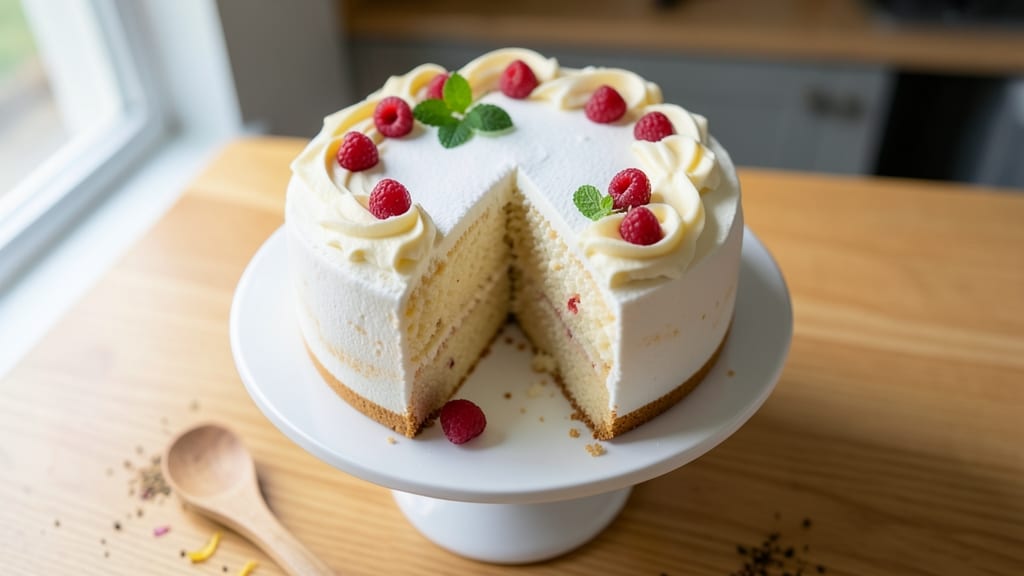
This angel food cake with cream cheese frosting recipe delivers the perfect balance of ethereal lightness and rich tangy sweetness. The secret lies in properly whipped egg whites and a foolproof frosting technique that creates silky layers without weighing down your cake.
I've perfected this combination for special occasions when you want a dessert that's both elegant and effortlessly delicious.
The cake itself is a study in texture—airy, tender crumbs that practically dissolve on your tongue, all thanks to the classic angel food method. No butter means no greasy residue, just pure, cloud-like perfection.
Meanwhile, the cream cheese frosting brings deep, velvety richness that contrasts beautifully with the cake's delicate structure. The key is letting the cake cool completely before frosting to maintain that signature lightness.
What you'll end up with is a showstopping dessert that looks as impressive as it tastes—tall layers of snowy white cake crowned with smooth, tangy cream cheese frosting.
Each bite delivers that perfect contrast between airy cake and creamy frosting, making it ideal for birthdays, weddings, or any celebration where you want to impress. The frosting's tang cuts through the sweetness, creating a harmonious balance that keeps everyone coming back for more.
This recipe scales beautifully for any occasion, whether you're serving a crowd or treating yourself to a special dessert. The frosting can be made ahead and chilled, so you can focus on assembling the cake itself. Let's create something truly memorable with this classic combination that never fails to delight.
Ingredients for angel food cake with cream cheese frosting
Twelve egg whites, a touch of cream cheese, and the perfect balance of sweetness—this is your ticket to showstopping dessert perfection.
| Ingredient | Amount | Notes |
|---|---|---|
| Large Egg Whites 🥚 | 12 whole | Room temperature, fresh from fridge |
| Granulated Sugar 🍚 | 1 ½ cups | Superfine preferred for smoothness |
| All-Purpose Flour 🌾 | 1 ½ cups | Sifted, spooned lightly |
| Cream of Tartar 🧂 | 1 ½ tsp | Essential for egg white stability |
| Vanilla Extract 🌿 | 2 tsp | Pure, high-quality extract |
| Unsalted Butter 🧈 | ½ cup | Softened for frosting |
| Cream Cheese 🧀 | 16 oz | Full-fat, room temperature |
| Powdered Sugar 🍚 | 4 cups | Sifted for smooth frosting |
| Lemon Juice 🍋 | 1 tbsp | Freshly squeezed |
| Salt 🧂 | ½ tsp | Fine sea salt |
| Angel Food Cake Flour 🌾 | 1 ½ cups | Or all-purpose flour substitute |
| Aluminum Cake Pan 🍰 | 1 whole | Ungreased, 10-inch tube pan |
The egg whites are non-negotiable here. Room temperature is key—cold whites won't whip properly. I always use fresh eggs from the grocery store's refrigerated section (the ones in the cardboard cartons), not the shell eggs from the bulk bins. For the flour, King Arthur or Bob's Red Mill brands are my go-to—they're sifted and consistent. The cream of tartar might be hiding in your spice drawer, but if not, grab it at Williams Sonoma or any well-stocked grocery store. Pro tip: Line your tube pan with parchment paper for easy removal—no greasing needed for angel food cake.
No cream cheese on hand? Substitute with a mix of Greek yogurt and powdered sugar (use 8 oz yogurt + 3 cups powdered sugar), though the texture won't be identical. Running low on powdered sugar? Sift granulated sugar in a blender or food processor for a quick substitute. The vanilla extract should be pure—Nielsen-Massey or McCormick are reliable brands. For the flour, if you don't have angel food flour, all-purpose flour works fine, but sift it thoroughly to avoid dense cake. The lemon juice is optional but brightens the frosting—freshly squeezed is best, but bottled works in a pinch.
Egg whites lose their magic after whipping, so use them immediately. Store the dry ingredients (flour, sugar, cream of tartar) in airtight containers for up to 6 months. The frosting keeps for 3 days in the fridge, covered tightly. For make-ahead convenience, bake the cake 1 day ahead—it actually tastes better after resting. The cake itself freezes beautifully for up to 3 months, but frost it fresh for the best texture. Always bring the frosting to room temperature before assembling—it spreads like a dream when it's not cold.
Why You'll Love This Recipe
- No Mixer Needed: I swear by this trick—whipping those egg whites with cream of tartar (just a splash!) gives them insane volume without a stand mixer. My hands get a workout, but the result? Cloud-like fluff that makes store-bought look dense.
- Sweet-Tart Magic: That tangy cream cheese frosting cuts through the sugar’s sweetness like a cool breeze. Honestly, the vanilla in the cake and the cream cheese frosting play off each other—simple, but it’s the kind of combo that makes people pause mid-bite.
- Birthday Party Ready: Slice it, stack it, and boom—you’ve got a showstopper that doesn’t require a bakery. I’ve used this for everything from kid birthday cakes to my mom’s 70th, and the frosting stays smooth even in heat. Zero fuss, all flair.
- Budget-Friendly Luxury: Egg whites and sugar are cheap staples, and cream cheese frosting stretches further than buttercream. Here’s what sold me: I can make two cakes for the price of one boxed mix, and the leftovers? They disappear faster than I can say “seconds.”
Step-by-step instructions for angel food cake with cream cheese frosting
Here's how to bake a cloud-light cake with perfectly tangy-sweet frosting—every detail matters.
Prepare the Egg Whites and Sugar Mixture
First, separate the 12 whole large egg whites from the yolks, making sure no fat touches them—even a tiny bit can prevent proper whipping. Place the egg whites in a spotless, grease-free bowl and let them sit at room temperature for 15 minutes to warm slightly. This helps them whip to stiffer peaks.
In a separate mixing bowl, combine the 1.5 cups granulated sugar and 1.5 tsp cream of tartar. The cream of tartar is non-negotiable—it stabilizes the egg whites, giving you that signature angel food cake texture. Sift the 1.5 cups all-purpose flour and 1.5 cups angel food cake flour together into a medium bowl and set aside. You want no lumps in your dry ingredients, so sift twice if needed.
Whip the Egg Whites to Stiff Peaks
Using a stand mixer fitted with the whisk attachment, beat the egg whites on low speed until foamy. Gradually increase to high speed and begin adding the sugar mixture in a slow, steady stream. This gradual addition is crucial—it prevents deflation and ensures the meringue incorporates smoothly.
Continue whipping for 8-10 minutes until the egg whites form stiff, glossy peaks that hold their shape when the whisk is lifted. The bowl should feel cool to the touch, and the peaks should stand straight up. If you're unsure, test by lifting the whisk—if the peak doesn't hold, keep whipping for another 1-2 minutes. Over-whipping can make the cake tough, but under-whipped egg whites won't rise properly.
Fold in the Dry Ingredients Gently
With the mixer on low speed, gradually add the sifted flour mixture to the egg whites. Use a spatula to fold in any stubborn bits from the sides of the bowl. The goal is to create a smooth, uniform batter without deflating the air you've just incorporated. Work quickly but carefully—this step is where most angel food cakes go wrong.
Once fully combined, pour the batter into the ungreased aluminum cake pan, smoothing the top with a spatula. Tap the pan gently on the counter 3-4 times to release any air bubbles. The batter should fill the pan to the top—don't underfill, as this cake relies on rising entirely from the egg whites. Bake immediately, as waiting causes the batter to deflate.
Bake Until Golden and Springy
Preheat your oven to 350°F and place the cake pan in the center rack. Bake for 35-40 minutes, or until the top is golden brown and the cake springs back when lightly touched. A toothpick inserted into the center should come out clean—this is your cue that the cake is fully baked.
Here's the thing—don't open the oven door during baking. The sudden temperature drop can cause the cake to collapse. If you're unsure, check the cake at the 30-minute mark and adjust time as needed based on your oven's behavior. Once baked, let the cake cool in the pan for 10 minutes, then invert it onto a wire rack to cool completely before frosting.
Make the Cream Cheese Frosting
In a large mixing bowl, beat the 16 oz cream cheese and 0.5 cup softened unsalted butter on medium speed until smooth and creamy. This step is where the frosting's texture is made or broken—if the cream cheese is too cold, it'll clump, and if it's too warm, it'll seize. Room temperature is key.
Gradually add the 4 cups powdered sugar, 1 tbsp lemon juice, and 0.5 tsp salt, mixing on low speed until combined. Increase the speed to medium and beat for 2-3 minutes until light and fluffy. Add the 2 tsp vanilla extract and mix for another 30 seconds to fully incorporate. The frosting should be thick but spreadable—if it's too stiff, add 1 tsp milk at a time until it reaches the right consistency.
Frost and Assemble the Cake
Once the cake is completely cool, spread a thin layer of frosting over the top and sides to create a "crust." This prevents the cake from absorbing moisture and becoming soggy. Add the remaining frosting and spread it evenly, using a spatula to smooth the sides. For a polished look, pipe a simple border around the edges or swirl the frosting with a knife.
Let the cake sit at room temperature for 30 minutes before slicing to allow the frosting to set slightly. The final result should be a light-as-air cake with a tangy-sweet frosting that balances perfectly. Slice and serve immediately—this cake is best enjoyed fresh, with every bite offering that perfect contrast of airy cake and creamy frosting.
Pro Tips For Making Angel Food Cake With Cream Cheese Frosting
- Use Room-Temp Egg Whites: Cold egg whites cling to your bowl like glue, making them impossible to whip properly. Pop them in a bowl of warm water for 10 minutes before starting—this small step guarantees smoother, stiffer peaks that hold up to folding in sugar.
- Sift the Flour Twice: Angel food cake relies on air, and unsifted flour is its enemy. Sift it once into your measuring cup, then sift it again directly into the bowl. I learned this the hard way when my cake turned dense—those tiny lumps matter more than you’d think.
- Don’t Overmix the Batter: Once you fold in the flour, stop mixing after 12-15 strokes. Overworking the batter deflates the egg whites and makes the cake gummy. Use a spatula to gently combine—just until the flour disappears, no more.
- Chill the Frosting Before Spreading: Cream cheese frosting is temperamental. Whip it until smooth, then refrigerate for 20 minutes before piping onto the cooled cake. This prevents melting and makes it easier to spread evenly—no more sticky messes or frosting slides.
Wine and beer pairings for this recipe
Sweet Wine Pairings
For this delicate dessert, I always reach for a Moscato d'Asti—its light, effervescent bubbles and subtle sweetness mirror the cake's airiness while complementing the frosting's tang. The 10-12% alcohol content ensures it doesn't overpower the dessert's delicate flavors.
For a slightly richer option, Riesling (especially German or Austrian) with its honeyed notes and crisp acidity creates a beautiful contrast with the cream cheese frosting. 🍷
Dessert Beer Options
If you prefer beer, a Belgian Witbier like Hoegaarden or Stella Artois works surprisingly well—their citrusy, spiced notes cut through the sweetness beautifully. For a bolder option, try a honey wheat beer like Allagash Honey Brew—the floral and caramel undertones enhance the cake's vanilla and lemon notes.
Serve slightly chilled (45-50°F) to highlight the beer's refreshing qualities. 🍺
Coffee Pairing Secrets
No dessert pairing is complete without coffee! A light roast espresso with its bright acidity and subtle nutty notes balances the frosting's richness perfectly. For a more decadent option, try a cold brew concentrate mixed with vanilla syrup—its smooth texture and sweetness enhance the cake's delicate crumb.
I like to serve it in small espresso cups alongside the cake for an elegant presentation. ☕
Seasonal Variations
For spring and summer gatherings, add fresh berries (strawberries or raspberries) to the cake layers—their tartness brightens the frosting's sweetness. In fall, a spiced rum sauce (warm ½ cup dark rum with 2 tbsp brown sugar and 1 cinnamon stick) poured over slices adds warmth.
Winter calls for a chocolate-dipped version—melt ½ cup dark chocolate and drizzle over the cake before serving. 🍓
Make-Ahead Pairing Tips
If you're prepping ahead, store the frosted cake in an airtight container in the fridge for up to 2 days. For wine pairings, decant sparkling wines like Moscato for 30 minutes before serving to release bubbles.
For beer, keep it refrigerated until ready to serve—never serve beer at room temperature with desserts. The key is maintaining the right temperature to preserve both the dessert and drink's qualities. ❄️
Nutrition facts
Frequently asked questions
Why does my angel food cake turn out dense instead of light?
Dense angel food cake usually means the egg whites weren't whipped enough or were contaminated with fat. Always use a spotless bowl and ensure your egg whites are room temperature (never cold). Whip them to stiff, glossy peaks—they should stand straight up when the whisk is lifted. Also, don't overmix after adding flour, and bake immediately after filling the pan.
Can I make this cake without an angel food pan?
Use a 10-inch round or bundt pan instead, but line it with parchment paper for easy removal. The key is to avoid greasing—angel food cake relies on steam for rising, so any oil will prevent proper texture. For a tube pan substitute, use a 9x13-inch pan and bake for 30-35 minutes at 350°F.
How do I fix lumpy cream cheese frosting?
Lumpy frosting happens when cream cheese is too cold. First, soften it by microwaving for 10-15 seconds (cover with a damp towel to prevent splattering), then beat again. For extra insurance, mix the cream cheese with butter first until completely smooth before adding powdered sugar. If lumps persist, strain the frosting through a fine-mesh sieve for a silky finish.
Can I substitute cream cheese in the frosting?
Yes, but texture will change. For a lighter option, blend 8 oz Greek yogurt + 3 cups powdered sugar until smooth. For a richer version, use 16 oz mascarpone cheese (reduce butter to 2 tbsp). Both work best when brought to room temperature before mixing. The tang will be milder, but the frosting will still pair beautifully with the cake.
Why does my frosting taste too sweet or bland?
Too sweet? Reduce powdered sugar by ½ cup and add 1 tbsp lemon juice for balance. Bland? Boost flavor with 1 tsp vanilla bean paste or ½ tsp almond extract. For extra tang, add 1 tbsp sour cream to the frosting. The key is adjusting sugar and acidity in small increments while tasting as you go.