
Desserts
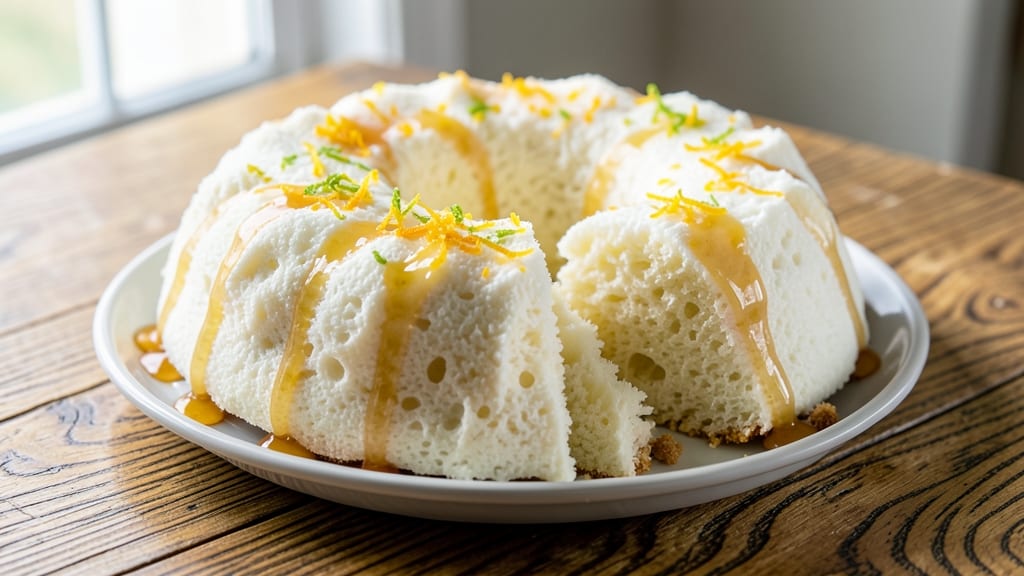
This angel food cake Bundt pan recipe delivers a cloud-like dessert that's lighter than air, with a citrus zest twist that brightens every bite. The secret lies in the traditional egg-white-based batter—no butter or oil—whipped to fluffy perfection before it gently bakes in the intricate Bundt pan's signature shape.
My first attempt nearly collapsed, but after mastering the inverted cooling technique, I achieved that signature tender crumb and elegant form.
The Bundt pan isn't just for looks—its ridges create a perfect balance of structure and airiness, while the citrus zest infuses subtle brightness that cuts through the cake's delicate sweetness.
Unlike dense cakes, this one stays moist for days when properly stored, making it ideal for special occasions or spontaneous dessert cravings. The key steps—folding the batter just until combined and avoiding overmixing—ensure that signature angel food texture that's impossible to resist.
What you'll end up with is a showstopping dessert that's as beautiful as it is light, with a golden exterior and tender, fluffy interior that practically melts in your mouth. The citrus zest adds a sophisticated twist without overpowering the cake's natural sweetness.
Serve it dusted with powdered sugar, drizzled with warm fruit compote, or paired with a cup of freshly brewed coffee for the ultimate dessert experience.
Perfect for brunch gatherings, holiday celebrations, or simply treating yourself to something extraordinary. This recipe transforms a simple cake into a centerpiece-worthy dessert that's surprisingly easy to master once you know the secrets. Let's get started on creating your lightest, most elegant angel food cake yet.
Ingredients for angel food cake bundt pan
Twelve simple ingredients transform into a cloud-like Bundt cake with citrus brightness that elevates every bite.
| Ingredient | Amount | Notes |
|---|---|---|
| Large Egg Whites 🥚 | 12 whole | Room temperature, no yolks |
| Granulated Sugar 🍚 | 1 ½ cups | Superfine preferred for smoothness |
| Cream of Tartar 🧂 | 1 ½ tsp | Stabilizes egg whites |
| Unsalted Butter 🧈 | 2 tbsp | For greasing Bundt pan only |
| All-Purpose Flour 🌾 | 1 ½ tbsp | Sifted, for dusting pan |
| Fresh Lemon Zest 🍋 | 1 tbsp | Bright, organic preferred |
| Fresh Orange Zest 🍊 | 1 tbsp | Organic, no white pith |
| Vanilla Extract 🌿 | 1 tsp | Pure Madagascar preferred |
| Powdered Sugar 🍚 | ½ cup | For dusting finished cake |
| Salt 🧂 | ¼ tsp | Fine sea salt |
| Lemon Juice 🍋 | 1 tbsp | Freshly squeezed |
The egg whites are your foundation—room temperature is non-negotiable for proper volume. Grab the freshest you can find (check the carton date) and let them sit out for 30 minutes before whipping. For zest, organic lemons and oranges from the produce section at Whole Foods or your local farmers market deliver the most vibrant flavor. The butter and flour are just for greasing and dusting the pan—no butter in the batter, which keeps this cake light as promised. Pro tip: use a nonstick Bundt pan for easier release, but grease it thoroughly regardless. The vanilla extract? Madagascar bourbon vanilla makes all the difference—worth the splurge for special occasions.
No cream of tartar? One extra egg white works in a pinch, though it won't stabilize as well. Substitute the citrus zest with equal parts bottled citrus zest if you're in a bind, but fresh is always better. For the sugar, superfine dissolves more easily, but if you only have granulated, pulse it in a food processor first. The powdered sugar is just for dusting—confectioners' sugar from the baking aisle works perfectly. Want to adjust the flavor? Swap the lemon juice for orange juice (reduce other liquids by 1 tbsp) or add 1 tsp almond extract for a sophisticated twist. And if you're feeling adventurous, add 1 tbsp poppy seeds to the batter for texture.
This cake is best made fresh, but if you need to prep ahead, assemble the batter up to 24 hours ahead and refrigerate. When ready to bake, let it sit at room temperature for 30 minutes first. The finished cake keeps beautifully for 3-4 days at room temperature, wrapped tightly in plastic, or up to 1 week in the fridge. For longer storage, freeze the fully baked cake (without powdered sugar) for up to 3 months. To serve, dust with powdered sugar right before slicing—the contrast of the white sugar against the golden cake is pure magic. Pair with warm berry compote or a scoop of vanilla bean ice cream for the ultimate dessert experience.
Why You'll Love This Recipe
- No Mixer Needed: I swear by this trick—whipping egg whites with cream of tartar until stiff peaks form is easier than folding a fitted sheet. No stand mixer? A hand mixer does the job just fine, and honestly, the extra elbow grease makes the cake even lighter.
- Butter-Kissed Sweetness: That tiny pat of butter folded into the batter? It’s the secret weapon—rich without being heavy, and the sugar dissolves into pure, cloud-like sweetness. The bundt shape means every bite has that perfect balance of crisp edges and tender center.
- Weekend or Weeknight: Make it ahead for a brunch spread or throw it together in 20 minutes for a last-minute dessert. Between us, I’ve served it at birthday parties, holiday dinners, and even as a "just because" treat—no one ever questions why it’s on the table.
- Budget Magic: Egg whites and sugar are cheap, and this recipe stretches further than you’d think. Leftovers? Toast them with a little powdered sugar—trust me, they disappear faster than you can say "second slice." Plus, no fancy ingredients to break the bank.
Step-by-step instructions for angel food cake in a Bundt pan
This recipe delivers a perfectly fluffy, citrus-infused angel food cake with a delicate crumb every time.
Prepare the Bundt Pan for Perfect Release
Generously butter the entire interior of the Bundt pan using all 2 tablespoons unsalted butter, making sure to coat every crevice and ridge. I like to use a pastry brush for this—it gets into all those intricate details where cake might otherwise stick. After buttering, dust the pan thoroughly with all 1½ tablespoons sifted all-purpose flour, tapping out any excess. The flour creates a barrier between the cake and pan, ensuring your finished cake slides out effortlessly.
Here's the thing—don't skip this step. I've seen too many beautiful cakes ruined by sticking. The flour also helps prevent the cake from absorbing moisture from the pan, which keeps that signature angel food cake lightness. Once prepared, set the pan aside and let it sit while you prepare the batter.
Whip Egg Whites to Stiff Peaks with Precision
In a large, immaculately clean mixing bowl (any grease will prevent proper whipping), combine all 12 whole large egg whites, 1½ teaspoons cream of tartar, and ¼ teaspoon salt. I use a stand mixer with the whisk attachment for this step—it gives you more control than a hand mixer. Begin whipping on low speed until the egg whites are frothy, then gradually increase to medium-high speed.
When the egg whites reach soft peaks that hold their shape but still curl slightly at the tips, gradually add all 1½ cups granulated sugar, 1 tablespoon lemon zest, and 1 tablespoon orange zest in three additions. This gradual addition prevents deflation and creates a stable foam. Whip continuously until the meringue is thick, glossy, and holds stiff peaks that stand straight up when the whisk is lifted. You should be able to draw a figure-eight in the meringue without it flattening—this is your target consistency.
Fold in Remaining Ingredients Gently
In a separate bowl, whisk together 1 teaspoon vanilla extract and 1 tablespoon lemon juice until fully combined. With a rubber spatula, gently fold this mixture into the meringue in three additions, being careful not to deflate the air you've just incorporated. Then, fold in the remaining ½ cup powdered sugar until just combined—again, minimal folding to preserve that airy structure.
I can't emphasize enough how delicate this stage is. You're working with a cloud of air here, and every rough motion risks collapsing it. Use a gentle folding motion from the bottom up, rotating the bowl occasionally to ensure even distribution. The batter should be thick, glossy, and hold its shape when spooned—almost like a thick pudding. If it's too thin, you've overmixed; if it's too thick, you haven't incorporated all the ingredients properly.
Bake to Golden Perfection
Preheat your oven to 350°F and place the prepared Bundt pan on the middle rack. The pan should be hot when you add the batter—this helps create that signature angel food cake rise. Spoon the batter into the pan, gently tapping the pan on the counter to release any air bubbles that might have formed during folding. Bake for 50-55 minutes until the top is golden brown and the cake springs back when gently pressed in the center.
Don't open the oven door during baking—this causes the cake to sink. The cake is done when it pulls away from the sides of the pan and a toothpick inserted in the center comes out clean (though angel food cake is safe to eat with a few moist crumbs). For best results, I like to bake until the internal temperature reaches 210°F—this ensures complete doneness without overbaking.
Cool and Serve for Maximum Fluffiness
Immediately after removing from the oven, invert the cake onto a wire rack and let it cool completely for at least 1 hour. This gradual cooling prevents the cake from absorbing moisture and becoming dense. Once completely cooled, you can unmold it or serve it directly from the pan—either way, it'll be light and airy.
For serving, dust the top generously with the remaining ½ cup powdered sugar through a fine-mesh sieve. This creates that classic angel food cake presentation while adding a delicate sweetness. Slice with a serrated knife for clean pieces, and serve immediately. The cake will be at its peak fluffiness when fresh from the pan—each bite should be light as air with bright citrus notes dancing on your palate.
Pro Tips For Making Angel Food Cake Bundt Pan
- Whip Whites to Stiff Peaks: I learned this the hard way—underwhipped egg whites are the #1 reason angel food cake turns out dense. Use a stand mixer with the whisk attachment (not a hand mixer) and whip them until they hold a peak when you lift the beaters. Yes, it’ll take 5-7 minutes, but rushing here ruins everything.
- Grease the Pan Right: Skip the butter alone—it’ll melt and pool. Instead, brush the Bundt pan with melted butter and dust it with flour, tapping out the excess. The cake won’t stick, and the texture stays light. (Pro move: Use a pastry brush for even coating.)
- Don’t Overmix the Batter: Once you fold in the flour, stop after 15 strokes—any more and you’ll deflate those precious air bubbles. The batter should look like pale, streaky ribbon. Overmixing = a cake that collapses like a sad soufflé.
- Check for Doneness Early: Angel food cake sets from the outside in, so pull it at 325°F (163°C) internal temp—even if it jiggles slightly. If you wait until it’s fully set, it’ll dry out. Let it cool upside down in the pan for 10 minutes first. (Trust me, this saves you from a gummy mess.)
Flavor customization for these flavors
Citrus Variations
Swap the lemon and orange zest for lime zest (1 tbsp) and grapefruit zest (1 tbsp) for a tangier, more complex flavor profile. The grapefruit adds a subtle bitterness that balances beautifully with the cake's sweetness.
I've also had great success with yuzu zest (1 tbsp) for a uniquely Japanese-inspired twist—it's floral and slightly tart. For a tropical vibe, try pineapple juice (1 tbsp) instead of lemon juice and add 1 tsp grated ginger to the batter. 🍋
Spiced Infusions
Add ½ tsp ground cardamom or ½ tsp cinnamon to the batter for a warm, aromatic twist. These spices pair wonderfully with the citrus notes, creating a sophisticated flavor that works beautifully with coffee pairings.
For a cozy fall version, I've used 1 tsp pumpkin pie spice (½ tsp cinnamon, ¼ tsp nutmeg, ¼ tsp ginger, pinch of cloves) with apple zest instead of citrus. The warmth of the spices complements the cake's light texture perfectly.
Fruit Add-Ins
Fold in ½ cup finely chopped fresh berries (strawberries, raspberries, or blueberries) into the batter just before baking for a fruity surprise in every bite. The berries add natural sweetness and moisture while keeping the cake light.
For a more dramatic presentation, create a berry compote (simmer 1 cup mixed berries with 2 tbsp sugar and 1 tsp lemon juice) to drizzle over the cooled cake. I also love adding 1 tbsp finely chopped crystallized ginger for a sweet-spicy contrast that elevates the citrus flavors.
Nutty Enhancements
For texture contrast, fold in ¼ cup toasted chopped pecans or walnuts into the batter during the final folding stage. The nuts add a satisfying crunch that balances the cake's delicate crumb.
For a more decadent version, sprinkle toasted sliced almonds over the top before baking—this creates a beautiful golden crust that adds visual appeal. I've also experimented with 1 tbsp poppy seeds for a subtle nutty flavor without the texture change. 🌰
Boozy Elevations
Enhance the citrus flavors with 1 tbsp orange liqueur (like Cointreau) or 1 tbsp brandy in place of the lemon juice. The alcohol adds depth and helps balance the sweetness. For a non-alcoholic option, use 1 tbsp orange juice concentrate (reduced by half) for similar depth. I've also had success with ½ tsp almond extract for a sophisticated floral note that pairs beautifully with the citrus zest.
Seasonal Adaptations
For spring, keep the original citrus theme but add 1 tsp fresh lavender buds (culinary grade) to the batter for a floral aroma. In summer, try 1 tbsp finely chopped fresh mint for a refreshing twist. For autumn, swap the citrus for apple cider (1 tbsp) and ½ tsp ground cloves with apple zest. Winter calls for 1 tsp orange extract and ½ tsp ground nutmeg with a touch of vanilla bean paste for extra richness. Each season brings new opportunities to adapt this classic cake to your current cravings. ❄️
Nutrition facts
Frequently asked questions
Why does my angel food cake Bundt pan version collapse?
Collapse happens when the batter loses air during mixing or baking. Always fold ingredients gently—overmixing deflates the egg whites. Also ensure your egg whites are room temperature and your bowl is completely grease-free. Bake at 350°F without opening the oven door until fully baked (50-55 minutes).
Can I use a regular Bundt pan instead of a nonstick one?
Yes, but you must grease it thoroughly with butter and dust with flour to prevent sticking. Nonstick pans make release easier, but traditional pans work fine with proper preparation. The key is coating every crevice—use a pastry brush for those intricate Bundt pan ridges.
How do I store leftover angel food cake?
Wrap tightly in plastic wrap or store in an airtight container at room temperature for 3-4 days. For longer storage, freeze the fully baked cake (without powdered sugar) for up to 3 months. Thaw overnight in the fridge before serving to preserve its light texture.
What's the best way to serve this citrus Bundt cake?
Dust with powdered sugar right before serving for that classic look. Pair with warm berry compote, vanilla ice cream, or a scoop of whipped cream. For a sophisticated touch, drizzle with orange glaze** (mix ½ cup powdered sugar + 1 tbsp orange juice) or fresh berries.
Can I make this cake without cream of tartar?
Yes, but the texture may be slightly less stable. Substitute with 1 extra egg white or ½ teaspoon baking soda. For best results, use the cream of tartar—it helps stabilize the egg whites and prevents deflation during baking.