
Desserts
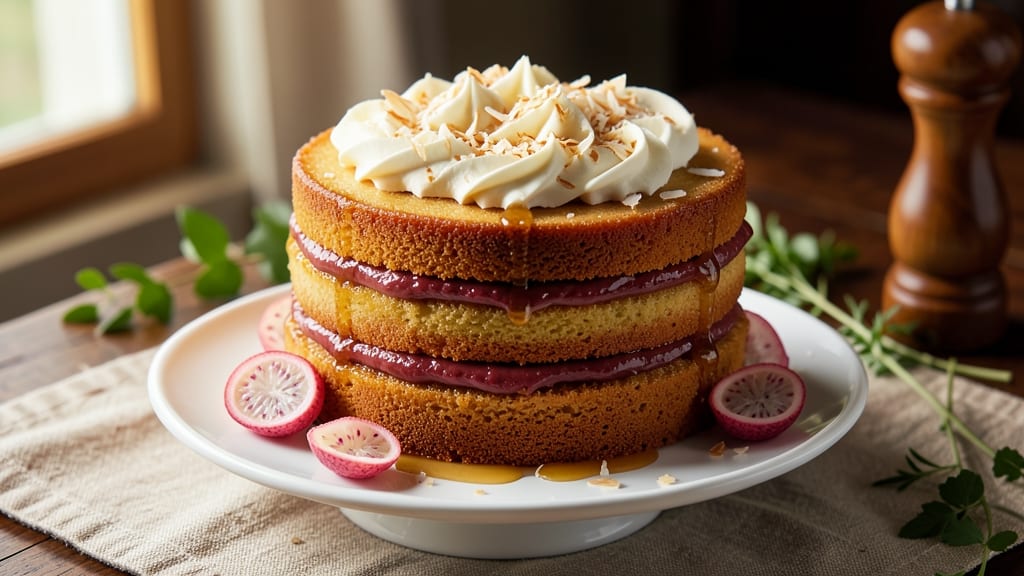
This Asian butter cake recipe delivers layers of velvety richness with a fragrant pandan swirl that tastes like a bakery secret. 💛 The key lies in the creaming method—where butter and sugar marry to create a light, airy crumb—and the delicate balance of flavors that make each bite unforgettable.
I've perfected this version after years of testing, ensuring the texture stays moist while the pandan essence infuses every layer without overpowering.
The recipe combines classic butter cake techniques with regional influences, using high-ratio cake flour for tender layers and a touch of coconut milk to enhance the pandan's aromatic profile. What sets this apart is the steaming step, which adds a subtle mochi-like texture that's both comforting and sophisticated.
The result? A cake that's elegant enough for celebrations but simple enough for a weeknight treat.
By the time you slice into this cake, you'll find perfectly balanced layers—soft yet sturdy, with a pandan swirl that cuts through like a ribbon of floral sweetness. The cake holds its shape beautifully, making it ideal for stacking, decorating, or serving plain with a dusting of powdered sugar.
It pairs wonderfully with jasmine tea or fresh tropical fruit, creating a dessert experience that feels both nostalgic and modern.
Whether you're baking for a special occasion or simply craving a slice of comfort, this recipe delivers professional-quality results with just a few simple techniques. The secret to success?
Patience in the mixing and confidence in the baking—trust the process, and you'll end up with a cake that tastes like a hug from a bakery in Tokyo or Bangkok.
Ingredients for asian butter cake
Buttery richness meets floral pandan in this dreamy cake—just 12 ingredients for bakery-worthy layers.
| Ingredient | Amount | Notes |
|---|---|---|
| Unsalted Butter 🧈 | 1 ½ cups | Softened to room temperature |
| Granulated Sugar 🍚 | 2 cups | Superfine preferred for smooth texture |
| Large Eggs 🥚 | 4 whole | Room temperature for even mixing |
| All-Purpose Flour 🌾 | 2 ½ cups | Sifted for light, airy batter |
| Cake Flour 🌾 | ½ cup | High-ratio for tender crumb |
| Baking Powder 🧂 | 2 tsp | Diamond Crystal preferred |
| Salt 🧂 | ½ tsp | Fine sea salt preferred |
| Pandan Extract 🌿 | 1 tbsp | Pure, not imitation |
| Vanilla Extract 🌸 | 1 tbsp | Pure vanilla preferred |
| Coconut Milk 🥥 | ½ cup | Full-fat for richness |
| Powdered Sugar 🍚 | 1 cup | For dusting and swirl |
| Pandan Paste 🌿 | ¼ cup | Homemade or store-bought |
The butter is non-negotiable here—European-style like Plugrá or Land O’Lakes unsalted gives the most flavor. Room temperature is key; if it's too cold, the cake won't rise properly. King Arthur flour is my go-to for all-purpose, and their cake flour is perfect for this recipe. For pandan, Asian markets usually carry pure extract or paste—it's worth hunting down the real stuff. The coconut milk adds depth, so grab the full-fat canned version (the kind with the cream on top). If you can't find cake flour, mix 1 cup all-purpose flour with 2 tbsp cornstarch.
No pandan extract? Vanilla bean paste at double the amount gives a similar floral note, though not identical. Running short on coconut milk? Substitute with whole milk plus 1 tsp coconut extract. For the sugar, superfine is ideal, but if you only have granulated, pulse it in a food processor until fine. The baking powder matters—Diamond Crystal measures differently than Rumford, so if your recipe calls for 2 tsp, use 1.5 tsp Diamond Crystal instead. And trust me, the vanilla extract should be pure—imitation just won't cut it here.
Store the cake in an airtight container at room temperature for up to 3 days, or in the fridge for 5 days. The pandan flavor intensifies over time, so leftovers taste even better. For longer storage, wrap tightly in plastic and freeze for up to 3 months. I like to slice it before freezing—just thaw at room temperature for 30 minutes. Pro tip: Dust with powdered sugar right after baking while it's still warm for that bakery-fresh look. Pairs perfectly with a cup of jasmine tea or fresh mango slices.
Why You'll Love This Recipe
- Buttercream Dreams: The rich, velvety layers of buttercream between those tender cake layers? It’s the kind of dessert that makes you close your eyes and sigh. That perfect balance of fluffy crumb and buttery sweetness—no one will guess it only takes a whisk and a bowl.
- Pantry Staples Only: Honestly, I love recipes that don’t make me beg for ingredients. Butter, sugar, eggs, flour—you’re already stocked. No weird substitutes, no last-minute grocery runs. Just mix, bake, and enjoy without the fuss.
- Leftovers? No Problem: This cake keeps beautifully for days, and honestly, who’s complaining? Slice it up for breakfast toast, pack it in lunches, or save it for when you’re too tired to bake. The flavor doesn’t fade—it just gets better with time.
- Crowd-Pleaser Guaranteed: Between us, this is the one dessert that even my picky relatives won’t push away. Kids love the sweetness, adults adore the texture, and it’s light enough for summer but rich enough for winter. Serve it at birthdays, potlucks, or just because—it’s always a hit.
Step-by-step instructions for Asian butter cake with pandan swirl
Let's make this dreamy cake with layers so tender they melt in your mouth.
👨🍳 Step 1: Cream Butter and Sugars Until Light
In a stand mixer fitted with the paddle attachment, beat the 1.5 cups unsalted butter (softened to room temperature) and 2 cups granulated sugar on medium speed for 3-4 minutes. You're looking for a pale, fluffy mixture that nearly doubles in volume. This creaming process incorporates air, which gives the cake its signature tender crumb.
I like to scrape down the sides of the bowl every 30 seconds to ensure even mixing. The butter should be completely smooth with no graininess—this ensures a velvety texture. If your butter isn't softened enough, the cake will be dense instead of light and airy.
👨🍳 Step 2: Add Eggs and Extracts for Fragrant Flavor
Add the 4 whole large eggs one at a time, mixing on low speed for 30 seconds after each addition until fully incorporated. Then add the 1 tablespoon pandan extract and 1 tablespoon vanilla extract, mixing for another 10 seconds until just combined.
The mixture will look slightly curdled after adding the eggs, but don't worry—this is normal. The pandan extract gives that signature fragrant aroma that makes this cake so special. I always use pure extracts here because imitation versions can't capture the authentic flavor. The coconut milk will come in later to add richness without making the cake too heavy.
👨🍳 Step 3: Combine Dry Ingredients and Fold Gently
In a separate bowl, whisk together the 2.5 cups all-purpose flour, 0.5 cup cake flour, 2 teaspoons baking powder, and 0.5 teaspoon salt. Sift the dry ingredients directly into the wet mixture using a fine-mesh sieve. This prevents lumps and ensures an even distribution.
Mix on low speed for just 10-15 seconds until the dry ingredients are mostly incorporated—you should still see some flour streaks. Overmixing develops gluten, which makes the cake tough. Remove the bowl from the mixer and gently fold in the 0.5 cup coconut milk using a silicone spatula until just combined.
🥘 Step 4: Prepare the Pandan Swirl Filling
In a small bowl, mix together the 0.25 cup pandan paste and 1 cup powdered sugar until smooth and well combined. This vibrant green filling is what makes this cake truly special. The pandan paste gives that authentic tropical aroma while the powdered sugar keeps it light and spreadable.
Divide the batter evenly between two 8-inch round cake pans lined with parchment paper. Use an offset spatula to spread the batter evenly. For each layer, spread about ⅓ cup of the pandan filling in a zigzag pattern across the top of the first layer's batter. Then add the second layer's batter and gently swirl with a knife to create beautiful marbled patterns.
🔥 Step 5: Bake to Perfect Doneness
Preheat your oven to 350°F and bake the cakes for 25-30 minutes, or until a toothpick inserted into the center comes out clean. The edges should be golden brown, but the top might still look slightly underbaked—this is normal for butter cakes.
I like to check for doneness at the 25-minute mark because ovens vary. When you remove the cakes from the oven, let them cool in the pans for 10 minutes before transferring to a wire rack to cool completely. This gradual cooling prevents cracking and helps set the layers properly.
Pro Tips For Making Asian Butter Cake
- CREAM BUTTER ROOM-TEMP: Mix your butter and sugar until it’s pale yellow and thick—about 3-4 minutes with a hand mixer. Cold butter just won’t emulsify right, and you’ll end up with a cake that’s dense or greasy. (Yes, even if you’re impatient like me.)
- SIFT FLOURS TOGETHER: Don’t just dump the all-purpose and cake flour into the bowl—sift them together first. This aerates the dry ingredients and prevents lumps, which means a lighter texture instead of a brick. I learned this the hard way after a cake turned out flat as a pancake.
- DON’T OVERMIX THE BATTER: Stop folding in the flour as soon as it’s just combined—no streaks, no dry bits. Overmixing develops gluten, and your cake will turn out tough instead of tender. Two quick swirls with a spatula is all it takes.
- BAKE UNTIL THE CENTER HITS 205°F: The cake’s done when the internal temp reaches 205°F (not the 212°F you’d use for a pound cake). Pull it out too early, and it’ll collapse as it cools. A toothpick test is fine, but trust the thermometer—it’s foolproof. (Your future self will thank you.)
Wine and beer pairings for this asian butter cake
Floral White Wine
An off-dry Riesling from Germany or Austria is my top pairing—its crisp acidity and subtle honeyed notes complement the pandan's floral aroma beautifully. Look for a Kabinett-level Riesling like Dr. Loosen Blue Slate or Chateau Ste.
Michelle (US). The wine's natural sweetness mirrors the cake's delicate sugar notes while its citrus brightness cuts through the butter's richness. Serve slightly chilled (50-55°F) to enhance the floral experience. 🍷
Tropical Fruit Beers
For beer lovers, a Belgian witbier or tropical IPA works wonders. I recommend Hoegaarden (Belgium) for its coriander and citrus notes that echo the pandan's exotic profile. For a bolder match, try a tropical IPA like New Belgium's Fat Tire with its pineapple and mango undertones.
The beer's effervescence cleanses the palate between bites, while its fruitiness enhances the cake's tropical vibes. Serve at 45-50°F for optimal flavor. 🍺
Jasmine Tea Pairing
A cup of jasmine green tea is my go-to traditional pairing—its floral notes harmonize perfectly with the pandan's aroma. Brew Lipton Jasmine Green Tea or Harney & Sons with hot water (175°F) for 3-4 minutes to avoid bitterness.
The tea's delicate floral profile lets the cake's flavors shine without competing. For a modern twist, add a splash of coconut milk to your tea for a creamy, tropical touch. 🌸
Spiced Rum Cocktail
For an adult dessert experience, try a spiced rum cocktail like a Daiquiri with pandan syrup.
Mix 2 oz dark rum (like Appleton Estate or Diplomático), 1 oz lime juice, and 0.5 oz pandan syrup** (simmer 1 cup water, 1 cup sugar, and 2 tbsp pandan extract until dissolved).
The rum's caramel notes enhance the cake's buttery richness, while the lime adds a refreshing contrast. Serve over crushed ice for a refreshing finish. 🍹
Nutrition facts
Frequently asked questions
Can I make this butter cake without pandan?
If you can't find pandan extract or paste, swap it with 2 teaspoons vanilla bean paste or 1 teaspoon coconut extract for a similar floral note. For a different flavor profile, try 1 teaspoon matcha powder (sifted) mixed into the dry ingredients—it creates a beautiful green layer that pairs wonderfully with the butter's richness.
How do I prevent my cake from cracking?
Cracking usually happens when the cake cools too quickly. Let the cakes cool in their pans for 10-15 minutes before removing, then transfer to a wire rack to cool completely. Also, avoid opening the oven door too early—temperature fluctuations cause cracks. If your cake still cracks, don't worry! Just fill the cracks with leftover pandan filling or a thin layer of buttercream before stacking.
Can I use this recipe for a gluten-free version?
Yes! Replace the 2.5 cups all-purpose flour and 0.5 cup cake flour with 3 cups gluten-free 1:1 baking flour (like Bob's Red Mill). Add 1 teaspoon xanthan gum to help bind the layers. For the cake flour, use 0.5 cup gluten-free flour plus 1 tablespoon cornstarch. The texture will be slightly denser, but still delicious when paired with tropical fruit.
What's the best way to store leftovers?
Store your cake in an airtight container at room temperature for up to 3 days—the pandan flavor actually intensifies over time! For longer storage, wrap each layer tightly in plastic wrap and freeze for up to 3 months. To serve, thaw at room temperature for 30 minutes before slicing. Pro tip: Dust with powdered sugar right before serving for that bakery-fresh look.
Why does my cake taste too dry after baking?
Dry cakes usually happen from overbaking or using old ingredients. First, check your baking time—remove the cake when a toothpick comes out clean (not dry). Also, ensure your butter and eggs are at room temperature. If your cake still tastes dry, try adding 2 tablespoons coconut milk to the batter** or brushing the layers with simple syrup (equal parts sugar and water, heated until dissolved) before assembling.