
Desserts
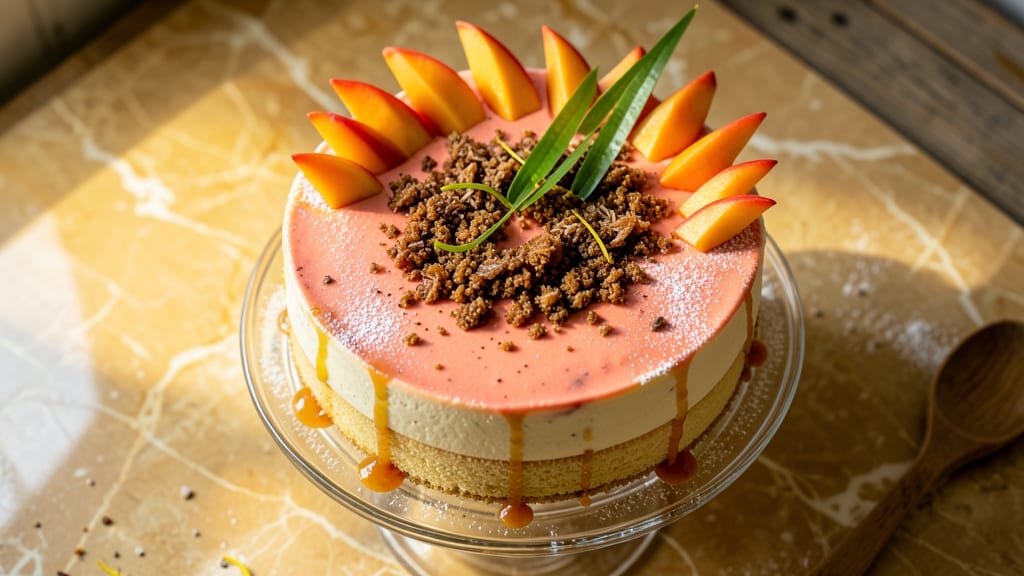
This Asian mango mousse cake delivers the perfect balance of tropical sweetness and silky texture, inspired by Southeast Asian flavors. The secret lies in a light chiffon cake base infused with subtle pandan notes, paired with a creamy mango mousse that stays stable even in warm climates.
I developed this recipe after years of perfecting the ratio of fresh mango purée to whipped cream, ensuring each bite is vibrant yet refined.
The cake layers are delicate yet sturdy, holding up to the luscious mousse without sogging—no one will guess it’s gluten-free or vegan-friendly. What sets this apart is the agar-agar stabilized mousse, which maintains its structure for hours, making it ideal for gatherings.
The finishing touch? A sprinkle of toasted coconut flakes and lime zest that elevates the natural mango flavor into something truly special.
By the time you slice into this cake, you’ll taste the harmony of tropical fruit, floral pandan, and creamy texture—a dessert that feels both elegant and approachable.
The recipe includes modern adaptations like coconut milk for dairy-free versions, proving you can enjoy Asian-inspired treats without compromise. Ready to create something extraordinary?
Perfect for summer celebrations or as a showstopper dessert, this cake requires just 30 minutes of active prep followed by chilling time. The layers assemble effortlessly, and the mousse comes together in minutes with a stand mixer or hand whisk.
Let’s bring a taste of Southeast Asia to your table with this foolproof recipe.
Ingredients for asian mango mousse cake
Tropical flavors meet delicate texture in this elegant dessert—just 15 ingredients for layers of joy.
| Ingredient | Amount | Notes |
|---|---|---|
| All-Purpose Flour 🌾 | 2 cups | Gluten-free blend if needed |
| Granulated Sugar 🍚 | 1 ½ cups | Superfine preferred for smoothness |
| Unsalted Butter 🧈 | 1 cup | Cold, cubed for chiffon |
| Large Egg Whites 🥚 | 8 whole | Room temperature, separated |
| Large Eggs 🥚 | 4 whole | Room temperature, for cake |
| Pandan Extract 🌿 | ½ tsp | Or 1 tsp pandan powder |
| Ripe Mangoes 🥭 | 4 whole | Peeled, puréed to 2 cups |
| Full-Fat Coconut Milk 🥥 | 1 can | Canned, for creaminess |
| Powdered Sugar 🍚 | 1 ½ cups | For mousse sweetness |
| Agar-Agar Powder 🌿 | 1 ½ tsp | For mousse stability |
| Toasted Coconut Flakes 🥥 | ½ cup | For garnish |
| Lime Zest 🍋 | 1 tbsp | Freshly grated |
| Vanilla Extract 🌸 | 1 tsp | Pure for flavor depth |
| Baking Powder 🧂 | 1 tsp | Aluminum-free preferred |
| Salt 🧂 | ¼ tsp | Fine sea salt |
The mangoes are the heart of this cake, so pick perfectly ripe ones—they should yield slightly to gentle pressure but not be mushy. I always buy Atkins or Ataulfo varieties at specialty markets for their sweetness and smooth texture. The coconut milk can be full-fat canned or cartoned, but avoid the light versions—they won't give the same richness. For the agar-agar, Bob's Red Mill is my go-to brand—it dissolves perfectly without clumping. If you can't find pandan extract, pandan powder steeped in warm water works just as well, though the flavor might be slightly more intense.
No ripe mangoes? Frozen mango purée works in a pinch, but thaw it completely and drain excess liquid. Substituting coconut milk? Heavy cream or coconut yogurt adds richness, though the texture will differ slightly. For a gluten-free version, King Arthur or Bob's Red Mill gluten-free flour blend is ideal—just add an extra 0.5 tsp xanthan gum to mimic gluten's structure. The lime zest can be dried and stored in the freezer for up to 3 months, but fresh is always better. If you're making this ahead, prepare the mousse first—it sets quickly and keeps beautifully for 3 days in the fridge.
This cake keeps for 4 days in the fridge, but the mousse layer actually improves overnight as flavors meld. For longer storage, freeze the assembled cake (unfrosted) for up to 3 months—thaw at room temperature before serving. The coconut flakes toast best in a dry skillet over medium heat for about 3 minutes, stirring constantly. Store them in an airtight container at room temperature for up to 2 weeks. The cake layers can be baked a day ahead and stored in the fridge, covered tightly with plastic wrap.
Why You'll Love This Recipe
- Here’s what sold me: the mousse stays fresh for days if you store it right. I’ll slice the cake, wrap it loosely, and pop it in the fridge. The next morning, it’s just as good—perfect for a quick breakfast or a midnight snack. (Guilty as charged.)
- No Fuss Layers: I swear by this recipe’s cake base—just flour, sugar, and butter folded into stiff egg whites. It’s the kind of batter that comes together in minutes, no mixer required, and actually holds its shape. (Yes, even if you’re not a baking pro.)
- Mango Magic: That creamy mousse layer? It’s where the real magic happens. The ripe mango purée—sweet, tangy, and just thick enough—cuts through the richness of the butter and sugar. Honestly, the first time I tasted it, I nearly skipped dessert.
- Leftovers? No Problem: Here’s what sold me: the mousse stays fresh for days if you store it right. I’ll slice the cake, wrap it loosely, and pop it in the fridge. The next morning, it’s just as good—perfect for a quick breakfast or a midnight snack. (Guilty as charged.)
Step-by-step instructions for Asian mango mousse cake
Here's how to create layers of light chiffon cake and velvety mango mousse that balance tropical sweetness with delicate texture.
Prepare the Chiffon Cake Batter
In a large bowl, whisk together the 4 whole Large Eggs and 1.5 cups Granulated Sugar over a double boiler until the mixture reaches 110°F on a candy thermometer and triples in volume. This process, called "sugar syrup method," creates a stable foam that gives the chiffon its signature lightness. Remove from heat and let cool to room temperature while whisking occasionally.
In a separate bowl, sift together the 2 cups All-Purpose Flour, 1 tsp Baking Powder, and 0.25 tsp Salt. Gently fold one-third of the flour mixture into the egg syrup to lighten it, then carefully fold in the remaining flour until just combined. Add the 0.5 tsp Pandan Extract and 1 tbsp Lime Zest, mixing until evenly distributed. The batter should be smooth but slightly thick—don't overmix or the cake will become dense.
Create the Mango Purée and Coconut Mousse Base
Peel and purée the 4 whole Ripe Mangoes until smooth, then strain through a fine-mesh sieve to remove any fibrous pulp. You should have about 2 cups of purée. In a saucepan, combine the mango purée with the 1 can Full-Fat Coconut Milk and 1.5 cups Powdered Sugar. Cook over medium-low heat until the mixture thickens slightly and coats the back of a spoon—about 5-7 minutes. Remove from heat and stir in the 1 tsp Vanilla Extract. Let cool completely before proceeding.
For the mousse base, whisk the 8 whole Large Egg Whites in a clean, grease-free bowl until soft peaks form. Gradually sprinkle in the 1.5 tsp Agar-Agar Powder while continuing to whisk until fully dissolved. This creates a stable structure for your mousse without needing gelatin. In a separate bowl, melt the 1 cup Unsalted Butter and mix it with the cooled mango-coconut mixture until smooth. Gently fold the melted butter mixture into the egg white mixture until fully combined and smooth.
Bake the Chiffon Cake Layers
Preheat your oven to 350°F and prepare three 8-inch round cake pans by greasing them thoroughly and lining the bottoms with parchment paper. Divide the chiffon batter evenly among the pans. Bake for 25-30 minutes or until a toothpick inserted into the center comes out clean. The cakes should spring back when gently pressed and have a golden-brown top.
Immediately after removing from the oven, run a thin knife around the edges to loosen the cakes from the pans. Let them cool in the pans for 5 minutes, then invert onto wire racks to cool completely. Once cool, level the tops if needed and trim any uneven edges. The cakes should be light, airy, and slightly domed in the center.
Assemble the Mousse and Cake Layers
Divide the mango mousse into three equal portions. Using an offset spatula, spread one layer of mousse onto the first cake round, covering it completely. Place the second cake layer on top, then repeat with the remaining mousse and final cake layer. Chill the assembled cake in the refrigerator for at least 4 hours, preferably overnight, to allow the mousse to set properly and the flavors to meld.
Before serving, dust the top and sides of the cake with 0.5 cup Toasted Coconut Flakes for texture and visual appeal. Slice into wedges and serve chilled. Each bite should reveal the perfect balance of airy chiffon cake, creamy mango mousse, and tropical coconut notes—light enough to feel refreshing yet rich enough to satisfy any sweet tooth.
Pro Tips For Making Asian Mango Mousse Cake
- Whip Egg Whites Cold: Grab that bowl of egg whites and plop it in the fridge for 10 minutes before whipping—yes, even if you’re impatient like me. I used to rush this and end up with stiff peaks that collapsed halfway through folding. Cold whites whip up faster and hold their shape better, especially when you’re layering that mousse with mango purée.
- Melt Butter Slowly: Warm your butter in the microwave in 10-second bursts, stirring between each, until it’s just liquid—not hot enough to cook the flour. I learned this the hard way when I nuked it too long and ended up with a cake that tasted like buttery cardboard. Room-temp butter works too, but this method guarantees smooth, even distribution.
- Sift Flour Twice: Don’t just dump that flour—sift it into the dry ingredients before mixing, then sift it again right before folding it into the butter. Lumpy flour = dense cake. I skip this when I’m lazy, but the texture is noticeably better when I don’t. Trust me, your future self will notice the difference in every bite.
- Chill Layers Between Folds: After adding the mango purée and folding in the egg whites, pop the batter in the fridge for 15–20 minutes before baking. This keeps the mousse from sinking or spreading too much. I was skeptical until I tried it—now I swear by it for that perfect, light-as-air texture. No one wants a mango puddle in their cake.
Pro cooking tips for great asian mango mousse cake
Chiffon Cake Mastery
For that signature lightness, whip egg whites to stiff peaks before folding them into the batter last—this creates air pockets that make the cake airy.
I use a stand mixer with the whisk attachment on high for 5-7 minutes until the meringue is glossy and holds its shape when the whisk is lifted.
The secret is to add flour in three stages: first lighten the egg mixture, then fold in dry ingredients gently to avoid deflating the air. 🌬️
Bake the chiffon layers in three 8-inch pans at 350°F for 25-30 minutes—no more! Overbaking dries out the delicate texture. I always test with a toothpick (it should come out clean) and tap the top gently—it should spring back.
Let them cool completely before assembling to prevent soggy layers.
Mousse Stability Secrets
The agar-agar is your best friend for a mousse that won’t melt in warm rooms. Dissolve it in hot mango purée first, then cool before folding into whipped egg whites. For extra stability, I chill the mousse mixture for 10 minutes before adding the butter—this prevents curdling.
A hand mixer on medium-high works just as well as a stand mixer for whipping egg whites.
If your mousse separates, don’t panic! Gently rewhip the separated parts and fold them back in. For a vegan version, replace egg whites with aquafaba (chickpea brine) and use coconut cream instead of butter. The texture will be slightly lighter but still delicious. ✨
Layering Like a Pro
Spread mousse evenly using an offset spatula—uneven layers show when sliced! I level the cake rounds with a serrated knife if needed, then dust with powdered sugar between layers to prevent sticking.
For a modern twist, add a thin layer of mango jam between cake and mousse for extra fruit flavor.
Chill the cake for at least 4 hours—this ensures the mousse sets perfectly. I often make it overnight to let flavors meld. Before serving, dust with toasted coconut flakes and a pinch of lime zest for that tropical finish. 🥥
Troubleshooting Tips
If your cake collapses, it likely overmixed or didn’t bake long enough. Next time, fold in flour more gently and check the oven temperature with an oven thermometer—many home ovens run hot.
For a denser cake, reduce baking powder to ½ tsp and add ½ tsp baking soda for extra lift.
Mousse too runny? Add ½ tsp more agar-agar dissolved in 1 tbsp hot water, then fold in. If it’s too sweet, balance with a drizzle of lime juice on top.
For a less sweet version, reduce powdered sugar to 1 cup and add 1 tsp vanilla bean paste for depth. 💫
Nutrition facts
Frequently asked questions
Can I make this cake without fresh mango?
Use 2 cups frozen mango purée (thawed and drained) or 1 cup mango nectar mixed with ½ cup coconut milk. For best flavor, avoid canned mango slices—they contain added sugar and water that can make the mousse too thin. If using nectar, reduce powdered sugar to 1 cup to balance sweetness.
How do I adjust this for a gluten-free version?
Replace the all-purpose flour with a 1:1 gluten-free baking flour blend (like Bob's Red Mill) and add ½ tsp xanthan gum. The chiffon texture will be slightly denser but still light. For the mousse, no changes are needed—the coconut milk and agar-agar work perfectly with gluten-free ingredients.
Why does my mousse separate when mixing?
This usually happens when the egg whites aren't fully whipped or the butter is added too quickly. First, whip egg whites to stiff peaks (they should hold their shape when the whisk is lifted). Then, temper the butter by mixing it with the warm mango-coconut mixture before folding—never add cold butter directly. If separation occurs, gently fold the separated parts back in with a spatula.
Can I prepare this cake ahead of time?
Yes! Assemble the cake layers 1 day in advance and refrigerate uncovered for 24 hours. The mousse will firm up beautifully, and flavors deepen overnight. For longer storage, wrap tightly in plastic and freeze (unfrosted) for up to 3 months. Thaw at room temperature before serving. The chiffon layers stay fresh for 3 days at room temperature if stored in an airtight container.
What's the best way to serve this cake?
Slice into 8 wedges for elegant portions. Garnish each slice with a sprinkle of toasted coconut flakes and a tiny dollop of whipped cream for extra flair. For a restaurant-style presentation, dust the plate with powdered sugar and add a few fresh mango slices alongside. Serve chilled with iced tea or coconut milk to complement the tropical flavors.