
Desserts
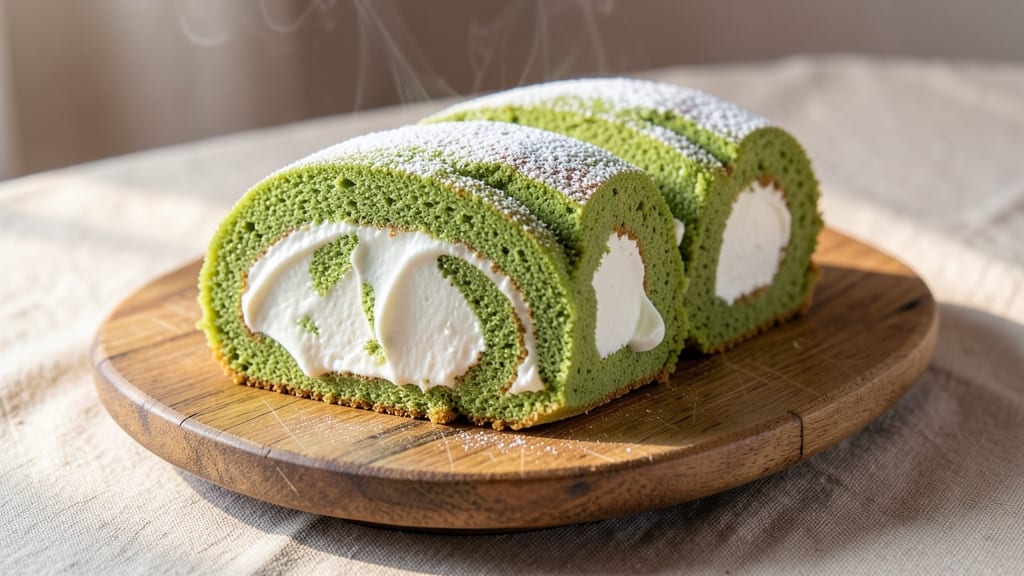
This Asian Swiss roll cake recipe transforms a classic dessert into a matcha-infused masterpiece with layers of silky meringue and vibrant green tea. The delicate balance of earthy matcha and sweet meringue creates a texture that's both light and satisfying, perfect for special occasions or when you want to impress.
What sets this recipe apart is the Japanese-inspired technique of rolling the sponge while still warm, ensuring clean layers and a professional finish every time.
The foundation begins with a tender matcha-infused sponge cake that's baked to perfection, then brushed with a thin layer of custard before rolling. This custard layer acts as both a glue for the roll and a subtle flavor enhancer that complements the matcha.
The key to success lies in precise timing—baking the sponge just until it springs back when touched, then rolling it immediately while still warm but cool enough to handle.
What you'll achieve is a beautifully rolled cake with layers of fluffy meringue and fragrant matcha sponge, all held together by that delicate custard layer. The result is a dessert that's elegant enough for celebrations but approachable enough for everyday enjoyment.
Each slice reveals the intricate rolling pattern and the harmonious blend of flavors that make this cake truly special.
This recipe scales beautifully for gatherings, and the techniques can be adapted to other flavors like pandan or red bean paste. The professional finish comes from attention to detail in the rolling process and the meringue preparation, ensuring every bite delivers that perfect combination of textures and flavors.
Let's create this showstopping dessert together.
Ingredients for asian swiss roll cake
Precision ingredients for a professional matcha Swiss roll with delicate layers and vibrant green tea flavor.
| Ingredient | Amount | Notes |
|---|---|---|
| All-Purpose Flour 🌾 | 2 ½ cups | Sifted for light texture |
| Granulated Sugar 🍚 | 1 ½ cups | Superfine preferred for smoothness |
| Matcha Powder 🍵 | 2 tbsp | Ceremonial grade for vibrant color |
| Large Egg Whites 🥚 | 6 whole | Room temperature for best volume |
| Unsalted Butter 🧈 | ½ cup | Cold, cubed for custard |
| Heavy Cream 🥛 | 1 cup | Whole milk fat for richness |
| Milk 🥛 | ½ cup | Whole milk preferred |
| Cornstarch 🌾 | 2 tbsp | For smooth custard texture |
| Granulated White Sugar 🍚 | ½ cup | For custard sweetness |
| Vanilla Extract 🌿 | 1 tsp | Pure vanilla for flavor |
| Salt 🧂 | ¼ tsp | Fine sea salt preferred |
| Meringue Powder 🍰 | 1 tbsp | For stable meringue layers |
| Powdered Sugar 🍚 | 1 cup | Sifted for smooth dusting |
| Rice Flour 🌾 | 1 tbsp | Prevents sticking during rolling |
The matcha powder is non-negotiable here—ceremonial grade from Matcha Kari or Jade Leaf ensures vibrant color and smooth flavor. Ceremonial grade is less bitter than culinary grade, which is crucial for this delicate dessert. The egg whites must be room temperature; cold whites won't whip properly, and that's a dealbreaker for the meringue layers. For the custard, Land O'Lakes European-style butter adds richness that regular butter can't match. If you can't find it, Plugrá is a solid second choice. The rice flour might seem odd, but it creates a subtle barrier that prevents the sponge from sticking to your rolling surface—trust me on this.
No meringue powder? 1/4 tsp aquafaba plus 1/4 tsp cream of tartar works as a stabilizer, though results won't be as professional. Substituting powdered sugar with superfine white sugar requires sifting to avoid graininess. The custard can be made with half-and-half instead of heavy cream, but texture will be slightly lighter. For the matcha, if you only have culinary grade, reduce to 1.5 tbsp to avoid bitterness. The vanilla extract should be pure—imitation extracts have a chemical aftertaste that ruins the delicate balance. If you're short on time, pre-made custard from a trusted brand like La Creme works in a pinch, though homemade always tastes better.
Store the unbaked sponge in an airtight container for 1 day if needed, but bake it fresh for best results. The custard can be refrigerated for 3 days or frozen for 1 month—thaw overnight in the fridge before using. For the meringue, whisk the egg whites in a copper bowl if possible; copper ions help stabilize the meringue for a glossier finish. Once rolled, keep the cake in the fridge for up to 3 days, but slice and serve at room temperature for the best texture. The matcha-infused sponge keeps its vibrant color best when stored away from light.
Why You'll Love This Recipe
- Here’s what sold me: matcha powder is cheap, butter makes it feel special, and the recipe stretches to feed six for under $10. Leftovers? They disappear faster than I can reheat them. My freezer’s full of these, wrapped in parchment, ready for when I forget to plan ahead.
- No Fuss Layers: I swear by this recipe—just mix, bake, roll, and fill. No piping bags, no temperamental meringue. The egg whites fold in like butter, and the buttercream filling stays put even when I’m not the most patient roller.
- Earthy Matcha Magic: That first dusting of matcha isn’t just green—it’s alive. The powder dissolves smoothly into the batter, giving you a bright, grassy note that’s not bitter or overpowering. Honestly, I’ve tried store-bought rolls, and this tastes like someone actually cared.
- Party or Snack: Between us, this cake is my go-to for birthdays and lazy Sundays. Slice it thin for a tea-time treat, or serve a thick piece with ice cream—no judgment. The buttercream keeps it rich without being heavy, so it’s always a crowd-pleaser.
Step-by-step instructions for matcha Swiss roll cake
Here's how to create a delicate matcha Swiss roll with flawless layers and vibrant green tea flavor.
Prepare the Matcha Custard Base
In a medium saucepan, combine the 1 cup heavy cream, 0.5 cup milk, 0.5 cup granulated white sugar, 2 tbsp cornstarch, 1 tbsp matcha powder, 1 tsp vanilla extract, and 0.25 tsp salt. Whisk until smooth to prevent lumps. Cook over medium heat, stirring constantly, until the mixture thickens enough to coat the back of a spoon—this should take about 5-7 minutes. Remove from heat and let cool to room temperature.
The matcha should create a vibrant green color. If you see any graininess, strain through a fine-mesh sieve for a silky texture. This custard forms the foundation of your roll, so proper thickening is critical. Let it cool completely before proceeding to prevent steam from affecting your meringue layers.
Whip the Meringue Layers
In a clean, grease-free bowl, beat the 6 large egg whites on medium speed until soft peaks form. Gradually add the 1.5 cups granulated sugar while continuing to beat until stiff, glossy peaks form. This should take about 5-7 minutes. In a separate bowl, sift together the 2.5 cups all-purpose flour and 1 tbsp meringue powder, then gently fold into the meringue mixture using a spatula until just combined.
Here's the thing—don't overmix. You're looking for a light, airy texture that holds its shape when rolled. The flour and meringue powder work together to create the perfect structure for rolling. Spread half of the meringue mixture onto a parchment-lined jelly roll pan, smoothing the top with a spatula. This will be your first layer.
Assemble and Bake the Cake
Spread the cooled matcha custard evenly over the meringue layer, leaving a ½-inch border around the edges. Dust the remaining meringue mixture with 1 tbsp rice flour (this prevents sticking) and spread it over the custard layer. Use the spatula to smooth the top completely. Bake in a preheated 350°F oven for 12-15 minutes, or until the top is golden and springs back when touched.
Don't open the oven during baking—any steam will collapse your delicate layers. The cake should pull away from the edges of the pan when done. Immediately invert the cake onto a clean kitchen towel dusted with powdered sugar. This helps release the cake cleanly and prevents sticking. Let it cool completely before attempting to roll.
Roll and Fill the Cake
Once the cake is completely cool, peel back the parchment paper and gently roll the cake from the short end, using the towel to help guide it. This creates the classic Swiss roll shape. Unroll the cake and spread the remaining matcha custard evenly over the surface, leaving a ½-inch border uncovered. Reroll tightly, seam-side down, and wrap in plastic wrap to set for at least 2 hours in the refrigerator.
This chilling step is crucial—it allows the filling to fully absorb and the cake to hold its shape. If you try to slice it too soon, the filling will leak out. For best results, chill overnight. The contrast between the vibrant green matcha and the delicate meringue layers will be stunning when you slice into it.
Dust and Serve
Before serving, dust the cake generously with 1 cup powdered sugar sifted through a fine-mesh sieve. This creates that signature elegant look and adds a touch of sweetness. Use a sharp serrated knife to slice through the plastic wrap and into the cake at a slight angle. The knife should glide through cleanly if the cake is properly chilled.
Serve chilled slices on a platter with additional powdered sugar dusting. Each bite should deliver a perfect balance of silky matcha custard and airy meringue. The rice flour prevents sticking during rolling, ensuring clean slices every time. This cake keeps well in the refrigerator for up to 3 days, though it's best enjoyed fresh.
Pro Tips For Making Asian Swiss Roll Cake
- STOP OVERMIXING THE BATTER: I learned this the hard way—once I beat the egg whites into the flour-butter mix like I was trying to win a baking contest, and the cake turned dense as a brick. Fold in the whites just until combined—lumps are fine, but don’t turn it into glue.
- SIFT THAT MATCHA: Matcha powder is a diva. If you just dump it into the dry ingredients, you’ll end up with clumpy patches that ruin the smoothness. Sift it through a fine-mesh sieve with the flour—yes, even if it’s labeled "fine." Trust me, your roll will thank you.
- CHILL THE ROLL BEFORE SLICING: I used to rush this step and wonder why the filling oozed out like a sad ice cream cone. Wrap the rolled cake in plastic and refrigerate for at least 2 hours—better yet, overnight. Cold layers slice cleanly and stay together when you unroll it.
- USE ROOM-TEMP BUTTER: Cold butter in the dough makes the cake tough and crumbly. Take it out of the fridge 30 minutes before mixing—just soft enough to press into the flour, not greasy. (I know, I know, but trust the process.) Your layers will be tender and flaky.
Wine and beer pairings for asian swiss roll cake
Matcha-Inspired Whites
The earthy, slightly bitter notes of matcha pair beautifully with crisp, mineral-driven white wines that complement rather than compete with its vibrant flavor. A Japanese Koshu from Nagano Prefecture is my top recommendation—its delicate floral and citrus notes mirror the matcha's brightness while maintaining the cake's elegance.
For a more widely available option, try a Sauvignon Blanc from New Zealand's Marlborough region, particularly one with gooseberry and lime zest undertones that echo the matcha's herbal profile. 🍷
Light-Bodied Reds
If you prefer red wine, opt for Pinot Noir from Oregon's Willamette Valley or Burgundy's Côte de Nuits. These wines offer red fruit and earthy undertones that won't overpower the matcha's delicate flavor.
Look for bottles with moderate tannins and bright acidity—avoid heavy, oak-aged Cabernets that would clash with the cake's light texture. A chilled glass enhances the wine's freshness and prevents it from overwhelming the dessert's subtle sweetness.
Asian-Inspired Beers
For beer lovers, a Japanese lager like Asahi Super Dry or Sapporo Premium provides a crisp, clean palate cleanser that highlights the matcha's complexity. The subtle hop bitterness in these beers actually complements the matcha's earthiness rather than competing with it.
Alternatively, a Belgian Witbier with its citrus and coriander notes creates an unexpected but delightful flavor bridge between the cake and beverage. Serve both slightly chilled for optimal enjoyment. 🍺
Non-Alcoholic Pairings
Matcha's vibrant flavor shines just as well with non-alcoholic options. A cold-brewed green tea from Ippodo Tea (ceremonial grade) enhances the matcha experience without distraction. For something more indulgent, try vanilla bean chai tea—the warm spices create a comforting contrast to the cake's delicate texture.
Sparkling Japanese soda like Ramune (lychee or melon flavor) adds a playful effervescence that cuts through the richness of the meringue layers.
Serving Temperature Tips
Always serve both the cake and beverages chilled—matcha's flavor profile is most vibrant when paired with cool temperatures. Let your wine or beer sit in the fridge for 30-45 minutes before serving, while the cake should be sliced and served immediately after removing from the refrigerator.
This temperature balance ensures each bite and sip delivers the intended harmony of flavors. Pro tip: Use thin, elegant glassware for wine and small dessert cups for beer to maintain the cake's presentation focus. ✨
Nutrition facts
Frequently asked questions
Can I substitute matcha powder with other flavors?
While matcha gives this recipe its signature flavor, you can easily adapt it. Try pandan leaf paste (1 tbsp) for Southeast Asian flavors, or red bean paste (½ cup) for a classic Asian twist. For Western flavors, vanilla bean paste (1 tsp) or orange zest (1 tbsp) works beautifully. Just adjust the liquid measurements if using pastes to maintain the right consistency.
Why did my Swiss roll crack when rolling?
This usually happens when the cake is either too dry or not cooled enough. Let the cake cool completely before rolling—it should be firm but still slightly warm. If it cracks, gently press the edges back together before rerolling. For extra stability, chill the cake for 10 minutes before attempting to roll. The rice flour dusting also helps prevent sticking and cracking during this step.
How do I make this recipe gluten-free?
Replace the all-purpose flour with a 1:1 gluten-free baking flour blend (like Bob's Red Mill 1-to-1) plus an extra ½ tsp xanthan gum to improve structure. The meringue powder can be omitted, but add ¼ tsp cream of tartar to stabilize the egg whites. Test your gluten-free flour blend first—some brands require slightly more liquid. The rice flour can be replaced with tapioca starch for rolling.
Can I make this cake ahead of time?
Yes! Assemble the cake up to 2 days in advance—wrap it tightly in plastic and refrigerate. For best texture, let it sit at room temperature for 30 minutes before serving. The custard filling will firm up slightly in the fridge but remains silky when brought to room temperature. For longer storage, freeze the assembled (but unrolled) cake for up to 1 month, then thaw overnight in the fridge before rerolling.
What's the secret to getting clean slices?
Proper chilling is key—your cake must be thoroughly chilled (at least 2 hours) before slicing. Use a sharp serrated knife and dip it in hot water, wipe dry, then slice at a slight angle. For extra clean cuts, freeze the cake for 15 minutes before slicing. The powdered sugar dusting also helps create that professional finish by preventing crumbs from sticking to the knife.