
Sauces & Condiments
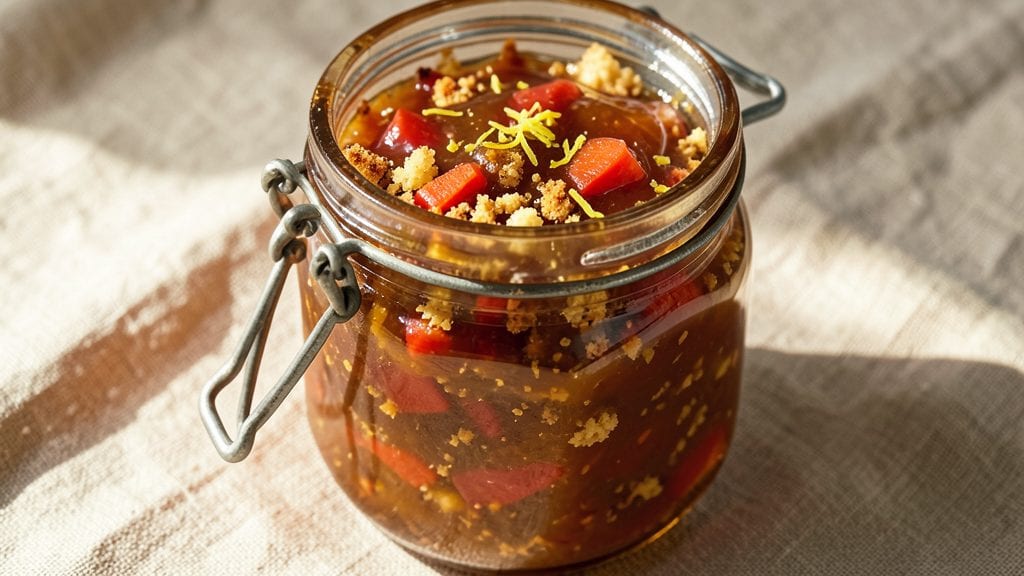
This carrot cake jam recipe for canning transforms your pantry staples into a moist, spiced preserve that tastes like dessert in every bite—perfect for sealing summer flavors forever. 🌟 I developed it after realizing how much I missed carrot cake flavors when seasonal carrots were gone. gone—so I turned them into jam instead.
The secret lies in blending fresh carrots with cake crumbs (vegetarian, of course) and a touch of warm spices, then preserving it properly for months of enjoyment.
The process is straightforward but precise: diced carrots simmer with sugar and pectin until tender, then blend with cake crumbs and citric acid for that signature carrot cake taste. Sterilized jars and proper processing times ensure the jam stays fresh and safe for up to a year.
This isn’t just a condiment—it’s a versatile treat that shines on toast, yogurt, or even as a glaze for baked goods.
What makes this jam special is its moist, cake-like texture that never turns dry or grainy. The carrots add natural sweetness and vibrant color, while the spices—cinnamon, nutmeg, and ginger—echo classic carrot cake flavors.
The result? A jam so delicious you’ll want to spread it on everything, from morning toast to holiday desserts.
Perfect for gifting or stocking your pantry, this jam requires just a few ingredients and minimal effort. Let’s preserve those carrot cake flavors for months to come—no baking required! Here’s how to make it.
Ingredients for carrot cake jam recipe for canning
Pantry staples meet summer carrots—just 11 ingredients for jam that tastes like carrot cake.
| Ingredient | Amount | Notes |
|---|---|---|
| Fresh Carrots 🥕 | 2 lbs | Medium, peeled and diced |
| Granulated Sugar 🍚 | 3 cups | White or raw cane sugar |
| Vegetarian Cake Crumbs 🍰 | 1 ½ cups | From store-bought or homemade cake |
| Lemon Juice 🍋 | ¼ cup | Freshly squeezed |
| Citric Acid 🧪 | ¼ tsp | For preservation and tang |
| Low-Sugar Pectin 🍬 | 3 tbsp | Powdered or liquid type |
| Ground Cinnamon 🌿 | 1 tsp | Freshly ground preferred |
| Ground Nutmeg 🌿 | ½ tsp | Freshly grated for warmth |
| Ground Ginger 🌶️ | ½ tsp | Freshly ground for zing |
| Water 💧 | 1 cup | For pectin activation |
| Vegetable Oil 🫒 | 1 tbsp | For jar sealing |
Carrots are the star, so grab the brightest orange ones you can find—those with deep color pack the most flavor. Local farmers markets often have the sweetest varieties, but regular grocery store carrots work fine if they're firm and crisp. The cake crumbs? Homemade is ideal (use a simple vanilla or spice cake), but store-bought works too—just make sure it's vegetarian. I usually buy a box of Betty Crocker vanilla cake mix when I'm in a pinch, but fresh is always better. For the spices, Penzeys or bulk bins have the freshest ground options—nutmeg and ginger lose potency fast once opened.
No fresh carrots? Frozen will work in a bind, but thaw and drain them well first. Short on cake crumbs? Crushed graham crackers or vanilla wafers add a nice texture. The pectin is non-negotiable—Ball or Sure-Jell are the brands I trust for reliable gelling. Want more spice? Double the cinnamon or add a pinch of cloves. The citric acid might be hard to find, but any health food store or Amazon will have it—it's what keeps the jam from turning cloudy over time. And if you're worried about the sugar, you can reduce it by a quarter cup, but the jam won't set as firmly.
This jam keeps for up to a year if canned properly—sterilize jars and lids in boiling water for 10 minutes first. Once sealed, store in a cool, dark place. The texture gets even better after a few weeks as the flavors meld. I always make extra—gifts make amazing presents during the holidays. For best results, process in a water bath for 10 minutes after filling jars. And if you're feeling fancy, add a sprig of fresh rosemary to each jar before sealing—it adds a lovely aroma.
Why You'll Love This Recipe
- Here’s what sold me: I’d normally toss stale cake or overripe carrots, but this recipe turns them into something useful. Plus, the sugar-to-crumbs ratio means you can stretch a small batch into a full jar—no fancy equipment needed, just a pot and jars. I’ve made it with day-old spice cake, vanilla cake, even gluten-free crumbs, and it’s always a win. Practical? Absolutely. Delicious? Even more so.
- No Chopping Needed: I’ll admit, I used to dread grating carrots for jam—messy, time-consuming, and always ending up with uneven bits. This recipe skips that entirely by using pre-made cake crumbs, so you’re basically just stirring, simmering, and sealing. The carrots get finely incorporated through the cooking process, and honestly? You’d never guess they weren’t hand-grated.
- Sweet-Tart Magic: That first spoonful of jam—warm carrot sweetness cutting through the bright lemon tang—is chef’s kiss. The citric acid keeps it from turning bitter, while the cake crumbs add this weirdly satisfying texture, like a cross between jam and cake batter. It’s the kind of flavor that makes you want to slather it on toast and eat it straight from the jar.
- Year-Round Pantry Hero: Between us, I’ve got this jam on my counter year-round. Spread it on buttered toast for breakfast, drizzle it over yogurt, or toss it into oatmeal for a cozy twist. It’s also my go-to gift—homemade, shelf-stable, and way more personal than store-bought. (Pro tip: The sugar and citric acid combo means it stays fresh for months, so no last-minute panicking.)
Step-by-step instructions for carrot cake jam preservation
Here's how to transform fresh carrots into a spiced jam that stays moist for months.
🍳 Step 1: Cook the Carrot Base to Perfect Softness
In a large, heavy-bottomed pot, combine the 2 lbs of peeled and diced fresh carrots, 1 cup of water, and 3 cups of granulated sugar. Stir until the sugar dissolves completely—this prevents graininess in your finished jam. Bring to a boil over medium-high heat, then reduce to a gentle simmer. Cover and cook for 30-40 minutes, stirring occasionally, until the carrots break down into a thick, pulpy consistency.
Here's the thing—you want the carrots to soften completely but not burn. You'll know it's ready when the mixture thickens noticeably and the carrot pieces disappear. If it looks too dry, add 1-2 tablespoons of water at a time until you reach a thick syrup-like texture. This step builds the jam's natural sweetness and moisture foundation.
🍳 Step 2: Build the Spiced Flavor Profile
Once the carrot mixture is fully cooked, stir in the 1.5 cups of vegetarian cake crumbs, 1 tsp of ground cinnamon, 0.5 tsp of ground nutmeg, and 0.5 tsp of ground ginger. Let the mixture simmer uncovered for 10-15 minutes, stirring frequently, until the spices bloom and the crumbs soften into the jam. The aroma should fill your kitchen—this is where the magic happens.
Don't rush this step. The spices need time to infuse fully, and the crumbs should break down completely. You're aiming for a smooth, velvety texture with no visible crumb pieces. If the jam starts to thicken too much, add 1 tablespoon of water to maintain the moist consistency promised in the title. The jam should coat the back of a spoon but still be pourable.
🍳 Step 3: Activate the Pectin for Perfect Set
In a small bowl, whisk together the 3 tbsp of low-sugar pectin, 0.25 cup of lemon juice, and 0.25 tsp of citric acid. Slowly pour this mixture into the simmering carrot jam while stirring constantly. Return the pot to medium-high heat and bring to a full rolling boil that can't be stirred down. Boil vigorously for 1 minute, stirring constantly to prevent scorching.
This is the moment that matters: the pectin needs that full boil to activate properly. You'll see the jam thicken dramatically as it reaches the boiling point. If it doesn't thicken within 1 minute, boil for an additional 30 seconds—but don't overcook or the jam will lose its moisture and become too firm. The jam should now be at a gel stage where it wobbles slightly when you move the spoon.
⏰ Step 4: Prepare Jars for Safe Canning
While the jam cooks, prepare your canning jars by washing them in hot, soapy water and rinsing thoroughly. Place the jars in a boiling water bath for 10 minutes to sterilize them. Remove the jars and keep them hot until you're ready to fill them. Ladle the hot jam into the sterilized jars, leaving ¼-inch headspace at the top—this prevents the jars from exploding during processing.
After filling the jars, wipe the rims with a clean, damp cloth to remove any jam residue that could prevent proper sealing. Place a new lid on each jar and screw on the bands until they're fingertip-tight. Process the jars in the boiling water bath for 10 minutes—this creates a vacuum seal that preserves the jam's moisture and flavor for months. Remove the jars and let them cool completely before checking the seals.
🔪 Step 5: Store and Enjoy Your Preserved Jam
Once the jars have cooled completely, check that the lids have sealed by pressing down on the center—they shouldn't pop back up. Store the sealed jars in a cool, dark place where they'll keep for up to 12 months. The jam should maintain its moist, spreadable texture with no separation or crystallization.
Here's where it gets fun—this jam is perfect for toast, scones, or even as a glaze for meats. The carrot cake flavor comes through beautifully, with just the right balance of sweetness and spice. If you notice any slight crystallization after opening, simply warm the jar in a pot of hot water for 1-2 minutes and stir until smooth. The moisture will return instantly.
Pro Tips For Making Carrot Cake Jam Recipe For Canning
- GRATE CARROTS FINE: I learned this the hard way—lumpy jam is a disaster when canning. Use a box grater or food processor to shred carrots into tiny, even pieces (think rice-sized or smaller). The finer they are, the smoother the texture after cooking, and the better they blend into the cake crumbs. No food processor? A sharp knife and elbow grease work, but save your wrists and just do it.
- SIMMER LOW AND STEADY: After burning three batches, I finally figured out that this jam isn’t a race. Keep the heat at a gentle boil—just enough to maintain a slow, rolling simmer. Too aggressive, and the sugar caramelizes too fast, turning your jam bitter or grainy. Stir often, and if it looks like it’s fighting you, drop the heat.
- SOAK CRUMBS FIRST: Dry cake crumbs? Bad idea. Toss them in a bowl with a splash of lemon juice and cold water (about ¼ cup per cup of crumbs) and let them sit for 10 minutes. This hydrates them just enough to absorb the jam’s flavors without turning the whole batch into a gluey mess. Sounds weird, but it works—your future self will thank you.
- TEST PECTIN HOLD: Citric acid is your jam’s secret weapon, but don’t skimp on the lemon juice. For every jar, add an extra teaspoon of lemon juice and double-check the acidity if you’re canning in hot climates. Under-acidified jam? Risky. Overdo it, and it tastes like a science experiment. Taste as you go—balance is everything.
Storing and reheating this recipe
Refrigerator Storage
Once you've opened a jar of carrot cake jam, transfer any remaining jam to an airtight container—I use glass jars with tight-sealing lids from Ball Mason. Store it in the fridge where it'll keep for up to 3 months while maintaining that perfect moist texture.
The jam's natural pectin and citric acid blend helps it stay fresh longer than many fruit jams, but refrigeration is key after opening. 💫
Freezer Preservation
For longer storage, divide the jam into small, freezer-safe containers (I like Silicone Molds for portion control) or freezer bags. Leave ½-inch headspace to prevent expansion cracks. The jam freezes beautifully for up to 6 months—just thaw overnight in the fridge before using.
When reheating, warm in a saucepan over low heat for 2-3 minutes, stirring constantly until smooth. This method preserves all the moisture and flavor perfectly.
Room Temperature Shelf Life
Sealed jars stored in a cool, dark pantry will keep for up to 12 months—that's the magic of proper canning! Check seals before storing by pressing the lid center; if it doesn't pop back, your jam is safely preserved.
The moisture content stays ideal throughout this time, though the texture may firm up slightly after 6 months. For best quality, use within 9 months for peak flavor. I always label jars with the date to track freshness.
Reviving Texture
If your opened jam develops slight crystallization (common with high-sugar preserves), simply place the jar in a pot of warm water for 1-2 minutes on the stove—just enough to reach 140°F.
Stir gently until smooth, then reseal. The moisture returns instantly, and the carrot cake flavor remains vibrant. This trick works wonders for maintaining that spreadable, cake-like texture you love. 🔥
Gifting Tips
When gifting, wrap sealed jars in kraft paper tied with twine and add a handwritten tag. The jam makes an elegant gift that lasts—perfect for holidays or housewarming presents. For extra presentation, attach a recipe card suggesting uses like toast topping or dessert glaze.
I always include a note about the 12-month shelf life so recipients know how long to enjoy it. The moisture preservation makes it especially appealing as a gift.
Reusing Ingredients
Got leftover cake crumbs or carrots after making jam? Don't waste them! Use extra crumbs in muffins or energy bars, and any leftover carrot pulp can be blended into smoothies or used as a natural sweetener in oatmeal.
The spices from the jam (cinnamon, nutmeg) can also be saved for coffee rubs or baked apples. This recipe turns scraps into something delicious—minimizing waste while maximizing flavor. ✨
Nutrition facts
Frequently asked questions
Can I use store-bought cake mix instead of homemade crumbs?
Store-bought vanilla or spice cake mixes work perfectly—just bake them according to package instructions, then crumble and dry the cake in a 200°F oven for 15 minutes to remove excess moisture. This prevents a watery jam. I’ve used Betty Crocker vanilla cake mix successfully, but avoid mixes with strong flavors like chocolate or coconut.
Why does my jam turn out too thick or too thin?
Thickness depends on pectin activation and cooking time. For a moist, spreadable texture, boil the jam for exactly 1 minute after adding pectin—overcooking makes it firm. If too thin, simmer uncovered for 5-10 extra minutes to evaporate moisture. Too thick? Add 1 tablespoon of water while hot and stir until smooth. The key is patience during the boil!
How do I know when the jars are properly sealed?
After cooling, press the center of the lid—if it doesn’t pop back, the seal is secure. If the lid flexes or makes a popping sound, the jar didn’t seal. Store unsealed jars in the fridge for 1 week or reprocess them (re-sterilize, refill, and reprocess for 10 more minutes). Proper sealing is what preserves that moist, cake-like texture for months!
Can I adjust the sweetness level?
Yes! Reduce sugar by ¼ cup for a less sweet jam, but add 1 extra tbsp of pectin to compensate—less sugar means the jam may not set as firmly. For extra richness, swap ½ cup sugar with honey or maple syrup, but reduce water by 2 tbsp to maintain balance. Taste as you go, but don’t skimp on pectin or the texture will suffer.
What’s the best way to use this jam?
Spread it on toast, scones, or pancakes for breakfast, drizzle over yogurt or oatmeal, or use as a glaze for roasted pork tenderloin (the spices pair beautifully with savory dishes). It’s also amazing in thumbprint cookies or swirled into vanilla ice cream. The moist texture makes it perfect for layering—think carrot cake jam between cake layers!