
Appetizers
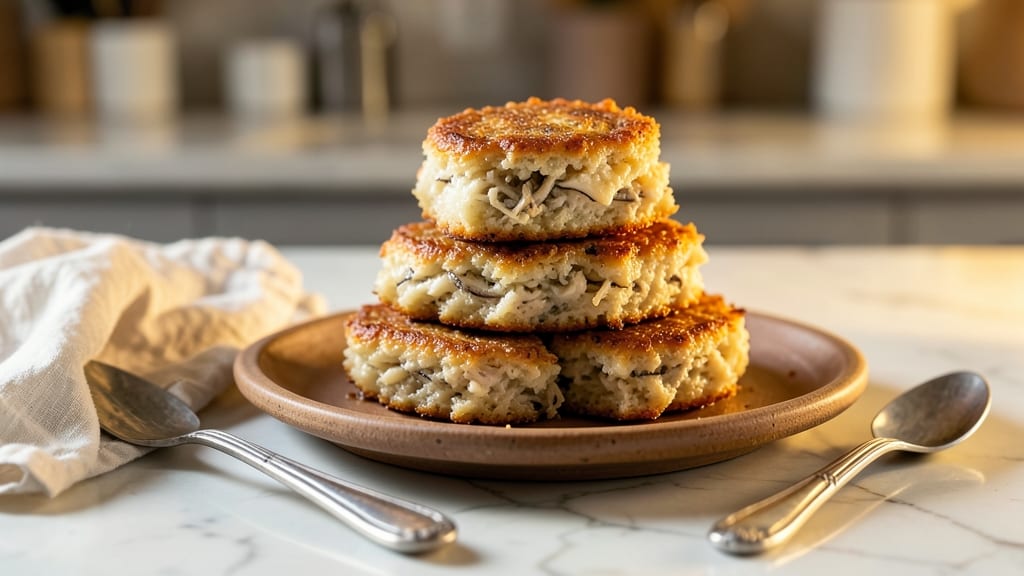
This lion's mane crab cake recipe delivers the perfect balance of crispy golden crust and tender, fluffy centers—exactly what seafood lovers crave.
The secret lies in using finely chopped lion's mane mushrooms as a sustainable, meaty alternative to traditional crab, bound together with a simple yet effective mixture of mayo, egg, and panko breadcrumbs.
I developed this recipe after years of perfecting texture and flavor, ensuring every bite mimics the classic crab cake experience without the high cost or environmental concerns.
The magic happens in the pan-searing stage, where high heat creates that coveted crispy exterior while keeping the interior light and fluffy. A touch of Old Bay seasoning and lemon zest adds that signature briny, zesty flavor that makes these crab cakes irresistible.
This recipe serves four as an appetizer, making it perfect for gatherings or a special weeknight dinner when you want to impress without the fuss.
By the time these crab cakes emerge from the pan, they'll be golden-brown and crispy on the outside, with a tender, flaky interior that holds together beautifully. The flavor is a perfect harmony of savory, slightly sweet mushroom, tangy lemon, and the classic Old Bay seasoning.
Serve them with a dollop of tartar sauce or a squeeze of fresh lemon to elevate the experience even further.
These crab cakes pair beautifully with a crisp green salad, roasted vegetables, or even as part of a seafood platter. The recipe is designed to be foolproof, with clear instructions that ensure consistent results every time.
Whether you're hosting a dinner party or simply craving a restaurant-quality appetizer at home, this recipe delivers professional results with minimal effort.
Ingredients for lion's mane crab cake
Eight ingredients transform into restaurant-style crab cakes—crispy, fluffy, and packed with Old Bay magic.
| Ingredient | Amount | Notes |
|---|---|---|
| Lion's Mane Mushrooms 🍄 | 8 oz | Finely chopped, stems removed |
| Mayonnaise 🥫 | ½ cup | Dijon-style preferred for tang |
| Large Eggs 🥚 | 2 whole | Room temperature for best binding |
| Panko Breadcrumbs 🍞 | ¾ cup | For maximum crispiness |
| Fresh Lemon Zest 🍋 | 1 tbsp | Brightens the flavor profile |
| Old Bay Seasoning 🧂 | 1 ½ tsp | Signature crab cake flavor |
| Garlic Powder 🧄 | ½ tsp | Freshly ground preferred |
| Ground Black Pepper 🌶️ | ½ tsp | Freshly cracked for best flavor |
| Extra-Virgin Olive Oil 🫒 | 2 tbsp | For pan-searing |
| Unsalted Butter 🧈 | 2 tbsp | For extra richness |
| Fresh Chives 🌿 | 2 tbsp | Chopped for garnish |
| Sea Salt 🧂 | ½ tsp | For seasoning |
| Lemon Juice 🍋 | 1 tbsp | Freshly squeezed |
The lion's mane mushrooms are the star—look for thick, white caps at specialty grocery stores like Whole Foods or Trader Joe's. They should feel dense, not slimy, and smell earthy. If you can't find them fresh, dried lion's mane works too—just rehydrate in warm water. For the panko, Japanese brands like Nissin give the best texture, but any high-quality panko will do. The key here is chopping the mushrooms super finely—almost like a paste—so they mimic crab perfectly. I like to pulse them in a food processor for even texture.
No Old Bay? Mix 1 tsp paprika, 0.5 tsp celery salt, and 0.25 tsp black pepper for a close substitute. Short on mayo? Greek yogurt or vegan mayo keeps it light. For extra richness, add 1 tbsp cream cheese to the mix. The lemon zest and juice are non-negotiable—they cut through the earthiness of the mushrooms and add that signature briny tang. If you're feeling fancy, add a pinch of smoked paprika for depth. And trust me, room-temperature eggs bind better than cold ones—just give them 30 minutes on the counter.
These crab cakes are best served immediately after searing, but you can hold them in a 200°F oven for up to 20 minutes if needed. Store leftovers in an airtight container for 2 days in the fridge, but honestly, they're better fresh. For a quick appetizer, make the mixture ahead and refrigerate—it actually tastes better after chilling. Freezing isn't recommended since the texture can get soggy. Pair with tartar sauce or a squeeze of lemon, and you've got a showstopper every time.
Why You'll Love This Recipe
- No Finely Chopped Work: Lion’s mane mushrooms slice like butter—no food processor, no frustration. I toss in the shredded pieces raw, mix them with mayo and egg, and call it done. (Yes, even my kids can handle this part.)
- Crispy-Creamy Magic: That panko crust? Chef’s kiss. The outside gets golden and shatteringly crisp while the inside stays tender—like a crab cake’s dreamy cousin. The lemon zest cuts through the richness, so it’s bright and addictive.
- Weeknight or Party Star: Make a batch on Sunday, store them in the fridge, and pull them out for lunch or game day. They reheat beautifully (or eat cold—no judgment) and impress guests without you breaking a sweat.
- Budget-Friendly Seafood Hack: Lion’s mane mimics crab’s texture for a fraction of the cost. I’ve fed four people for the price of one restaurant crab cake, and honestly? No one’s ever noticed the difference. (My wallet thanks me.)
Step-by-step instructions for lion's mane crab cakes
Here's how to create golden, crispy crab cakes with a fluffy interior using lion's mane mushrooms.
Prepare the Lion's Mane Mixture
In a large bowl, combine the 8 oz finely chopped lion's mane mushrooms with the 0.5 cup mayonnaise, 2 whole large eggs, 1 tbsp fresh lemon zest, 1.5 tsp Old Bay seasoning, 0.5 tsp garlic powder, and 0.5 tsp ground black pepper. Using your hands or a fork, mix until fully incorporated and the mushrooms release their moisture. This step creates the perfect binding base for your crab cakes.
Here's the thing—don't rush this mixing. You want the mushrooms to break down slightly and absorb all the flavors. After mixing, let the mixture rest for 5 minutes at room temperature. This resting period helps the texture firm up slightly, making it easier to shape later without falling apart.
Form and Chill the Crab Cakes
Add the 0.75 cup panko breadcrumbs to the mushroom mixture and gently fold them in with a rubber spatula. Be careful not to overmix—just combine until the breadcrumbs are evenly distributed. The panko will create that signature crispy exterior we're after.
Using your hands, form the mixture into 4 equal patties, about ½-inch thick each. Place them on a parchment-lined plate and refrigerate for 30 minutes. This chilling step is crucial—it helps the crab cakes hold their shape during cooking and prevents them from spreading in the pan.
Create the Perfect Pan Sear
Heat a large skillet over medium heat until hot. Add 2 tbsp extra-virgin olive oil and 2 tbsp unsalted butter—the butter adds richness that olive oil alone can't provide. Once the butter has melted and is foaming, carefully place the chilled crab cakes in the skillet, leaving about 1 inch between each.
Cook undisturbed for 3-4 minutes until the bottoms are golden brown and crispy. You'll know they're ready to flip when you see that beautiful caramelization forming. Flip carefully with a spatula and cook the other side for another 3-4 minutes until golden brown and crispy. Real talk: don't press down on them while cooking—this squeezes out moisture and creates a dense cake instead of a tender one.
Finish with Lemon and Chives
Remove the crab cakes from the skillet and transfer them to a serving plate. Drizzle each one with 1 tbsp freshly squeezed lemon juice—this brightens all the flavors and cuts through the richness. Sprinkle with 2 tbsp chopped fresh chives and an extra pinch of 0.5 tsp sea salt to enhance the seasoning.
Here's where it gets fun—serve immediately while they're still crispy. The lemon juice will make the chives look vibrant against the golden-brown crab cakes. For maximum crispiness, keep them warm in a 200°F oven for up to 10 minutes if needed, but honestly, they're best served right away.
Pro Tips For Making Lion'S Mane Crab Cake
- Pulse, Don’t Blend: Lion’s mane breaks down into mush if you overwork it—pulse the mushrooms in short bursts with your food processor, stopping to scrape down the sides every 5 seconds. I learned this the hard way when my first batch turned into a gray paste instead of a textured cake.
- Chill the Mixture: After mixing everything, pop the crab cake batter in the fridge for 15–20 minutes. Cold eggs and mayo bind better, and the panko stays crisp instead of soggy. (Yes, even if you’re impatient like me.)
- Use Two Eggs: The recipe says “large eggs,” but trust me—swap in two yolks + one whole egg for extra richness. The yolk adds fat that keeps the cake juicy, especially when frying. My grandmother swore by this, and she was right.
- Dry the Panko First: Toast the panko in a dry pan for 2–3 minutes before mixing—it crisps up instantly and absorbs less moisture from the mushrooms. Skip this, and your cakes will turn greasy instead of golden. (Your future self will thank you.)
Essential equipment for lion's mane crab cake
Skillet Essentials
Your 10-inch cast iron skillet is the star of this recipe—I swear by a Lodge Pre-Seasoned for its even heat distribution and natural non-stick properties after proper seasoning. The deep sides help prevent oil splatter while searing, and the heavy material maintains consistent medium heat throughout cooking.
For a lighter option, a stainless steel skillet like All-Clad works beautifully, but you’ll need to monitor heat more closely to avoid sticking. 🔥
Oil and Butter
Use avocado oil or refined olive oil for high-heat searing—they have higher smoke points (400°F+) than regular olive oil. I recommend Mazola Avocado Oil for its neutral flavor and stability. Pair it with unsalted European-style butter (like Plugrá or Kerrygold) for that rich, golden finish.
The butter adds flavor and helps create a Maillard reaction for that perfect crust. Never substitute margarine—it burns too easily.
Breading Tools
A fine-mesh sieve (like the OXO Good Grips) is perfect for coating the crab cakes in panko without making them too dense. For shaping, I use wet hands (lightly dampened with water) to prevent sticking while forming patties.
If you prefer tools, a small ice cream scoop helps create uniform-sized cakes. A spatula with a thin, flexible edge (like OXO Good Grips) makes flipping effortless without breaking the crust.
Temperature Control
Invest in a thermometer with a probe (I love the Thermoworks Thermapen) to monitor your skillet’s temperature—medium heat should register around 325-350°F. Too hot, and your crab cakes burn outside before cooking through; too cool, and they steam instead of sear.
A silicon spatula helps test doneness by gently lifting an edge—if it releases easily with a golden crust, it’s ready to flip. 🌡️
Garnish and Serve
Fresh chives and lemon zest need sharp scissors or a microplane for precise garnishing. I use a small offset spatula to arrange chives in an artistic pattern on the plate. For serving, a wooden board or slate platter keeps the crab cakes elevated and elegant.
A lemon squeezer (like the OXO Good Grips) ensures clean, mess-free juice application—no one wants lemon seeds in their tartar sauce!
Nutrition facts
Frequently asked questions
Can I use dried lion's mane mushrooms instead of fresh?
Rehydrate 4 oz dried lion's mane in warm water for 15-20 minutes until pliable, then drain and finely chop. Use the same quantity as fresh mushrooms (8 oz) in the recipe. The texture will be slightly denser but still delivers that signature crab cake flavor. Just squeeze out any excess water before mixing to avoid soggy cakes.
How do I fix crab cakes that fall apart when flipping?
This usually happens when the mixture isn't chilled long enough or the pan isn't hot enough. First, make sure to refrigerate the formed cakes for the full 30 minutes before cooking. Heat your skillet over medium-high heat until it's smoking slightly before adding oil. Also, use a flexible spatula and flip gently—don't press down! If they still crumble, the binding mixture needs more egg (1 extra yolk) or panko (1 tbsp extra).
Can I bake these instead of pan-searing?
Yes, but the texture will be less crispy. Preheat oven to 400°F and bake on a parchment-lined sheet for 12-15 minutes until golden. For extra crispiness, broil for 1-2 minutes at the end. The key difference: pan-searing creates that perfect Maillard crust, while baking gives a softer, more even cook. If baking, brush the tops with a little olive oil before baking for better browning.
What's the best way to store leftovers?
Store in an airtight container in the fridge for up to 2 days, separated by parchment paper to maintain crispiness. For reheating, warm in a 350°F oven for 5-7 minutes—microwaving makes them soggy. Freezing isn't recommended as the texture suffers, but if you must, freeze for 1 month and reheat directly from frozen in the oven. The best approach? Make fresh and enjoy immediately!
Can I make these gluten-free?
Swap panko for gluten-free breadcrumbs or crushed gluten-free crackers. For extra crispiness, add 2 tbsp cornstarch to the mixture. Just be sure your breadcrumbs are finely ground—coarse textures won't crisp up as nicely. The flavor stays just as delicious with this simple swap!