
Desserts
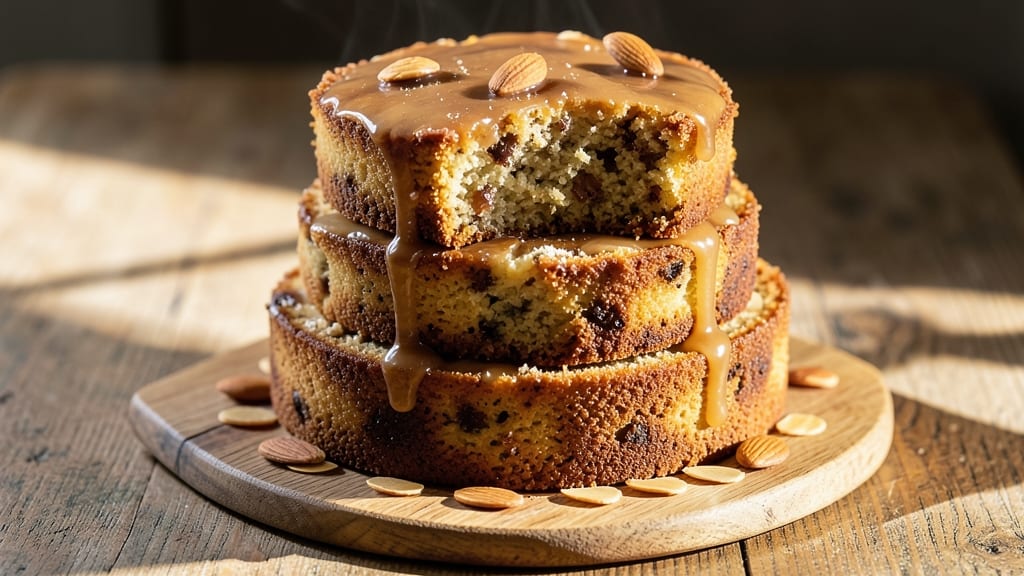
This almond-flavored pound cake delivers rich, nutty depth with every slice—moist layers infused with vanilla and almond extract that make it irresistible. 💛 The secret lies in properly creaming butter and sugar, then folding in almond flour for that signature texture and flavor.
I've perfected this recipe over years of baking, ensuring it stays tender without drying out, even the next day.
The cake's vanilla-infused layers create a delicate balance with the almond flavor, making it perfect for special occasions or a luxurious dessert. With just a few simple ingredients—like almond extract, butter, and flour—you'll achieve a professional-quality result that's surprisingly easy to bake.
The key is patience during the baking process to let the flavors meld perfectly.
What you'll end up with is a beautifully golden cake with a moist, crumbly texture that practically melts in your mouth. The almond flavor shines through without overpowering, creating a dessert that's elegant yet approachable.
Serve it plain, dusted with powdered sugar, or with a drizzle of glaze for an extra touch of sophistication.
This recipe is ideal for beginners yet impressive enough for any gathering—whether it's a holiday dessert, a brunch centerpiece, or a treat for yourself. The instructions are straightforward, and the results are consistently delicious. Let's get baking!
Ingredients for almond flavored pound cake
Rich almond flavor meets delicate vanilla layers—just these 11 ingredients create a showstopping cake.
| Ingredient | Amount | Notes |
|---|---|---|
| Unsalted Butter 🧈 | 1 ½ cups | Room temperature, full-fat preferred |
| Granulated White Sugar 🍚 | 2 ½ cups | Superfine sugar for smoother texture |
| Almond Flour 🌰 | 2 cups | Fine-ground, unsweetened preferred |
| All-Purpose Flour 🌾 | 1 ½ cups | Sifted for lighter texture |
| Pure Vanilla Extract 🌿 | 2 tbsp | Bourbon or Madagascar preferred |
| Almond Extract 🌰 | 1 tbsp | Pure, not imitation |
| Large Eggs 🥚 | 4 whole | Room temperature, separated |
| Baking Powder 🧂 | 1 tbsp | Aluminum-free preferred |
| Salt 🧂 | ½ tsp | Fine sea salt preferred |
| Whole Milk 🥛 | 1 cup | Room temperature |
| Powdered Sugar 🍚 | 1 cup | For dusting, optional |
The almond flour is non-negotiable here—Bob's Red Mill or King Arthur brands give the best texture. Grab the finest grind possible; coarse flour makes the cake dense. Butter matters too—Plugrá or European-style brands add richness that regular butter can't match. If you're short on almond extract, almond paste (like Nocciolina) works too—just reduce by half. Look for vanilla extract labeled 'pure' or 'natural'—the cheaper stuff tastes artificial.
No almond flour? Substitute with ground almonds (blend almonds in a food processor until ultra-fine), but expect slightly denser texture. Short on vanilla? Vanilla bean paste adds seeds for extra depth. For the eggs, if you're making this ahead, room temperature eggs are crucial—they incorporate better. The milk can be swapped for heavy cream for even more moisture, but whole milk keeps it classic. Pro tip: Sift the dry ingredients together to avoid lumps—trust me on this.
This cake keeps beautifully—3 days wrapped at room temp, 1 week refrigerated, or 3 months frozen. For freezing, slice first, then wrap tightly with plastic. The powdered sugar dusting? Only if you're feeling fancy—it's purely decorative. Leftovers? Toast slices for 10 seconds in the toaster to revive texture. I always bake two pans—one for guests, one for me to sneak later.
Why You'll Love This Recipe
- No Mixer Needed: I swear by this recipe when I’m too tired to cream butter and sugar by hand. Just fold everything together—no electric mixer, no fuss—and the almond flour does all the heavy lifting for that tender crumb.
- Vanilla-Almond Magic: That first slice? Pure bliss. The almond flour gives it a nutty depth, while the vanilla extract—just a teaspoon—makes every bite smell like a bakery. Honestly, I’ve never met a pound cake that hits this flavor combo so cleanly.
- Weekend or Weeknight: Slice it fresh for brunch, pack it for a picnic, or even reheat a piece with butter for a lazy afternoon snack. Between us, I’ve served it at birthday parties and leftovers at lunch—it’s that adaptable.
- Budget-Friendly Luxury: Almond flour can be pricey, but a little goes a long way here. You’re not sacrificing texture or taste—just a few dollars per serving—and it keeps beautifully for days. My secret weapon for when I want to feel fancy without breaking the bank.
Step-by-step instructions for almond flavored pound cake
Here's how to bake a tender, nutty pound cake with layers of vanilla-almond flavor.
👨🍳 Step 1: Cream Butter and Sugars for Maximum Moisture
In a stand mixer fitted with the paddle attachment, beat the 1.5 cups unsalted butter and 2.5 cups granulated white sugar on medium speed for 5-7 minutes until light and fluffy. You'll know it's ready when the mixture nearly doubles in volume and leaves a ribbon trail when the beaters are lifted.
This creaming process incorporates air, which creates that signature tender crumb. I like to scrape down the sides every couple of minutes to ensure everything gets evenly incorporated. If your butter isn't softened enough, the cake will turn out dense—press your finger into it and if it leaves a slight indentation, it's ready.
👨🍳 Step 2: Add Eggs and Extracts for Deep Flavor
Add the 4 whole large eggs, one at a time, mixing well after each addition. Then stir in the 2 tbsp pure vanilla extract and 1 tbsp almond extract. The mixture will look slightly curdled at first, but don't worry—it will come together when we add the dry ingredients.
Here's the thing—those extracts are what make this cake truly special. The vanilla adds warmth, while the almond extract infuses that nutty depth throughout. Mix on low speed for another 30 seconds to combine completely. If you're using room-temperature eggs, they'll blend in more smoothly than cold ones.
👨🍳 Step 3: Combine Dry Ingredients and Milk
In a separate bowl, whisk together the 2 cups almond flour, 1.5 cups all-purpose flour, 1 tbsp baking powder, and 0.5 tsp salt. Sift the flours first if you can—this prevents lumps and ensures a lighter texture. Gradually add this mixture to the wet ingredients, alternating with the 1 cup whole milk. Start and end with the dry ingredients.
I use a spatula to gently fold everything together just until combined. Overmixing develops gluten, which can make the cake tough. You should still see some streaks of flour—this is perfect. The milk helps hydrate the almond flour, which can be tricky since it absorbs moisture differently than regular flour.
🔥 Step 4: Bake to Golden Perfection
Pour the batter into two 9-inch round cake pans lined with parchment paper and greased with butter. Bake in a preheated 350°F oven for 50-60 minutes, or until a toothpick inserted into the center comes out clean. The tops should be golden brown, and the edges should pull away slightly from the pan.
Don't open the oven during baking—this causes the cake to sink. If the tops brown too quickly, tent loosely with foil after 30 minutes. The cake is done when it springs back gently when pressed in the center. Let it cool in the pans for 10 minutes, then transfer to a wire rack to cool completely before frosting or slicing.
🍽️ Step 5: Dust with Powdered Sugar (Optional)
Once completely cooled, dust the top of each cake layer with 1 cup powdered sugar using a fine-mesh sieve. This adds a delicate sweetness and makes the cake look stunning. For extra flavor, you can also brush the layers with a simple syrup made by heating ½ cup sugar with ¼ cup water until dissolved, then cooling.
The powdered sugar step is optional, but it's what takes this cake from great to showstopping. If you're serving it plain, the natural almond flavor will still shine—just slice it thick and enjoy the moist, tender crumb. This cake keeps well for 3-4 days at room temperature or can be frozen for up to 3 months for fresh-baked flavor whenever you need it.
Pro Tips For Making Almond Flavored Pound Cake
- Cream Butter Slowly: I used to dump cold butter straight into the sugar and wonder why my batter turned out greasy. Warm the butter to room temperature first—just press a finger into it, and if it leaves a slight indent, you’re good. Then whip it with the sugar until it’s pale and fluffy, not just looks creamy. That extra air is what makes the cake rise right.
- Sift Almond Flour Twice: Almond flour is clumpy, and clumps mean dense cake. Sift it once before measuring, then sift it again right into the bowl. No, it’s not faster to just eyeball it—trust me, I’ve done both. That second sift ensures even distribution, so every bite has that smooth, fine texture instead of gritty pockets.
- Don’t Overmix the Batter: This isn’t cookie dough—once the flours are incorporated, stop. Overmixing develops gluten, and gluten in pound cake means a tough, chewy result. Stir just until the dry ingredients disappear, then fold in the vanilla. The batter will look shaggy, but that’s exactly how it should be.
- Test for Doneness Early: Almond flour cakes can dry out fast, so pull yours out of the oven when the center still has a slight give—like pressing a jelly finger into it leaves a faint imprint. If you wait for the toothpick to come out clean, you’ll end up with a cake that’s more crumb than slice. Cover it with a towel and let it cool for 10 minutes before slicing.
Troubleshooting this dish
Dense Cake Texture
If your almond pound cake turns out dense, it’s likely from overmixing the batter or using cold eggs/butter. The almond flour absorbs moisture differently than regular flour, so don’t skimp on the 1 cup milk—it’s key for hydration.
Also, make sure your butter is room temperature (press your finger in it; it should leave a slight indentation). Overmixing develops gluten, so fold dry ingredients just until combined—you should still see flour streaks. 💡
Cracked Top or Sinking
Cracks or a sunken center usually mean the oven wasn’t hot enough or the cake baked too long. Preheat your oven to 350°F for at least 15 minutes before baking, and use an oven thermometer to confirm accuracy.
If the top browns too quickly, tent the cake with foil after 30 minutes. Avoid opening the oven door during baking—temperature drops cause cracks. 🔥
Dry or Crumbly Cake
A dry cake often results from overbaking or insufficient fat. Check your baking time—50-60 minutes is ideal for a 9-inch pan. If your cake dries out, try adding 1-2 tbsp extra milk or melted butter to the batter.
Almond flour can be tricky, so sift it thoroughly to avoid dry spots. For extra moisture, brush the cooled cake with a simple syrup made from ½ cup sugar and ¼ cup water. 💧
Uneven Baking
Uneven baking (dark edges, pale center) happens when heat isn’t distributed properly. Rotate your pans halfway through baking and ensure they’re placed on the middle rack. If your oven has hot spots, consider using an oven thermometer to monitor temperature variations.
For even browning, tent the cake with foil if the edges brown too quickly. 🌡️
Weak Almond Flavor
If the almond flavor isn’t strong enough, double-check your extracts. Use pure almond extract (not imitation) and add an extra ½ tsp if needed. For deeper flavor, toast 2 tbsp sliced almonds and fold them into the batter before baking.
Alternatively, brush the cooled cake with a glaze made from ½ cup powdered sugar + 1 tbsp almond extract + 1 tbsp milk. 🌰
Sticky or Gummy Texture
A gummy texture usually means the cake was underbaked or the sugar didn’t caramelize properly. Ensure your cake reaches 210°F internal temperature at the center before removing it from the oven. If it’s still sticky after baking, let it cool completely on a wire rack—don’t rush it.
For a firmer texture, chill the cake in the fridge for 30 minutes before slicing. 🧊
Nutrition facts
Frequently asked questions
Can I substitute almond flour with regular flour?
You can try, but the texture will differ significantly. Almond flour gives the cake its signature moistness and nutty flavor. For a 1:1 substitution, add 1 extra egg and 2 tbsp extra milk to compensate for the lack of fat. If you want a lighter texture, mix 1 cup almond flour with 1 cup all-purpose flour—this keeps some of the almond flavor while improving structure.
How do I make this cake gluten-free?
Replace the 1.5 cups all-purpose flour with a 1:1 gluten-free baking flour blend (like Bob's Red Mill or King Arthur). Add ½ tsp xanthan gum to help bind the cake. For extra moisture, increase milk to 1.25 cups. Almond flour is naturally gluten-free, so no other substitutions are needed there. Test your blend first to ensure proper rising.
Can I bake this in a different pan size?
Yes, but adjust baking time accordingly. For a 9x13-inch pan, reduce baking time to 40-45 minutes at 350°F. For a 6-inch pan, increase time to 60-70 minutes. Always check doneness with a toothpick—it should come out clean. Smaller pans may need tenting with foil after 30 minutes to prevent over-browning.
Why does my cake taste bitter?
Bitterness usually comes from overusing almond extract or using low-quality extracts. Stick to 1 tbsp pure almond extract—no more! If you want extra flavor, toast 2 tbsp sliced almonds and fold them into the batter instead. Also, ensure your butter isn't rancid (store it properly in the fridge). For a sweeter cake, add 1 tbsp extra sugar or brush with simple syrup after baking.
How do I store leftovers for maximum freshness?
Wrap tightly in plastic wrap and store at room temperature for 3 days. For longer storage, refrigerate for up to 1 week or freeze for 3 months. To revive stale slices, warm them in the oven at 300°F for 5-10 minutes or toast in a toaster. Freeze individual slices wrapped in plastic for easy single-serving access—just thaw at room temperature before eating.