
Desserts
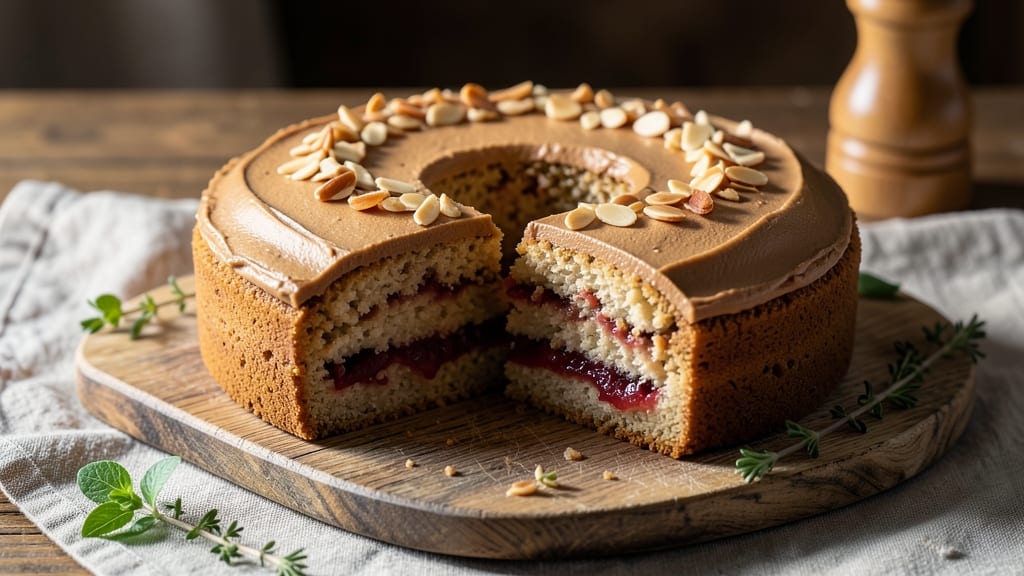
This almond ring coffee cake recipe delivers the perfect balance of buttery crust, tender crumb, and rich almond swirl that makes every slice irresistible. 💛 The secret lies in a well-developed almond filling that stays moist and flavorful while the layers of cake create that signature ring pattern.
I've perfected this technique over years of baking, ensuring the filling doesn't leak and the crust maintains its ideal crispness.
The recipe begins with a simple yet flavorful cake batter that's enriched with almond flour for that signature nutty taste. A generous layer of almond paste filling is spread between cake layers and swirled into the center, creating that iconic ring shape.
The butter crust on top adds a satisfying crunch that contrasts beautifully with the soft, moist cake beneath.
What you'll end up with is a coffee cake that's perfect for breakfast gatherings, brunch spreads, or as a special treat with your morning coffee. The almond flavor shines through while maintaining a balanced sweetness that won't overwhelm.
Each slice offers that perfect combination of textures - tender cake, creamy almond filling, and crispy crust.
This recipe serves 12 and can be prepared in a standard 9-inch tube pan. The baking time is approximately 45-50 minutes at 350°F, resulting in a cake that's perfectly golden on top with a moist interior.
For an extra touch, dust with powdered sugar or drizzle with a simple glaze before serving.
Ingredients for almond ring coffee cake
Twelve ingredients for a coffee cake that’s pure magic—nutty, buttery, and perfectly balanced.
| Ingredient | Amount | Notes |
|---|---|---|
| All-Purpose Flour 🌾 | 2 ½ cups | Sifted for light texture |
| Almond Flour 🥜 | 1 cup | Finely ground for smooth batter |
| Granulated Sugar 🍚 | 1 ½ cups | White or light brown |
| Unsalted Butter 🧈 | 1 cup | Softened to room temperature |
| Large Eggs 🥚 | 3 whole | Room temperature for even mixing |
| Almond Paste 🥜 | 1 cup | High-quality, smooth texture |
| Powdered Sugar 🍚 | ½ cup | For dusting and filling |
| Baking Powder 🧂 | 2 tsp | Double-acting for lift |
| Salt 🧂 | ½ tsp | Fine sea salt preferred |
| Vanilla Extract 🌿 | 1 tbsp | Pure, high-quality extract |
| Milk 🥛 | ½ cup | Whole milk for richness |
| Almond Slices 🥜 | ½ cup | For topping, toasted |
| Powdered Sugar 🍚 | 2 tbsp | Extra for final dusting |
The almond paste is where the magic happens. Ghirardelli or Wilton are my go-tos—they’ve got that smooth, rich texture that doesn’t leak. If you’re using store-bought, make sure it’s at room temperature so it spreads like a dream. Almond flour? Bob’s Red Mill is my favorite—it’s finely ground and doesn’t clump. Pro tip: Toast your almond slices for 5 minutes at 350°F before topping to bring out their flavor. And don’t skimp on the butter—Plugrá or Land O’Lakes work perfectly, but make sure it’s unsalted so you control the saltiness.
No almond paste? Blend 1 cup almonds with 1/4 cup powdered sugar until it’s smooth—it’ll be less refined, but it’ll work. Out of almond flour? Substitute 1/4 cup almond meal for the missing amount, but know it’ll be slightly coarser. The vanilla extract should be pure—Nestlé or McCormick are reliable brands. If you’re baking ahead, wrap the cake tightly in plastic and store at room temperature for up to 2 days. The filling stays moist, but the crust might soften a bit—just reheat for 10 minutes at 300°F to crisp it back up.
This cake is best served the day it’s made, but if you need to prep ahead, assemble the cake (without baking) and refrigerate for up to 24 hours. The butter crust stays crispy for 3 days if stored in an airtight container. For an extra touch, drizzle with a simple glaze made from 1/4 cup powdered sugar + 1 tbsp milk right before serving. And trust me, the first slice is always the best—save a little for later!
Why You'll Love This Recipe
- No Mixer Needed: I swear by this—just creaming butter and sugar by hand until fluffy (about 3 minutes) gives that perfect, tender crumb. No fancy equipment, no fuss, and honestly? The almond flour keeps it rich without needing a stand mixer.
- Buttery Almond Magic: That combo of almond flour and melted butter in the streusel topping? It’s like biting into a warm hug. The sugar caramelizes just enough to make every slice taste like a bakery’s secret, but with half the guilt.
- Weekday Breakfast or Dessert: Between us, this cake is my go-to for lazy mornings and after-dinner treats. Toast a slice, slather with cream cheese, and suddenly it’s a brunch star. (Yes, even on a Tuesday night.)
- Leftovers That Last: The almond flour makes this cake stay moist for days—no dry, sad slices here. I’ll make one on Sunday, wrap the leftovers, and still have perfect bites by Thursday. Plus, the butter and eggs stretch the cost further than most boxed mixes.
Step-by-step instructions for almond ring coffee cake
Here's how to create a golden, nutty masterpiece with layers of almond swirl and buttery crust.
👨🍳 Step 1: Prepare the Almond Swirl Filling
In a medium bowl, combine the 1 cup almond paste and 0.5 cup powdered sugar. Mix until completely smooth and homogeneous—this ensures a velvety swirl rather than a grainy one. The almond paste should look like a thick, pale yellow dough. If it feels too stiff, add 1 teaspoon milk to loosen it slightly while maintaining its shape when rolled.
Shape the mixture into a 12-inch log by rolling it between your palms. Wrap it tightly in plastic wrap and refrigerate for at least 30 minutes (or up to 2 hours). This chilling step is crucial—it prevents the filling from melting prematurely in the oven and ensures clean, defined swirls when you cut into the cake later. Real talk: Skipping this will give you a sad, runny center instead of that beautiful spiral pattern.
👨🍳 Step 2: Mix the Cake Batter
Preheat your oven to 350°F and grease a 9-inch round cake pan (or line it with parchment paper). In a large mixing bowl, cream together the 1 cup softened unsalted butter and 1.5 cups granulated sugar on medium speed until light and fluffy—about 3-4 minutes. This step incorporates air, which gives your cake that perfect lift and tender crumb.
Add the 3 whole large eggs, one at a time, mixing well after each addition. Stir in the 1 tbsp vanilla extract and 0.5 cup milk. In a separate bowl, whisk together the 2.5 cups all-purpose flour, 1 cup almond flour, 2 tsp baking powder, and 0.5 tsp salt. Gradually add the dry ingredients to the wet mixture, mixing just until combined—do not overmix or your cake will turn tough. The batter should be thick but pourable.
🥘 Step 3: Assemble the Coffee Cake
Spread about half of the batter evenly into the prepared cake pan, using a spatula to smooth the top. Unwrap the chilled almond filling and place it gently in the center of the batter. Using a sharp knife, cut the filling log into 8 equal pieces and arrange them in a circular pattern around the center, leaving a 1-inch border of batter uncovered. This creates that classic ring pattern.
Pour the remaining batter over the almond pieces, gently pressing down to ensure contact with the pan. Sprinkle the 0.5 cup almond slices evenly over the top for extra crunch and visual appeal. Dust the entire surface with the 2 tbsp powdered sugar—this gives the cake its signature shimmery finish and prevents the almond slices from browning too quickly.
🔥 Step 4: Bake to Golden Perfection
Bake for 45-50 minutes until the edges are golden brown and a toothpick inserted into the center comes out clean (or with a few moist crumbs). The cake is done when the top springs back slightly when pressed gently. If the almond slices aren't browned enough, broil for 1-2 minutes at the end, watching closely to avoid burning.
Let the cake cool in the pan for 10 minutes before transferring it to a wire rack to cool completely. This resting period is essential—it allows the cake to set properly and prevents it from falling apart when you cut into those beautiful almond swirls. Serve warm with a pat of butter or a dollop of whipped cream for the ultimate coffee cake experience!
Pro Tips For Making Almond Ring Coffee Cake
- Whisk Eggs Cold: Pull those eggs straight from the fridge and whisk them with the sugar first—no waiting for them to warm up. I used to let them sit out, thinking they’d mix better, but cold eggs incorporate smoother and create a lighter crumb. Trust me, your cake will thank you for the extra fluff.
- Sift the Almond Flour: Almond flour is dense and clumpy, and if you don’t sift it, your cake will turn out heavy. Use a fine-mesh sieve and tap it gently over a bowl—no need to go crazy, just break up those stubborn lumps. This makes a real difference in texture, especially around the ring’s edges.
- Don’t Overmix the Batter: Once you fold in the almond flour, stop mixing the second everything comes together. Overworking the batter introduces too much gluten, and your cake will turn out dense instead of tender. A few gentle swirls are all it takes—just until the dry ingredients disappear.
- Rotate the Pan: The almond ring’s edges burn before the center sets, no matter how even your oven looks. After 20 minutes, rotate the pan 180 degrees and swap the top and bottom racks halfway through baking. This ensures the ring cooks through without turning into a crispy disaster on one side.
Common mistakes when making perfect results
Overmixing the Batter
I’ve ruined more coffee cakes than I’d like to admit by overmixing the batter. Once you’ve combined the wet and dry ingredients, stop mixing immediately after they’re just incorporated—no streaks of flour should remain.
Overmixing develops the gluten in the flour, which creates a tough, dense cake instead of that tender crumb we all love. I recommend using a hand mixer on low speed and switching to a spatula for the final fold to avoid overworking the batter. 💛
Skipping the Chill
The almond filling needs that 30-minute chill—trust me, it’s non-negotiable. Without it, the filling will melt too quickly in the oven, creating a messy, runny center instead of those clean, swirled almond rings.
If you’re in a hurry, pop the filling in the freezer for 15 minutes—it’ll still work. Pro tip: Use plastic wrap to shape the log neatly, and avoid touching it too much to prevent warming.
Uneven Filling Distribution
When arranging the almond filling pieces, resist the urge to cram them too close to the edges. Leave that 1-inch border of batter uncovered to ensure the cake bakes evenly and the filling stays contained.
I’ve seen too many cakes where the filling oozed out during baking, creating a sticky mess. Use a sharp knife to cut the filling into even pieces—this ensures consistent swirls when you slice the cake later.
Incorrect Pan Prep
Greasing the pan isn’t enough—line it with parchment paper for that perfect release. I’ve had cakes stick so badly they tore apart when I tried to remove them. If you’re using a 9-inch round pan, make sure it’s well-greased and lined.
For extra insurance, dust the parchment with a little flour or almond flour before pouring in the batter. This prevents sticking and adds a subtle nutty flavor to the crust.
Overbaking or Underbaking
That toothpick test is your best friend. If it comes out completely clean, your cake is done. If it’s still moist, bake for 5-10 more minutes. Overbaking dries out the cake and makes it crumbly, while underbaking leaves it gummy.
I’ve learned the hard way—set a timer for the full 45-50 minutes and check at 40 minutes to avoid missing the window. The cake should spring back slightly when pressed gently in the center.
Ignoring the Resting Time
Letting the cake cool in the pan for 10 minutes before transferring it to a rack is crucial. Skipping this step can cause the layers to separate or the almond filling to ooze out when you slice it.
I’ve seen cakes collapse dramatically when cut too soon. For an extra touch, dust the warm cake with powdered sugar right after baking—it’ll melt slightly and create a beautiful, shimmery finish. 💡
Nutrition facts
Frequently asked questions
Can I make this almond coffee cake without almond paste?
For a budget-friendly version, blend 1 cup almonds with ¼ cup powdered sugar until smooth. The texture will be slightly less refined, but it'll still create that nutty flavor. For an extra boost, add 1 tsp vanilla extract to the blended mixture before using it as a filling substitute.
How do I store leftovers to keep them fresh?
Wrap the cake tightly in plastic wrap and store at room temperature for up to 2 days. For longer storage, refrigerate for 3-4 days in an airtight container. To revive the crust, reheat slices in the oven at 300°F for 5-7 minutes. The filling stays moist, but the texture softens with time.
Why did my almond filling melt out during baking?
This happens when the filling isn't chilled long enough before baking. Always refrigerate the almond log for at least 30 minutes (or up to 2 hours) to firm it up. If you're short on time, freeze it for 15 minutes instead. Also ensure you're using a sharp knife to cut the filling pieces—dull blades can cause uneven heating.
Can I use this recipe with a different nut instead of almonds?
While almonds create the signature flavor, you can substitute with hazelnuts or pecans for a different taste profile. Use the same quantity of nut paste or finely ground nuts, but note the texture and flavor will vary. Hazelnuts add a richer, slightly bitter note, while pecans bring a buttery sweetness. Adjust sweetness in the filling if needed.
How do I serve this coffee cake for a brunch gathering?
Slice the cake into 12 equal wedges and serve warm with a dusting of powdered sugar. For an elegant presentation, drizzle with a simple glaze made from ¼ cup powdered sugar + 1 tbsp milk. Pair with fresh berries, whipped cream, or a scoop of vanilla ice cream. The almond flavor pairs beautifully with citrusy elements like orange marmalade or lemon curd.